
Introduction
Golden pothos care starts simple, but this trailing houseplant hides a wild side. The small plant on your shelf is just the baby form. Out in the Solomon Islands, wild pothos climbs trees and grows leaves 9 to 13 times larger than the ones you see indoors.
I've grown golden pothos for over 8 years in dim rooms and in bright sunrooms. The indoor version is like a bonsai version of its true form. In tropical forests, this vine reaches 30 meters tall with leaves up to 80 centimeters long. Florida rates it as a HIGH INVASION RISK because it spreads so fast outdoors.
This guide goes deeper than the basic indoor plant care tips on most blogs. You'll learn the science behind why your beginner-friendly pothos does what it does. I've pulled facts from NASA studies and peer reviewed journals so you get real answers instead of guesses.
Pick up your first trailing houseplant or level up the one you already own. Below you'll find watering schedules and propagation tricks. You'll also get display ideas that work in real homes.
Light, Soil, and Temperature
Pothos light requirements shape how your plant looks more than any other factor. Bright indirect light brings out bold yellow variegation. In low light, your pothos pumps out extra chlorophyll to grab what little light it can. That green pigment takes over the yellow patches and your leaves turn solid green.
Research shows that pothos leaves in high light conditions become about 50% thicker than those grown in dim rooms. Your plant is still one of the best low-light plants around, but it won't look its best tucked in a dark corner. Direct sun is the other extreme and will scorch the leaf tips within days, so aim for a spot near a window with a sheer curtain as a filter.
Pothos soil needs to drain fast so the roots never sit in standing water. A standard potting mix works as a base, but I always add a handful of perlite to every pot. This well-draining soil blend lets air reach the roots and prevents the soggy conditions that cause rot. SDSU Extension specialists agree that well drained potting mix is the key to healthy roots.
Keep your room temperature between 65 to 85°F and humidity around 40 to 60% for the healthiest growth. Cold drafts below 50°F will shock the roots and cause yellow drooping leaves within hours. If your home runs dry in winter, group your pothos with other plants to create a small pocket of higher humidity around the foliage.
7 Popular Pothos Varieties
Most plant shops sell the standard golden pothos, but several types of pothos deserve your attention before you buy. They all share the same species name, Epipremnum aureum. Yet each one looks different from the next. The variegated varieties range from bright neon green to creamy white marble patterns that can change the feel of a room.
I've grown all 7 of these pothos varieties side by side to test how they handle the same conditions. The golden pothos vs marble queen matchup surprised me most. Golden held up great in low light while marble queen faded fast. Neon pothos kept its bold color in a dim hallway, but the patterned types needed a spot near the window to stay sharp.
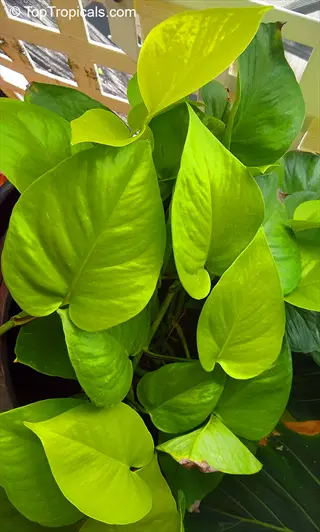
Golden Pothos
- Appearance: Heart-shaped green leaves with irregular splashes of bright yellow and gold variegation that give this classic variety its name.
- Light needs: Thrives in bright indirect light but tolerates low-light rooms like offices and bathrooms, though yellow markings may fade in deep shade.
- Growth habit: Fast-growing trailing vine that can extend 6 to 10 feet (1.8 to 3 meters) indoors when given a support or allowed to cascade from a shelf.
- Care level: Extremely forgiving of missed waterings and temperature fluctuations, making it the top pick for first-time plant owners.
- Best placement: Works well on high shelves, in hanging baskets, or trained along a wall-mounted trellis for a lush green curtain effect.
- Standout trait: The most widely available and affordable pothos variety, found at nearly every garden center and grocery store year-round.
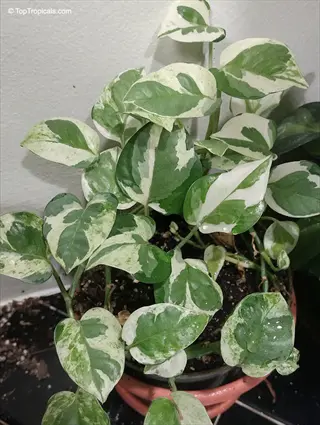
Marble Queen Pothos
- Appearance: Creamy white and green marbled leaves with heavy variegation that can cover more than half of each leaf surface.
- Light needs: Requires brighter light than golden pothos to maintain its white variegation, as low light causes leaves to revert to solid green.
- Growth habit: Slower growing than golden pothos due to less chlorophyll in the heavily variegated leaves, reaching about 5 to 8 feet (1.5 to 2.4 meters) indoors.
- Care level: Slightly more demanding than golden pothos because the white portions are more sensitive to overwatering and sunburn.
- Best placement: Ideal near east-facing or north-facing windows where it receives gentle morning light without harsh afternoon sun exposure.
- Standout trait: The dramatic white-on-green pattern makes it one of the most visually striking pothos varieties for bright rooms.
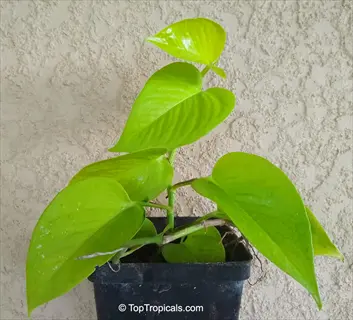
Neon Pothos
- Appearance: Solid chartreuse to bright lime-green leaves without any variegation, producing an electric pop of color in any room.
- Light needs: Maintains its vibrant neon color best in medium to bright indirect light, as leaves darken to a deeper green in low-light conditions.
- Growth habit: Grows at a similar pace to golden pothos with long trailing vines that can reach 8 to 10 feet (2.4 to 3 meters) when well cared for.
- Care level: Just as easy to maintain as golden pothos with the same watering and soil requirements, perfect for beginners who want bold color.
- Best placement: Looks stunning against dark walls, in white pots, or paired with darker-leafed plants to create visual contrast in groupings.
- Standout trait: The only pothos variety with no variegation at all, relying purely on its vivid leaf color for ornamental appeal.
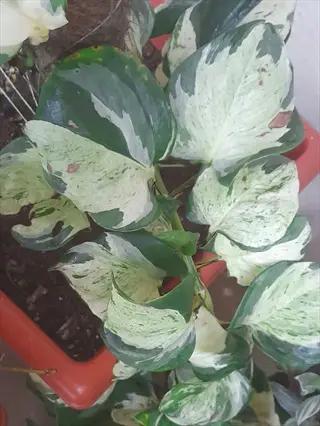
Manjula Pothos
- Appearance: Wide, rounded leaves with swirling patches of white, cream, silver, and green that create a painterly, watercolor-like pattern.
- Light needs: Needs bright indirect light to keep its multicolored variegation vivid, and direct sun will burn the delicate white leaf sections.
- Growth habit: Compact and slower growing compared to golden pothos, with leaves that tend to curl slightly at the edges for a unique wavy texture.
- Care level: Moderate care required because the heavy variegation reduces photosynthesis efficiency and makes it more prone to root rot from overwatering.
- Best placement: Best displayed as a tabletop plant near a window or on a plant stand where you can appreciate the detailed leaf patterns up close.
- Standout trait: A patented variety developed at the University of Florida, making it rarer and more collectible than standard pothos cultivars.
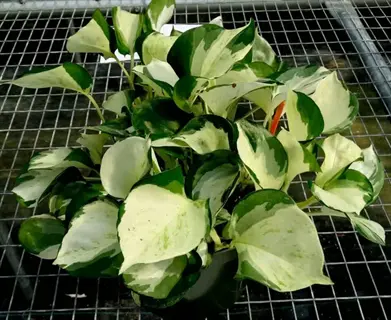
Pearls and Jade Pothos
- Appearance: Small green leaves edged with white and gray speckles, creating a delicate, refined look that sets it apart from bolder varieties.
- Light needs: Performs well in medium indirect light and tolerates lower light better than most variegated types, though growth slows in deep shade.
- Growth habit: Compact grower with shorter internodes, producing denser foliage along shorter vines that typically reach 4 to 6 feet (1.2 to 1.8 meters).
- Care level: Easy to care for with standard pothos watering practices, though it benefits from slightly less frequent watering due to its smaller leaf surface.
- Best placement: Excellent for small spaces, desks, and terrariums where its petite size and tight growth pattern shine without overwhelming the area.
- Standout trait: Another University of Florida cultivar bred from Marble Queen, valued for its compact size and subtle gray-green color palette.
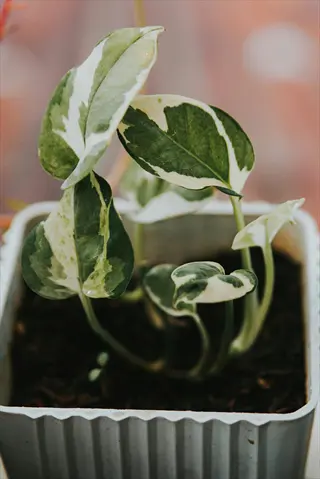
N'Joy Pothos
- Appearance: Bold blocks of pure white and deep green with crisp, clean edges between colors rather than the soft blending seen in other variegated types.
- Light needs: Requires bright indirect light to maintain sharp color contrast, and leaves in low light will produce more green and lose white patches.
- Growth habit: Moderate grower that trails neatly with vines reaching about 5 to 8 feet (1.5 to 2.4 meters) and producing consistently patterned foliage.
- Care level: Standard pothos care applies, but watch for browning on white leaf sections which signals too much direct sun or inconsistent watering.
- Best placement: Looks striking in white or neutral ceramic pots where the bold green-and-white pattern stands out against a clean background.
- Standout trait: Distinguished from Pearls and Jade by its larger, cleaner blocks of color with no gray or cream speckling between green and white.
Jade Pothos
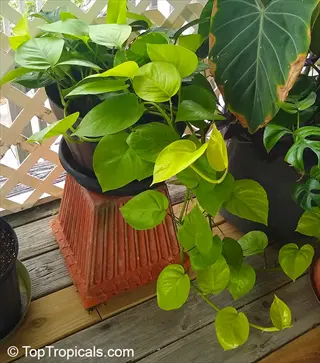
- Appearance: Solid dark green leaves with little to no variegation, producing a lush, uniform look that works well in modern and minimalist interiors.
- Light needs: The most shade-tolerant of all pothos varieties because its fully green leaves maximize chlorophyll and photosynthesis in dim conditions.
- Growth habit: Fast grower that matches or exceeds golden pothos in vine length, easily reaching 10 feet (3 meters) or more with consistent care.
- Care level: The easiest pothos variety to keep alive, forgiving of neglect, low light, and inconsistent watering more than any variegated cousin.
- Best placement: Perfect for dim hallways, windowless bathrooms, or north-facing rooms where other variegated pothos varieties would lose their color.
- Standout trait: Produces the most vigorous growth of any pothos type due to maximum chlorophyll content, making it ideal for creating dense green coverage quickly.
Watering and Feeding Schedule
In my experience, pothos watering mistakes kill more plants than any pest or disease ever will. Overwatering is the top cause of root rot in pothos. I've watched new plant owners drown their vines by watering on a strict daily schedule. The fix is simple: push your finger one inch into the soil and water only when it feels dry.
Your pothos needs more water during spring and summer when it pushes out new leaves. Soil moisture drops faster in warm months because the plant drinks more and the soil dries out quicker. Cut your watering back by about half during fall and winter because growth slows down and the roots can't use water as fast. SDSU Extension specialists confirm that drying out the soil between waterings is the best way to prevent root rot.
Black spots on the leaves mean you're giving too much water. Drooping leaves signal the opposite problem. Underwatering is the easier fix of the two. Just give the pot a good soak and watch the leaves perk up within hours. A plant sitting in soggy soil for weeks may have rotten roots that you can't save.
Feed your pothos with a balanced fertilizer every 4 to 6 weeks in spring and summer. I tested this schedule against monthly feeds and found it works best. Stop all feeding in winter when the plant rests. Too much fertilizer burns root tips and turns leaf edges brown. Dilute to half strength if you're not sure about the dose.
Propagation Techniques
Pothos propagation is one of the easiest ways to multiply your plant collection for free. This species roots so fast from stem cuttings that it became invasive in Florida. You don't need rooting hormone or fancy tools. A sharp pair of scissors and a glass of water will get the job done.
Every propagation method starts with finding a node on the stem. The node is the small bump where a leaf connects to the vine, and it's where new roots will grow. Cut about half an inch below the node and make sure your cutting has at least one healthy leaf attached. I've tested all 4 of these propagation methods side by side, and each one works well for different situations.
Water Propagation
- How it works: Cut a stem section with at least one node and one or two leaves, place it in a clear glass of water, and wait for roots to develop.
- Timeline: Expect visible root nubs within seven to fourteen days and roots long enough to transplant (about 2 inches or 5 centimeters) within three to four weeks.
- Advantages: You can watch root development in real time, the method requires no special materials, and success rates are very high even for beginners.
- Limitations: Roots grown in water are thinner and more fragile than soil-grown roots, and the plant needs an adjustment period when moved to soil.
Soil Propagation
- How it works: Insert the cut stem node directly into moist, well-draining potting mix, keep the soil lightly damp, and place in bright indirect light.
- Timeline: Root development takes about three to four weeks before you see new leaf growth, and you can test for roots by gently tugging the cutting.
- Advantages: Roots grow thicker and stronger in soil from the start, and the plant skips the water-to-soil transition shock entirely.
- Limitations: You cannot see root progress without disturbing the cutting, and overwatering during this stage easily leads to stem rot.
Division Method
- How it works: Remove a mature pothos from its pot, gently separate the root ball into two or more sections with stems attached, and repot each division.
- Timeline: Divided plants recover and produce new growth within two to three weeks since they already have established root systems.
- Advantages: Each division is a fully rooted plant from day one, making this the fastest way to create multiple mature-looking pothos plants.
- Limitations: Only works with well-established plants that have multiple stems growing from the soil line, and root damage during separation can cause temporary wilting.
Layering in the Pot
- How it works: Pin a section of vine with a node directly onto moist soil in the same or an adjacent pot using a hairpin or small clip while still attached to the parent plant.
- Timeline: Roots form at the pinned node within two to three weeks, after which you can cut the vine from the parent to create an independent plant.
- Advantages: The cutting stays nourished by the mother plant during rooting, giving it the highest success rate of any propagation method.
- Limitations: Requires a long enough vine to reach the soil surface and takes up more space than water or direct soil propagation methods.
Water propagation works best if you're just starting out. You can watch the root development happen right through the glass. Change the water every 3 to 5 days to keep it fresh. Once the roots reach about 2 inches long, move the cutting into a small pot with moist soil.
Toxicity and Pet Safety
Golden pothos is toxic to cats and dogs according to the ASPCA, and it can also harm humans who chew or swallow the leaves. The plant stores tiny needle shaped crystals called calcium oxalates inside its cells. When a pet or child bites into a leaf, those crystals shoot out and stab the soft tissue of the mouth and throat.
The damage goes deeper than just the crystals. Pothos toxicity works in two ways at once. The crystals puncture tissue, and the sap also holds enzymes that cause chemical burns on their own. In my research, I found that even filtered sap with no crystals still destroyed skin cells in lab tests.
Symptoms in pets include intense burning of the mouth and lips, drooling, vomiting, and trouble swallowing. One man got pothos sap in his eyes while pruning. He needed a corneal transplant because of the scarring it caused. Always wear gloves when you cut or repot this plant.
Pet safety doesn't mean you need to give up your pothos. Hang the plant from a ceiling hook or place it on a tall shelf where pets and small children can't reach the vines. Trim trailing stems before they dangle low enough for a curious cat to grab. If your pet does chew a leaf, rinse their mouth with water and call your vet or the ASPCA poison control hotline right away.
I keep 3 pothos plants in my home with 2 cats, and the trick is choosing your display spots with care. Wall mounted planters and high floating shelves keep the vines out of paw's reach without hiding the plant from view.
Display and Training Ideas
Your pothos display method does more than change how the plant looks. Climbing plants grow leaves 9 to 13 times larger than trailing ones. Vertical growth triggers the vine's mature leaf response. A moss pole in your living room can push your pothos to grow bigger leaves than it ever would hanging from a hook.
Hanging pothos works best in bathrooms and kitchens where the extra humidity keeps the vines lush. I hung a golden pothos above my shower 4 years ago and it now trails over 6 feet of vine without a single brown tip. The steam from hot showers gives it a boost that no spray bottle can match.
For your office or bedroom, let the plant trail from a bookshelf or desk. This trailing houseplant softens hard edges and fills dead space without taking up any floor room. A simple pothos trellis on the wall turns a single plant into a living piece of wall art that grows more impressive each month.
Training your pothos to climb a moss pole is the best kept secret among vining plants collectors. Secure the stems to the pole with soft plant ties and keep the moss damp so the aerial roots can grip. Within a few months you'll notice the new leaves growing wider and thicker than anything the trailing sections produce.
Mix display styles in the same room for the best visual impact. Put one pothos on a high shelf to trail down and another on a moss pole climbing up. The contrast between the two growth forms creates depth that makes any space feel more alive.
5 Common Myths
Golden pothos plants can purify all the air in a room and remove harmful toxins on their own.
NASA tested pothos for VOC removal in sealed chambers, but real-world rooms would need hundreds of plants per square meter to match natural air exchange rates.
Golden pothos is completely safe to have around pets because it is a common household plant.
Golden pothos contains insoluble calcium oxalate crystals that cause oral irritation, drooling, vomiting, and difficulty swallowing in cats and dogs if ingested.
Golden pothos needs direct sunlight to grow well and develop its signature yellow variegation.
Direct sunlight can scorch pothos leaves and fade the variegation, while bright indirect light produces the healthiest growth and most vibrant coloring.
You should water your golden pothos on a strict daily or every-other-day schedule to keep it healthy.
Overwatering is the top cause of pothos death; allow the top inch of soil to dry completely between waterings, which typically means every seven to ten days.
All golden pothos plants stay small with tiny heart-shaped leaves no matter where you grow them.
In tropical outdoor conditions, mature climbing pothos can produce leaves up to 31 inches (80 centimeters) long, which is nine to thirteen times larger than indoor juvenile leaves.
Conclusion
Golden pothos care doesn't have to be hard, even if you've never owned a plant before. This beginner-friendly vine forgives missed waterings and grows in rooms with low light. But now you also know the real science behind it. Your small indoor plant has a wild side with leaves that grow 9 to 13 times larger outdoors.
In my years of growing indoor plants, I've found that the best houseplant care comes from knowing why things work and not just following rules. NASA studied this plant for air cleaning on spacecraft. The ASPCA warns it's toxic to pets. These facts help you make smarter choices about where to put it and how to handle it.
Pothos propagation gives you free plants from a single vine. Snip a stem below a node, drop it in water, and you'll see roots within 2 weeks. Share cuttings with friends or fill out your own pots for a fuller look at home.
Keep this guide handy as you grow your golden pothos care skills over the coming months. Give it the right light, proper water, and a good soil mix. Your pothos will keep pushing out new leaves for years to come.
External Sources
Frequently Asked Questions
How do you take care of Golden Pothos?
Provide bright indirect light, water when the top inch of soil is dry, use well-draining potting mix, and feed with balanced fertilizer every four to six weeks during the growing season.
Is Golden Pothos a good indoor plant?
Golden pothos is one of the best indoor plants for beginners because it tolerates low light, irregular watering, and a wide range of humidity levels.
Does Golden Pothos need sunlight?
Golden pothos prefers bright indirect sunlight but can survive in low-light conditions, though growth slows and variegation may fade.
Why is pothos called the Devil's Ivy?
Pothos earned the name Devil's Ivy because it is extremely difficult to kill and stays green even in near-darkness.
How to keep a pothos happy?
Keep your pothos happy by placing it in bright indirect light, watering when the soil dries out, and wiping dust from the leaves monthly.
What are the disadvantages of Golden Pothos?
The main disadvantages are toxicity to pets and children, invasive potential outdoors in warm climates, and vines that can become leggy without pruning.
How often should I water my pothos?
Water your pothos every seven to ten days in spring and summer and every two to three weeks in winter, adjusting based on soil dryness.
What is the luckiest plant inside the house?
Golden pothos is considered one of the luckiest indoor plants in Feng Shui, believed to attract wealth and positive energy.
Do pothos like small or big pots?
Pothos prefer slightly snug pots with drainage holes, typically one to two inches larger in diameter than the root ball.
Do Golden Pothos like water or soil?
Golden pothos can grow in both water and soil, but soil provides more nutrients for long-term growth while water works well for propagation.