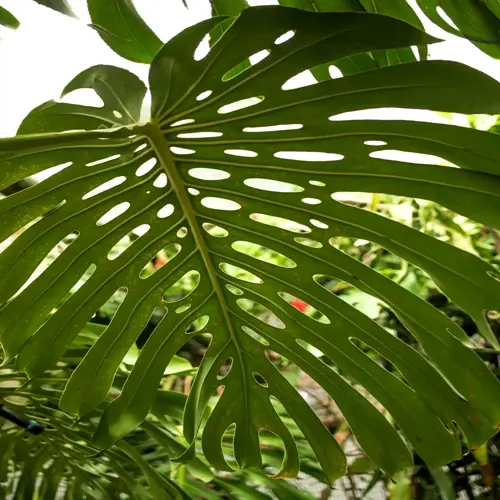

To take care of a Swiss cheese plant, you need to get five things right. Light, water, humidity, soil, and feeding form the foundation. Nail these five pillars and your plant will reward you with gorgeous split leaves.
The biggest swiss cheese plant care mistake I see people make is rigid watering. I killed my first one by watering every Sunday no matter what. The lower leaves turned yellow and stems went soft. Once I switched to checking the soil first, the problem stopped. Now I water about once a week in summer and every 10 to 14 days in winter. This simple change saved my plant.
Good swiss cheese plant care also means getting the light right. Place your plant near a bright window with no harsh direct sun hitting the leaves. Bright indirect light pushes the plant to develop those famous holes and splits. This species grew in rainforest understories and adapted to catch bits of light through the canopy. Without enough brightness, new leaves stay small and plain.
You might see it labeled as Monstera deliciosa at the store. The monstera deliciosa care needs match what you'd expect from a tropical plant. Keep your room between 65°F and 85°F (18°C to 29°C) since growth stalls below that range. Humidity matters a lot too. Aim for 60% to 70% around the leaves. A pebble tray under the pot helps boost moisture in the air. Most homes sit close enough to this range without extra help from you.
Soil has to drain fast while holding some moisture at the same time. I mix equal parts potting soil, perlite, and orchid bark for a blend that keeps roots healthy. Caring for monstera means never letting them sit in soggy ground. Roots rot fast in wet soil, so a pot with drainage holes at the bottom is a must. Check the pot after watering and dump any water sitting in the saucer.
Feeding gives the plant fuel for new growth. Use a half-strength balanced liquid fertilizer every two weeks from March through September. This covers the active growing season when your Monstera pushes out most of its new leaves. Don't feed more than the label says. Extra fertilizer burns roots and causes brown leaf tips that won't heal.
Winter care trips up most growers because the rules change. Your plant enters a dormant phase as daylight shrinks and temperatures drop. Cut watering back to every 10 to 14 days or even longer if the soil stays moist. Stop all fertilizer from October through February. Move the pot away from cold window drafts that shock the roots. The plant won't push much new growth during these months, and that's normal.
Once spring hits and you spot fresh leaves, bring back your regular watering and feeding routine. I mark the first new spring leaf on my calendar as a reminder to start fertilizer again.
Repotting fits into the care cycle too. Check the roots each spring and move up one pot size if you see them circling the bottom or poking from drainage holes. A fresh pot with new soil gives roots room to grow and keeps your Monstera strong for the season ahead.
Pests can sneak up on you if you don't check the leaves now and then. Spider mites and thrips love Monstera foliage. Wipe each leaf with a damp cloth once a month to remove dust and spot any tiny invaders early. Catching a pest problem in the first few days saves you weeks of treatment and keeps your plant looking clean.
I've found that caring for monstera gets easier each year as you learn your plant's signals. Yellow leaves mean too much water. Brown tips point to low humidity or fertilizer burn. Small leaves without holes say the light is too dim. Once you read these signs, the whole process feels second nature.
Read the full article: Swiss Cheese Plant Care Guide