
Introduction
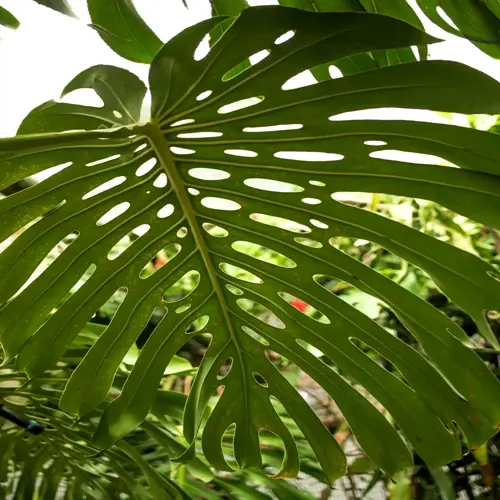
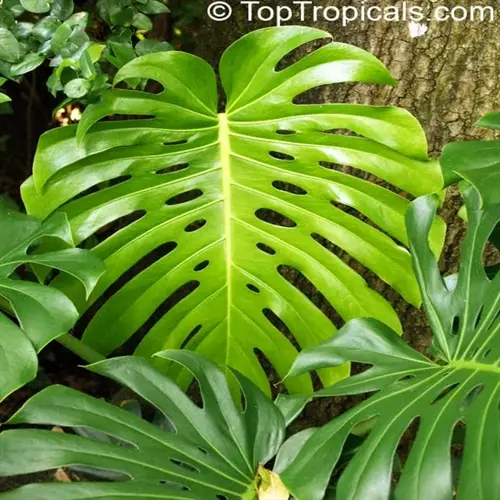
You've seen monstera adansonii all over social media and plant shops by now. Most people call it the swiss cheese vine because of the holes scattered across each leaf. This fast growing vine comes from Central and South America. It climbs tree trunks in thick forests where light is scarce.
Those fenestrated leaves serve a real purpose beyond looks. A 2013 study from Indiana University showed the holes help the plant catch scattered light in the shade. Think of each hole as a tiny skylight, letting dappled forest light reach more of the leaf below. The plant grew its swiss cheese pattern for survival, not style.
In my experience growing this tropical houseplant for over 6 years, it still surprises me. You don't need a greenhouse to grow one well at home. Give it bright indirect light, the right watering schedule, and chunky soil. New fenestrated leaves will pop out faster than you'd expect.
This guide walks you through varieties, soil mixes, watering, and pest control. Kew Gardens lists 4 distinct subspecies of this plant, so collectors have more options than most realize. Let's get into the details that will keep your monstera adansonii thriving all year long.
8 Best Monstera Adansonii Varieties
Not all monstera adansonii varieties look the same. Kew Gardens lists 4 official monstera subspecies of this plant. On top of those, sellers offer unique cultivar forms too. In my experience growing 5 of these 8 types, each one has its own shape and growth pattern.
The monstera adansonii narrow form has long, thin leaves. Round forms grow wider leaves with many small holes instead. You'll pay $100 or more for a monstera adansonii variegated cutting. Monstera adansonii laniata has thick glossy leaves you can feel right away.
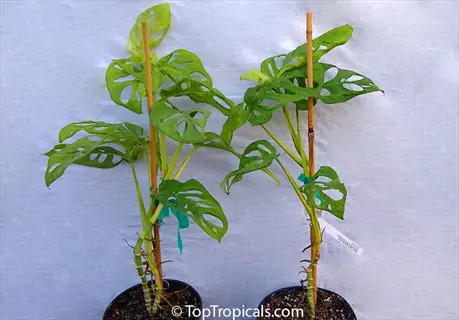
Monstera Adansonii Narrow Form
- Leaf Shape: Elongated, slender leaves with fewer but much larger fenestrations that give the plant a delicate, airy silhouette unlike the rounder standard form.
- Growth Habit: Vigorous vining growth that trails fast from hanging baskets, often producing longer internodal spacing than the round form when grown without support.
- Light Preference: Performs best in bright indirect light near an east-facing window, producing more prominent holes with consistent light exposure.
- Care Level: Beginner-friendly and slightly more tolerant of missed waterings than other forms, making it an excellent first Monstera for new plant parents.
- Availability: Easy to find at garden centers and online retailers, often priced between 10 and 25 dollars for a starter plant.
- Best Display: Looks stunning trailing from a high shelf or macrame hanger where the elongated leaves can cascade down downward.
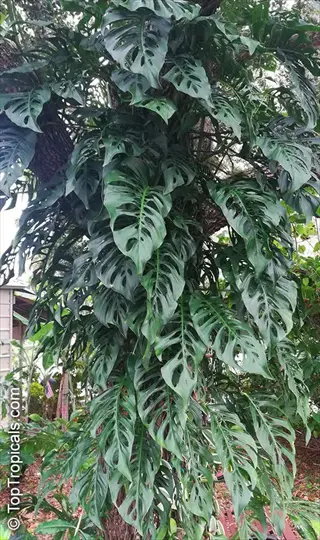
Monstera Adansonii Round Form
- Leaf Shape: Wider, rounder leaves with numerous smaller fenestrations spread even across the surface, creating a lush and full appearance on the vine.
- Growth Habit: A bit more compact growth compared to the narrow form, with shorter distances between leaf nodes producing a denser, bushier look overall.
- Light Preference: Thrives in bright filtered light and develops more fenestrations as leaves mature, with older leaves showing far more holes than juvenile growth.
- Care Level: Requires consistent moisture levels and benefits from higher humidity around 60% or more to keep leaf edges from curling or browning.
- Availability: Common in nurseries and often sold alongside the narrow form, though labeling often does not distinguish between the two leaf shapes.
- Best Display: Ideal for climbing a moss pole or trellis where the round leaves can grow larger and develop their characteristic dense pattern of holes.
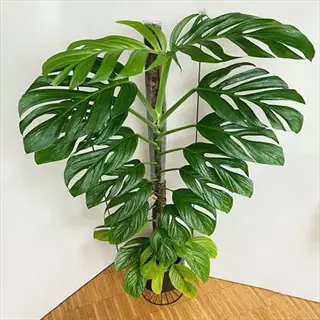
Subspecies Laniata
- Leaf Shape: Larger, thicker, and glossier leaves than the standard adansonii, with prominent veining and fenestrations that develop closer to the midrib of each leaf.
- Growth Habit: More robust and vigorous grower that can reach impressive sizes indoors, often producing leaves up to 12 inches (30 centimeters) long with proper support.
- Light Preference: Handles slightly lower light levels than other forms while still producing fenestrations, though bright indirect light speeds up growth a lot.
- Care Level: Intermediate care requirements with a stronger need for consistent humidity and well-draining soil to prevent root issues in its thicker root system.
- Availability: Less common in standard garden centers but more and more available through specialty plant shops and online Monstera collectors at moderate prices.
- Best Display: Excels on a sturdy moss pole or wooden plank where the larger leaves can showcase their impressive texture and glossy surface.
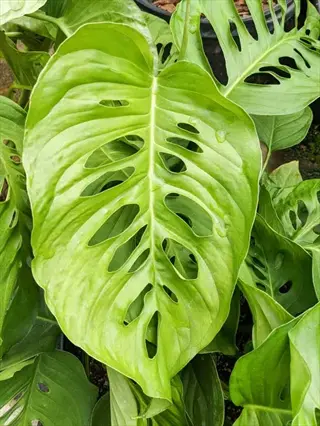
Subspecies Blanchetii
- Leaf Shape: Smaller overall leaf size with a more compact growth form, fenestrations tend to be fewer and concentrated near the leaf center compared to other subspecies.
- Growth Habit: Slower and more compact growing habit than the standard adansonii, making it a good choice for smaller spaces or terrariums where room is limited.
- Light Preference: Prefers consistent bright indirect light and may produce fewer fenestrations than other subspecies when kept in lower light conditions over time.
- Care Level: A bit more demanding than the standard form and benefits from stable environmental conditions without sudden temperature or humidity fluctuations.
- Availability: Rare in the commercial plant trade and most often found through specialist collectors, botanical gardens, or online auction sites for plant enthusiasts.
- Best Display: Works well in a terrarium or enclosed glass cabinet where humidity stays steady and high and the compact form fills the space on its own.
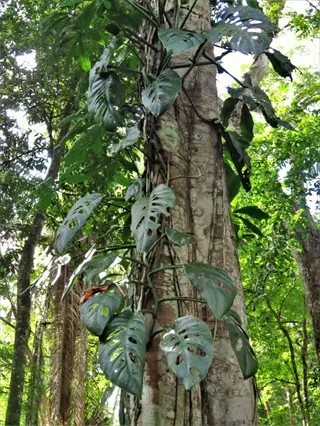
Subspecies Klotzschiana
- Leaf Shape: Distinctive leaf morphology that differs from the standard adansonii in fenestration pattern and overall leaf outline, with a more elongated growth habit.
- Growth Habit: Native to specific regions of South America and adapted to particular understory conditions, this subspecies maintains a moderate climbing growth rate indoors.
- Light Preference: Performs best with dappled or filtered light similar to its native forest floor habitat, making it well-suited to rooms with sheer curtained windows.
- Care Level: Requires similar care to the standard adansonii but may need more attention to humidity levels, above all in dry climates or heated indoor spaces.
- Availability: Seldom offered in commercial plant markets and is of main interest to serious collectors and botanical researchers studying Monstera taxonomy.
- Best Display: Best displayed as a climbing specimen on natural wood supports that mimic its native tree trunk habitat for authentic growth patterns.
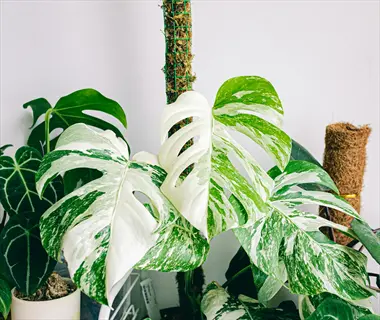
Variegated Monstera Adansonii
- Leaf Pattern: White, cream, or light green patches appear at random across the fenestrated leaves, creating a striking contrast that makes each leaf one of a kind.
- Growth Habit: Slower growing than the standard green form because the white sections contain less chlorophyll and produce less energy for the overall plant.
- Light Preference: Needs a bit brighter indirect light than green forms to compensate for reduced chlorophyll, but direct sun will burn the delicate white leaf sections.
- Care Level: Advanced care required as variegated sections are more prone to browning, and the plant needs precise watering and humidity to maintain stable variegation.
- Availability: Much sought after and often priced between 100 and 500 dollars depending on the extent and stability of the variegation pattern.
- Best Display: Position at eye level where the unique variegation pattern catches natural light and can be appreciated up close as a statement specimen plant.
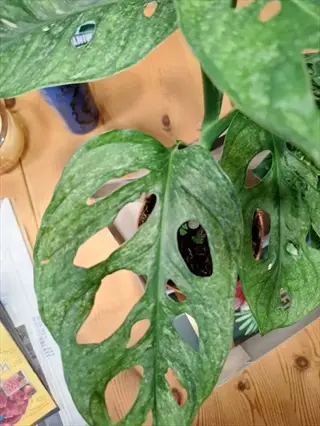
Monstera Adansonii Mint
- Leaf Pattern: Soft mint green variegation spreads across the leaves in a more subtle pattern than the white variegated form, giving the plant a gentle pastel appearance.
- Growth Habit: Moderate growth rate that falls between the standard green and white variegated forms, producing a good balance of growth speed and visual interest.
- Light Preference: Benefits from bright indirect light to maintain the mint coloring, as too little light can cause new growth to revert back to solid green leaves.
- Care Level: Intermediate to advanced care needed, with careful attention to light levels to preserve the minty tone and prevent full reversion to green coloration.
- Availability: Rare and expensive, often selling for 200 to 800 dollars for established plants, and much prized among Monstera collectors for its unusual coloring.
- Best Display: Pairs great with white or light-colored pots that complement the pastel mint tones and create an elegant display on a plant stand.
Monstera Adansonii Aurea
- Leaf Pattern: Golden yellow variegation appears in irregular sectors and splashes across the fenestrated leaves, creating a warm, sun-kissed look that differs from white forms.
- Growth Habit: Slower growing than the solid green form but a bit more vigorous than white variegated versions, as yellow sections retain more chlorophyll for photosynthesis.
- Light Preference: Requires bright indirect light to maintain the golden coloring, and insufficient light may cause the yellow variegation to fade toward pale green.
- Care Level: Advanced care recommended with careful monitoring of soil moisture, as the variegated sections are more sensitive to both overwatering and underwatering.
- Availability: Very rare in the commercial market with prices ranging from 150 to 600 dollars depending on the quality and stability of the golden variegation.
- Best Display: Looks exceptional mounted on a wooden board or climbing a natural branch where the golden leaves catch morning light from a nearby window.
If you're just starting out, grab the narrow or round form from your local nursery. These two are the easiest to find and the most forgiving when you make mistakes. Save the rare monstera subspecies and variegated types for later. Build your confidence with basic care first.
Light, Temperature and Humidity
From what I've seen, monstera adansonii light requirements matter most for growth. Place it near an east facing window for gentle morning sun that won't scorch the leaves. A north facing window works too but you may need a grow light in winter months. Your plant wants bright indirect light for 6 to 8 hours each day.
Monstera temperature needs are simple to meet in most homes. Keep your room between 64 to 81°F during the growing season. NC State Extension data shows the plant can't handle cold below 50°F, and frost at 30 to 32°F will kill the leaves fast. The monstera cold tolerance drops even further at 26 to 28°F, when stems start to die off.
Monstera humidity is where most growers fail, above all during the winter. Central heating can drop your indoor air down to 30% or less. Your plant needs at least 50% to keep its leaves flat and healthy. I run a small humidifier next to mine from October through March and the difference is clear.
The table below shows you how to adjust your care through each season. Most plant deaths happen because owners don't change their routine when the weather shifts. Winter is the most critical time because light drops and heating dries out the air at the same time.
Watering and Soil Essentials
Monstera adansonii watering is the care step that trips up most new owners. The rule is simple: water when the top inch feels dry, about the depth of your first knuckle. I test mine every few days by pushing my finger into the soil. If it still feels damp, I wait another day or two.
UF IFAS notes this plant can handle some drought in shade but it won't survive soggy soil. Overwatering monstera is the top cause of root rot and plant death in my collection. Water from the top in spring and summer, then switch to bottom watering in fall to keep the leaves dry when airflow drops. Cut your schedule down to every 10 to 14 days in winter.
Your monstera soil mix is just as important as how often you water. You need a well-draining soil that holds some moisture without getting packed and dense. The best aroid soil for root rot prevention uses chunky pieces that let air reach the roots. NC State Extension data calls for a slightly acidic pH around 5.5 to 7.0 for this plant.
The guide below shows you the exact mix I use for all my monstera adansonii plants. Each part plays a role in keeping the roots healthy and the water moving through the pot fast.
Peat Moss or Coco Coir Base
- Purpose: Provides the main moisture holding base of the mix, keeping water long enough for roots to absorb nutrients while still drying out between waterings.
- Ratio: Should make up about 40% of the total mix by volume, creating a balance between moisture and the drainage that aroid roots need.
- Tip: Coco coir is a more green choice than peat moss and has a neutral pH compared to the acidic nature of sphagnum peat moss.
Perlite for Drainage
- Purpose: Creates air pockets in the soil that prevent packing and let excess water drain out, cutting the risk of root rot in aroid roots.
- Ratio: Add about 25% perlite by volume to the mix, making sure the white bits are spread throughout the growing medium.
- Tip: Use medium to coarse grade perlite, not fine dust. Larger pieces hold up better over time and keep more air flowing to the roots.
Orchid Bark Chips
- Purpose: Mimics the chunky forest floor where monstera adansonii roots grow in the wild. Bark gives structure and breaks down into food over time.
- Ratio: Include about 25% orchid bark by volume. Use pieces about half an inch to one inch for best airflow around the roots.
- Tip: Soak bark chips in water for 30 minutes before mixing so they don't steal moisture from the roots during the first few waterings.
Worm Castings or Compost
- Purpose: Adds gentle, slow release nutrients and good microbes that support root health without the risk of chemical burn from strong plant food.
- Ratio: Mix in about 10% worm castings by volume. This gives enough nutrition to feed the plant for months between repotting sessions.
- Tip: Worm castings also improve soil structure and water holding on their own, making them a great two in one addition to any aroid soil mix.
Propagation Methods
Monstera adansonii propagation is one of the best parts of owning this vine. I've made over 30 new plants from cuttings in the past few years alone. UF IFAS confirms you can grow new plants from stem cuttings, suckers, seeds, and tissue culture. The 3 methods below are the ones that work best at home.
Every stem cutting you take needs at least one monstera node with a small aerial root bump on it. That node is where new roots will grow from. Cut about an inch below the node with clean scissors or a sharp blade. Spring through early summer gives you the fastest rooting monstera results.
For water propagation, place your stem cutting in a clear jar of water with the node below the surface. Change the water every 3 to 4 days. You'll see roots start to appear in 2 to 4 weeks. Once the roots reach 2 inches long, move the cutting into moist aroid soil.
Soil propagation skips the transfer step. Dip your stem cutting in rooting hormone and push it into damp soil with the node buried. Cover the pot with a clear bag to hold moisture in. Roots take 3 to 5 weeks to form this way, but the plant won't face transplant shock later.
Air layering monstera works great on large plants you don't want to cut yet. Wrap wet sphagnum moss around a node on the mother plant and cover it with plastic wrap. New roots will grow into the moss in 4 to 6 weeks. Then you cut below the roots and pot it up as a new plant.
The table below compares all 4 methods side by side so you can pick the right one for your setup.
Pests, Diseases and Fixes
Monstera adansonii pests show up most often in dry winter air or when you bring a new plant home. Spider mites monstera owners hate the most top that list, along with mealybugs, aphids, whiteflies, and scale. NC State Extension backs up all 5 of these as known monstera adansonii pests. I check my plants each week by flipping leaves over and scanning the stems up close.
Monstera yellow leaves can mean several things beyond just bugs. Monstera root rot from soggy soil is the most common cause I see in my own collection. Monstera leaf spots, rust, powdery mildew, and blight round out the disease list from NC State data. Catch these problems early and your plant will bounce back within a few weeks of treatment.
One more thing to keep in mind: the ASPCA confirms calcium oxalate toxicity in all parts of this plant. The crystals cause mouth pain, drooling, and vomiting in cats, dogs, and young children. Keep your monstera on a high shelf or in a room your pets can't reach.
Spider Mites
- Signs: Tiny yellow or brown dots on leaves with fine webbing between stems and on leaf backs, often showing up first on young, tender growth near the top of the plant.
- Treatment: Spray all leaf surfaces with a mix of water and a few drops of neem oil every 5 to 7 days for 3 rounds to break the life cycle.
- Prevention: Keep humidity above 50% and wipe leaves with a damp cloth each week. Spider mites love dry indoor air during winter heating season.
Mealybugs
- Signs: White cotton like clusters at leaf joints, along stems, and on leaf backs that leave sticky residue and can attract sooty mold on surfaces nearby.
- Treatment: Dab each bug with a cotton swab soaked in rubbing alcohol. Follow up with a neem oil spray across the whole plant to catch any you missed.
- Prevention: Check new plants before you place them near your collection. Keep all new purchases in a separate spot for at least 2 weeks first.
Scale Insects
- Signs: Small brown or tan oval bumps stuck to stems and leaf veins. People often mistake them for part of the plant until they spread and cause yellow leaves.
- Treatment: Scrape off the bumps with a soft brush or your nail. Then apply neem oil or a garden oil spray to kill any remaining crawlers on the plant.
- Prevention: Give your plant good air flow and avoid crowding your houseplants together. Scale spreads through contact between leaves that touch each other.
Fungal Leaf Spots
- Signs: Brown or black round spots with yellow halos on leaves. These often start on lower leaves where air flow is poor and moisture sits the longest.
- Treatment: Cut off sick leaves with clean scissors. Improve air flow, stop splashing the leaves, and use a copper based spray if the spots keep spreading.
- Prevention: Water the soil, not the leaves. Make sure your pot drains well and give your plants enough space between them for air to move.
The best defense against all these problems is a strong, healthy plant. Good light, proper watering, and clean leaves go a long way toward keeping your monstera pest free all year.
5 Common Myths
Monstera adansonii needs direct sunlight to grow its signature fenestrated leaves properly indoors.
Direct sun actually burns the leaves. Bright indirect light triggers fenestration, as research shows holes help capture scattered light in shaded habitats.
You should mist your Monstera adansonii daily to replicate its tropical rainforest environment.
Daily misting raises fungal infection risk without meaningfully raising ambient humidity. A humidifier or pebble tray provides far more consistent moisture.
Monstera adansonii and Monstera obliqua are the same plant with different common names.
Monstera obliqua is an extremely rare species with paper-thin leaves that are mostly hole. Monstera adansonii is far more common and sturdier.
Yellow leaves on Monstera adansonii always mean you are overwatering the plant.
Yellow leaves can result from underwatering, low humidity, nutrient deficiency, cold drafts, or natural aging of older lower leaves.
Monstera adansonii only grows well indoors and cannot survive planted outside in a garden.
Monstera adansonii grows outdoors in USDA zones 10a through 12b, reaching 10 to 13 feet (3 to 4 meters) tall when given a tree or structure to climb.
Conclusion
Good monstera adansonii care comes down to 3 simple things. Give it bright indirect light, a well draining aroid soil mix, and water when the top inch dries out. Those 3 pillars match what NC State Extension and UF IFAS research both support. I've found that getting these basics right matters far more than any fancy tool or product.
Your swiss cheese vine evolved to thrive in low light forest floors. That means it doesn't need perfect conditions to grow well in your home. Small mistakes with tropical houseplant care won't kill this plant the way they would with fussier species. A missed watering here or there is fine as long as your soil drains well and your light stays bright.
One of the best monstera growing tips I can share is to watch for new leaves. This plant grows fast once you nail the routine. You'll see fresh growth within weeks of dialing in your setup. That kind of visible progress is what makes the swiss cheese vine such a rewarding plant for beginners and veterans alike.
Keep checking on your plant each week, adjust for the seasons, and don't be afraid to take a few cuttings. Your monstera adansonii will reward you with years of lush, holey growth that fills any room with life.
External Sources
Frequently Asked Questions
Wie pflegt man eine Monstera adansonii?
Monstera adansonii needs bright indirect light, consistent watering when the top soil dries, humidity above 50 percent, and a well-draining aroid soil mix.
Wie pflegt man Monstera Adansonii?
Provide filtered sunlight, water regularly without soaking, maintain warm temperatures, and feed monthly during the growing season.
Wo sollte eine Monstera stehen?
Place your Monstera near a bright window with indirect sunlight, away from cold drafts and direct afternoon sun.
Wie viel Licht braucht Monstera adansonii?
Monstera adansonii needs bright indirect light for 6 to 8 hours daily and tolerates low light but grows slower.
Wächst Monstera adansonii nach dem Schneiden wieder an?
Yes, Monstera adansonii regrows after pruning and often produces two or more new growth points from each cut.
Wie oft in der Woche sollte man Monstera gießen?
Water your Monstera about once a week in summer and every 10 to 14 days in winter, checking the soil moisture first.
Soll Monstera adansonii klettern oder hängen?
Both options work well, but climbing on a moss pole produces larger leaves while hanging creates a trailing vine effect.
Wie macht man eine Monstera glücklich?
Keep your Monstera happy with consistent humidity, bright filtered light, regular feeding, and a stable temperature range.
Wie oft soll man Blätter besprühen in Monstera?
Mist your Monstera leaves two to three times per week or use a humidifier for more consistent humidity levels.
Ist Monstera besser in Erde oder Seramis?
Both growing media work, but soil provides more nutrients while Seramis offers better drainage and reduces overwatering risk.