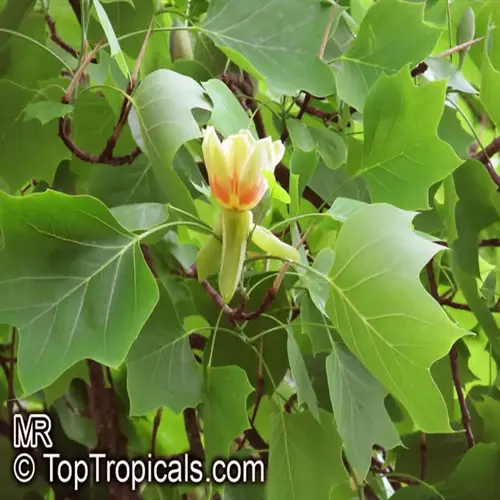

The most popular another name for a tulip tree is tulip poplar. You'll also hear it called yellow poplar, whitewood, canoe tree, and tulip magnolia. All five names point to the same exact species. This creates real confusion at nurseries and garden centers across the country.
The full list of tulip tree common names covers a lot of ground. You'll find five names in the USDA NRCS records. Those are tulip poplar, tuliptree, yellow poplar, and whitewood. Where you live shapes what you call it. Lumber yards in the Southeast use yellow poplar. Landscapers in the Mid-Atlantic say tulip poplar. I once visited three nurseries in the same county and found the same species sold under three different labels. The confusion is real and it catches new buyers off guard.
The tulip poplar vs tulip tree debate causes the most mix-ups. The word "poplar" in the name tricks people into thinking it's related to true poplars. It's not. Your tulip tree's real name is Liriodendron tulipifera. It belongs to the magnolia family. True poplars sit in the willow family. The two groups share no close DNA at all. Early settlers thought the wood looked similar to poplar lumber and the name stuck.
The name "canoe tree" carries the most history. Native Americans carved dugout canoes from tulip tree trunks. They picked this species because the wood is soft and straight-grained. Old-growth trunks grew wide enough to carve boats that held up to 20 people. Daniel Boone used a tulip tree dugout canoe to move his family down the Ohio River.
You might buy "whitewood" boards at a home store without knowing you're working with tulip tree lumber. The name comes from the pale, creamy color of fresh-cut wood. Furniture makers and trim carpenters like it because it takes stain well. It machines clean without splitting. The timber trade has used this name for over a century now.
My best tip for you is to use the scientific name Liriodendron tulipifera when you buy from a nursery. I learned this after ordering a "tulip tree" online and getting a saucer magnolia instead. The seller wasn't trying to cheat me. They just used a different common name for a different tree. Saying the Latin name removes all guesswork. You get the right species every single time without any back and forth.
Write down the name on a card and hand it to your nursery staff. They'll know what you want no matter what regional name shows up on their tags. I also tell friends to check the Latin name on the plant tag before they pay. One quick look saves you from bringing home the wrong tree and having to deal with a return or swap later on.
You should also know that the naming confusion extends to online shopping. I searched "tulip tree" on a major garden website last spring and got results for three different species. One was the real tulip tree, one was a Japanese magnolia, and one was a Chinese tulip tree. Only one had the right Latin name on its tag. That was the native I wanted. Your safest bet is to shop at a local nursery where you can see the tree in person. You can check the tag and confirm what you're buying before you hand over your cash.
Don't let the name confusion keep you from planting this great tree. Just keep in mind that tulip poplar, yellow poplar, whitewood, canoe tree, and tulip magnolia all mean the same thing. Use the Latin name when you buy and you'll get exactly what you're looking for every time.
Read the full article: Tulip Tree: Complete Growing Guide