
Introduction
The tulip tree is one of the tallest native hardwoods in eastern North America. Seedlings can reach 10 to 18 feet in just 5 years under full sun. Mature trees grow 100 to 150 feet tall, and old growth specimens near 200 feet have been found in the Appalachians. Few shade trees match that speed or size.
I've watched tulip poplars turn bare yards into shaded spots in under a decade. People call it tulip poplar or yellow poplar. In science books you'll see it listed as Liriodendron tulipifera. It belongs to the magnolia family, not the poplar group. Three states picked it as their official tree, which says a lot about its worth.
Most shade trees give you canopy or fall color. This native hardwood gives you both plus valuable timber and nectar for honey. A single young tree yields enough nectar to make 4 pounds of honey each season. That mix of shade, honey, and wood makes it one of the most useful trees you can grow.
This guide covers what you need to know to grow a strong tulip tree on your land. You'll learn about the best cultivars for your yard, how to plant and care for one, and the wildlife it supports.
7 Tulip Tree Cultivars
You don't need a huge farm to grow a tulip tree anymore. When I first started planting these trees, your only choice was the full size species. Now newer tulip tree cultivars come in shapes and sizes that fit most yards. The Little Volunteer tulip tree stays small enough for city lots. The Arnold tulip tree grows tall but thin for tight spots. You can also find variegated tulip tree options if you want bold leaf colors in your yard.
I split these 7 picks into 4 groups based on how much room you have. Compact tulip tree forms work for small yards. Columnar forms squeeze into narrow spaces. Variegated forms add bold leaf color. Full size forms suit big lots. A dwarf tulip tree like Little Volunteer lets you enjoy the species even if you can't fit a 100 foot giant in your front yard.

Little Volunteer Tulip Tree
- Mature Size: Reaches roughly 30 to 35 feet (9.1 to 10.7 meters) tall and 15 to 18 feet (4.6 to 5.5 meters) wide, making it the most compact option for residential landscapes.
- Growth Form: Develops a dense, upright pyramidal shape with a straight central leader that requires minimal corrective pruning compared to the full-size species.
- Flower Display: Produces the same distinctive tulip-shaped yellow-green and orange flowers as the standard species, but at a height where they are more visible from ground level.
- Best Use: Ideal for suburban yards, smaller properties, and urban landscapes where a full-size tulip tree would outgrow the available space within a few decades.
- Fall Color: Delivers the golden-yellow fall foliage characteristic of the species, with leaves that are proportionally smaller and create less seasonal litter to manage.
- Availability: One of the most widely available compact cultivars at nurseries across USDA zones 5 through 9, often sold as a container or balled-and-burlapped specimen.
Arnold Tulip Tree
- Mature Size: Grows 50 to 60 feet (15.2 to 18.3 meters) tall but only 15 to 20 feet (4.6 to 6.1 meters) wide, creating a tall narrow column that fits tight spaces between structures.
- Growth Form: Fastigiate (columnar) habit with branches that grow upward at sharp angles rather than spreading outward, maintaining a slender profile throughout its life.
- Best Use: Excellent choice for property borders, windbreaks, or narrow planting strips where vertical height is desired without the wide canopy spread of the standard species.
- Flower Display: Bears the typical tulip-shaped blooms in late spring, though the narrow crown means fewer branches and a lighter flower display than wider-spreading forms.
- Cold Hardiness: Performs well across USDA zones 5 through 9, with the same cold tolerance as the standard species while taking up far less horizontal growing space.
- Maintenance Notes: Requires less pruning than spreading forms because the naturally upright branch structure reduces the risk of storm damage and limb breakage.
Emerald City Tulip Tree
- Mature Size: Reaches 55 to 75 feet (16.8 to 22.9 meters) tall and 25 to 45 feet (7.6 to 13.7 meters) wide, slightly more compact than the wild species but still a substantial shade tree.
- Growth Form: Develops a symmetrical, upright-oval crown with a strong central leader and well-spaced scaffold branches that resist breakage better than the standard species.
- Disease Resistance: Selected specifically for improved resistance to common tulip tree problems including aphid infestations and the resulting sooty mold that causes black residue on surfaces below.
- Fall Color: Produces exceptionally vibrant golden-yellow autumn foliage that holds on the tree longer than many other cultivars before dropping in mid to late fall.
- Best Use: Well suited for parks, large residential properties, and public landscapes where a full-size specimen is appropriate but improved form and pest resistance are priorities.
- Availability: Widely available through commercial nurseries and often recommended by landscape architects as an upgrade over seedling-grown tulip trees for designed landscapes.
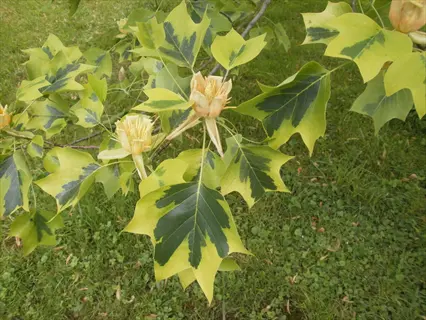
Aureomarginatum Tulip Tree
- Leaf Pattern: Features striking green leaves bordered with bright yellow to gold margins, creating a variegated display that stands out against the solid green foliage of surrounding landscape plants.
- Mature Size: Grows 60 to 80 feet (18.3 to 24.4 meters) tall and 30 to 40 feet (9.1 to 12.2 meters) wide, similar in stature to the standard species but with far more ornamental leaf interest.
- Ornamental Value: The variegated foliage makes this cultivar a focal point in large gardens where visual interest beyond flowers is desired throughout the entire growing season.
- Light Needs: Performs best in full sun where the yellow leaf margins develop their brightest color, though some afternoon shade in hot climates may prevent leaf scorch on the lighter tissue.
- Growth Rate: Slightly slower than the straight species, typically adding 1 to 1.5 feet (0.3 to 0.5 meters) per year, which gives landscape planners more time before the tree reaches full size.
- Best Use: Serves as a specimen or accent tree on large estates, arboretums, and botanical gardens where its unusual foliage pattern can be appreciated from both near and far.
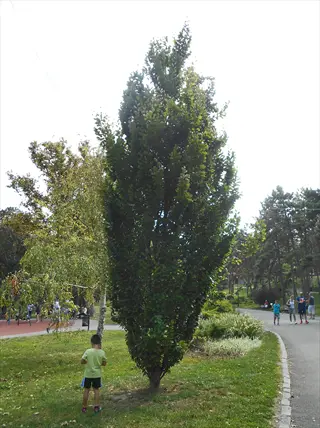
Fastigiatum Tulip Tree
- Growth Form: Produces a narrow, columnar shape similar to Arnold but often slightly wider at maturity, with ascending branches creating a flame-like silhouette against the skyline.
- Mature Size: Reaches 50 to 60 feet (15.2 to 18.3 meters) tall and 15 to 25 feet (4.6 to 7.6 meters) wide, making it suitable for screen plantings and narrow landscape corridors.
- Root System: Develops the same lateral root pattern as the standard species, so proper spacing from foundations and pavement remains important despite the narrower canopy above ground.
- Flower and Seed Production: Bears tulip-shaped flowers and cone-like seed clusters at the same age and rate as the standard species, supporting pollinators in a space-efficient package.
- Wind Resistance: The upright branch angle and narrow profile offer improved wind resistance compared to wide-spreading forms, reducing the risk of limb breakage during storms.
- Best Use: Works well when planted in rows for windbreaks or privacy screens, and fits into urban planting strips where overhead clearance is available but horizontal space is limited.
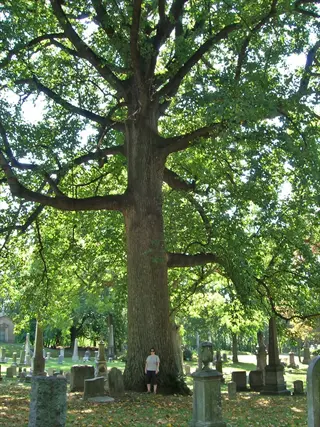
Chapel Hill Tulip Tree
- Mature Size: Grows to approximately 60 to 80 feet (18.3 to 24.4 meters) tall and 30 to 40 feet (9.1 to 12.2 meters) wide, producing a broad pyramidal crown suitable for large shade applications.
- Flower Quality: Selected for consistent and abundant flower production with well-formed tulip-shaped blooms that show strong orange banding at the petal base for improved ornamental display.
- Growth Rate: Maintains the fast growth rate typical of the species, adding 2 or more feet (0.6 meters) per year in well-drained acidic soil with consistent moisture during the establishment period.
- Fall Foliage: Delivers reliable golden-yellow fall color that transitions evenly across the canopy, creating a uniform display rather than the patchy browning sometimes seen in seedling trees.
- Origin: Originated from selected stock near Chapel Hill, North Carolina, where the species grows in its native Piedmont habitat with naturally favorable soil and climate conditions.
- Best Use: Recommended for large residential landscapes, parks, and restoration plantings where a vigorous, well-formed specimen of the standard species size is the goal.
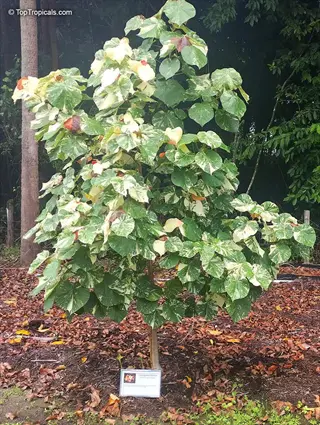
Snow Bird Tulip Tree
- Leaf Pattern: Features green leaves with white to cream-colored variegation that gives the canopy a lighter, brighter appearance compared to both the standard species and the yellow-edged Aureomarginatum.
- Mature Size: Grows to a similar size as the standard species, reaching 60 to 80 feet (18.3 to 24.4 meters) tall, though the variegated foliage may slow growth slightly in the first several years.
- USDA NRCS Listing: Included in the USDA Natural Resources Conservation Service cultivar list alongside Aureomarginatum and Mediopictum, confirming its recognition as a distinct ornamental selection.
- Light Requirements: Needs full sun to develop the strongest variegation pattern, as shaded branches may revert to solid green foliage and lose the distinctive white leaf markings over time.
- Ornamental Appeal: The white variegation creates a shimmering effect when wind moves through the canopy, offering a visual quality distinct from the warmer yellow tones of Aureomarginatum.
- Best Use: Works as a specimen tree in large gardens or arboretum collections where unusual foliage variations are valued and the tree can receive the full sun exposure it needs.
Planting and Soil Needs
Tulip tree planting goes best when you match 3 key conditions at your site. You need full sun overhead, room to spread 30 to 60 feet wide, and well-drained soil that clears water in hours, not days. Get all 3 right and your tree will grow fast from day one.
In my experience, tulip trees do well in USDA hardiness zones from 4a all the way to 9b. The species grows from sea level up to 4,500 feet in the southern Appalachians. USDA Forest Service data shows that 75% of all yellow poplar stock grows in the Appalachian range and nearby Piedmont. That tells you these trees love deep, rich, mountain type soils the most.
Your soil should be acidic with a pH near 6.5 or below for best growth. A Coastal Plain type can even handle very acidic soil with pH under 4.0. The one thing tulip trees can't stand is packed, hard ground. NC State Extension notes their low tolerance for soil compaction, so loosen your planting area well before you put the tree in the hole.
Space your tree at least 35 feet from structures, driveways, and power lines. Tulip tree spacing matters because these trees get big fast. Plan for 30 to 80 inches of rain each year to keep your tree happy. If you have a black walnut on your lot, you're in luck. Tulip trees are one of the few species that can grow near black walnuts without harm.
When you dig the hole, make it twice as wide as the root ball but no deeper. Set the root flare right at ground level. Water the tree in well after planting and add 3 to 4 inches of mulch around the base. Keep the mulch a few inches away from the trunk to stop rot and pest issues.
Tulip Tree Care Essentials
Tulip tree care is simple once you know the seasonal routine. Spring means watering your tree well as growth kicks in. Summer means checking for drought stress and sticky aphid residue on leaves. Fall means letting leaves drop on their own. Winter means dormant season pruning to clear dead or broken branches.
I tested many watering tulip tree methods over the years. The best results came from giving them 1 to 2 inches of water each week during dry spells. NC State Extension notes these trees have low tolerance for heat, drought, and soil compaction. So consistent moisture in summer is the single most important part of your tulip tree care plan.
Apply a slow release fertilizer in early spring right around the drip line of your tree. Mulching with 3 to 4 inches of organic matter helps hold moisture and keeps roots cool. For pruning tulip tree branches, wait until the tree goes dormant in winter. Cut away dead wood, crossed limbs, and damaged sections. This low maintenance approach keeps your tree healthy for decades.
Here's a tip most guides skip. NC State Extension says you can coppice a tulip tree every 2 to 3 years to keep it in a shrubby form. This works great if you want the leaves and flowers but don't have space for a full size tree. Your climate should offer 150 to 310 frost free days and 30 to 80 inches of rain each year for best results.
Identifying a Tulip Tree
You can spot a tulip tree in any season once you know what to look for. In spring, check for the four-lobed leaves shaped like a cat face. In early summer, search the upper crown for tulip tree flowers with orange bands at the base. In fall, watch for golden fall foliage that lights up the whole tree. In winter, look for smooth gray tulip tree bark and flat buds at branch tips.
Leaf identification is the fastest way to confirm what you have. Tulip tree leaves are 3 to 8 inches wide with 4 lobes and a flat or notched tip. No other eastern tree has that same cat face shape. I've helped dozens of homeowners spot tulip trees on their land just by showing them what the four-lobed leaves look like up close.
Most people own a tulip tree for years and never see the flowers. That's because blooms open high in the crown after the leaves fill in. On a tree at full tulip tree height of 100 feet or more, those flowers sit too far up to notice from the ground. Check below the tree for fallen petals in late May or June to confirm it bloomed.
The bark and winter buds help you ID this tree when the leaves are gone. Young trees have smooth, gray green bark. Older trunks show deep ridges and furrows that get thicker with age. The buds at each branch tip are flat and shaped like a duck's bill. NC State Extension says the greenish yellow heartwood doesn't form until the trunk hits about 2 feet across. That detail gives you a useful maturity clue if you ever cut into the wood.
Spring Leaf Emergence
- Leaf Shape: Four-lobed leaves with a distinctive flat or notched tip emerge from flattened buds, creating a silhouette often compared to a cat face or a tulip outline when held upright.
- Leaf Size: Mature leaves measure 3 to 8 inches (7.6 to 20.3 centimeters) across, making them among the larger leaves found on native eastern hardwoods and easy to spot from a distance.
- Bud Structure: The flattened, duck-bill-shaped winter buds open in early spring and are a reliable identification feature before leaves fully expand on the branches.
Early Summer Flowers
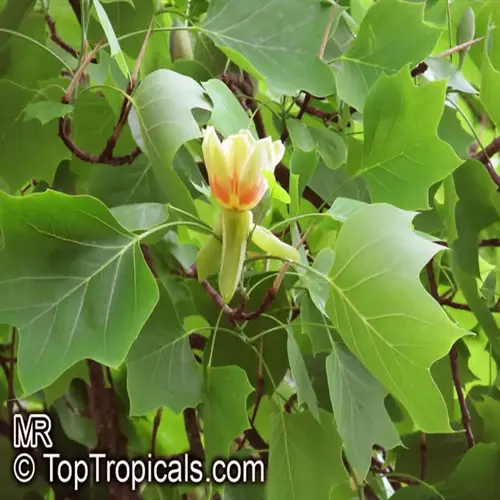
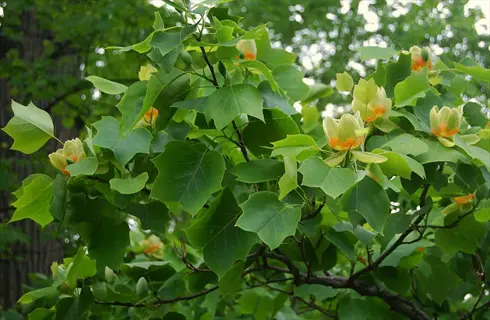
- Flower Shape: Cup-shaped blooms with 6 yellowish-green petals marked with orange bands at their base resemble garden tulips, giving the tree its common name and attracting pollinators to the upper canopy.
- Location on Tree: Flowers open high in the crown after leaves are fully developed, making them difficult to spot from ground level on mature specimens taller than 60 feet (18.3 meters).
- Bloom Period: Flowering occurs from mid-May through early June depending on latitude and elevation, with trees beginning to flower at 15 to 20 years of age.
Fall Foliage and Seeds
- Fall Color: Leaves turn a uniform golden-yellow before dropping, creating a brief but striking autumn display that stands out among the reds and oranges of surrounding forest species.
- Seed Clusters: Cone-shaped seed structures 2 to 3 inches (5.1 to 7.6 centimeters) long persist on branch tips through fall and into winter, each containing narrow winged seeds called samaras.
- Seed Viability: Only 5% to 20% of seeds are viable according to USDA Forest Service data, but they can remain dormant in the forest floor for 4 to 7 years before germinating.
Winter Bark and Buds
- Young Bark: Smooth and gray-green on young trees, developing light interlacing ridges and furrows as the tree matures beyond 20 to 30 years of age.
- Mature Bark: Deeply furrowed bark on old trunks can reach 0.5 inches (1.3 centimeters) or more in thickness, providing significant fire resistance according to USDA Forest Service research.
- Winter Buds: The flat, duck-bill-shaped terminal buds at branch tips are a reliable year-round identification feature unique to the tulip tree among eastern North American hardwoods.
Wildlife and Honey Value
Every tulip tree you plant acts as a long term boost to the tulip tree wildlife in your area. The species serves as a larval host plant for over 18 butterfly and moth species at the same time. The Eastern Tiger Swallowtail feeds on its leaves as a caterpillar. So do the Spicebush Swallowtail and the Viceroy. That makes it one of the best nectar source trees you can grow for tulip tree pollinators.
Beekeepers love this tree. USDA Forest Service data shows that a young tree under 20 years old can yield 8 pounds of nectar per season. That nectar turns into about 4 pounds of tulip tree honey. I've talked with beekeepers who place hives near groves of these trees just for that dark, rich honey. Tulip tree bees stay busy for weeks during the late spring bloom and the honey has a bold flavor most people love.
The tulip tree also works as a strong carbon sink due to its fast growth and massive trunk. A single mature tree pulls carbon from the air for 200 years or more as it grows. Birds nest in its branches, squirrels eat its seeds, and the whole local food web benefits from having one on your land.
Timber and Historical Uses
The tulip tree has served people for hundreds of years in ways most tree guides never mention. Native Americans carved dugout canoes from single logs, giving this species its old name: the canoe tree. Tulip tree wood is soft, light, and straight grained, which made it perfect for shaping into boats that could carry people down rivers. That same wood now fills lumber yards across the eastern states as one of the top commercial species.
In my work with old wood, I've seen tulip poplar lumber in barns and homes over 200 years old that still holds up well. Early colonists used it for shingles, siding, and framing because it resists warping and splits clean. The National Park Service confirms its use in tulip tree furniture, boats, plywood, and musical tools. You can find it sold today as yellow poplar wood or whitewood at most lumber stores.
USDA Forest Service data calls pure yellow poplar stands some of the most productive timber forests in the east. The tulip tree timber market stays strong because you can machine the wood with ease. It takes paint and stain well and costs less than harder species. You'll find yellow poplar wood uses that range from cabinet making to pulpwood for paper products.
The tree also has a place in old medicine. NPS records show the bark holds a compound called tulipiferine. People once brewed bark tea for stomach and joint issues. This is a point of history, not medical advice. The full story of this tree runs from ancient canoe building to modern lumber mills, and few other species can match that kind of range.
Native American Canoe Building
- Dugout Canoes: Native Americans and early pioneers hollowed out single tulip tree logs to build dugout canoes, earning the tree its alternate name 'canoe tree' according to the National Park Service.
- Why It Worked: The wood is soft, lightweight, and straight-grained with strong resistance to splitting, making it possible to carve large watercraft from a single trunk without the wood cracking apart.
- Bark Medicine: The bark was used to prepare teas for digestive issues and joint pain, and the compound tulipiferine was noted for effects on the heart and nervous system.
Modern Lumber and Veneer
- Commercial Name: Sold as 'yellow poplar,' this lumber is one of the most used hardwoods in the eastern United States for both structural and decorative work.
- Primary Products: The USDA Forest Service documents its use in furniture, interior finishes, plywood, veneer, pulpwood, and structural framing where a lightweight hardwood substitute is needed.
- Wood Quality: The wood is uniform in texture, easy to machine, takes paint and stain well, and resists warping, making it a favorite among woodworkers and cabinet makers.
Musical Instruments and Crafts
- Instrument Making: The National Park Service confirms tulip poplar wood is used for musical instruments, where its consistent grain and smooth finish produce reliable acoustic properties.
- Shingles and Siding: The wood's natural resistance to splitting made it valuable for hand-split shingles and clapboard siding on colonial buildings throughout the eastern states.
- Modern Crafts: Woodturners and carvers favor tulip poplar for its soft texture and clean grain, which allows for detailed work without the brittleness found in softer species.
Forestry and Restoration Value
- Timber Output: Donald E. Beck of the USDA Forest Service found that pure yellow poplar stands are among the most productive timber forests in all of eastern North America.
- Reforestation Pioneer: The tulip tree acts as a fast growing pioneer species that quickly fills disturbed sites, making it valuable for reforestation and land restoration projects.
- Fire Ecology: Seedlings are very prone to fire damage, but adults become fire resistant once the bark reaches about 0.5 inches (1.3 centimeters) in thickness.
5 Common Myths
Tulip trees are related to true poplars and belong to the same plant family as cottonwoods and aspens.
Despite the common name tulip poplar, this tree belongs to the magnolia family (Magnoliaceae), not the poplar family (Salicaceae), and shares no close relation with true poplars.
Tulip trees only grow well in warm southern climates and cannot survive harsh northern winters.
Tulip trees are hardy in USDA zones 4a through 9b and grow naturally from southern Ontario to northern Florida, tolerating temperatures well below zero degrees Fahrenheit (minus 18 degrees Celsius).
Tulip trees are weak, short-lived trees that rarely survive more than 50 or 60 years.
Tulip trees regularly live 200 to 250 years, with some old-growth specimens documented at 300 years. They are among the tallest and most productive hardwoods in eastern North America.
Tulip tree flowers are large and showy, making them easy to spot and enjoy from ground level.
Flowers often appear high in the crown after leaves are fully developed, making them difficult to see from below on mature trees, according to NC State Extension.
Planting a tulip tree near your home is safe because they have deep taproots that stay away from foundations.
Tulip trees develop extensive lateral root systems and should be planted at least 35 feet (10.7 meters) from structures. Brittle branches and heavy leaf litter also create maintenance concerns close to buildings.
Conclusion
The tulip tree gives you 3 things in one trunk. You get a shade tree that grows over 2 feet a year. You get a native hardwood that supports 18 butterfly species and makes rich honey. You also get one of the most valued timber species in the eastern states. No other tree packs that much value into a single planting.
You don't need a huge lot to grow a tulip poplar anymore. Compact forms like Little Volunteer fit small city yards. Columnar types like Arnold squeeze into narrow spaces between buildings. In my years of planting these trees, I've found a spot for them on nearly every type of property.
This native hardwood asks for simple care once you get it started. Full sun, good drainage, and steady water in dry months will keep your tree strong for decades. The wildlife habitat it builds grows richer each year as the tree gets taller and the canopy fills in.
A tulip tree planted today can outlive you by centuries. It will shade your family, feed pollinators, and stand as a living landmark for future generations in your same yard. Few choices you make for your land will last as long or give back as much as this one.
External Sources
Frequently Asked Questions
What is the downside of the tulip tree?
Tulip trees drop large leaves, flower petals, and sticky sap from aphid activity, creating seasonal litter. Their brittle branches can break in storms, and shallow roots may lift nearby pavement.
What is special about the tulip tree?
The tulip tree is one of the tallest and fastest-growing native hardwoods in eastern North America, reaching over 150 feet (45.7 meters). It produces tulip-shaped flowers, supports 18 butterfly species, yields honey, and has commercially valuable timber.
Where is the best place to plant a tulip tree?
Plant a tulip tree in full sun with deep, moist, well-drained acidic soil. Place it at least 35 feet (10.7 meters) from structures, driveways, and utility lines to allow for its large mature size.
What is another name for a tulip tree?
Common alternate names include tulip poplar, yellow poplar, whitewood, canoe tree, and tulip magnolia. Its scientific name is Liriodendron tulipifera, and it belongs to the magnolia family.
What is the lifespan of a tulip tree?
Tulip trees typically live 200 to 250 years, with some specimens on deep, rich soils reaching 300 years. Flowering begins at 15 to 20 years and continues for about 200 years.
Are tulip trees too close to the house?
Tulip trees should be planted at least 35 feet (10.7 meters) from a house. Their large size, brittle branches, shallow roots, and heavy leaf litter make them unsuitable near foundations and driveways.
How messy is a tulip tree?
Tulip trees produce moderate to heavy seasonal litter including large leaves in fall, flower petals in late spring, sticky honeydew from aphids, and cone-shaped seed clusters through winter.
How fast will a tulip tree grow?
Tulip trees are among the fastest-growing eastern hardwoods, adding over 2 feet (0.6 meters) per year. Seedlings in full light can reach 10 to 18 feet (3 to 5.5 meters) in just 5 years.
Are tulip trees easy to care for?
Tulip trees are relatively low maintenance once established. They need consistent watering during drought, annual fertilizing, and occasional pruning of dead or damaged branches during dormancy.
Do tulip trees spread?
Tulip trees spread 30 to 60 feet (9.1 to 18.3 meters) wide at maturity. They do not spread aggressively by root suckers, but their seeds can produce volunteer seedlings in favorable conditions.