
Introduction
A single tulip bulb once sold for more than the price of a house during the Dutch Tulipmania of the 1630s. That sounds wild, but it shows how much people have loved these flowering bulbs for ages. Tulip bulbs trace back to Central Asia around 1,000 AD. Today the Dutch grow about 6.5 billion bulbs each year to meet global demand.
I started planting tulips in my garden over 12 years ago with a bag of mixed bulbs from a local nursery. That first spring taught me more than any book could. I've since tested dozens of varieties in different soil types and sun setups to learn what makes these spring flowers bloom strong.
Over 3,000 tulip varieties exist today, and you can fill your yard with blooms from early April through late May. You can grow bold color in garden beds or force fresh blooms on your kitchen table in winter. Container gardening with tulips works great too, making them perfect for balconies and small patios.
This guide walks you through planting tulips the right way. You'll find tips on the best varieties and care after they bloom. It also covers research backed methods from Cornell and Iowa State that most guides skip over.
8 Best Tulip Varieties
Your choice of tulip varieties decides whether your garden blooms for 2 weeks or 2 full months. I sort my tulips by tulip bloom time so I always have color from early April through late May.
The 8 types below cover every bloom window you need. Early bloomers like species tulips and Kaufmanniana types kick things off in April. Darwin hybrid tulips and Triumph types carry you through mid season. Late bloomers like Parrot tulips close out May with a big finish.
When I first grew perennial tulips, I learned that Darwin hybrids and species tulips come back the best. The University of Maryland backs this up. These 2 groups often bloom strong for 3 to 4 seasons or more. You'll find heights from 4 to 6 inches for small species types up to 30 inches for the tallest picks.
Darwin Hybrid Tulips
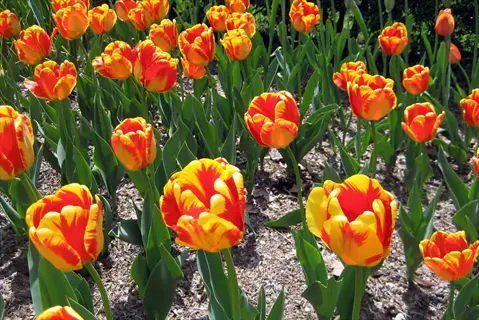
- Bloom Period: Mid to late spring, producing large cup-shaped flowers on sturdy stems reaching 20 to 24 inches (51 to 61 centimeters) tall.
- Perennializing: Among the most reliable tulips for returning year after year, often blooming strongly for 3 to 4 seasons or longer.
- Best For: Gardeners who want bold color and dependable performance without replanting every fall season.
- Popular Cultivars: Golden Apeldoorn offers bright yellow blooms while Ad Rem features red petals edged in golden yellow.
- Growing Needs: Requires full sun of 8 to 10 hours daily and well-drained soil to perennialize successfully in zones 3 through 8.
- Design Use: Plant in clusters of 10 to 25 bulbs for dramatic mass plantings in borders, beds, and along garden pathways.
Species Tulips
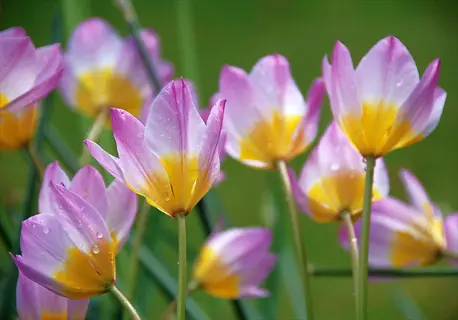
- Bloom Period: Early spring, among the first tulips to flower, with compact blooms on short stems of 4 to 6 inches (10 to 15 centimeters).
- Perennializing: The best tulips for naturalizing, returning and multiplying for many years when left undisturbed in the ground.
- Best For: Rock gardens, alpine beds, and naturalized areas where low-growing, self-sustaining flowers are preferred.
- Popular Cultivars: Tarda produces star-shaped white and yellow flowers while Linifolia offers bright scarlet red blooms.
- Growing Needs: Tolerates leaner soil than hybrid tulips and prefers excellent drainage with full sun exposure throughout the day.
- Design Use: Scatter in drifts of 25 to 50 bulbs through rock gardens or along the front edge of perennial borders.
Parrot Tulips
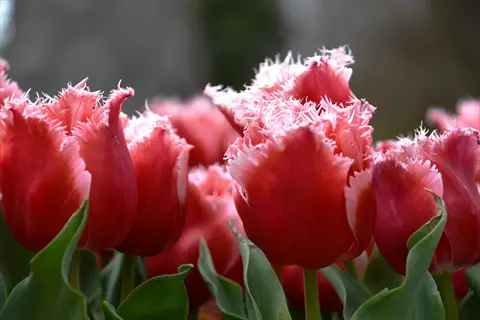
- Bloom Period: Late spring, producing large ruffled and fringed petals with dramatic color streaks on stems of 16 to 20 inches (41 to 51 centimeters).
- Appearance: Known for their feather-like petal edges and bold color combinations including deep purple, fiery orange, and vivid green streaks.
- Best For: Cut flower gardens and statement plantings where dramatic, artistic blooms create a focal point in the landscape.
- Popular Cultivars: Black Parrot features deep purple-black ruffled petals while Rococo displays vivid red with green flame markings.
- Growing Needs: Requires sheltered locations because the large flower heads can topple in strong winds; full sun and rich soil are ideal.
- Design Use: Plant near seating areas or entryways where their intricate petal details can be appreciated up close by visitors.
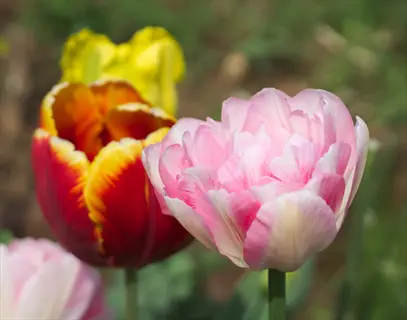
Double Peony Tulips
- Bloom Period: Mid to late spring, producing lush multi-petaled flowers resembling peonies on stems of 14 to 18 inches (36 to 46 centimeters).
- Appearance: Full, rounded blooms with multiple layers of petals that create a peony-like effect in soft pastels or vibrant hues.
- Best For: Cottage garden styles and romantic garden designs where soft, layered blooms complement other spring perennials.
- Popular Cultivars: Angelique produces soft pink double blooms while Mount Tacoma offers pure white multi-petaled flowers.
- Growing Needs: Plant in well-drained soil with full sun; the heavy flower heads benefit from protection against strong spring winds.
- Design Use: Combine with late-blooming daffodils and forget-me-nots for a layered cottage garden effect in mixed borders.
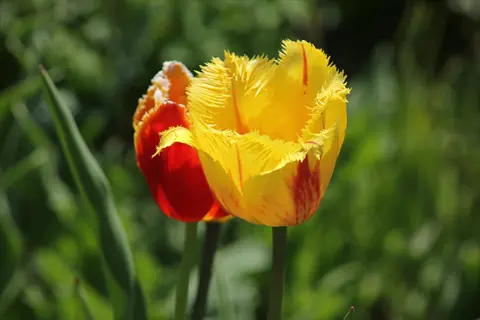
Fringed Tulips
- Bloom Period: Mid to late spring, with crystal-like fringed petal edges on stems reaching 18 to 22 inches (46 to 56 centimeters) tall.
- Appearance: Petal edges feature delicate, needle-like fringes that catch light and create a sparkling texture unlike any other tulip type.
- Best For: Adding unique texture to spring gardens, flower arrangements, and mixed tulip plantings for visual contrast.
- Popular Cultivars: Grand Perfection displays yellow petals streaked with red fringes while Honeymoon offers pure white fringed blooms.
- Growing Needs: Standard tulip requirements of full sun, well-drained soil, and fall planting at a depth of 6 to 8 inches (15 to 20 centimeters).
- Design Use: Pair with smooth-petaled tulip varieties to highlight the textural contrast of the fringed edges in garden beds.
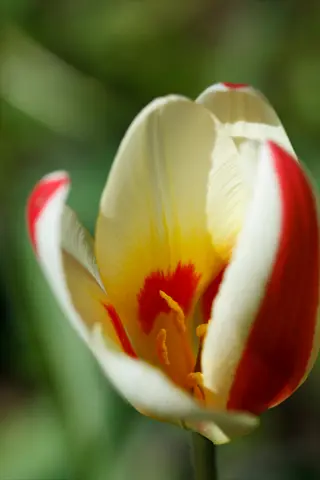
Kaufmanniana Tulips
- Bloom Period: Very early spring, among the earliest tulips to bloom, with water lily-shaped flowers on short 6 to 10 inch (15 to 25 centimeter) stems.
- Appearance: Flowers open wide and flat in sunshine, resembling water lilies, often with contrasting interior and exterior petal colors.
- Best For: Early spring color in rock gardens, front borders, and containers where their compact size fits naturally into small spaces.
- Popular Cultivars: Heart's Delight features pink and white bicolor petals while Giuseppe Verdi offers yellow blooms streaked with red.
- Growing Needs: Excellent drainage is essential; these tulips naturalize well and tolerate partial shade better than many taller varieties.
- Design Use: Plant along walkway edges or in raised beds where their early blooms signal the start of the spring gardening season.
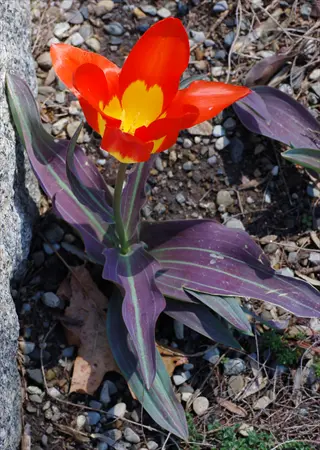
Greigii Tulips
- Bloom Period: Early to mid spring, with large flowers on stems of 8 to 14 inches (20 to 36 centimeters), featuring distinctive mottled foliage.
- Appearance: Broad leaves with distinctive burgundy or purple mottling provide ornamental interest even before and after the flowers bloom.
- Best For: Front-of-border plantings and containers where both the decorative foliage and bright blooms add multi-season interest.
- Popular Cultivars: Red Riding Hood offers scarlet red flowers with striking mottled leaves while Toronto produces multi-headed coral blooms.
- Growing Needs: Performs well in zones 3 through 8 with full sun and good drainage; tends to perennialize better than most hybrid classes.
- Design Use: Group with other early-blooming bulbs like crocuses and grape hyacinths for a layered early spring display in borders.
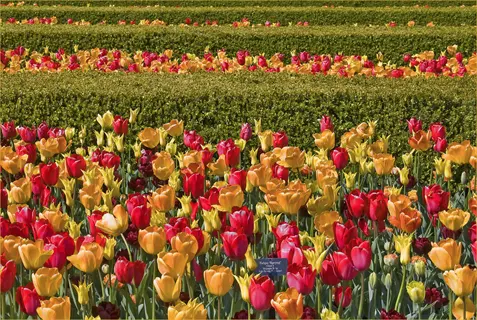
Triumph Tulips
- Bloom Period: Mid spring, bridging the gap between early and late varieties on sturdy stems of 16 to 20 inches (41 to 51 centimeters).
- Appearance: Classic egg-shaped blooms in nearly every color available, making them the most versatile tulip class for garden design.
- Best For: Mixed tulip plantings, formal beds, and cut flower gardens where a wide color palette and consistent form are desired.
- Popular Cultivars: Negrita features rich purple blooms while Orange Juice offers warm tangerine-colored flowers on strong stems.
- Growing Needs: Plant at standard depth of 6 to 8 inches (15 to 20 centimeters) in fall; strong stems resist wind better than many other classes.
- Design Use: Use as the backbone of a tulip garden design, filling gaps between early species types and late-blooming parrot varieties.
Planting Tulip Bulbs
Planting tulip bulbs in fall gives them the cold period they need to bloom in spring. You want to get your bulbs in the ground about 6 to 8 weeks before your first hard frost. For most areas that means October is your target month for fall bulb planting.
If you miss that window, don't panic. The University of Minnesota notes that tulips are the one bulb you can plant as late as you can get them into the soil. I've planted bulbs in early December before the ground froze and still got blooms the next spring.
How deep to plant tulips depends on the bulb size. The basic rule is 2 to 3 times the bulb's width. For most large tulips that means a planting depth tulips of 6 to 8 inches. Small species types go in at 3 to 5 inches. Set your tulip bulb spacing at 4 to 6 inches apart for big types and 3 to 4 inches for small ones. Point the flat root end down and the pointed tip up.
Here's a trick most guides won't tell you about. Cornell ran a 3 year study on what they call top planting. You till the soil just 2 inches deep, set the bulbs on the surface, then cover them with 2 to 4 inches of mulch. Their Ad Rem and Negrita bulbs grew more flowers with this method than with deep planting.
That top planting method saved me hours of digging when I planted 200 bulbs across my front yard last fall. It's also great if you have back problems or work with hard clay soil that fights every shovel push. The table below shows you the exact numbers for both large and small tulip types.
Soil and Sun Requirements
Think of your soil as a house foundation. Get it wrong and everything above it falls apart. For tulips, drainage for tulip bulbs matters more than any other factor. Bulbs that sit in wet soil will rot before they ever send up a shoot.
Full sun tulips need at least 5 to 6 hours of direct light each day to bloom well. If you want your bulbs to come back year after year, push that to 8 to 10 hours. I lost a whole bed of Darwin hybrids one year because a new tree blocked too much afternoon sun. Your spot choice shapes your results more than any fertilizer can.
Test your soil pH tulips before you plant. Tulips do best in a range of 6.0 to 7.0 on the pH scale. The University of Minnesota says you should test your soil every 3 to 5 years. You can grab a home test kit or send samples to your local extension office for a few dollars.
If you have clay soil tulips struggle in, mix in 2 to 3 inches of coarse sand and aged compost before planting. This opens up the soil so water drains through. Sandy soil drains too fast, so add extra compost to hold some moisture. You can also amend soil for tulips by building raised beds filled with loam, compost, and perlite. The checklist below gives you every step to get your well-drained soil tulips need.
Test and Adjust Soil pH
- Target Range: Tulip bulbs perform best in soil with a pH between 6.0 and 7.0, which is slightly acidic to neutral on the scale.
- Testing Method: Use a home soil test kit or send samples to your local extension office every 3 to 5 years for accurate results.
- Adjusting Low pH: Add garden lime at the rate recommended by your soil test to raise pH in overly acidic soils gradually.
Improve Drainage
- Why It Matters: Tulip bulbs rot quickly in waterlogged soil, making drainage the single most important factor for successful growing.
- Clay Soil Fix: Mix 2 to 3 inches (5 to 8 centimeters) of coarse sand and aged compost into heavy clay soil to improve water movement.
- Raised Beds: Consider raised beds in areas with persistent drainage issues, filling them with a mix of loam, compost, and perlite.
Add Organic Matter
- Compost Application: Work 2 to 4 inches (5 to 10 centimeters) of aged compost into the top 12 inches (30 centimeters) of soil before planting.
- Avoid Fresh Manure: Never use fresh manure near tulip bulbs because it introduces excess nitrogen and can promote fungal rot diseases.
- Mulch After Planting: Apply 2 to 3 inches (5 to 8 centimeters) of leaf mulch, wood chips, or clean straw over the planted area.
Apply the Right Fertilizer
- At Planting: Apply 2 to 3 pounds (0.9 to 1.4 kilograms) of 5-10-5 fertilizer per 100 square feet (9.3 square meters) of bed area.
- Bone Meal: Add bone meal at 3 to 4 pounds (1.4 to 1.8 kilograms) per 100 square feet (9.3 square meters) for phosphorus.
- After Bloom: Fertilize lightly again after flowering ends to help bulbs store energy for the following year's growth cycle.
Tulip Care After Blooming
What you do after your tulips bloom matters just as much as how you planted them. Tulip care after blooming starts the moment the last petal drops. Your first job is deadheading tulips by snapping off the spent flower head. This stops the plant from wasting energy on making seeds.
Here's the part that trips up most new growers. You must leave the foliage alone after you cut the flower. Those green leaves are your bulb's food factory. They soak up sunlight and turn it into energy that flows down into the bulb for next year's bloom. Tulip foliage care means letting those leaves stay put until they turn yellow on their own. Iowa State Extension says that won't happen until late June or early July in most areas.
I know the messy leaves bother you. In my experience they bothered me too. Then I started planting low annuals like petunias around my tulips to hide the fading leaves. That simple trick keeps your garden looking clean while your bulbs store up all the food they need. Never braid, fold, or tie up the leaves because that cuts off their sunlight.
Give your bulbs a light dose of fertilizing tulips food right after the flowers fade. A balanced fertilizer helps them pack on reserves for the next season. If you're mulching tulip bulbs, keep that layer at 2 to 3 inches of leaf mulch or straw. Pull back the mulch in early spring before shoots emerge so you don't get pale, weak stems.
After 3 to 4 years your tulip clumps may get crowded and bloom less. That's when you dig them up in early summer, separate the bulbs, and replant them with proper spacing. Species types and Darwin hybrids are great for naturalizing tulips because they spread at a gentle rate. Check your beds each year and dig up any clump that starts looking thin on flowers.
Pests and Common Problems
You can nail every planting step and still lose your tulips to pests and disease. I checked my beds for common tulip problems each season. The biggest threat? Squirrels eating tulip bulbs caused more damage than any fungus or bad weather.
The good news is that most tulip bulb pests and diseases are easy to prevent with a few smart steps. Below you'll find the 4 biggest threats along with clear signs to watch for and proven fixes from university research. Catching issues early saves your entire planting.
Squirrels and Chipmunks
- Signs: Freshly dug holes near planted bulbs, bulb fragments scattered on the soil surface, and missing bulbs entirely from planting beds.
- Prevention: Lay chicken wire flat over the planted area immediately after planting, securing it with U-shaped landscape staples at the edges.
- Alternative: Interplant with daffodil and allium bulbs, which are toxic to rodents and create a natural deterrent barrier around tulip bulbs.
Botrytis Tulip Fire
- Signs: Brown spots on leaves and petals, distorted growth, fuzzy gray mold on bulbs or shoots, and premature wilting of otherwise healthy plants.
- Prevention: Rotate tulip planting locations every 3 years, remove all infected plant material immediately, and avoid overhead watering on foliage.
- Soil Health: Ensure excellent drainage and air circulation between plants by spacing bulbs at recommended distances of 4 to 6 inches (10 to 15 centimeters).
Bulb Rot and Fungal Disease
- Signs: Soft, mushy bulbs when dug up, foul smell from the planting area, and failure of planted bulbs to emerge in spring despite proper planting.
- Prevention: Never plant in waterlogged soil, avoid using fresh manure, and select firm plump bulbs with intact root bases at purchase time.
- Recovery: Remove all affected bulbs and surrounding soil, improve drainage with sand and compost amendments, and wait one season before replanting.
Deer and Rabbit Damage
- Signs: Clean-cut bite marks on emerging shoots and flower buds, stripped foliage, and trampled planting beds around tulip growing areas.
- Prevention: Apply commercial deer repellent sprays every 2 to 4 weeks during the growing season, especially after rain washes off the product.
- Physical Barriers: Use garden netting or temporary fencing at least 30 inches (76 centimeters) tall around tulip beds during the spring bloom period.
Deer eating tulips was my second biggest headache after squirrels. A 30 inch fence around my front beds solved that problem fast. For Botrytis tulip fire and bulb rot, good drainage and a 3 year soil rotation are your best long term defenses.
Container and Indoor Forcing
You don't need a big yard to grow great tulips. Planting tulips in pots works on balconies, patios, and front steps. I grew my first tulip bulbs in containers on a small apartment balcony and got blooms just as bright as any garden bed. Pack 5 to 7 bulbs per pot for a full display.
For indoor tulip growing you need to force the bulbs. This means giving them a fake winter so they think spring has arrived. Pre-chilling tulip bulbs takes 12 to 15 weeks at 35 to 48°F. Your fridge, an unheated garage, or a cold frame all work fine. After that cold period, move the pots to a bright spot at 60 to 65°F and blooms will show up in 2 to 4 weeks.
Here's a tip I wish someone had told me sooner. Stagger your forcing tulip bulbs indoors by planting a new pot every 2 weeks during fall. This gives you fresh blooms rolling in all winter long instead of one big burst. The timeline below shows each stage so you know what to expect.
5 Common Myths
Tulip bulbs must be planted exactly 8 inches deep or they will not bloom properly in the spring season.
The ideal depth varies by bulb size. The reliable rule is 2 to 3 times the bulb diameter, which ranges from 3 to 8 inches depending on variety.
All tulips are annual flowers that need to be replaced every single year after they finish blooming.
Darwin hybrid and species tulips perennialize and return for 3 to 4 years or longer when given full sun of 8 to 10 hours daily and proper care.
Bone meal is the only fertilizer you ever need to grow healthy tulip bulbs in your garden beds.
A balanced 5-10-5 fertilizer at 2 to 3 pounds per 100 square feet (0.9 to 1.4 kilograms per 9.3 square meters) is recommended alongside bone meal.
Cutting tulip foliage immediately after the flowers fade helps the bulbs store more energy for next year.
Foliage must stay attached until it yellows naturally in late June or early July so the leaves can photosynthesize and feed the bulb.
Tulip bulbs cannot be grown successfully in containers and pots because they need deep garden soil.
Tulips thrive in containers when planted in well-drained compost, given adequate cold exposure, and spaced with 5 to 7 bulbs per pot.
Conclusion
Growing tulip bulbs comes down to a few key choices you make at the right times. Plant your bulbs in fall about 6 to 8 weeks before frost, pick a spot with full sun and good drainage, and leave the foliage alone after blooms fade. Those 3 steps carry most of your tulip growing success.
I keep going back to Darwin hybrids and species tulips because they return strong for years without fuss. If you want to save time on planting tulips, try Cornell's top planting method with 2 to 4 inches of mulch. It's the best shortcut I've found in over a decade of bulb planting guide testing.
Your plan for the year is simple. Order bulbs in late summer, plant them in October, and protect the beds from squirrels with chicken wire. Come spring your spring flowers will reward all that prep work. After they bloom, feed the bulbs and let the leaves do their job until summer.
Whether you're planting your first 10 tulip bulbs or filling an entire yard, the methods in this bulb planting guide work the same. With over 3,000 varieties to pick from, you have plenty of room to experiment and find your favorites. Get your bulbs in the ground this fall and enjoy the show next spring.
External Sources
Frequently Asked Questions
What is the best month to plant tulip bulbs?
October is generally the best month to plant tulip bulbs, ideally 6 to 8 weeks before the first hard frost in your area.
What are tulip bulbs?
Tulip bulbs are tunicate bulbs that store nutrients underground and produce colorful spring flowers, originating from Central Asia.
What flower was once used as money?
Tulips were once valued as currency during the Dutch Tulipmania of the 1630s, when single bulbs sold for more than houses.
Do tulip bulbs regrow?
Yes, tulip bulbs can regrow, though most modern cultivars bloom well for only 3 to 4 years before declining.
Will tulip bulbs grow every year?
Darwin hybrid and species tulips are the most likely to grow every year, while many modern cultivars decline after 3 to 4 seasons.
Are tulips better in pots or ground?
Both work well, but ground planting gives bulbs natural cold exposure while pots offer flexibility and better pest protection.
How long do tulips take to grow?
Tulip bulbs planted in fall take about 5 to 6 months to bloom in spring, with forced indoor bulbs blooming in 14 to 19 weeks.
What does 🌷 mean in texting?
The tulip emoji is commonly used to express beauty, spring, appreciation, or romantic affection in text messages.
Can I plant tulips in pots in October?
Yes, October is an excellent time to plant tulips in pots, giving bulbs the cold period they need before spring blooming.
What does the Bible say about tulips?
The Bible does not mention tulips directly, though some scholars connect references to lilies and flowers with tulip-like blooms.