Ornamental · Asteraceae
Oxeye Daisy
Leucanthemum vulgare
Give it sun and lean, well-drained soil and the oxeye daisy will bloom for months, then happily keep spreading on its own.
Full sun
Every 7–14 days
USDA 3–8
1–3 ft · 0.3–0.9 m
Overview
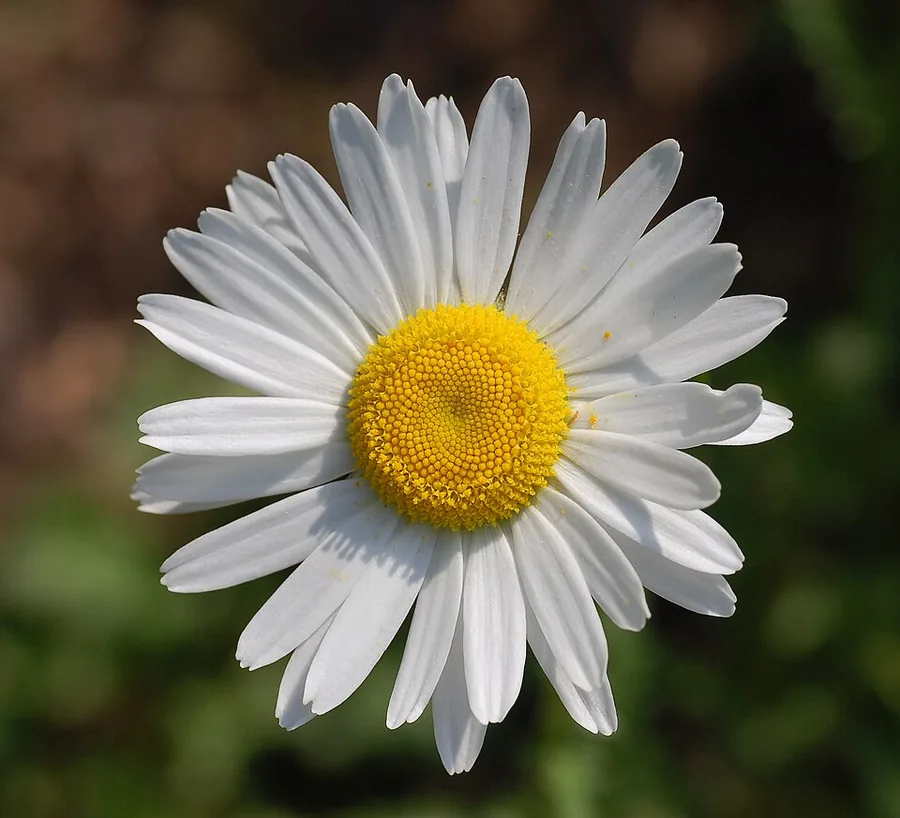
You could hardly pick a more familiar flower to start with than the oxeye daisy, the classic white bloom of summer roadsides and meadows, its white rays circling a bright yellow eye. It is part of the daisy family and was brought over from Europe and Asia long ago, and it has made itself at home across cool temperate regions ever since. Wonderfully tough and forgiving, it shrugs off poor soil and cold that would defeat fussier perennials, so you can relax as you learn its ways.
It ranks among the easiest of all plants to grow, and that very ease is the one thing to watch. Given free rein, it travels by both creeping rhizomes and plentiful seed, and a single plant can fill a patch of ground in just a season or two. Across much of the western US and in states like Minnesota it counts as an invasive or noxious weed, so a quick check of your local rules before planting is a kind thing to do for your neighbors.
Set in a spot where you can keep an eye on it, this daisy more than earns its place with months of bloom and almost no fuss from you. Offer it full sun and ground that drains freely, snip off the faded flowers to coax out more, and simply notice where it starts to wander. If spread worries you at all, the sterile cultivar is the reassuring choice.
Care
The short version: give it full sun and average, well-drained soil that leans on the dry side, and you are most of the way there. Water only while it is finding its feet, skip the fertilizer in decent ground, and deadhead through the season to keep the flowers coming.
Light
Settle it into full sun for the most flowers and the strongest, most upright stems, and you will see the difference. It happily takes a little afternoon shade, but where shade grows too deep the plants stretch, flop, and give you fewer blooms.
Water
Once its roots have taken hold, the oxeye daisy is delightfully drought tolerant and likes its soil on the dry to medium side. Water a new plant every 7 to 14 days while it settles in, then mostly hand it over to the weather, since soggy ground is what invites rot.
Soil
Average, well-drained soil suits it beautifully, and it cheerfully copes with poor, lean ground that would stop other perennials in their tracks. A slightly acidic to neutral pH of 6.5 to 7.0 is its happy place, though good drainage matters far more than hitting that number exactly.
Temperature
This is a wonderfully cold-hardy perennial that takes a range from about -40°F to 90°F (-40°C to 32°C) without complaint. The deep winter chill of zones 3 to 8 does not trouble it in the least, and it faithfully returns from the base each spring.
Humidity
Ordinary outdoor humidity is nothing to worry about, so there is no particular level to chase. What really counts here is good air movement, because still, damp air lingering around crowded clumps is what brings on leaf spot.
Feeding
In average soil the oxeye daisy asks for no feeding at all, and truthfully, rich ground only makes it floppy and even keener to spread. If your soil is genuinely poor, one light, balanced feed during the growing season is all it ever needs.
Pruning
Deadhead the spent flowers through the season to draw out fresh bloom and, just as helpfully, to rein in the heavy self-seeding. Once flowering winds down, cut the stems back to the low basal leaves to leave the clump neat and tidy.
Size & spacing
Plants reach 1 to 3 feet (30 to 91 cm) tall with a spread of 12 to 24 inches (30 to 61 cm), so give each one a little elbow room. Crowded clumps trap damp air and open the door to leaf spot, and a bit of space keeps everything healthier.
When to plant
The oxeye daisy is hardy from zones 3 to 8 and takes hard cold completely in stride, so there is no need to fret over winter. Start seed indoors 6 to 8 weeks before your last frost, set the young plants out once spring soil has warmed, and you will be rewarded with white daisies from May through August.
Northern hemisphere
Southern hemisphere
Typical months for a temperate climate: start earlier in warm zones, later where spring frosts linger.
- Sow: 6 to 8 weeks before last spring frost
- Plant: After last spring frost once soil has warmed
- Harvest: Blooms May through August
Hardiness
USDA hardiness zones: 3–8
Temperature: down to -40°C
Troubleshooting
This is a forgiving plant, so trouble is uncommon and nearly always comes back to soil that stays too wet or clumps that grow too crowded. Most of what turns up is a fungus or a handful of sap-feeding insects, and none of it is cause for alarm. Match what you see to the notes below and step in early, while a little help still goes a long way.
The whole plant is sagging and going yellow while growth stalls
If a plant wilts all over, yellows, and simply stops growing, the likely culprit is verticillium wilt, a fungus in the soil that plugs the stem from within and creeps up from the bottom leaves. Sadly there is no saving a plant once it sets in, so lift and destroy the ones that are affected and try not to feel bad about it. Better drainage and skipping susceptible species in that spot will help you avoid a repeat.
Fix:
- Remove and destroy affected plants
- Avoid replanting susceptible species in the same soil
- Improve drainage
The plant topples over with soft rot down at the base
Mushy, rotting stems right where they meet the ground usually mean stem rot or southern blight, troubles that settle in when the soil is warm, wet, and slow to drain. Lift and toss the affected plants before the rot has a chance to travel. Then set things right by improving drainage and easing the mulch back from the crown so the base of the plant can stay comfortably dry.
Fix:
- Remove and discard infected plants
- Improve drainage and reduce moisture at crown
Little brown or black spots dotting the leaves
Those dark specks are fungal leaf spot, and they tend to show up when the air is humid and the clump has grown too dense, then spread after a rainy stretch. Don't worry, it is an easy fix: pick off the spotted leaves and give the plant some breathing room by thinning or dividing so air can flow through. Watering low at the base instead of over the leaves keeps things drier and calmer.
Fix:
- Remove affected foliage
- Improve air circulation by thinning or dividing clumps
- Avoid overhead watering
Crumpled new growth with tiny bugs bunched on the stems and buds
When fresh shoots come in puckered and you spot little insects gathered on the stems, you are looking at sap feeders such as aphids, mites, or leaf miners, and the squiggly trails on the leaves are their calling card. The good news is that a firm spray of water usually washes most of them away. If they keep returning, a little insecticidal soap does the trick, and the ladybugs and other helpers in your garden will handle the stragglers.
Fix:
- Spray off with water
- Apply insecticidal soap if persistent
Toxicity
Think of the oxeye daisy as a mild irritant rather than any real poison, which should set your mind at ease. Its leaves and flowers carry sesquiterpene lactones that can leave a pet with a sour stomach and make sensitive skin itch, yet a stray nibble seldom causes any true harm. Just keep pets from grazing on it, and slip on gloves if your own skin tends to react.
Toxic to
Cats · Dogs · Horses · Rabbits · Livestock · Birds · People
Cats Mild
Should your cat nibble a leaf or flower, you might see some drooling, a bit of vomiting, or loose stools, and the sap can leave its skin itchy. Take heart, because the upset stays mild and clears up on its own once the plant is safely out of paw's reach.
Dogs Mild
Dogs go through much the same thing, with drooling, a queasy stomach, and now and then a slightly wobbly walk after a hearty mouthful. Nearly always it passes without trouble, though it never hurts to phone the vet if your dog swallowed a large amount.
Horses Mild
The sesquiterpene lactones tucked in the foliage can hand a horse an unsettled stomach and some mild, colic-like discomfort. Happily, horses usually steer clear of the bitter plant on their own unless there is little else around to graze.
Rabbits Caution
It is kindest to keep this off your rabbit's plate, since the daisy compounds can upset that delicate little digestive system. One accidental nibble seldom does any real harm, but there is no need to offer it deliberately.
Livestock Caution
Cattle, sheep, and goats tend to browse right around the bitter leaves, so actual poisoning is rare and nothing to lose sleep over. The real nuisance is the way the plant edges out better pasture, more than the gentle upset it can bring on.
Birds Caution
There is not much sign that birds come to serious harm from it, yet those same irritant compounds make it sensible to keep pet birds from pecking at the leaves and flowers just to be safe.
People Caution
Handling the leaves and flowers can leave tender skin a little red and itchy with a contact rash, so gloves are a friendly precaution. The plant is not meant for eating, so simply keep it out of reach of small children who might be tempted to taste it.
Contact with leaves and flowers can cause mild contact dermatitis in sensitive individuals.
Helpline numbers

United States
ASPCA Animal Poison Control: (888) 426-4435 (fee applies)
Poison Control: (800) 222-1222



Canada
Poison Centres: 1-844-764-7669
Varieties
Only a couple of forms find their way into gardens, and choosing between them really comes down to a single, simple question: how much do you want it to spread?
May Queen ('Maikonigin')
This neat, upright selection rises to around 2 feet (60 cm) and opens big single white daisies, and because it is reported to be sterile and raised only from divisions, it kindly stays right where you plant it.
Leucanthemum vulgare (species)
The wild original bears cheerful 1.5 to 2 inch (4 to 5 cm) white-rayed flowers around a golden center, though it does travel fast by way of both rhizomes and seed.
How to propagate
The oxeye daisy multiplies almost too willingly, from both seed and division, which is a lovely gift in a wild corner and a bit of a handful anywhere you would rather it hold still.
SeedEasy
Sow in spring after frost or start indoors 6 to 8 weeks before last frost · Germinates in 1 to 3 weeks; blooms by second season
Seed is the friendliest way in, and it could hardly be simpler: sow outdoors once the frost has passed, or get a head start indoors 6 to 8 weeks early. The seeds come up in 1 to 3 weeks and reward you with flowers in their second season. Do keep in mind that it self-seeds with real enthusiasm and its seed can linger alive in the soil for decades, which is much of why it turns invasive.
DivisionEasy
Spring or early fall, every 2 to 3 years · Reestablishes within one season
Every 2 to 3 years, lift and gently pull the clumps apart in spring or early fall to keep them fresh and blooming, and each division settles happily back in within one season. Bear in mind that even a small piece of rhizome left behind will sprout again, so gather up the stragglers if you would like to keep the plant tidy and contained.
Myths
The oxeye daisy is just another name for the garden Shasta daisy and is fine to plant wherever you like.
These are truly two different plants. The oxeye daisy travels by rhizomes and seed and is named an invasive or noxious weed in a good many regions, while the well-behaved Shasta daisy forms a clump and stays put. It is worth telling them apart before you dig a hole, and doing so will save you trouble later.
Daisies are perfectly safe and cannot harm pets at all.
Plants in the daisy family hold sesquiterpene lactones and pyrethrins that can bring on mild vomiting, drooling, loose stools, and skin irritation in cats and dogs. The reaction usually stays gentle and passes, but it is genuine, so it pays to keep your pets from grazing.