Shrub · Solanaceae
Goji Berry
Lycium barbarum
Give it full sun, lean alkaline soil, and room to sprawl, and this forgiving nightshade will thank you with superfood berries.
Full sun
Every 7–14 days
USDA 4–7
3–12 ft · 0.9–3.7 m
Overview
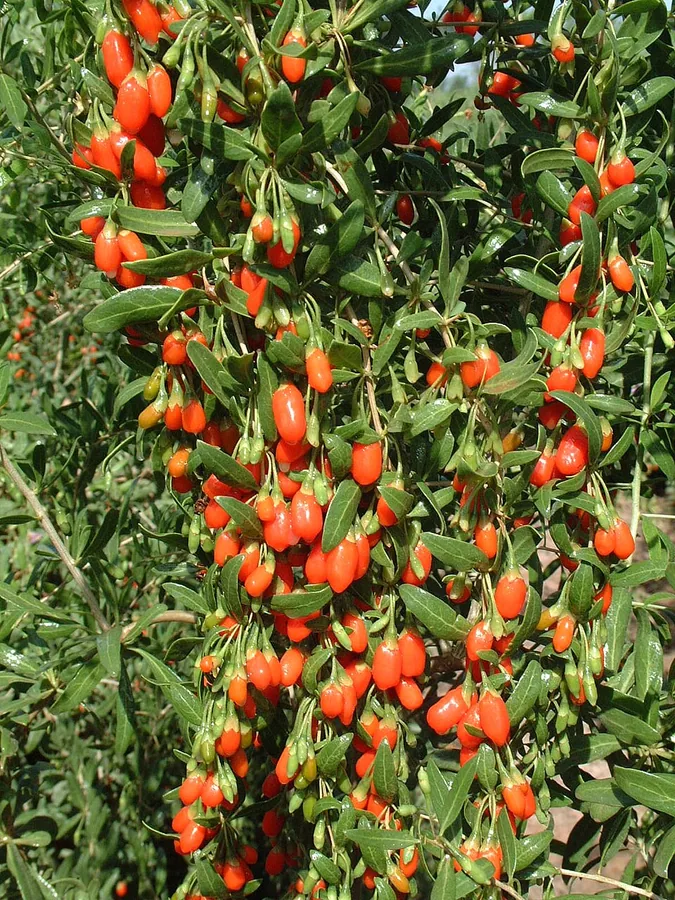
Goji berry is a hardy little nightshade shrub grown for those bright red superfood berries you have seen on health-food shelves, and it is far kinder to a beginner than its dainty reputation suggests. It comes from China, where people have grown it for centuries, and it is genuinely tough. The plant shrugs off cold as deep as -20°F (-29°C) and takes summer heat, drought, and thin ground in stride, so early mistakes are easy to recover from.
What you get in return is a sprawling, thorny character with plenty of energy. Long arching canes stretch 3 to 12 feet (91 cm to 3.7 m) and love to lean, root, and sucker wherever they touch the soil. Purple flowers open in late spring, and the berries follow about 35 days later, carrying you from midsummer into late fall.
This is an easy plant to grow and only a slightly trickier one to keep in bounds, so please do not feel daunted. It fruits with almost no fuss once it settles in, though it suckers freely and self-seeds, which is why it has turned weedy in a few regions. Simply pick a spot where its spread won't become a problem, and it will reward you for years.
Care
The short version: give it full sun, lean and slightly alkaline well-drained soil, about an inch of water a week, and one friendly prune a year to keep the thorny, suckering canes tidy.
Light
Goji loves full sun, and the more it gets the happier it is, since bright, hot spots give you the best fruit and the fewest disease worries. It will put up with a little partial shade, but light shade trades away some berries and lets mildew creep onto crowded leaves.
Water
Offer about 1 inch of water a week and let the top half of the soil dry out between drinks, which is an easy rhythm to fall into. New transplants appreciate steady watering while they settle, and once established the plant handles drought with ease. The one thing to avoid is waterlogged ground or big swings from soaked to bone dry.
Soil
Plant in well-drained light loam, though goji is forgiving and takes a wide range of ground. It leans toward the alkaline side, a pH of 6.8 to 8.2, which is the reverse of most berries and the main reason it can struggle in acidic soil.
Temperature
This is a genuinely tough shrub, comfortable anywhere from -20°F to 100°F (-29°C to 38°C). It rides out hard winters and fierce summers alike, and that same resilience is part of why it takes to the ground so readily once planted.
Humidity
Goji is happiest on the dry side, around 20% to 50% humidity, just like its hot, arid homeland. Damp, still air is what invites powdery mildew, so good airflow will do far more for it than any effort to add moisture.
Feeding
Feed with a balanced 16-16-16 fertilizer through spring and summer, timed to budbreak, flowering, and fruit ripening. Roughly 4 to 5 tablespoons per 10 square feet a year, split into three feedings, is all this easygoing plant asks of you.
Pruning
Let the plant simply be for its first year and enjoy watching it grow. After that, prune during dormancy to take out weak or damaged branches and shorten the laterals 6 to 18 inches, then pinch the terminals back 2 to 3 inches in early summer to encourage branching and keep those thorny, sprawling canes in gentle order.
Repotting
Goji is really a ground plant rather than a container one, so repotting rarely comes up at all. If you do keep it in a pot, move it up a size when you notice roots circling, water running straight through, or top growth that has stalled.
Size & spacing
Expect a big, generous, arching shrub from 3 to 12 feet (91 cm to 3.7 m) tall with an even broader sprawl of 4 to 8 feet (120 to 244 cm). Give it that much room right from the start, because the canes lean, sucker, and fill space quickly.
When to plant
Goji is a cold-hardy perennial shrub for zones 4 to 7, so it will settle in comfortably for the long haul. Start seeds indoors in late winter, or set plants out after the last spring frost once the soil has warmed, and then simply enjoy the purple flowers in late spring and the ripe berries from midsummer into late fall.
Northern hemisphere
Southern hemisphere
Typical months for a temperate climate: start earlier in warm zones, later where spring frosts linger.
- Sow: 8 to 10 weeks before last frost (seed); or propagate from cuttings or suckers
- Plant: after last spring frost once soil has warmed
- Harvest: purple flowers in late spring; berries ripen mid-summer to late fall, about 35 days after full bloom
Hardiness
USDA hardiness zones: 4–7
Temperature: down to -34°C
Troubleshooting
Goji is a rugged, forgiving plant with very few real troubles, and nearly everything that does turn up shows on the leaves, where it is easy to spot. Get to know the small handful of pests and the one common disease below, and you can step in early with confidence. Match what you see, then act calmly before it spreads through the bush.
Warty bumps and puckered leaves that curl at the edges
Take heart, because this one looks worse than it is. The culprit is the goji gall mite, so tiny you will never spot it, tucked inside the leaf tissue where it raises green to yellow warty galls and leaves the foliage thick and misshapen. Snip off the worst-hit growth and burn it, then treat the buds with horticultural oil or sulfur as they open in spring, and your shrub will bounce right back.
Fix:
- Prune out and destroy heavily galled growth
- Apply horticultural oil or sulfur per label as buds break
- Remove and dispose of fallen infested leaves
A soft white dust settling over leaves and shoots
When cool, damp weather lingers, powdery mildew can drift in and leave a white film that wipes away under your finger, though it rarely does lasting harm. Your goji throws it off once hot, dry sun returns, so the real cure is simply better airflow. Thin any crowded stems, water down at the base, and you will only need a labeled fungicide if it truly starts to spread.
Fix:
- Improve air circulation by thinning crowded stems
- Avoid overhead watering
- Apply a labeled fungicide or sulfur if severe
Sticky, curling shoots dotted with little insects
Sticky leaves and curled tips almost always point to aphids gathering on the tender new shoots, and spider mites or potato leafhoppers can leave a very similar mess. Turn a few leaves over and look for soft-bodied bugs, sticky honeydew, or fine webbing so you know what you are up against. A firm blast of water knocks most of them off, insecticidal soap tidies up the rest, and the ladybugs that arrive will happily handle the stragglers.
Fix:
- Dislodge with a strong jet of water
- Apply insecticidal soap or horticultural oil to affected growth
- Encourage natural predators such as ladybugs
Toxicity
You can relax about the ripe berries, which are a famous superfood, safe to eat fresh, cooked, or dried. The one thing to keep in mind is the foliage: as a nightshade, the leaves and unripe parts carry trace alkaloids that make them a mild caution for cats, dogs, horses, and other animals that like to graze. Do watch the sharp thorns on the stems as well.
Toxic to
Cats · Dogs · Horses · Rabbits · Livestock · Birds
Safe for
People
Cats Mild
There is no need to worry about the ripe berries, which are harmless, but the leaves do hold trace nightshade alkaloids. Should a cat nibble the foliage, you might see a little drooling or a mild upset tummy, so it helps to gently keep them away from the plant.
Dogs Mild
A dog that gobbles a few fallen berries will be perfectly fine, though chewing the leaves or green stems can bring on some mild drooling or a touch of digestive upset. A little discouragement goes a long way here.
Horses Mild
Horses face only a small risk from the leaves, where the trace alkaloids might leave them with mild stomach discomfort if they browse the bush. Rest easy about the berries, which are no concern at all.
Rabbits Mild
Feel free to share ripe berries, but the leaves and unripe parts carry those same trace alkaloids and can unsettle a rabbit's delicate gut. It is kindest to treat the foliage as an occasional nibble at most.
Livestock Mild
Cattle, goats, and sheep can graze near goji without much bother, though a lot of munching on the leaves might bring on mild digestive upset from the nightshade alkaloids they hold.
Birds Mild
Birds happily eat the ripe fruit with no harm and even help scatter the seed around. Since the leaves carry trace alkaloids, the foliage is the only thing to keep a gentle eye on, never the berries.
People Ripe fruit safe
Ripe goji berries are a beloved superfood you can enjoy fresh, cooked, or dried with complete confidence. Just leave the leaves and unripe parts alone, since they hold trace alkaloids, and take care around the sharp thorns on the stems.
Stems carry sharp thorns that can scratch people and pets, and the leaves and unripe parts contain only trace solanaceous alkaloids, so discourage pets from grazing foliage.
Helpline numbers

United States
ASPCA Animal Poison Control: (888) 426-4435 (fee applies)
Poison Control: (800) 222-1222



Canada
Poison Centres: 1-844-764-7669
Varieties
Goji is sold under a handful of named cultivars, and choosing a known name is a lovely bit of insurance, since it buys you predictable fruit that seed-grown plants simply cannot promise. These are the ones you are most likely to meet.
Crimson Star (Ningxia #1)
A popular, well-loved choice that begins bearing 1 to 2 years after you plant it and reaches full production in 3 to 5 years.
Phoenix Tears
A generous selection that gardeners treasure for the heavy crop of fruit it gives.
Wolfberry Agrodevco
A named cultivar sold with home gardens and small plantings in mind.
How to propagate
Goji happily multiplies in several ways, from slow seed to free suckers, and the route you pick decides how soon you get to pick berries and whether the new plant comes true to its parent.
SeedEasy
Start indoors in late winter to spring · 2 years to first fruit, full production in 3 to 5 years
Goji sprouts happily from seed started indoors in late winter or spring, so this is a friendly way in, though the seedlings turn out a bit variable and you wait about 2 years for that first fruit and 3 to 5 years for a full crop. If you have your heart set on a known cultivar and dependable berries, it is worth starting with a named plant instead.
Stem cuttingsModerate
Softwood cuttings in early summer or hardwood cuttings during dormancy · Several weeks to root, fruiting within a couple of years
Take softwood cuttings in early summer or hardwood cuttings during dormancy, and give them several weeks to root before they fruit within a couple of years. Because cuttings come true to type, this is your best route for keeping a cultivar's lovely traits.
DivisionEasy
Dig and transplant suckers in dormancy · Establishes quickly once moved
After about 3 years a mature plant sends up suckers all on its own, and the simplest new plants come from lifting those rooted suckers during dormancy. Dig and move them then, and they settle in fast with almost no coaxing from you.
Myths
Goji berries must be poisonous because the plant is a nightshade.
You can put this fear aside, because the ripe berries are enjoyed around the world as a superfood, whether fresh, cooked, or dried. Only the leaves and unripe parts hold trace solanaceous alkaloids, and even those are a mild caution rather than any real danger. The fruit is safe to eat.
Goji needs rich, acidic soil to thrive.
Quite the opposite is true, since goji comes from slightly alkaline ground and feels happiest at a pH of 7 to 8. Acidic soil actually holds it back, so there is no need to reach for the soil acidifier you might use on blueberries.