Ornamental · Ranunculaceae
Delphinium
Delphinium elatum
Towering spires of true blue that ask for staking, steady moisture, and a watchful eye around children and pets.
Full sun
Every 2–4 days
USDA 3–7
3–7 ft · 0.9–2.1 m
Overview
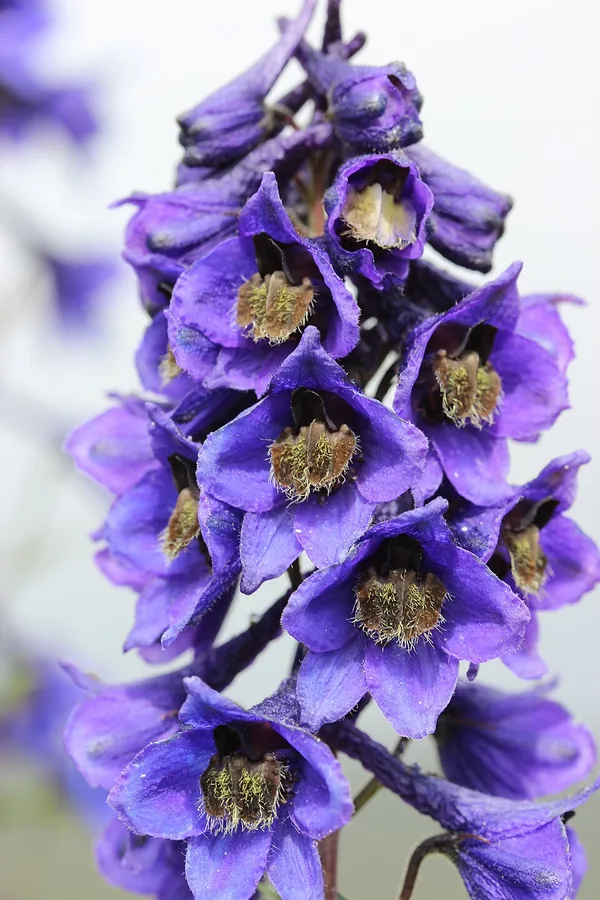
If you have ever wanted real height at the back of a border, a delphinium in bloom delivers it beautifully. The spikes can rise to 6 feet (180 cm) or more, carrying flowers in blue, purple, white, and pink that few other plants can offer. It is a member of the buttercup family and loves a cool summer, which is part of why it settles so happily into cottage and country plantings across the cooler zones.
Do not let its reputation scare you off. Yes, delphiniums are short-lived perennials that often last only 3 to 5 years, and the tall hollow stems can snap in wind or rain if you forget to stake them, but staking early is an easy habit to keep. Feed them well, give them rich, moist, well-drained ground and a cool root run, and they will pay you back with one of the loveliest shows of the early summer garden.
There is one thing to take seriously before planting, and it is worth saying plainly. Every part of a delphinium is poisonous, carrying the same diterpenoid alkaloids that make wild larkspur deadly to range cattle, with the young growth and seeds holding the most. Choose a spot where children, pets, and grazing animals simply cannot reach it, and you can enjoy it with an easy mind.
Care
The short version: give it full sun and cool, rich, evenly moist soil, set sturdy stakes early, and feed it a balanced fertilizer through the growing season.
Light
Give your delphiniums full sun and they will reward you with the sturdiest stems and the richest bloom, though a touch of afternoon shade is welcome where summers turn warm. Leave them in too much shade and they tend to stretch, flop, and pick up mildew more easily.
Water
Aim to keep the soil cool and evenly moist, never letting it dry out while the plant is growing hard. Water gently at the base every 2 to 4 days through warm spells, since both soggy ground and wet leaves can open the door to disease.
Soil
Settle them into fertile, well-drained ground that you have worked full of organic matter, so it holds moisture without turning soggy. Happily, delphiniums are relaxed about pH and take anything from 6.5 to 8.0, even leaning alkaline.
Temperature
These are wonderfully tough plants that come through winters as cold as -40°F (-40°C), yet they do struggle with real heat. Growth and flowering ease off once summers climb past the mid-80s, near 84°F (29°C), which is why they are happiest in cool-summer regions.
Humidity
Plain outdoor humidity is all they need, so there is no figure to worry over. What matters far more is good airflow, because still, muggy air around crowded plants is what invites powdery mildew and rot.
Feeding
Delphiniums are hungry growers that put on a lot of leaf and stem quickly. Offer a balanced fertilizer once a month through the growing season, and you will keep that lush foliage and those tall spikes well fueled.
Pruning
Get those hollow stems staked early, before wind and rain have a chance to fold them. Once flowers fade, snip the spent spikes back to the basal leaves to coax a second flush, then cut the whole plant back when the main bloom is finished.
Size & spacing
Expect plants to reach 3 to 7 feet (91 to 213 cm) tall in bloom, so leave each one 2 to 3 feet (61 to 91 cm) of breathing room. That bit of space keeps air moving and helps hold down disease on these mildew-prone plants.
When to plant
Delphiniums keep a cool-season schedule, and once you learn the rhythm it feels natural. Sow seed indoors in late winter, move young plants outside in spring after hard frost has gone, and the spires open from early to midsummer, often giving you a second showing in late summer when you trim the faded spikes.
Northern hemisphere
Southern hemisphere
Typical months for a temperate climate: start earlier in warm zones, later where spring frosts linger.
- Sow: Late winter to early spring, 8 to 10 weeks before last frost
- Plant: Spring after danger of hard frost passes
- Harvest: Early to midsummer, sometimes reblooming in late summer if deadheaded
Hardiness
USDA hardiness zones: 3–7
Temperature: down to -40°C
Troubleshooting
Most of what goes wrong with delphiniums comes down to soggy soil, weak stems, or pests gathering on the tender new shoots, and the good news is that early signs are easy to catch. Spot the trouble below, match it to what you see, and step in while it still makes a difference. A little attention usually saves the plant.
Wilting plant with a blackened, rotting base
A healthy-looking plant that suddenly wilts and blackens at the base is showing crown rot, which takes hold when the soil stays wet or the crown was set too deep. Lift and destroy the worst plants quickly so it does not travel. Then fix the drainage and replant with the crown sitting right at the soil line, never below it.
Fix:
- Remove and destroy severely affected plants
- Improve soil drainage
- Avoid planting the crown too deeply
Dusty white film over the leaves and stems
What you are seeing is powdery mildew, a fungus that moves in when plants sit crowded, shaded, or without much moving air, and it usually appears later in the season as nights cool. Do not panic, since it is rarely fatal. Open up the spacing, grow them in full sun, and pull off the worst-coated leaves to slow it right down.
Fix:
- Improve air circulation and spacing
- Grow in full sun, which improves resistance
- Remove and discard affected foliage
Tall flower spikes that bend, flop, or snap
Because the stems are hollow, a strong gust or a heavy downpour can fold or break them, especially out in the open. The fix is simple kindness done early: stake each plant before the spikes shoot up and grow top-heavy. Tucking delphiniums into a sheltered corner takes much of the wind out of the problem too.
Fix:
- Stake plants early in the season
- Site in a location sheltered from strong wind
Twisted new growth, sticky leaves, and ragged holes
A few different pests like delphiniums at once, so do not be alarmed by mixed damage. Aphids feed on the new shoots and leave a sticky film, slugs and snails chew ragged holes and trail slime, and leaf miners and mites pitch in as well. Pick the slugs off after dark, wash or treat the aphids, and remove any leaves tunneled by miners.
Fix:
- Hand-pick slugs and snails
- Wash off aphids or treat as needed
- Remove mined leaves
Toxicity
It helps to be honest here: the whole plant should be treated as poisonous. Every part holds diterpenoid alkaloids that interfere with the nerves running the muscles, and the young shoots and seeds carry the heaviest dose. It can sicken or kill cats, dogs, horses, rabbits, birds, and livestock, and it is dangerous to people as well, so keep it well out of reach of children, pets, and grazing animals.
Toxic to
Cats · Dogs · Horses · Rabbits · Livestock · Birds · People
Cats Severe
A cat that tastes any part of this plant may start drooling hard, lose interest in food, and become constipated before muscle tremors, stiffness, and weakness take over. In a bad case the cat can collapse and convulse, and death may follow from heart or breathing failure.
Dogs Severe
In a dog, look first for drooling, colic, and constipation, followed by trembling muscles, stiff movement, and an unsteady, weak walk. A larger dose can tip the dog into convulsions and bring on fatal heart or breathing failure.
Horses Severe
Horses show the familiar neuromuscular pattern of muscle tremors, weakness, and finally going down on the ground. They seldom eat enough to be poisoned unless their pasture runs thin and they turn to the plant out of hunger.
Rabbits Severe
Those same paralysing alkaloids run through every part of the plant, so a rabbit should never be left to nibble it. Even a small mouthful can set off tremors and weakness, so keep it well away from the hutch and run.
Livestock Severe
Cattle suffer the most from it, and larkspur kills more range cattle in the western states than nearly any other plant. Affected animals stagger, lose coordination, tremble, and bloat, then go down with labored breathing, and many die.
Birds Severe
The toxic alkaloids run all the way through the plant, so both seeds and foliage are a genuine danger to birds. Keep pet and backyard birds away from every part of it.
People Severe
No part of this plant is food, and the young shoots and seeds hold the heaviest dose of toxin. Eating it can bring a burning mouth, nausea, a slowed and irregular heartbeat, and muscle paralysis, so keep children well clear of it.
Keep plants and especially seeds away from children and pets; keep grazing livestock off ranges where larkspur grows, particularly in spring and early summer when alkaloid levels are highest.
Helpline numbers

United States
ASPCA Animal Poison Control: (888) 426-4435 (fee applies)
Poison Control: (800) 222-1222



Canada
Poison Centres: 1-844-764-7669
Varieties
Nearly all garden delphiniums trace back to a handful of well-loved strains, told apart mostly by how tall they grow and how sturdy their stems are. These are the ones worth getting to know by name.
Pacific Giant (Pacific Hybrids) series
These beloved tall border hybrids climb to about 5 to 6 feet and carry dense spikes in blue, purple, white, and pink.
Aurora series
Bred to be more compact and sturdier, this strain offers stronger stems and dependable rebloom, and you will find it in blue and white.
Summer Blues
A notably tall pick that can reach up to around 7 feet when it is happy.
How to propagate
You have two gentle ways to make more delphiniums, by seed or by dividing a clump you already grow, though neither is fast and named hybrids stay true only when you divide them.
SeedModerate
Start indoors in late winter to early spring; fresh seed germinates best · Plants typically flower the first or second season after sowing
Sow seed indoors in late winter to early spring, and try to use the freshest seed you can get, since it loses its vigor quickly. Most plants will flower in their first or second season, which is quite rewarding. Just remember that hybrids rarely come true from seed, so it is best to keep named cultivars going by division instead.
DivisionModerate
Early spring as new growth emerges · One season to re-establish
Lift and split mature clumps in early spring, right as the new shoots push up, handling the brittle crowns gently as you go. Each division usually needs about a season to settle back in. Dividing every few years has a lovely bonus too, refreshing a plant that is naturally short-lived and lasts only 3 to 5 years.
Myths
Larkspur and perennial delphinium are the same plant, so you can swap one for the other.
Not quite the same. Perennial delphinium covers Delphinium elatum and its hybrids, while annual larkspur sits in a separate genus called Consolida, and the two differ in habit and life cycle. Both, however, carry the same dangerous alkaloids, so treat either with the same care.
Delphinium is only mildly toxic, really just a passing stomach upset.
It is a good deal more serious than that. The plant holds potent diterpenoid alkaloids that paralyse the muscles and can kill. It is a notorious killer of cattle on western rangelands, which is a long way from a passing tummy ache.