Ornamental · Ranunculaceae
Columbine
Aquilegia canadensis
Offer it dappled shade and moist, free-draining soil, and columbine rewards you with spurred spring flowers that hummingbirds adore.
Partial shade
Every 5–10 days
USDA 3–8
1–3 ft · 0.3–0.9 m
Overview
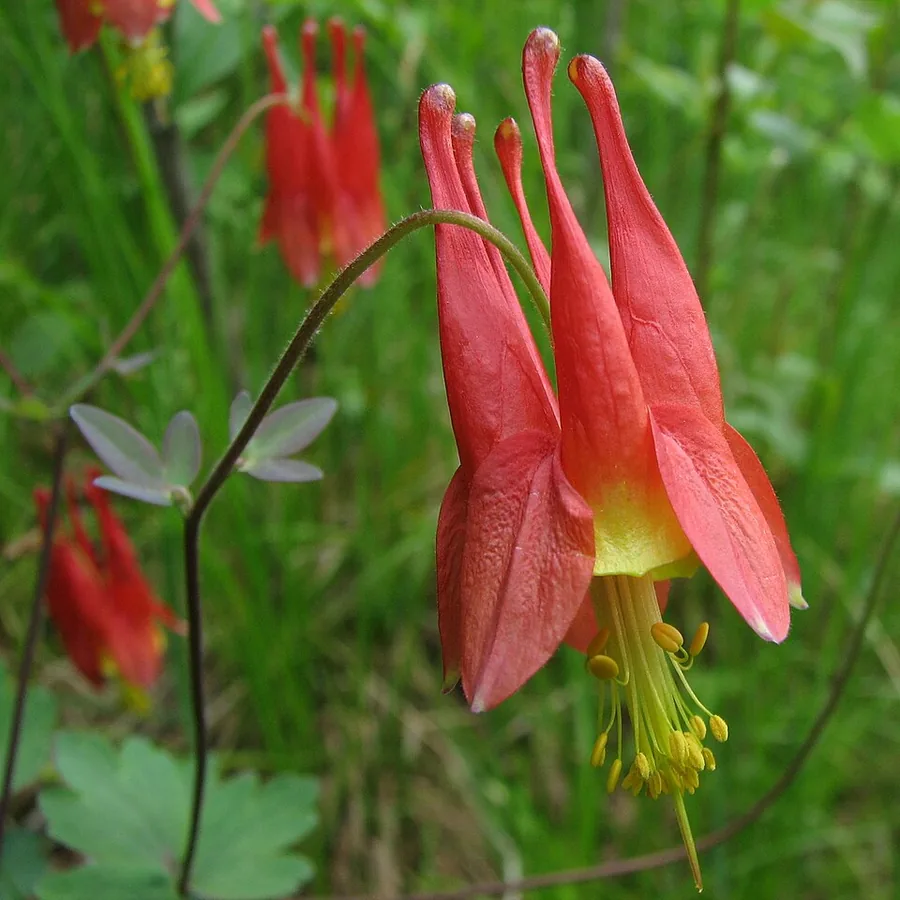
Columbine is a gentle woodland perennial in the buttercup family, and the native Eastern red kind, Aquilegia canadensis, grows wild across much of eastern North America. Its nodding, spurred flowers sway on slender stems above soft, blue-green leaves, and they welcome hummingbirds as spring warms. It looks delicate, yet you will find it far sturdier than it seems.
This is a forgiving plant for partial shade, perfectly happy at the edge of a border or in a woodland nook where taller plants offer a little cover. It comes through hard winters down to USDA zone 3 and carries on through summers up to zone 8. Columbine is short-lived as perennials go, but it sows itself so generously that a planting tends to renew on its own and settle into easy little colonies.
Give it ground that stays moist while draining freely, and you have done nearly all that is asked. The flowers arrive in a lovely spread of colors across the genus, from the red and yellow of the native species to the blues, whites, and pinks of the old European types. Let a few seedheads ripen and you will be delighted to find new plants appearing nearby each season.
Care
The short version: give it partial shade and rich, moist, well-drained soil. Water to keep the ground evenly damp without letting it turn soggy, feed it lightly in spring, and trim back tired foliage after bloom to neaten the plant and gently slow its self-seeding.
Light
Columbine is happiest in partial shade, the kind of dappled light it would find at a woodland edge. It will take full sun in cooler regions and is fine in partial sun too, but in hot summers a little deeper shade keeps it from scorching, so do not fret over getting it perfect.
Water
Keep the soil evenly moist but never waterlogged, watering roughly every 5 to 10 days once you allow for rain. An established plant easily shrugs off the odd dry spell, yet soggy ground in a hot summer can invite crown rot, so simply let the surface dry a touch between waterings.
Soil
Plant it in rich, well-drained loam worked with some organic matter, though columbine is forgiving and adapts to sand or clay as long as water moves through. It is happy across a wide pH band from 6.0 to 8.0, so most garden soil will suit it without any fuss.
Temperature
This is a wonderfully cold-hardy perennial, at ease across USDA zones 3 to 8 and weathering temperatures from -40°F to 90°F (-40°C to 32°C). That deep winter chill is actually a help, since the seeds need a good cold spell before they will sprout.
Humidity
Ordinary outdoor humidity is all this plant asks of you, so there is no figure to chase. Air movement matters more than the moisture itself, because still, crowded conditions are what let powdery mildew settle on the leaves.
Feeding
Columbine is a light feeder, so you can keep things simple. A single balanced feed or a topdress of compost in spring sees it through the season, and adding more fertilizer than that only tempts aphids onto the soft new growth.
Pruning
Trim the spent flower stems after bloom to coax a second flush and gently rein in the heavy self-seeding. If the foliage starts to look tired by mid-summer, do not hesitate to shear it to the ground, and fresh new leaves will soon follow.
Size & spacing
Plants reach 1 to 3 feet (30 to 91 cm) tall with a spread of 12 to 18 inches (30 to 46 cm). Give each one roughly that much room so air drifts through the clump and mildew has little chance to take hold.
When to plant
Columbine takes its cue from spring. Start seed indoors in late winter after a cold spell to break its dormancy, or simply sow it straight into the ground in spring or fall. The spurred flowers open from March into May and linger for four to six weeks before the plant eases into summer.
Northern hemisphere
Southern hemisphere
Typical months for a temperate climate: start earlier in warm zones, later where spring frosts linger.
- Sow: Late winter, 6 to 8 weeks before last frost; seeds benefit from cold stratification.
- Plant: Spring after last frost, or sow seed outdoors in fall.
- Harvest: Spring (March to May), with bloom lasting about four to six weeks.
Hardiness
USDA hardiness zones: 3–8
Temperature: down to -40°C
Troubleshooting
Columbine is a kind, easygoing plant, and most hiccups show up on the leaves or near the base where you can catch them early. Spot the first signs and a quick trim or a small change in watering usually puts things right again. Find what matches what you are seeing below, then take a gentle step.
Plant wilting and going soft at the base in summer
When a plant slumps in the heat and the base turns soft and brown, that is crown rot taking hold in soil that has stayed too wet and airless. Sadly an affected plant cannot be brought back, so lift it out gently and let it go. The good news is that once you loosen the drainage and go a little lighter on water through summer, the next planting will do just fine.
Fix:
- Remove affected plants
- Improve soil drainage before replanting
Curling pale trails wandering across the leaves
If you spot pale squiggles wandering across the foliage, take heart, because that is just leaf miner larvae feeding tucked between the two leaf surfaces. It looks worse than it is and never harms the plant itself, so you have nothing to worry about. Simply pick off the marked leaves, and once flowering ends you can cut the foliage right down to invite a tidy fresh start.
Fix:
- Remove and destroy mined leaves
- Cut affected foliage to the ground after bloom to flush fresh growth
- Choose resistant species such as Aquilegia canadensis
Little soft bugs gathered on buds and fresh shoots
Small green or black aphids love to gather on the softest tips and buds, sipping sap until the young leaves curl and a sticky sheen appears. Do not be discouraged, since a firm spray of water sends most of them packing, and a little insecticidal soap takes care of any stubborn crowd. Easing back on nitrogen feed simply means less of the tender growth they flock to.
Fix:
- Spray plants with a strong jet of water
- Apply insecticidal soap if populations are heavy
Soft white dust settling over leaves and stems
A pale, powder-like film on the leaves is powdery mildew, a fungus that creeps in where the air sits still and plants grow shoulder to shoulder. It is an easy thing to turn around: give your columbines a bit more breathing room so air drifts through them, and gently remove any leaves that are affected. Watering at the soil instead of over the top keeps the leaves dry and much less welcoming to it.
Fix:
- Improve air circulation by spacing plants
- Remove and destroy infected foliage
Toxicity
Columbine is only mildly toxic, and the pretty flowers are low-risk, so there is no need to worry. The caution lies in the seeds and roots, which hold cardiogenic toxins and cyanogenic glycosides that can upset the stomach if eaten in quantity. Everyday gardening needs no special handling, just keep pets and children from making a snack of the seedpods.
Toxic to
Cats · Dogs · Horses · Rabbits · Livestock · Birds · People
Cats Mild
Should a curious cat nibble the seeds or roots, you might see a little drooling, vomiting, or an unsettled stomach. Rest easy about the flowers and leaves, which are low-risk, and real trouble only follows a fair amount eaten.
Dogs Mild
Most dogs come away perfectly fine, so there is no need to fret. Only when one chews a good helping of the seeds or roots might you see some drooling and a short spell of vomiting or loose stools.
Horses Mild
Horses usually pass columbine by, and a stray mouthful does almost nothing. It would take a large feed of the seed-bearing or root parts to unsettle the gut at all.
Rabbits Mild
It is worth keeping rabbits away from the seedpods and roots, where the cyanogenic compounds gather most. A small nibble of the leaves seldom brings on more than a passing tummy ache.
Livestock Mild
Cattle, goats, and sheep tend to steer clear, so poisoning is rare and not something to lose sleep over. Even so, heavy grazing on the seeds or roots can leave the digestion a little off.
Birds Mild
The flowers happily feed hummingbirds with no harm whatsoever. The seeds are where the cyanogenic glycosides sit, so it is wise to keep poultry from gorging on the ripe pods.
People Caution
Columbine is not one for the kitchen. The flowers are low-risk, yet the seeds and roots hold cardiogenic toxins, so eating much of those parts can upset the stomach and is best avoided, above all with children.
No special handling is needed for routine gardening; wash hands after extended contact and supervise pets and children around the seeds.
Helpline numbers

United States
ASPCA Animal Poison Control: (888) 426-4435 (fee applies)
Poison Control: (800) 222-1222



Canada
Poison Centres: 1-844-764-7669
Varieties
Columbine spans everything from a tough little native wildflower to big, showy garden hybrids. Here are the ones you are most likely to come across.
Aquilegia canadensis (Eastern red columbine)
You will love this hardy native for its nodding red and yellow spurred blooms held on slender wiry stems, and it happily brushes off the leaf miner that troubles its relatives.
Aquilegia vulgaris (Granny's bonnet)
This much-loved old European columbine offers blue, violet, white, pink, or red flowers, though it does feel leaf miner damage more keenly than the native plant.
Aquilegia chrysantha (Golden columbine)
A cheerful southwestern species with long-spurred yellow flowers that copes with heat better than most, just be sure to give it good drainage since it can rot at the crown in soggy ground.
Aquilegia × hybrida (Hybrid columbine)
If you want a showstopper, these garden hybrids carry the largest, often bicolor long-spurred flowers in the widest color range, unfolding from mid-spring into early summer.
How to propagate
Columbine all but multiplies on its own, and you can happily lend a hand with saved seed or a careful division of an established clump.
SeedEasy
Sow indoors in late winter with cold stratification, or direct sow outdoors in spring or fall. · Seedlings typically flower in their second year.
Seed is the gentlest and surest way to grow more columbine, and happily the plant does most of the work for you by self-seeding into easy little colonies wherever it is content. Start seed indoors in late winter after a cold spell to wake it from dormancy, or simply scatter it outdoors in spring or fall. Either path works, and you can look forward to the first flowers in the seedling's second year, since that first season is spent quietly building a crown.
DivisionModerate
Early spring or fall. · One growing season; columbine has a deep taproot and resents disturbance, so divide carefully.
Division is an option in early spring or fall, though it does ask a bit more of you. Columbine sends down a deep taproot and dislikes being disturbed, so lift and split the clump with a gentle hand and settle the pieces back in straightaway. Give it a single growing season to find its feet and a careful division will take, even if seed remains the easier, more forgiving route.
Myths
Columbine is deadly poisonous and should never be grown around pets or children.
You can put this worry aside, because the genus is only mildly toxic and extension sources note no serious poisoning concerns for it. The seeds and roots do carry cyanogenic compounds, so a big mouthful of those parts may bring mild stomach upset, but the plant is safe to grow with normal supervision and the flowers are low-risk.
Every columbine gets chewed to ribbons by leaf miner.
Whether a plant suffers really depends on the kind you choose to grow. The native Aquilegia canadensis holds up nicely against leaf miner while hybrids and other species often take more damage, so picking a resistant species is the simplest fix.