Ornamental · Ranunculaceae
Hellebore
Helleborus orientalis
One of the first flowers of the year, the hellebore opens through shade and snow when little else dares.
Partial shade
USDA 4–9
12–18 in · 30–46 cm
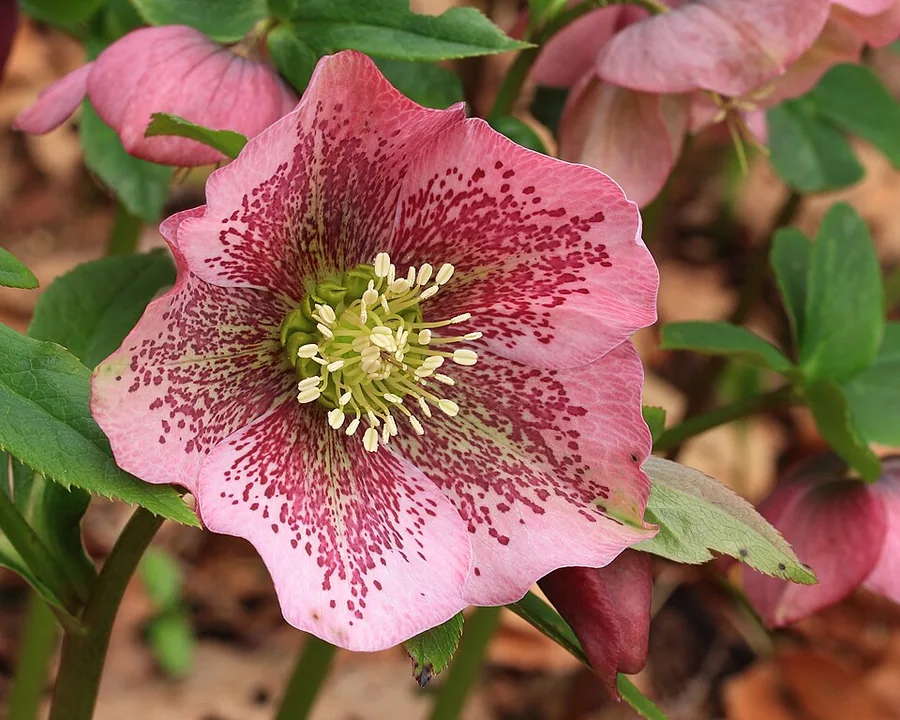
Overview
The hellebore is a friendly shade-loving perennial that flowers while the rest of the garden is still fast asleep. It belongs to the buttercup family and blooms in deep winter, often from late winter into spring for an 8 to 10 week stretch, with flowers that sometimes open while snow still rests on the ground. Names like Lenten rose and Christmas rose nod to that early season, even though it is no relation at all to a true rose.
Two names cover most of what you are likely to grow, so do not feel you need to memorize a long list. The Lenten rose, Helleborus orientalis, carries nodding cups in white, pink, and rose-purple, while the Christmas rose, Helleborus niger, opens earliest with broad white blooms. Most plants you will find for sale today are easygoing hybrids drawn from these, loved for their wider color range and cleaner flower form.
Hellebores are slow and steady rather than showy, reaching only 12 to 18 inches (30 to 46 cm) across in cool shade, so there is no rush and little to go wrong. They would rather not be moved and truly reward a gardener who plants them once and then lets them be. One thing to hold in mind from the start: every part is poisonous, and the sap can sting bare skin, so gloves are your friend.
Care
The short version: part to full shade in rich, humusy, well-drained soil. Keep it evenly moist while it settles in, feed lightly in late winter, and trim away the tattered old leaves before the flowers open, and you will do just fine.
Light
Give your hellebore part to full shade, and the dappled light beneath deciduous trees is just about perfect for it. A little winter sun while it blooms is a welcome treat, but harsh summer sun scorches the leaves and dries them out, so a cool corner keeps it happiest.
Water
Keep the soil evenly moist while a young plant is settling in, and never let it dry out hard through that first year or two. Once it is established it shrugs off a bit of dry shade, so try not to fuss, and remember good drainage matters far more than constant watering.
Soil
Plant it in organically rich, humusy, well-drained loam with plenty of leaf mold worked in, and it will thank you. Hellebores are relaxed about pH, taking anywhere from 6.0 to 8.0, so the soil that suits most shade beds will suit them nicely.
Humidity
Ordinary outdoor humidity is perfectly fine, so there is no number here to chase or worry over. Airflow counts for far more, since damp, crowded leaves are how leaf spot and crown rot get their start.
Feeding
Feed lightly in late winter or early spring with a balanced fertilizer, or simply top-dress with compost or leaf mold and let it do its quiet work. A rich, organic soil handles most of the job, so there is truly no need to push growth or overdo it.
Pruning
Cut back the old, tattered, or winter-damaged leaves in late winter before the flowers open, which tidies the plant and lets the blooms shine. After flowering, remove the spent stems to make room for fresh foliage, and the plant will look all the better for it.
Size & spacing
Plants stay comfortably compact at 12 to 18 inches (30 to 46 cm) tall and about as wide, so they are easy to place. Give each one that much room so air can move freely and disease has little chance to settle.
When to plant
Hellebores keep a quiet, unhurried rhythm that is easy to work with. Set out container-grown crowns in spring or fall, and from late winter into spring the flowers open and hold for weeks, sometimes before the last of the snow has gone.
Northern hemisphere
Southern hemisphere
Typical months for a temperate climate: start earlier in warm zones, later where spring frosts linger.
- Sow: Seed is slow and erratic; fresh seed sown outdoors or self-seeding is more reliable than indoor sowing.
- Plant: Plant container-grown crowns in spring or fall into shaded, well-drained soil.
- Harvest: Blooms late winter into spring, often for an 8 to 10 week period; flowers may open while snow is still present.
Hardiness
USDA hardiness zones: 4–9
Temperature: down to -34°C
Troubleshooting
Most hellebore trouble shows up on the leaves or at the crown, and damp, crowded plantings are usually the reason, so please do not take any of it personally. Learn the early signs and you can step in well before a problem spreads. Find what matches below, then act while it still makes a difference.
The plant flops over and the crown feels brown and soft
This one is crown rot, and it happens when the soil stays too wet right around the base of the plant. You may find the crown soft and off-color, sometimes a bit sour-smelling, once water has nowhere to drain. The good news is you can recover the situation: lift the plant, sort out the drainage, and set it back in at the right depth without heaping mulch over the crown.
Fix:
- Remove affected plants or rot-damaged tissue
- Improve drainage and avoid planting too deeply
- Do not mulch directly over the crown
Black streaks and twisted growth across the whole plant
This is the one to catch early: hellebore black death, a virus that streaks the leaves, stems, and flowers black and twists up the new growth. No spray will cure it, because aphids are the ones carrying it from plant to plant, so please do not spend money on fungicide here. Dig up and get rid of any affected plant right away, keep those aphids in check, and never take divisions or seed from a plant that shows the streaking.
Fix:
- Remove and destroy infected plants promptly
- Control aphids that spread the virus
- Do not propagate from affected plants
Dark spots and blotches showing up on the leaves
Try not to worry, because those marks are fungal leaf spot and they are easy to get on top of. They take hold when plants sit damp and packed together, so simply snip off the spotted leaves, clear away the old foliage in late winter before new growth comes up, and open a little space between your plants. Give the air room to move and you will see the spots struggle to come back.
Fix:
- Remove and destroy affected leaves
- Cut back old foliage in late winter before new growth
- Improve air circulation by thinning crowded plantings
Pale winding trails or chewed, notched leaf edges
Those pale tunnels running through the leaves are leaf miners, while ragged edges and slime trails mean slugs and snails have been visiting, and neat notches around the rim point to weevils. None of this puts your plant at risk, so you can relax. Pick off the leaves that look worst, gather up the slugs and snails by hand or set out a few traps, and just keep a friendly eye on any aphids gathering on the new growth.
Fix:
- Pick off and destroy affected leaves
- Hand-pick slugs and snails or use traps
- Monitor for aphids and rinse or remove as needed
Toxicity
Please take this plant seriously: every part is poisonous. Hellebore holds cardiac glycosides and an irritant called protoanemonin all through the leaves, stems, and roots, and a large dose can disturb the heart. The bitter sap stings skin and mouths alike, so wear gloves to handle it and keep pets, livestock, and children well away, and there is no reason it cannot live safely in your garden.
Toxic to
Cats · Dogs · Horses · Rabbits · Livestock · Birds · People
Cats Toxic
If a cat chews any part, expect heavy drooling, vomiting, diarrhea, and a tender belly, and a cat that eats more of it goes quiet and low. The same bufadienolides that upset the stomach can also unsettle the heartbeat, so a big mouthful really does call for the vet right away.
Dogs Toxic
A dog that gnaws the leaves or roots will drool, retch, and get a sore stomach, often with loose stools and flat energy. If it pushes past that bitter taste to a larger dose, the cardiac glycosides can slow or trouble the heart, so step in early.
Horses Toxic
A horse grazing hellebore ends up drooling, off its feed, and prone to colic and loose droppings. The heart toxins make a real meal genuinely dangerous, so it is kindest to keep the plant well away from paddocks and hay.
Rabbits Toxic
No part of this plant is safe for a rabbit to eat. Even a small nibble can sting the mouth and gut and bring drooling and a refusal to eat, and the cardiac glycosides make a larger helping worse still.
Livestock Toxic
Cattle, goats, and sheep that eat hellebore get mouth and stomach irritation, drooling, and diarrhea, and a heavy feed can disturb the heart. The sharp taste usually keeps them off it, though trimmings tossed over a fence are still a hazard, so bin them safely.
Birds Toxic
Please keep hellebore off-limits for birds. The bufadienolides and protoanemonin that harm mammals are just as unkind to a bird, so keep poultry and pet birds away from the foliage and any cuttings.
People Caution
No part of this plant is food, and eating it brings burning in the mouth, drooling, vomiting, and stomach cramps, with a heart risk in quantity. The sap on its own can irritate skin, so slip on gloves to cut or divide it and keep little ones away from the flowers and leaves.
The cell sap can cause skin irritation and contact dermatitis, so wear gloves and protective clothing when cutting or dividing plants. Hellebore contains bufadienolide cardiac glycosides (such as hellebrin) plus protoanemonin, and large ingestions can affect the heart, so keep cut foliage and trimmings away from pets and children.
Helpline numbers

United States
ASPCA Animal Poison Control: (888) 426-4435 (fee applies)
Poison Control: (800) 222-1222



Canada
Poison Centres: 1-844-764-7669
Varieties
Most garden hellebores trace back to just a few species and their hybrids, which makes them lovely and simple to get to know. These are the ones worth having by name.
Helleborus orientalis (Lenten rose)
This clump-forming species gives you nodding, cup-shaped flowers in white, pink, and rose-purple that often carry gentle spotting, it blooms from late winter into spring, and it stands as the parent behind many of the garden hybrids you will meet.
Helleborus niger (Christmas rose)
A shorter, sweeter plant at around 9 to 12 inches with large white bowl-shaped flowers, it is hardier down to zone 3 and the earliest of all to open, sometimes right around Christmas where winters stay mild.
Helleborus × hybridus (hybrid Lenten rose)
These easygoing garden hybrids come mostly from H. orientalis and reward you with a wide color range and tidier flower form, and they are usually the very plants sold to you simply as Lenten rose.
How to propagate
Hellebores spread slowly and on their own terms, whether you split a clump in spring or simply let the plant scatter its own seed, so either path is a gentle one.
DivisionModerate
Spring · One to two seasons; divisions are slow to reestablish and may bloom poorly the first year.
To divide, wait for spring, then lift a mature clump, split the crown gently, and settle each piece back at its original depth in rich, well-drained shade. Do give it time and grace, because a division needs one to two seasons to feel at home and often blooms only lightly that first year.
SeedModerate
Sow fresh seed in late spring to summer, or allow self-seeding. · Seedlings take 2 to 3 years to reach blooming size
Sow fresh seed in late spring to summer, or just let the plant self-seed, which it happily does in a spot it likes. Germination is slow and a little unpredictable, and a seedling needs 2 to 3 years to reach blooming size, so patience truly pays off here. Seedlings of hybrids rarely come true to the parent, so look forward to a few lovely surprises.
Myths
Hellebore is harmless because it is called a rose and has pretty flowers.
The name really does mislead, since this is not a true rose in the slightest. Every part is poisonous and the plant is listed as toxic to cats, dogs, horses, and people, and the sap can bring up a rash on bare skin. Treat it as a poisonous plant and pop on gloves, and you and your household will be perfectly fine.
You can dig and divide hellebores anytime because they are tough plants.
They are slow to find their feet again and really do not enjoy being disturbed. Divide only in spring if you truly must, and even then be gentle with your expectations for that first year. Plenty of happy gardeners simply skip dividing and let the self-sown seedlings do the work for them.