Ornamental · Ranunculaceae
Marsh Marigold
Caltha palustris
Give it a spot where the ground stays wet to soggy, and marsh marigold will reward you with gold at the water's edge before almost anything else stirs.
Full sun
Every 1–3 days
USDA 3–7
8–24 in · 20–61 cm
Overview
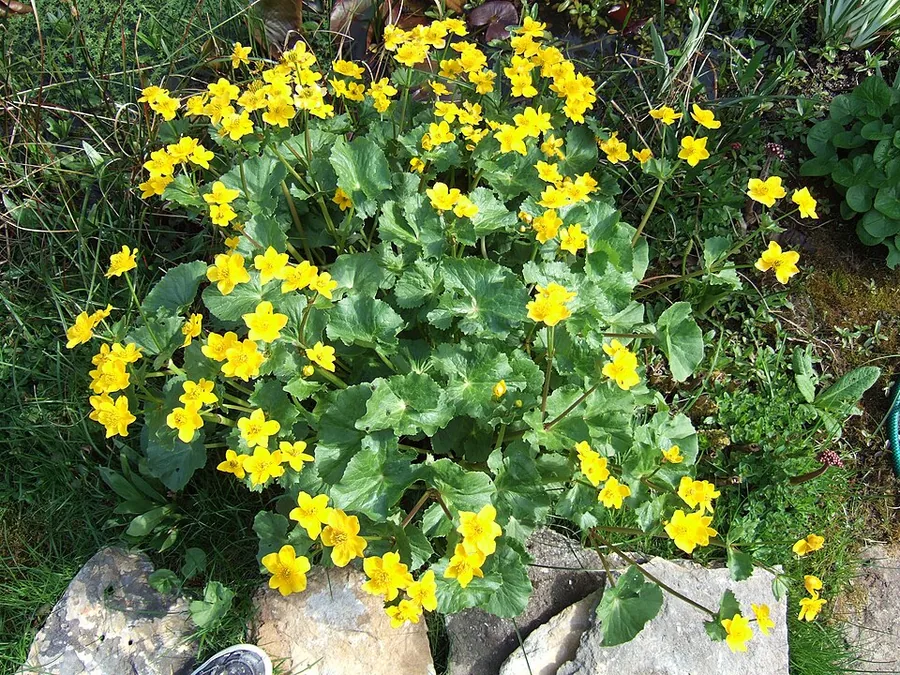
If you are just starting out, marsh marigold is a kind plant to begin with. It opens cupped yellow flowers along ponds, streams, and boggy ground early in spring, while much of the garden is still half asleep. It comes from the buttercup family, and you will spot that heritage in the glossy petals and the rounded, heart-shaped leaves tucked beneath them.
There is really only one thing this plant insists on, and it is an easy wish to grant: it wants wet feet. Coming from wet meadows and marshes, it is happiest in constantly moist to wet, humus-rich soil or even a little shallow standing water, which makes a pond edge, bog garden, or rain garden a natural home. Meet that and it will ask almost nothing more of you.
This is a tough, long-lived plant that shrugs off hard winters and forgives most beginner slips, so long as the soil never dries out. After its spring display it often eases into summer dormancy and dies back, then quietly returns the next spring. The fresh plant is an irritant, so handle it with a little care around pets and children and you will get along just fine.
Care
The short version: give it full sun to part shade and soil that stays wet to soggy all season, in rich, mucky ground near water, and beyond making sure it never dries out there is very little for you to do.
Light
Marsh marigold is happy in full sun to part shade and flowers best where it gets plenty of light. In hot-summer regions a bit of afternoon shade is a real help, since that shade eases the slide into summer dormancy and keeps the leaves going a little longer.
Water
This is the one part to get right, and it is simple once you know it. The roots want to stay constantly moist to wet, in soaked soil or even shallow standing water, and the plant should never dry out. Let the ground dry after flowering and it often slips early into summer dormancy.
Soil
Plant it in wet, humus-rich, mucky soil like the kind at a pond edge, and it will happily take a little shallow standing water too. Any pH from 5.5 to 7.5 will do, so the soil reaction is one thing you can stop worrying about.
Temperature
Cold will not faze it in the least. The plant is hardy right down to about -40°F (-40°C) and copes with heat up to roughly 86°F (30°C), though hot summers do tend to send it into an early rest.
Humidity
It loves things damp, which comes for free in the wet, marginal spots it calls home. High humidity around the leaves suits it well, so there is nothing extra to do when it sits near water.
Feeding
Feeding could hardly be easier. As new growth begins in spring, offer a single helping of balanced fertilizer or mix in some rich compost, and that will see it through the season.
Pruning
There is next to nothing to trim. Snip away spent flowers and clear the yellowing leaves as the plant dies back, and take comfort that summer dieback is normal and the crown will send up fresh growth come spring.
Repotting
Lift and divide clumps every 2 to 3 years, or sooner if flowering fades, the roots fill the pot, or the crown starts lifting above the soil. Just keep any divisions wet while they settle in.
Size & spacing
Plants grow to about 8 to 24 inches (20 to 61 cm) tall and spread to roughly 12 to 18 inches (30 to 46 cm) across, making a neat little mound right at the water's edge.
When to plant
Marsh marigold keeps an early schedule, and it is a forgiving one to follow. It wakes and flowers in early to mid spring, among the very first plants to bloom, then often rests through summer. Set it out in spring or fall in wet ground, and sow seed fresh in late summer to fall.
Northern hemisphere
Southern hemisphere
Typical months for a temperate climate: start earlier in warm zones, later where spring frosts linger.
- Sow: Sow fresh seed in late summer to fall; cold stratification improves germination
- Plant: Spring or fall, in wet soil or pond margins after frost
- Harvest: Early to mid spring (April to June), one of the earliest spring bloomers
Hardiness
USDA hardiness zones: 3–7
Temperature: down to -40°C
Troubleshooting
Marsh marigold rarely gives you trouble, and when it does the cause almost always comes back to soil that dried out. Once you can tell an ordinary summer rest from real distress, you will hardly ever need to step in. Match what you are seeing below before you do anything.
Plant wilts, fades, or never comes back
If your plant sags or does not reappear, the answer is nearly always dry soil, and the good news is that it is fixable. Marsh marigold is a bog plant whose roots want to stay wet, so a stretch of dry ground will knock it back. Move it somewhere reliably wet like a pond margin, bog garden, or rain garden, water often enough to keep the soil soaked, and lay down mulch to lock that moisture in place.
Fix:
- Move or replant at a pond margin, bog garden, or rain garden where soil stays wet
- Water frequently to keep the soil saturated
- Mulch to retain moisture
Leaves yellow and die back in summer
Take a breath, because yellow leaves in summer almost always mean summer dormancy rather than anything wrong. Your marsh marigold puts on its spring show, then rests for the year, and a warm or dry spot only nudges it to nap sooner. You can leave it be, keep the ground nice and wet, and gently clear the faded leaves once the crown has settled down.
Fix:
- Leave the plant in place and let foliage die back naturally
- Keep the soil wet to prolong the foliage and reduce stress
- Tidy away yellowed leaves once they have withered
White powder or rusty spots on the leaves
A dusty white film usually means powdery mildew, and small orange-brown bumps point to rust, and neither one should worry you much. They creep in when air stops moving through a crowded clump. Pick off the marked leaves, thin things out so a breeze can pass through, and try to keep the foliage dry in the evening. Apart from these two, this is a plant with almost nothing to trouble it.
Fix:
- Remove and dispose of affected leaves
- Improve air circulation around the clump
- Avoid wetting foliage late in the day
Toxicity
The whole plant is toxic while it is fresh, so this is worth knowing up front. As a buttercup-family member it carries protoanemonin, an irritant set loose when the leaves or stems are crushed or chewed, and it can blister the mouth and skin and upset the stomach. The bitter, burning taste usually stops an animal before it eats much, but keep the fresh plant away from pets, livestock, and children to be safe.
Toxic to
Cats · Dogs · Horses · Rabbits · Livestock · Birds · People
Cats Toxic
A curious cat that nibbles the fresh plant meets a sharp, irritant sap and tends to give up quickly. Keep a gentle eye out for drooling, pawing at the mouth, vomiting, and loose stool.
Dogs Toxic
A dog that chews the leaves or stems can end up drooling and uninterested in food, sometimes with vomiting or diarrhea soon after. Happily, the harsh, burning taste stops most dogs from swallowing much.
Horses Toxic
The fresh plant stings the mouth and unsettles the belly, so a grazing horse seldom goes past one taste. Reassuringly, once it dries into hay the protoanemonin fades and the worry goes with it.
Rabbits Toxic
It is best not to offer this one to a rabbit at all. The same protoanemonin that bothers other animals stings a rabbit's mouth and upsets its tummy, so simply keep the fresh plant out of reach.
Livestock Toxic
Cattle, goats, and sheep may get sore lips and an upset stomach from the raw plant, though the bitter taste usually keeps them from grazing it. Dried into hay it loses its sting and causes no trouble.
Birds Toxic
Play it safe and keep it away from birds. The crushed plant gives off the same harsh compound that bothers mammals, so there is no need to let a bird peck at it.
People Caution
Please never eat any part raw. The fresh sap can blister the mouth and skin, so slip on gloves before you cut it, though a thorough boil breaks down the toxin and the cooked young leaves and buds have long been on the table.
The raw plant is toxic and irritant: the same protoanemonin found in buttercups and clematis. Cooking (boiling) destroys the protoanemonin, and cooked young leaves and flower buds have historically been eaten - never eat any part raw. The sap can irritate skin, so wear gloves when handling or cutting.
Helpline numbers

United States
ASPCA Animal Poison Control: (888) 426-4435 (fee applies)
Poison Control: (800) 222-1222



Canada
Poison Centres: 1-844-764-7669
Varieties
Alongside the wild golden form, a couple of garden selections show up now and then. These are the ones worth getting to know.
'Flore Pleno' ('Multiplex')
A friendly double-flowered form whose extra petal-like sepals crowd together into full, rounded golden-yellow blooms.
var. alba
A lovely white-flowered form that swaps the usual gold for clean white petals gathered around a soft yellow center.
How to propagate
You can grow more marsh marigold by splitting a clump or sowing seed, and division is by far the faster, surer route for a first try.
DivisionEasy
Early spring or late summer after flowering · One growing season
This is the easiest and most forgiving way to grow your collection. Gently lift an established clump in early spring or late summer once flowering is done, ease the crown apart into pieces, and tuck each one back into wet ground. Keep the divisions good and soggy and they will settle in comfortably over a single growing season.
SeedModerate
Sow fresh seed in late summer to fall · Several months to a year; may self-seed in suitable wet sites
Seed asks for a bit more patience, and that is perfectly fine. Sow it fresh in late summer to fall so a cold winter can wake the seeds and coax them into sprouting. Young plants take anywhere from several months to a year to find their footing, and on ground that stays wet the marsh marigold will often self-seed and do the work for you.
Myths
Marsh marigold and true cowslip are the same plant.
It is an easy mix-up, since both go by the old name cowslip, but they sit in different families. Marsh marigold is Caltha palustris in the buttercup family, and true cowslip is Primula veris among the primroses. That shared name is all they really have in common, so lean on the botanical name whenever it counts.
Marsh marigold is a safe wild green to forage and eat.
Raw, it is a buttercup-family irritant full of protoanemonin that can blister the mouth, so this is one to be careful with. Only the young leaves and flower buds, boiled well, have any history of being eaten, because cooking breaks the toxin down. No part is safe to eat raw.