Ornamental · Ranunculaceae
Monkshood
Aconitum napellus
Tall blue hooded spikes that earned the name queen of poisons, lovely in the border and best met with care in the hand.
Full sun
Every 3–7 days
USDA 3–7
3–4 ft · 0.9–1.2 m
Overview
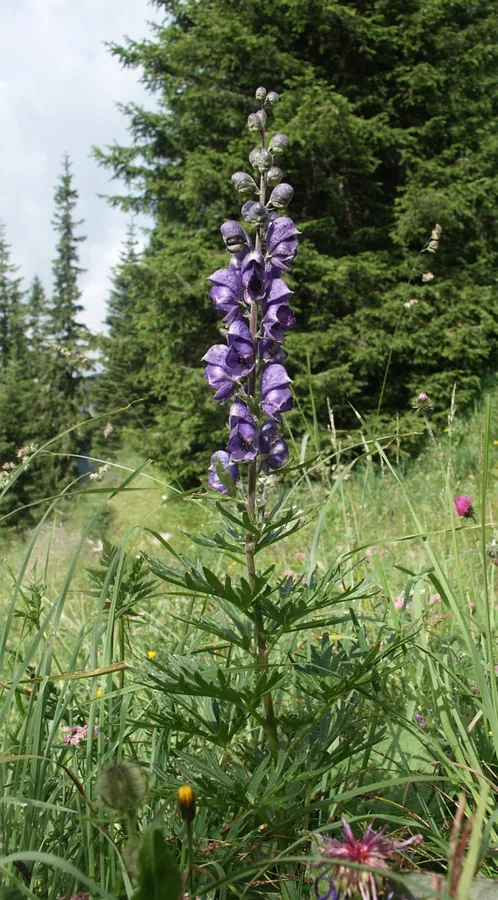
Monkshood quietly steals the show late in summer, when tall stems lift hooded flowers in a deep purplish-blue. Each bloom curves like a cowl drawn over a face, and that is exactly where the name comes from. It sits in the buttercup family and settles happily into cool, damp gardens across the colder USDA zones.
Behind that beauty lies one of the most poisonous plants you can grow, and it helps to know that going in. Every part carries aconitine, a fast-acting toxin that gave rise to old names like wolfsbane and queen of poisons. That danger is real, so think it through before you plant it where children, pets, or grazing animals wander.
The good news is that it is a slow, long-lived perennial that dislikes being moved and asks very little once it has settled. Give it rich, damp, well-drained soil and a bit of shelter for those tall stems, and wear gloves any time you touch it. Treat it with respect and a clump will come back for you, faithfully, year after year.
Care
The short version: full sun to part shade in cool climates, soil kept evenly moist but never soggy, ground enriched with compost, and gloves on your hands every single time you touch the plant.
Light
Monkshood is happiest in full sun where climates stay cool, and it gladly takes a little afternoon shade where summers turn hot. Too much shade leaves the stems weak and flopping, so aim to give it good light and a touch of shelter together.
Water
Keep the soil evenly moist and never let it dry right out, watering roughly every 3 to 7 days through a dry spell. It dislikes sitting in water just as much, so good drainage really matters. When summer heats up, steady moisture and a bit of afternoon shade keep it content.
Soil
Set it into rich, moist, well-drained ground full of organic matter and it will thank you. It is easygoing about pH across a wide band from 5.5 to 7.5, so most garden soil suits it once you have dug in plenty of compost.
Temperature
This is a plant made for cold spots, hardy right down to about -35°F (-37°C) and reaching up near 84°F (29°C). Real heat is its weak point, which is just why a little afternoon shade earns its keep where summers bake.
Humidity
Ordinary outdoor air suits it well, so there is no target number to fret over. What matters far more is good air movement, since still, muggy conditions tempt powdery mildew onto the leaves.
Feeding
Feed it in spring as new growth stirs, working in a balanced fertilizer or a comfortable layer of compost. A single seasonal feed is all this unhurried plant needs to do well.
Pruning
Trim the spent flower stalks once they fade to neaten the clump and sometimes tease out a second flush, then cut the foliage back after it dies down in fall. Always wear gloves and keep those cut stems and their sap clear of your skin.
Repotting
A settled clump would rather be left in peace, so divide it only every 4 to 5 years, and only if it has grown crowded. Weaker flowering, smaller cramped leaves, or a bare dead patch in the middle are its way of telling you the time has come.
Size & spacing
Expect plants to rise 3 to 4 feet (91 to 122 cm) tall on slim clumps that spread just 12 to 18 inches (30 to 46 cm) across. Give each one a little elbow room so air can pass freely and mildew stays at bay.
When to plant
Monkshood keeps a cool-season rhythm, and it is an easy one to follow. Sow the cold-treated seed in late winter, or split settled clumps in early spring or fall, then watch for those tall blue hoods to open in the warmth of July and August.
Northern hemisphere
Southern hemisphere
Typical months for a temperate climate: start earlier in warm zones, later where spring frosts linger.
- Sow: Late winter; seed needs cold stratification and germination is slow and erratic
- Plant: Spring after frost, or divide established clumps in early spring or fall
- Harvest: July to August
Hardiness
USDA hardiness zones: 3–7
Temperature: down to -40°C
Troubleshooting
Most monkshood worries begin down at the roots in wet soil, or among stems set too close together. The reassuring part is that catching the early signs lets you step in well before a clump is lost. Match what you are seeing below, and reach for gloves before you touch a struggling plant.
Soft brown crown giving way where it meets the soil
You are looking at crown rot, which creeps in when the ground stays soggy too long or a clump gets so packed it can no longer breathe. Do not lose heart: slip on gloves, lift out the sad plants, and sort the drainage before anything goes back in. Your good, firm divisions will happily return to looser, richer soil.
Fix:
- Remove and discard affected plants (wear gloves)
- Improve drainage and avoid overhead watering
- Replant healthy divisions in better-drained, amended soil
Leaves that droop and yellow no matter how you water
This is verticillium wilt, a fungus in the soil that plugs the stem from within, so watering can never bring the plant back. It is a hard one to hear, because there is no cure once it settles in. The kindest move is to dig out and destroy the affected plants, then keep anything vulnerable out of that patch from now on.
Fix:
- Remove and destroy affected plants
- Avoid replanting susceptible plants in the same soil
- Maintain plant vigor with proper moisture and nutrition
A pale dusty bloom settling over the foliage
That chalky film is powdery mildew, a fungus that shows up late in the year when the air turns damp and stops moving. It is an easy one to turn around: open up the planting so a breeze can pass through, pinch away the worst leaves, and keep the hose off the foliage. It looks worse than it is and seldom does any real harm.
Fix:
- Improve air circulation by thinning or spacing plants
- Remove and discard badly affected foliage
- Avoid wetting foliage when watering
Tall spikes leaning after a storm or a gusty day
Those lovely tall stems grow a little top-heavy, so a downpour or a strong gust tips them over, and a shady or overfed spot only makes them softer still. The fix is simple and forgiving: slip a stake in early, before they start to sprawl. Tuck the plant somewhere with a bit of shelter and it will mostly hold itself up.
Fix:
- Stake or support taller stems
- Site in a spot with some shelter from strong wind
Toxicity
It is kindest to yourself and everyone around you to treat this plant as dangerous, because it truly is. All parts hold aconitine, a poison that can kill cats, dogs, horses, livestock, and people, sometimes within hours of swallowing only a little. The sap even passes through skin, so wear gloves whenever you handle it and keep it well away from animals and children.
Toxic to
Cats · Dogs · Horses · Rabbits · Livestock · Birds · People
Cats Severe
It only takes a few mouthfuls to turn deadly for a cat. Keep an eye out for heavy drooling, vomiting, an unsteady weakness, and hard breathing, along with a heart that races or stumbles toward sudden collapse. Please treat any contact as a straight-to-the-vet emergency.
Dogs Severe
A dog that chews any part will drool, bloat, and vomit quickly, then grow weak and labour for breath. The true worry is the heart, where the toxin scrambles the rhythm and can bring it to a stop, so act fast.
Horses Severe
A horse that grazes on it soon salivates, colics, and shakes with trembling muscles. Breathing grows difficult and the heartbeat slips out of time, and sadly a fatal cardiopulmonary failure can follow.
Rabbits Severe
The very aconitine that harms big animals is every bit as deadly inside a small one. Even a single nibble can bring on drooling, weakness, and a faltering heartbeat, so it is safest to keep rabbits well away from every part.
Livestock Severe
Cattle, sheep, and goats are all poisoned by the leaves and roots, and losses in grazing herds are sadly well recorded. Look for staggering, a slowed heartbeat, and struggling breath, which too often ends in death before help can reach them.
Birds Severe
Aconitine is a whole-body poison with no gentle dose, and birds get no pass from it. A little pecking at leaves, seeds, or roots can bring rapid weakness and a fatal upset of the heart.
People Caution
No part of this plant belongs on a plate. Swallowing even a little brings tingling, numbness, vomiting, and frightening heart rhythms, and the sap can slip through skin, so please wear gloves and never handle it bare-handed.
Wear gloves whenever handling this plant, avoid skin or oral contact with plant juices and cut stems, cover any open cuts or abrasions, and wash hands thoroughly afterward. Keep away from pets, livestock, and children.
Helpline numbers

United States
ASPCA Animal Poison Control: (888) 426-4435 (fee applies)
Poison Control: (800) 222-1222



Canada
Poison Centres: 1-844-764-7669
Varieties
Most monkshood you will meet is the wild blue species, but a handful of named forms shift the color for you. These are the ones you are most likely to come across.
Album
You get clean white spikes from this form instead of the usual deep purplish-blue.
Carneum
Its flowers open in a gentle pale pink to pinkish tone, softer than the wild species.
Bicolor
Each bloom wears blue and white side by side, and you will often see it sold as Aconitum x cammarum.
How to propagate
You can grow more monkshood by splitting a clump or by sowing seed, and both simply ask for a little patience and a pair of gloves from the first step to the last.
DivisionModerate
Early spring or fall · Often slow to establish; may take a year or more to settle and bloom well
You can lift and split an established clump in early spring or fall, and it is well worth the effort, but keep gloves on the whole time because the sap is dangerous on bare skin. These plants dislike being moved and often sulk for a season, so give them a year or more to settle in and bloom well again.
SeedDemanding
Sow in late winter; seed benefits from cold stratification · Slow and erratic germination over many weeks
Sow your seed in late winter after a cold spell to wake it from dormancy, and be patient, since it comes up slowly and unevenly over many weeks. Handle the seed and the little seedlings with gloves, because every part already holds the toxin from the very start.
Myths
Monkshood is only dangerous if you eat it, so handling it bare-handed is fine.
The aconitine in the sap can slip right through your skin, so even touching cut stems or juices is a genuine hazard by itself. Garden and poison authorities are clear that you should wear gloves and avoid all contact, and take special care around any open cut.
Only the roots and seeds are poisonous, so the leaves and flowers are harmless.
Every part of the plant is toxic, from the bark and leaves through to the flowers, fruit, seeds, roots, and stems. The roots, seeds, and young shoots just happen to hold the most poison, which leaves nothing else safe to touch or taste.