Ornamental · Rosaceae
Great Burnet
Sanguisorba officinalis
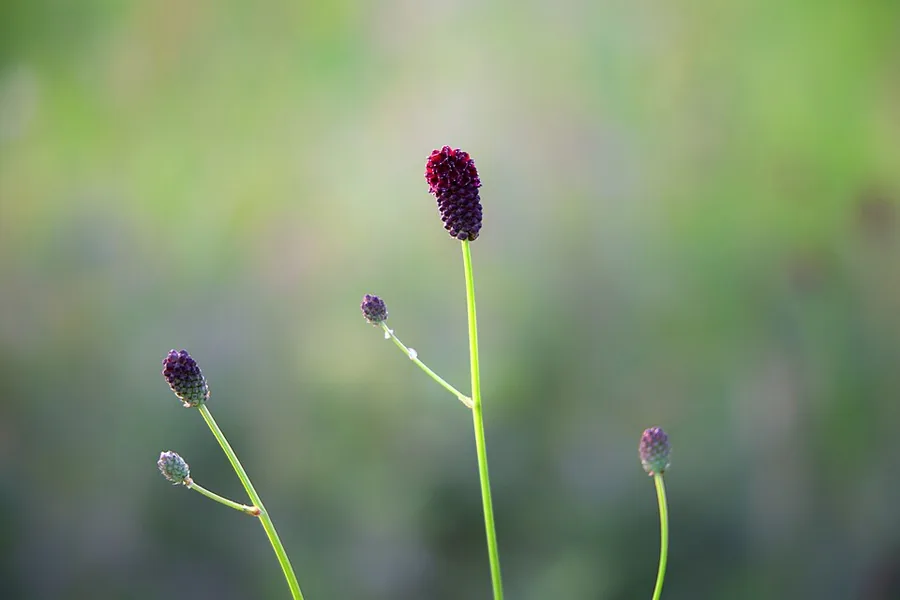
Tall wands of dark red bottlebrush flowers that sway over the back of a damp, sunny border all summer long.
Full sun
Every 3–7 days
USDA 4–8
2–3 ft · 0.8–0.9 m
Overview
If you are just starting out and a little nervous, great burnet is a kind plant to begin with. It is a tough, easygoing perennial that returns year after year, lifting slender stems of dark red bottlebrush flowers above soft, divided foliage. You do not need a green thumb to keep it happy, just a sunny spot and soil that stays comfortably moist.
Picture it toward the back of a border, where its airy flower stems can sway and catch the light all summer. It pairs naturally with the damp, sunny corners that puzzle many gardeners, turning a tricky moist patch into something quietly beautiful. Mistakes here are gentle ones, and most can be put right with a stake or a good watering.
The plant gives back far more than it asks. It shrugs off cold winters, has no serious pest or disease troubles, and is non-toxic and food-friendly, so it fits easily into a household with pets or children. Settle it in once, keep the roots from drying out, and you will have a reliable, low-fuss returner that makes you feel like the capable gardener you are becoming.
Care
The short version: give great burnet full sun and steadily moist, well-drained soil, and it will largely look after itself. Feed it lightly in spring, stake the tallest stems early so they stand proud after a storm, and cut everything to the ground in late fall or early spring. It is a forgiving plant, and almost any slip you make can be put right.
Light
Aim for full sun, which gives you the sturdiest stems and the most generous flowering. The plant will also accept partial shade if that is what you have, though too much shade tends to leave growth weak, leggy, and prone to leaning, so the brighter the spot, the better it stands.
Water
This is the one thing worth staying on top of, and it is simple enough. Keep the soil consistently moist and try not to let the root zone dry out, especially through summer heat. Great burnet is genuinely happy in damp ground and tolerates moist sites, so check it every few days and water before the soil dries rather than after.
Soil
Average, medium-moisture, well-drained soil is all this plant asks for, and there is no need to chase a particular pH. If your ground is on the poor side, work in a little compost to give it a steady footing, but avoid making it too rich, as overfed soil tends to grow soft, floppy stems.
Temperature
Here is a plant that takes the weather in its stride. It is a tough, cold-hardy perennial suited to zones 4 through 8, riding out winters down to about -29°F (-34°C) and summers up to roughly 86°F (30°C). Within that range it needs no special protection, so you can plant it and trust it to cope.
Humidity
You can stop worrying about humidity here, because ordinary outdoor air is exactly right and there is no figure to aim for. What truly matters is steady soil moisture, since dry roots show up as browning leaf edges well before the air around the plant ever causes trouble.
Feeding
Feeding is light and low-pressure. A single spring feed once a season, using a balanced general-purpose fertilizer or a topdressing of compost, is plenty on average soil. Resist the urge to give more, because heavier feeding only encourages weak, leggy growth that struggles to stand.
Pruning
Pruning is forgiving and quick. Cut back spent flower stems to hold down self-seeding, then cut the whole plant to the ground in late fall or early spring to tidy up for the new season. Stake the taller stems early in the year so they do not sprawl after rain or wind.
Repotting
As a garden perennial, great burnet is rarely lifted and actually grows best left in place to form a settled clump. You only really need to divide it when crowding starts to thin the flowering or the center of the clump begins to die out, so for the most part you can leave it be.
Size & spacing
Expect a clump that reaches 2.5 to 3 feet (76 to 91 cm) tall with a spread of 2 to 3 feet (61 to 91 cm). Give each plant roughly that much room so its airy stems have space to sway and breathe, which keeps the whole planting looking light and healthy.
When to plant
There is no need to rush the calendar with this one. Start seed indoors from late winter into early spring, then set young plants outside once the last frost has passed and the soil has warmed. The dark red flower spikes open from May into early summer, with some forms carrying on a good while longer, so your patience is rewarded with a long season of color.
Northern hemisphere
Southern hemisphere
Typical months for a temperate climate: start earlier in warm zones, later where spring frosts linger.
- Sow: Late winter to early spring
- Plant: Spring after last frost
- Harvest: May to June (into late summer for some forms)
Hardiness
USDA hardiness zones: 4–8
Temperature: down to -34°C
Troubleshooting
Take heart: great burnet stays remarkably free of serious pests and disease, so the short list of hiccups below mostly traces back to where it sits and how steadily it is watered. Learn to read the early signs, reach for a quick fix, and your planting keeps looking its best with very little drama.
Brown Showing Up on Leaf Tips and Edges
Crisp brown margins are usually the plant gently asking for a steadier drink, most often during a hot, dry stretch. Give the roots reliable moisture again and it bounces back, so this is a setback you can turn around with a watering can.
Fix:
- Water to keep soil evenly moist
- Apply mulch to conserve soil moisture
When Tall Flower Stems Lean or Tip Over
Those long stems carry a lot of weight up top, so a lean or a bow after a storm is a common and very fixable thing. Your plant is not failing you, it simply wants a little backup, and the crown below stays perfectly sound while you sort it out.
Fix:
- Install stakes or grow-through supports early in the season
- Site in full sun for sturdier stems
Little Volunteer Seedlings Turning Up Nearby
Finding baby plants scattered around the parent clump just means your burnet is happy and setting seed. It is nothing to fret over, and you can either welcome the extras or tidy them away with a gentle tug, whichever suits your garden.
Fix:
- Deadhead spent flowers before seed sets
- Remove volunteer seedlings by hand
Toxicity
You can breathe easy on this front. Great burnet is not toxic and belongs to the culinary burnets, and its close relative salad burnet has been cleared as non-toxic to cats, dogs, and horses. A stray nibble from a curious pet is nothing to worry about.
Safe for
People · Cats · Dogs · Horses · Rabbits · Livestock · Birds
Cats None
No troubling reaction is expected if a curious cat takes a taste, so you can plant with an easy mind.
Dogs None
A nibbling dog should be just fine here, with no toxic effects on record to worry you.
Horses None
Grazing horses face no reported harm from this plant, so it sits comfortably near a paddock.
Rabbits Safe
Rabbits can browse without any toxicity concerns, leaving you free to relax.
Livestock Safe
Livestock that wander past or graze nearby are not at risk from this gentle plant.
Birds Safe
Birds visiting the garden have nothing to fear from this safe, food-friendly genus.
People Safe
People are perfectly safe around it, fitting for a plant whose kin grow in the kitchen garden.
No special handling precautions are required; the plant is not reported to be toxic.
Varieties
If you would like the same lovely dark flowers in a tidier or taller shape, a couple of named selections are well worth seeking out. Each gives you that signature look with a slightly different habit.
Tanna
A neat, compact pick at around 12 inches (30 cm), Tanna sends up upright stems topped with deep maroon-red bottlebrush heads, a lovely choice if you want the look in a smaller, easygoing package.
Red Thunder
Red Thunder grows taller with a strongly branching shape, opening deep burgundy-red flowers from midsummer into late summer for a long, generous show.
How to propagate
Making more of this plant is genuinely easy, which is heartening when you are still building confidence. You can split an established clump or simply let the plant sow itself and gather the volunteers.
DivisionEasy
Spring or early fall · One growing season
Dividing is friendly work that even a first-timer can manage. In spring or early fall, lift the whole crown, slice it into sections that each keep healthy roots, and tuck them back into prepared, moisture-retentive soil. Each piece tends to settle in over a single growing season, so a little patience is all it asks.
SeedEasy
Spring · One to two seasons to flowering size
Because this plant self-seeds so freely, growing from seed is about as forgiving as it gets. Sow your saved or shop-bought seed in spring in average soil and it comes up readily. The young plants take one to two seasons to reach flowering size, and watching them get there is half the fun.
Myths
Great burnet is simply the same plant as the salad burnet you grow to eat.
It is an easy mix-up, since the two share a genus and a common name, but they are not the same plant. Great burnet is the taller ornamental perennial prized for its dark red flower spikes, while salad burnet, Sanguisorba minor, is the smaller, cucumber-flavored kitchen herb. A quick glance at the species name before you plant tells you whether you are growing for flavor or for flowers.