Ornamental · Rosaceae
Barren Strawberry
Waldsteinia ternata
An easygoing, low yellow-flowered carpet that thrives in dry shade where most plants give up.
Partial shade
Every 5–10 days
USDA 4–7
3–6 in · 8–15 cm
Overview
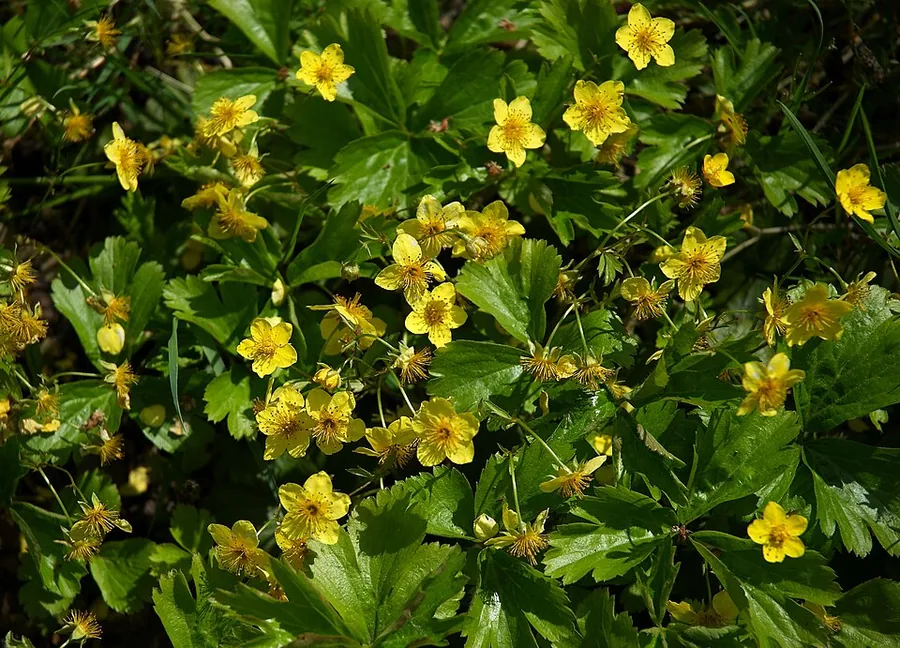
Barren strawberry is a low groundcover in the rose family that wears a strawberry costume without being one. It knits into a thick carpet of glossy, three-part leaves standing just 3 to 6 inches (8 to 15 cm) tall, dotted with little yellow flowers come spring. The name comes from its fruit, which stays dry and barren rather than plumping into a red berry, and that is nothing to fret about.
Its real charm is how forgiving it is, which makes it a kind first plant for anyone feeling unsure. It happily takes dry shade beneath trees, holds soil on a slope, and fills in for grass where a lawn struggles. After it settles, it travels on its own by short surface runners and underground rhizomes, yet it stays well-mannered and never aggressive.
Offer it part shade and steady moisture in its early days and it gives back an evergreen to semi-evergreen carpet that warms to bronze through the cold months. It shrugs off deer and stands tough down to -29°F (-34°C), so it makes a calm, reliable companion for the hard corners of a garden where you might worry little else will take.
Care
The short version: give it part shade, average to rich soil that drains well, and steady water until it roots in, and from there it copes with drought and barely asks anything of you.
Light
Part shade is its happy place, though it is wonderfully adaptable and accepts anything from full sun to full shade. Where summers run hot, tip the balance toward shade, because fierce afternoon sun over dry soil can scorch the leaves.
Water
While the plant is finding its feet, keep the soil evenly moist with a drink every 5 to 10 days. Once it is established it becomes pleasantly drought tolerant, though a deep watering during a heat wave keeps the foliage from browning.
Soil
It settles into nearly any well-drained soil, be it loam, clay, or sand, and grows best where compost has been worked in. A pH anywhere from 5.5 to 7.5 suits it just fine, so most beds need no fussing at all.
Temperature
This is a cold-hardy perennial that holds on down to -29°F (-34°C) and copes with summer warmth up to 86°F (30°C). It is heat beyond that point, teamed with dry soil, that starts to trouble the leaves.
Humidity
Everyday outdoor air is all this plant wants, so there is no humidity level for you to track. The thing that truly counts is steady soil moisture through the heat of summer.
Feeding
Feeding is barely a chore. A single spring topdressing of compost or a balanced fertilizer each season is all it takes to keep the mat in good health.
Pruning
Pruning is almost off your list. Just shear or mow the mat lightly in late winter or early spring to tidy away winter-tattered leaves and welcome fresh growth.
Repotting
Since this lives in the garden as a groundcover, it seldom needs lifting. Divide a clump only when the center begins to thin or crowded crowns start pushing up out of the soil.
Size & spacing
Plants keep low at 3 to 6 inches (8 to 15 cm) tall while each one reaches 6 to 18 inches (15 to 46 cm) across. Set them a little closer together and you will enjoy a solid mat that much sooner.
When to plant
Barren strawberry handles the cold without complaint and keeps to its own gentle rhythm. Tuck new plants into cool, moist soil in spring or early fall, then watch for the cheerful yellow flowers arriving from mid to late spring.
Northern hemisphere
Southern hemisphere
Typical months for a temperate climate: start earlier in warm zones, later where spring frosts linger.
- Plant: Spring or early fall
- Harvest: Yellow flowers in mid to late spring (April to June)
Hardiness
USDA hardiness zones: 4–7
Temperature: down to -34°C
Troubleshooting
Happily, this groundcover gives you very little to fix, and what does come up usually points back to where it sits rather than to bugs or disease. Spotting the early clues below means you can correct the cause long before the planting struggles. Find the sign that matches yours, then act while it can still help.
Leaves turning brown and patchy where the sun beats down
What you are seeing is sun scorch, which happens when intense heat lands on soil that has gone dry. You can spot the pattern easily: the harm gathers along the hottest, driest edges while the shadier portions hold their green. The good news is that it is fixable. Step up your watering through heat waves, tuck a thin layer of mulch over the bed, and offer afternoon shade if you garden somewhere warm.
Fix:
- Increase watering during hot, dry spells to keep soil evenly moist
- Provide afternoon shade in hot climates
- Mulch lightly to conserve soil moisture
Open patches that hang around for a season or two after planting
Take a breath, because this is simply slow establishment and not a sign that anything has gone wrong. Barren strawberry weaves itself into a mat using short surface runners and rhizomes, and that cover thickens little by little across one to two seasons. To speed things along, set your plants a touch closer, keep the weeds out, and let nature close those gaps on its own.
Fix:
- Be patient; allow one to two seasons for the mat to close
- Space plants closer together for faster coverage
- Keep evenly watered and weed-free while establishing
Toxicity
You can relax here. Barren strawberry carries no toxic label, so it is safe to grow around cats, dogs, and children. The small dry fruit is barren rather than poisonous, and the most a pet might face after a mouthful of leaves is a brief, mild tummy upset that fades on its own.
Safe for
People · Cats · Dogs · Horses · Rabbits · Livestock · Birds
Cats None
Perfectly fine to have nearby. Should a curious cat munch through a good helping of leaves, the most it might feel is a short, gentle tummy ache that soon passes.
Dogs None
Nothing here puts a dog at risk. After a chew on the foliage, the worst you might notice is a temporary loose stool that settles by itself.
Horses None
Horses come to no harm from this plant. They can graze across the low mat with nothing to worry about.
Rabbits None
Your rabbits are welcome to nibble the leaves freely, as the plant holds nothing that could hurt them.
Livestock None
Cattle, goats, and sheep have nothing to fear from grazing this groundcover.
Birds None
Birds are quite safe around it. There are no toxins tucked inside the small dry fruit.
People None
Gentle on people, with no cause for concern around little ones, though the dry fruit is barren and simply not worth a taste.
Not poisonous. The small, dry fruit is barren (inedible) rather than a true edible berry, but it is not toxic. Pets nibbling foliage may at most have mild, self-limiting GI upset.
Varieties
Two different plants answer to the name barren strawberry, one hailing from Europe and Asia and the other native to North America. Here is a simple way to tell which is which.
Waldsteinia ternata (European/Asian barren strawberry)
You will find this is the popular groundcover from across Europe and Asia, an energetic mat-maker dressed in shiny three-part leaves and topped with yellow blooms each spring.
Geum fragarioides / Waldsteinia fragarioides (Appalachian or Northern barren strawberry)
This one belongs to North America, a modest woodland wildflower from eastern Canada and the United States that carries the same yellow blooms and evergreen, strawberry-like leaves.
Companions
Barren strawberry pairs well with plants that share its love of shade, and it makes a clean backdrop for anything that needs its bare lower stems hidden.
Plant near
Spring-blooming bulbs (such as daffodils and crocus): Barren strawberry combines well with spring bulbs, whose foliage is masked by the dense low mat after bloom.
Shade trees and woodland shrubs: Tolerates dry shade and makes an excellent durable groundcover or lawn alternative under trees and on shaded slopes.
How to propagate
Growing more barren strawberry is wonderfully simple, whether you divide a settled clump or take the slower path from seed.
DivisionEasy
Spring or early fall · One to two growing seasons to knit into a dense mat
Division is the dependable route to more of this groundcover, and it is hard to get wrong. In spring or early fall, lift a settled clump, or gently pull away rooted runners and rhizomes, then tuck them back into the ground. Allow each new piece one to two growing seasons to knit into a dense mat.
SeedModerate
Sow when ripe or in spring · Slower than division; plants take time to reach mat-forming size
Seed is another option, though it tests your patience a bit more. Sow when ripe or in spring, then settle in to wait, since seedlings move along slower than divisions and take their time reaching mat-forming size. Most gardeners simply choose to divide instead.
Myths
People often assume barren strawberry is a true strawberry that gives you edible berries.
It simply is not a strawberry. Yes, the three-part leaves and creeping runners can fool the eye, yet its flowers come up yellow rather than white, and what follows is a tiny, dry, barren fruit instead of a juicy red one. Think of it as a charming ornamental groundcover, never a fruit crop.