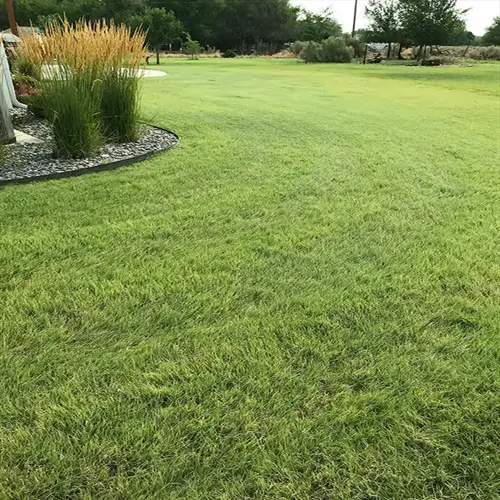

Kentucky bluegrass vs fescue comes down to what you want from your lawn. Fescue wins on drought tolerance and lower upkeep. Bluegrass takes the lead on self-repair and that classic look. Neither grass is perfect for every yard. Your choice comes down to how much time and water you want to spend on upkeep versus how much you care about a pristine appearance.
A fescue vs bluegrass comparison starts with water needs. Tall fescue sends roots 2-3 feet deep, pulling moisture from soil layers that bluegrass can't reach with its short root system. I watched this play out in my own transition zone yard during a dry July. The tall fescue section stayed green for three weeks without rain while the bluegrass side turned brown and went dormant after just ten days. That difference in drought survival alone is enough to sway most homeowners toward fescue.
Bluegrass fights back with a trick that fescue can't match. Kentucky bluegrass spreads through underground stems called rhizomes that grow sideways and sprout new plants. This means bluegrass fills in bare spots, dog damage, and worn paths on its own. Tall fescue is a bunch type grass. It grows from a central crown and produces tillers, but it never sends out runners. Every bare patch in a fescue lawn stays bare until you overseed it yourself.
Purdue USDA-NIFA research backs up what you see in your own yard. Fine fescues need less mowing, less fertilizer, and less water than bluegrass. The study tracked inputs over several seasons at test sites across the country. Bluegrass lawns cost more in both time and money to keep looking good. If you value your weekends, fescue wins on labor alone.
I tested both grasses side by side for two full seasons. The bluegrass looked better in spring when it was growing fast and filling in from winter damage. But by August, the fescue looked better because it held its color without extra watering. The bluegrass needed twice the irrigation to stay green, and it still went patchy in the hottest spots near the driveway.
Your wallet feels the difference too. A fescue vs bluegrass comparison on yearly costs shows fescue owners spend $200-$300 less on water, fertilizer, and mowing fuel. Bluegrass needs 3-4 fertilizer rounds per season while fescue does fine with just two. You also run your sprinklers less with fescue since those deep roots find water on their own during dry weeks.
Shade tolerance gives fescue another edge over bluegrass. Your fescue lawn handles 4-5 hours of shade per day without thinning. Bluegrass starts to struggle with anything less than 6 hours of direct sun. If you have mature trees in your yard, fescue keeps its density under those canopies while bluegrass goes bare. This alone makes fescue the better pick for most yards with mixed light.
The best cool season grass for your yard depends on your priorities. Choose tall fescue if you want lower water bills and less mowing. Pick Kentucky bluegrass if you want a self-repairing turf with that rich blue-green color. You can blend them at a 90/10 fescue-to-bluegrass ratio to get deep roots and some self-repair in the same lawn. That blend gives you the best of both grasses without their worst drawbacks.
Read the full article: Fescue Grass Types, Care and Tips