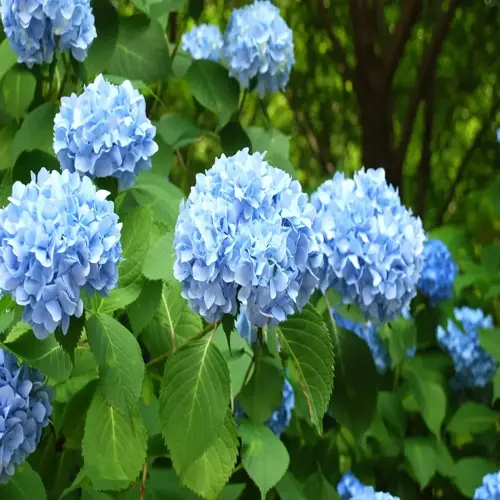

The main difference between hydrangea and hydrangea tree is that the tree form is not a separate species at all. A hydrangea tree is a regular panicle hydrangea shrub that got pruned or grafted to grow on a single trunk. It doesn't send up many stems from the ground like the bush form does. The DNA inside the plant is identical. Only the shape has changed.
I was surprised when I first learned this at a local nursery. The hydrangea bush vs tree display sat side by side on the same bench, and the grower told me they started from the same batch of cuttings. One group got trained to a single leader while the other grew wild with six or seven stems from the base. That one choice in year one created two very different-looking plants by year three. Same flowers, same leaf shape, same care needs, but a completely different garden presence.
When you compare hydrangea bush vs tree in terms of structure, the bush form grows wider and lower to the ground. It sends out new shoots from the root crown every year, creating a dense, rounded mass of branches and blooms. The hydrangea tree vs shrub form stands taller and more upright because all the energy goes into one main trunk and a canopy on top. You can plant flowers or groundcovers beneath a tree form, which you can't do with a bush that covers the ground.
So what is a hydrangea tree in technical terms? Growers take Hydrangea paniculata plants and graft them onto a strong rootstock. Or they train the strongest stem upward while cutting all side shoots. Only panicle hydrangeas work for this because their stems grow thick and woody enough to support a canopy. Bigleaf hydrangeas (the blue and pink ones) have softer stems that snap under the weight. Oakleaf types grow too wide and irregular to hold a clean tree shape. Paniculata's upright growth habit makes it the only practical choice for tree form training.
Grafted trees give you a finished look faster, often in just one season at the nursery. But the graft union where two plants join can be a weak point over time. Trained trees take longer to develop but tend to be stronger because the trunk and roots come from the same plant. If you buy a grafted tree, check the graft union for swelling, cracking, or bark peeling before you bring it home.
You can train your own hydrangea tree vs shrub at home with patience and a few basic tools. Start with a young panicle hydrangea in a 1-gallon or 3-gallon pot. Pick the strongest, straightest stem and tie it to a sturdy stake. Remove all other stems at ground level. Over the next three years, keep removing side shoots from the lower trunk while letting the top branches form a canopy. You need bypass pruners, a stake, and soft ties. The process costs a fraction of buying a pre-trained tree, but it takes dedication through those first three growing seasons.
I trained my own Limelight from a $12 nursery shrub two years ago. The first winter it looked like a sad stick in the ground. By the second summer it had a clean 4-foot trunk with a round canopy forming on top. The whole project cost less than a quarter of what garden centers charge for a pre-trained tree of the same size. Just clip off suckers every few weeks during the growing season. Your tree will take shape faster than you expect once you stay on that routine.
Read the full article: Hydrangea Tree: Complete Growing Guide