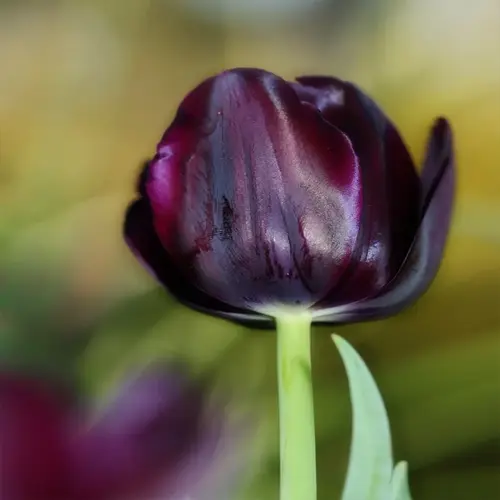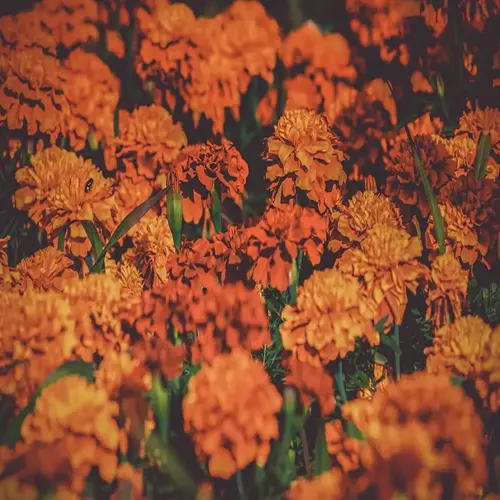

Red flowers stand for love, passion and strong feeling. That is the red flower meaning you will get from almost every florist page, and it holds up because enough people agree on it. The color itself carries no fixed message. What sits around it does the work, so the same stems can say two very different things depending on where they end up.
Put a dozen red blooms on your dinner table and the room reads romance. Carry that same bunch to a war memorial and it reads grief and remembrance. Nothing about the flowers changed between those two rooms. The setting changed, and the reading followed it without anyone having to explain the switch.
That gap is the whole answer. Red flower meaning runs on convention, and a convention is a shared habit of reading rather than a documented history. Every source I could find on red flower symbolism is commercial florist content, written by shops that sell arrangements. No university page, no museum record, no study. The meaning is real in the sense that people act on it, and thin in the sense that nobody can show you where it began.
You will also read that roses came out of Persia, or that gardeners in China grew them 5,000 years ago. Those lines show up in retail blogs and nowhere I could check. Treat them as stories rather than record. The love link feels ancient because it gets repeated so often, and repetition is not proof. If a page hands you a date and cannot say where it came from, treat the date as decoration and keep the practical part.
There is a plain test for any meaning you read online. Look at who is telling you and what they want from you. A shop that sells bouquets has every reason to make the message sound old and settled. A claim tied to a country, a war or a holiday is easier to check, because the link sits in living use rather than in a legend. That is why the poppy and the poinsettia hold up while the Persia story does not.
A few pairings in red flower symbolism are specific enough to lean on. The red rose is the love flower, and nothing else comes close to taking that job. The red poppy stands for wartime remembrance across much of the English-speaking world, which is why you see them in November and not on anniversaries. The poinsettia belongs to Christmas, and florist pages treat it as a holiday plant with no romance attached to it. In Japan the red spider lily is linked with death, so an arrangement that feels warm in one country can land badly in another.
Plants did not pick red for you. Ng and Smith counted red flowers in at least 65 angiosperm families, spread right across the plant family tree. No single plant owns the color, and no shared origin sits behind it. Red showed up again and again across that tree, one family at a time. Any chart that hands you one fixed message for every red bloom is working backward from a gift shop rather than from the plants themselves.
So pick the flower for the setting instead of for a chart. Red flower meaning shifts with the occasion, and the occasion is the part you control. Ask what the person opening the box will think, because that reading is the only one that counts on the day. Red roses for a partner. Poppies in November, poinsettias in December, and something other than red if the flowers are headed to a Japanese household. The meaning of red roses is the one message you can count on landing the way you meant it across most of the West.
When you want the flowers to say something exact, put it on the card. One plain line settles it, and the person holding them never has to guess which reading you meant. Color sets the mood, and a card handles anything more specific than that.
Read the full article: 10 Red Flowers and What Makes Them Red