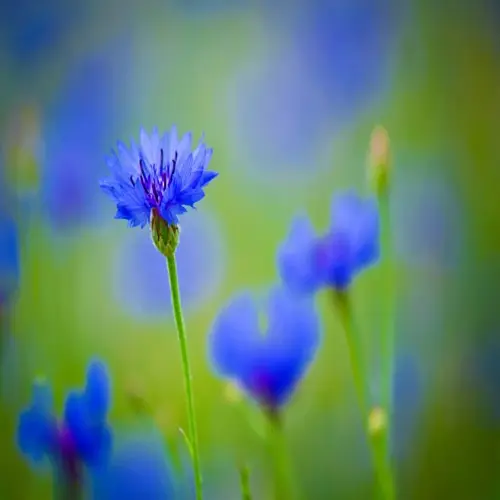

Two plants both sold as purple can sit side by side and look nothing alike. One reads gray lilac in full sun, and the other sits so dark it passes for black at ten paces. Sorting the shades of purple flowers into three bands makes catalog shopping much easier. The pale band holds lavender, lilac and mauve, violet and amethyst and magenta sit in the middle, and the deep band runs from plum and indigo down to near-black. Those names come from garden writing, not from any botanical system.
Start at the pale end, where the color carries a lot of gray. Lavender is the plant most people picture, and its spikes swing between gray and blue depending on which cultivar you buy. Catmint does a similar job with hazier flowers that keep coming for months. Light purple flowers can read washed out in hard midday sun and much stronger again at dusk, so you get two different colors off the same plant in one day.
The mid-tone band is what most people mean when they say purple. Clematis covers it well, with big flat flowers that hold a strong hue for weeks on a fence or an obelisk. Siberian iris does the same work at knee height, and its falls often carry darker veining over a clearer ground. Violet flowers read as blue from across a lawn and turn warmer as you walk up to them. That shift catches out anyone who plans a border from photos.
The whole spread comes out of pigment chemistry. Six anthocyanidins do most of the work in nature. Alappat and Alappat name them as pelargonidin, cyanidin, delphinidin, peonidin, petunidin and malvidin. Between them they cover orange through bluish-red. Extra hydroxyl groups on the B-ring push the color bluer, and methylation pushes it back toward red. Sugar added at C3 gives a red shift, while aromatic acylation swings the flower toward blue. Small edits to one molecule move the color along that range, and the shade names you read follow it.
At the deep end the color falls away toward black. Plum and indigo still show their hue when the sun hits them, but they sink into shade on a dull day. Dark purple flowers need something pale or silver behind them or you lose the flower and keep the leaves. Breeders keep pushing cultivars that catalogs call black, and the honest shade name is near-black. Hold one bloom up to the light and you find dense maroon or deep violet underneath.
Pigment is only half the answer. The shape of the surface cells on a petal changes how much light bounces back at you. Conical cells trap light and deepen the color, while flat cells throw more of it back and can leave a heavily pigmented flower looking washed out. Two seedlings carrying the same pigment load can read a full shade apart for that reason alone.
So judge a purple cultivar in your own garden before you order a dozen of it. Catalog photos are lit to flatter, and no photo tells you how that flower will read at dusk against your own fence. Buy one plant and stand it where the group is going. Watch it through a full week of weather. Purple runs through fruit and foliage too, and a dark leaf behind a pale flower often does more for the border than a second flower would.
Check a new purple twice, once in flat morning light and once with the sun behind it. The same bloom can read gray at breakfast and glow violet by evening.
Read the full article: 10 Purple Flowers Worth Planting