
Introduction
Your rattlesnake plant puts on a quiet show every single evening when its long wavy leaves fold upward as the sun goes down. At dawn those leaves open back up and show off bold dark green markings on a pale green base. Flip one over and you will see stunning purple undersides that pop from across the room. This tropical houseplant has earned a loyal following for good reason.
I started growing this plant about 4 years ago after killing 2 calatheas back to back. The rattlesnake plant turned out to be more forgiving than its cousins, and that surprised me. Its leaves can stretch up to 18 inches long with wavy edges that make them look almost hand drawn. Think of the rattlesnake plant as the living lava lamp of the houseplant world, with leaves that rise and fall on their own internal clock.
You might know this plant as calathea lancifolia, but scientists gave it a new name in 2012. The new name is Goeppertia insignis because genetic tests proved it belongs in a different group. Most stores still use the old calathea name, so don't let that trip you up. It belongs to the prayer plant family and grows fast once you get the basics right.
If you have pets at home, you will love this part. The ASPCA confirms the rattlesnake plant is non-toxic to cats, dogs, and horses. That puts it ahead of dozens of popular houseplants that pose real dangers to your animals. This guide gives you everything you need to grow a healthy plant, from the right soil mix to fixing brown leaf tips fast.
Rattlesnake Plant Overview
You can find the calathea rattlesnake growing wild in Brazil where it started. This evergreen perennial sits in the Marantaceae family with all prayer plants. Your plant can reach about 1.5 feet tall indoors. Outdoors in USDA Zones 11 and 12 it can grow up to 2.5 feet with room to spread.
In 2012, researchers ran genetic tests on the Calathea genus and found big problems with how the plants were grouped. They moved about 200 species into a new genus called Goeppertia. That is why you see both names in stores and online. The old calathea labels stuck because growers used them for decades, but the science is solid.
Rattlesnake plant care does take steady attention. NC State Extension rates its maintenance level as high. But here is the payoff that makes it worth your time. This plant grows fast and rewards you with new leaves on a regular basis when you keep things stable. I watch my plants push out a fresh leaf every 2 to 3 weeks each summer.
You should grow this plant in a container so you can control moisture and temperature with ease. It is also a pet safe houseplant that won't hurt your cats or dogs if they chew on a leaf. The table below gives you a quick look at the key facts before you start setting up the right conditions.
8 Rattlesnake Plant Varieties
Most plant shops still use old Calathea names on their labels. That makes telling these rattlesnake plant varieties apart tricky for new buyers. When I first tried to buy a calathea lancifolia from a local shop, I made a big mistake. It grew into a Ctenanthe with a shape nothing like what I expected at all.
NC State Extension lists 3 named cultivars of this species plus several look-alike plants that growers mix up all the time. In my experience, you need to know the differences so you can give the right care to the right plant from day one. Check leaf shape, texture, and pattern when you compare these side by side. A calathea makoyana or calathea zebrina could be in your collection right now.
You should check your plant against each profile below to make sure you know what you own. If you bought yours from a big box store, your odds of having a mislabeled plant go up fast.
Goeppertia Insignis (Classic)
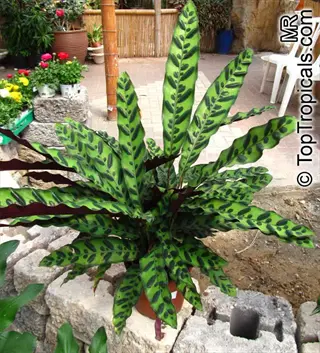
- Leaf Pattern: The original rattlesnake plant features pale green lanceolate leaves with alternating dark green elliptic blotches running along both sides of the central midrib.
- Underside Color: Flip any leaf over to see the signature deep purple-maroon coloring that contrasts with the green upper surface of each blade.
- Leaf Size: Individual leaves can reach up to 18 inches (45.7 centimeters) in length with distinctive wavy margins along the entire leaf edge.
- Growth Habit: This variety grows in upright clumps reaching 1.5 feet (45.7 centimeters) indoors and spreads through underground rhizomes over time.
- Best For: The classic rattlesnake plant suits beginners because it tolerates a bit lower humidity than many other members of the prayer plant family.
- Care Note: NC State Extension classifies this variety as rapid-growing, meaning you can expect visible new leaf development throughout the spring and summer months.
Fun Star Cultivar
- Leaf Pattern: Fun Star displays lighter, more yellow-green base coloring with smaller, more dense and close dark markings compared to the standard rattlesnake plant leaf pattern.
- Size Difference: This cultivar tends to stay more compact than the classic variety, making it an excellent choice for smaller shelves and desktops.
- Availability: Fun Star is one of three named cultivars listed by NC State Extension and can be found at specialty nurseries and online tropical plant retailers.
- Distinguishing Feature: The overall appearance feels brighter and more cheerful than the classic form because of the increased yellow-green pigmentation throughout each leaf.
- Care Similarity: Fun Star requires the same growing conditions as the standard rattlesnake plant including bright indirect light and high humidity above 50%.
- Pairing Suggestion: Place Fun Star alongside the classic variety to create a visually interesting display that shows the range of color within a single species.
Saint Paul Cultivar
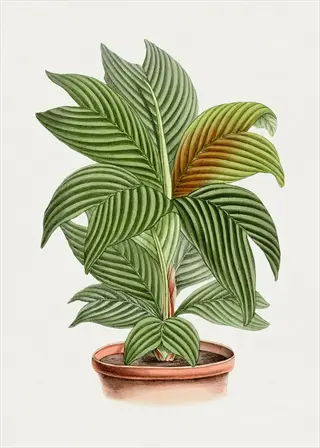
- Leaf Pattern: Saint Paul features wider leaves with bolder dark green markings that create a stronger contrast against its medium green background coloring.
- Growth Style: This cultivar produces a denser growth habit with leaves that emerge closer together, giving the plant a fuller, bushier appearance in its container.
- Rarity Level: Saint Paul is harder to find in retail stores than the classic variety and often requires searching specialty growers or online plant shops.
- Visual Impact: The bolder markings on Saint Paul make it stand out from a distance, which works well as a focal point on a plant shelf or side table.
- Care Requirements: Like all Goeppertia insignis cultivars, Saint Paul needs acidic soil with a pH between 5.5 and 6.5 and consistent moisture without waterlogging.
- Collector Appeal: Plant collectors value Saint Paul for its subtle differences from the classic form, especially the wider leaf blade and stronger pattern definition.
Silver Lance Cultivar
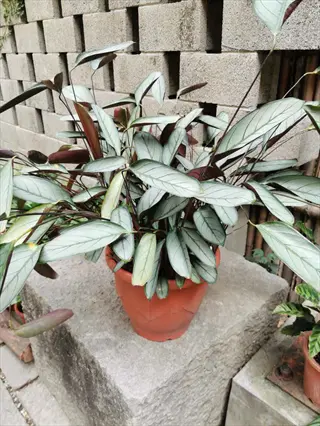
- Leaf Pattern: Silver Lance stands apart with a distinctive silvery sheen overlaying its green leaves, creating an almost metallic appearance under indirect lighting conditions.
- Leaf Shape: The leaves tend to be narrower and more lance-shaped than other cultivars, which gives the plant a more elegant and refined visual profile.
- Availability: Silver Lance is the rarest of the three NC State Extension cultivars and often requires ordering from specialized tropical plant sellers.
- Light Response: The silver coloring on Silver Lance becomes more pronounced in brighter indirect light, making placement near a north or east-facing window ideal.
- Care Consideration: Silver Lance may be a bit more sensitive to low humidity than the classic form, so you should keep levels above 60%.
- Display Tip: The silvery foliage pairs beautifully with dark-colored pots or plant stands that highlight the metallic quality of each leaf surface.
Goeppertia Makoyana (Peacock)
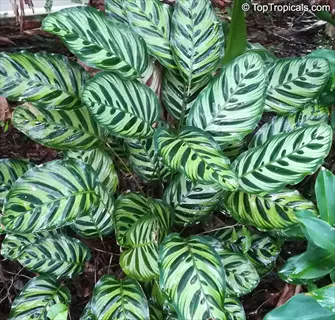
- Common Confusion: Goeppertia makoyana, known as the peacock plant, shows up in stores with wrong rattlesnake plant labels because the foliage looks similar.
- Key Difference: Peacock plant leaves are oval and broader rather than long and lance-shaped, with a feather-like pattern radiating from the center of each leaf.
- Leaf Underside: Both species share purple-maroon undersides, but the peacock plant's upper surface has a more translucent quality that lets light filter through the pattern.
- Size Comparison: The peacock plant tends to stay shorter than the rattlesnake plant, reaching about 12 inches (30.5 centimeters) indoors compared to 20 inches (50.8 centimeters).
- Care Overlap: Both plants share the same care requirements for light, humidity, and water quality, so accidental purchases still result in a beautiful houseplant.
- Identification Tip: Hold a leaf up to light; peacock plant leaves appear stained-glass-like with visible patterns from both sides, while rattlesnake plant leaves are more opaque.
Goeppertia Zebrina (Zebra)
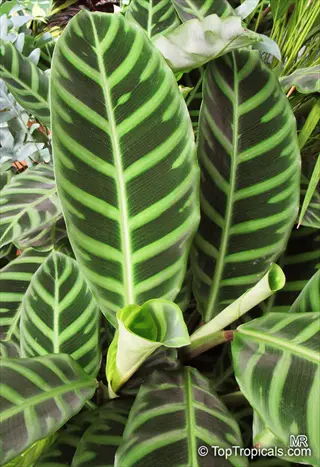
- Common Confusion: Goeppertia zebrina, the zebra plant, shares striped foliage with the rattlesnake plant but has completely different leaf shapes and growth patterns.
- Key Difference: Zebra plant leaves are broad and oval with velvet-textured surfaces, compared to the rattlesnake plant's narrow, glossy, lance-shaped leaves with wavy edges.
- Pattern Style: Zebra stripes run in parallel bands from the midrib to the leaf edge, while rattlesnake markings are elliptic blotches alternating along the central vein.
- Growth Size: The calathea zebrina can grow taller indoors, reaching up to 3 feet (91.4 centimeters), making it a more substantial floor plant than the rattlesnake variety.
- Humidity Needs: Goeppertia zebrina tends to be a bit more demanding about humidity than the rattlesnake plant, often requiring levels consistently above 60%.
- Shopping Tip: Check leaf texture when buying; the zebra plant feels soft and velvety to the touch, while rattlesnake plant leaves have a smooth, glossy surface.
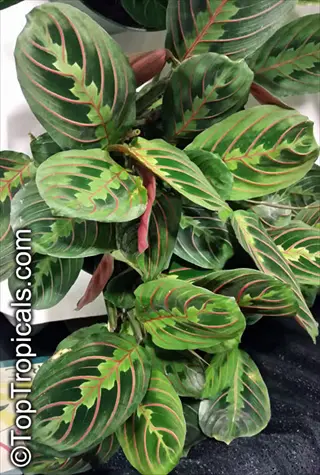
Maranta Leuconeura (Prayer)
- Common Confusion: Maranta leuconeura is the original prayer plant and shares the same family as the rattlesnake plant, leading to frequent name mix-ups between the two.
- Key Difference: Prayer plants have shorter, rounder leaves with herringbone-patterned veins in red or pink, while rattlesnake plants have long lance-shaped leaves with green markings.
- Growth Habit: Prayer plants grow as low spreading ground cover with trailing stems, while rattlesnake plants grow upright in dense clumps from underground rhizomes.
- Leaf Movement: Both species exhibit nyctinasty and fold their leaves at night, but prayer plant movement is often more dramatic with leaves rising almost straight up after sunset.
- Beginner Comparison: Maranta leuconeura grows easier than Goeppertia insignis because it handles a wider range of humidity and water conditions.
- Propagation Difference: Unlike the rattlesnake plant which you can only divide at the roots, prayer plants can also grow new plants from stem cuttings placed in water.
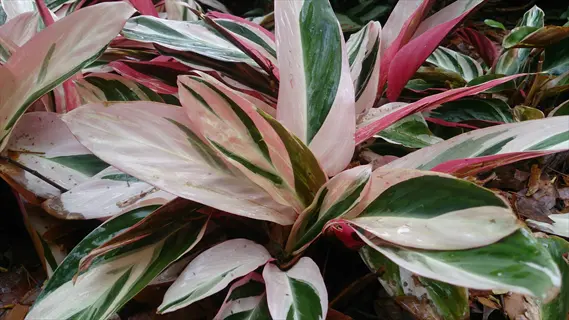
Ctenanthe (Never-Never Plant)
- Common Confusion: Ctenanthe species, often called never-never plants, belong to the same Marantaceae family and often end up with incorrect Calathea labels on them.
- Key Difference: Ctenanthe leaves tend to have a more elongated shape with a fishbone-style pattern and gray-green coloring rather than the bold dark blotches on rattlesnake plants.
- Growth Pattern: Never-never plants tend to grow taller and leggier than rattlesnake plants, often reaching 2 to 3 feet (61 to 91.4 centimeters) with more space between leaves.
- Hardiness Advantage: Ctenanthe species are much more forgiving of imperfect conditions than Goeppertia insignis, tolerating lower humidity and occasional drought better overall.
- Pet Safety: Like the rattlesnake plant, Ctenanthe species are also considered non-toxic, making them a safe substitute if rattlesnake plant care proves too demanding.
- Identification Method: Look at stem structure; Ctenanthe plants show distinct nodes along their stems where new branches emerge, while rattlesnake plants grow leaves directly from the rhizome.
Light, Water, and Soil Needs
Getting rattlesnake plant light right is the first step toward healthy growth. This plant thrives in bright indirect light and can tolerate partial shade, but direct sun will bleach those beautiful markings right off the leaves. A north or east facing window works great in most homes. I keep mine about 3 feet back from an east window and the leaves stay vibrant all year long.
Dust builds up on those long wavy leaves faster than you might expect. Dust on the leaves will slow down how fast your plant can use that light. Wipe each leaf with a damp cloth every 2 weeks to fix this. This small habit keeps your plant converting light into energy at full speed. If your home lacks natural light, a grow light running about 12 hours per day can fill the gap without any risk of sunburn.
Water quality matters more than watering schedule with this plant. Chlorine and fluoride in treated tap water build up in the leaf tissue over time and cause brown tips that won't heal. These chemicals disrupt the cells at the leaf edges where moisture escapes fastest. Use distilled water plants love, or try filtered or collected rainwater instead. Serve it at room temperature because cold water can shock the roots.
The NYBG backs up this advice and says tepid water works best for all calathea species.
Water your rattlesnake plant when the top inch of soil feels dry to your finger. That means about every 7 to 10 days in summer and every 14 to 21 days in winter. Soggy soil leads to root rot faster than almost any other mistake, so good drainage is essential.
Your rattlesnake plant soil needs to hold moisture without getting waterlogged. Mix equal parts peat moss, perlite, and orchid bark. This well-draining soil blend holds the acidic soil pH between 5.5 and 6.5 that your plant wants. The peat moss keeps things moist and acidic. The perlite creates air pockets for the roots. The orchid bark prevents compaction and adds structure. This potting mix calathea growers swear by gives you the best of all worlds. Make sure your pot has drainage holes at the bottom so excess water flows out after each watering session.
Humidity and Temperature Tips
Rattlesnake plant humidity needs go back to the Brazilian rainforest floor. Down there, moisture in the air sits between 70% and 90% all day long. Your plant pulls water through its leaves from that damp air. When your home gets too dry, the leaves lose moisture faster than the roots can send it up. That gap is what causes calathea brown tips on most plants I see.
The calathea humidity requirements for this species sit between 50% and 80% for good growth. Most homes drop to 30% or 40% in winter, which is way too low. I learned this when my first plant turned crispy within 3 weeks of coming home in January. A cheap hygrometer from the hardware store tells you where your room stands right now.
Misting plants with a spray bottle feels like it helps but does almost nothing lasting. The water goes away within minutes. Your plant goes right back to dry air. Misting does wash dust off the leaves and can keep spider mites away. Use it as a pest tool 2 to 4 times per week, but don't rely on it for real moisture.
A humidifier gives you the best results for dry rooms with multiple plants. A pebble tray with water under the pot boosts local moisture by about 5% to 10% for a single plant. You can also group your plants together so they share the moisture each one puts out through its leaves. The table below shows how each method stacks up so you can pick what works for your space.
Steady temps matter just as much as moisture for this plant. Keep your room between 65°F and 75°F for the best growth. Anything below 60°F will hurt the leaves and stall new growth. Don't put your plant near heating vents or drafty windows. Fast temp swings stress the roots and cause the leaves to curl up within hours.
Propagation by Division
Rattlesnake plant propagation works through one method and one method only. You have to divide the plant at the roots. Leaf cuttings won't grow roots no matter what technique you try, and stem cuttings fail the same way. Root division is how this species creates new plants in the wild, and it is how you will do it at home too.
Spring is the best time for calathea division because your plant starts its rapid growth phase then. It can fix root damage much faster in spring than in fall or winter. I tried dividing a plant in October once and lost both halves within 6 weeks. The same technique in April gave me 2 thriving plants that pushed out new leaves within a month. Timing makes all the difference with this species.
The NYBG recommends rattlesnake plant repotting every 1 to 2 years in spring using a peat based mix. That repotting window is the perfect time to divide because you already have the plant out of its pot. Wait at least 6 weeks after repotting before adding any fertilizer so the fresh roots can settle without chemical burn. The steps below walk you through the full process from start to finish.
Choose the Right Timing
- When to Divide: The best time to divide your rattlesnake plant is in early spring, just as new growth begins emerging from the soil surface after winter dormancy.
- Plant Maturity: Only divide plants that have been growing for at least two years and have developed multiple visible clumps with their own leaf clusters rising from the soil.
- Health Check: Make sure the parent plant is healthy with no signs of pest infestation, root rot, or severe stress before attempting division, as weakened plants recover at a slow rate.
Prepare Your Materials
- Pots Needed: Have clean pots ready that are only 1 to 2 inches (2.5 to 5.1 centimeters) larger than each divided root section, because rattlesnake plants prefer snug containers.
- Soil Mix: Prepare fresh acidic potting mix with equal parts peat moss, perlite, and orchid bark to ensure good drainage and the 5.5 to 6.5 pH this plant prefers.
- Sterilization: Clean all cutting tools with rubbing alcohol before use to prevent transferring bacteria or fungal spores to new exposed root tissue during separation.
Remove and Separate Roots
- Extraction Method: Water the plant thoroughly one day before dividing, then gently tip the pot sideways and slide the entire root ball out without pulling on the stems or leaves.
- Root Inspection: Shake off loose soil and examine the rhizome structure to identify natural separation points where individual clumps connect through thinner root bridges.
- Separation Technique: Pull clumps apart at natural division points using your hands first, resorting to a sterilized knife only when roots are too tangled to pull apart by hand.
Plant and Aftercare Routine
- Minimum Size Rule: Each divided section must have at least 2 to 3 healthy leaves and a portion of the rhizome with attached roots to survive independently in its new pot.
- Planting Depth: Place each division at the same depth it was growing before, pressing soil with care around the roots without compacting it too hard around the base.
- Recovery Period: Keep newly divided plants in higher humidity for 4 to 6 weeks, avoid direct sunlight, and do not fertilize until new growth appears confirming the roots have established.
Troubleshooting Leaf Problems
Most rattlesnake plant problems come from your growing setup rather than bugs or disease. The leaves tell you what went wrong if you know how to read them. When I first started growing these, I noticed the same 6 issues over and over in my plants and in those of friends. Calathea brown tips and rattlesnake plant yellow leaves both point to causes you can fix at home with the right steps.
NC State Extension lists root rot, fungal leaf spots, and brown edges from low humidity as the top causes of damage. Calathea curling leaves and drooping leaves also trace back to your setup most of the time. Aphids, scale, mealybugs, and spider mites cause trouble too, but your environment drives about 90% of the issues you will face. Match your plant's symptoms to the fixes below.
Brown and Crispy Leaf Tips
- Primary Cause: Low humidity below 40% causes moisture to evaporate from leaf edges faster than the plant can replace it, leading to brown, dry, crispy tips.
- Secondary Cause: Chlorine and fluoride in untreated tap water accumulate in leaf tissue over time, causing chemical burns that appear as progressive browning starting at the tips.
- Quick Fix: Switch to distilled, filtered, or rainwater immediately and raise humidity above 50% using a pebble tray or humidifier near the plant.
Yellowing Leaves Throughout
- Primary Cause: Overwatering that keeps soil constantly soggy deprives roots of oxygen, causing them to suffocate and lose their ability to take in nutrients.
- Secondary Cause: Exposure to cold drafts or temperatures below 60°F (15.6°C) slows metabolism and triggers yellowing as the plant shuts down leaf function.
- Quick Fix: Check soil moisture before watering by inserting your finger one inch deep; if it still feels damp, wait another two to three days before adding water.
Curling or Rolling Leaves
- Primary Cause: The plant curls its leaves inward to reduce surface area and minimize water loss when humidity drops below the 50% minimum it needs to work well.
- Secondary Cause: Direct sunlight hitting the leaves causes heat stress that triggers protective curling as the plant tries to shield its delicate tissue from burning.
- Quick Fix: Move the plant away from any direct light source and boost humidity right away; leaves should uncurl within 24 to 48 hours if the cause is environmental.
Drooping or Wilting Stems
- Primary Cause: Underwatering causes the plant to lose turgor pressure in its cells, making stems unable to hold leaves upright and causing the entire plant to droop visibly.
- Secondary Cause: Root rot from chronic overwatering destroys the root system until the plant can no longer absorb water at all, mimicking the appearance of severe underwatering.
- Quick Fix: Check roots by gently removing the plant from its pot; healthy roots are white and firm, while rotted roots appear brown, mushy, and may smell foul.
Faded or Bleached Leaf Color
- Primary Cause: Too much direct sunlight breaks down chlorophyll in the leaves, causing the vibrant dark green markings to fade into a washed-out pale green or yellowish tone.
- Secondary Cause: Nutrient deficiency during the growing season can cause overall color fading, especially if the plant has not been fertilized in more than two months.
- Quick Fix: Relocate the plant to a spot with bright but filtered light at least 3 feet (91.4 centimeters) from any window that receives direct afternoon sun exposure.
Dark Spots on Leaf Surface
- Primary Cause: Fungal leaf spot disease develops when water sits on leaf surfaces for extended periods, especially in cool conditions with poor air circulation around the plant.
- Secondary Cause: Bacterial infections can enter through damaged leaf tissue, creating dark water-soaked spots that expand outward and may develop yellow halos around the edges.
- Quick Fix: Remove affected leaves with sterilized scissors, stop spraying water on the foliage, improve air circulation, and water only at the soil level going forward.
5 Common Myths
Misting your rattlesnake plant several times a day is the best way to provide the humidity it needs.
Misting has minimal lasting effect on humidity levels. A pebble tray, humidifier, or grouping plants together provides much more consistent moisture in the air.
Rattlesnake plants need very low light and can survive in a dark corner of any room without problems.
Rattlesnake plants need bright indirect light to maintain their vibrant leaf patterns. Too little light causes leggy growth and faded markings over time.
Regular tap water is perfectly fine for watering rattlesnake plants because all houseplants tolerate it.
Rattlesnake plants are sensitive to chlorine and fluoride in treated tap water. Using distilled, filtered, or collected rainwater prevents brown leaf tips.
You can propagate a rattlesnake plant from a single leaf cutting placed in water just like a pothos.
Rattlesnake plants can only be propagated through root division. Leaf cuttings will not develop roots or produce new growth regardless of the method used.
A rattlesnake plant that folds its leaves at night is stressed and needs immediate attention to recover.
Leaf folding at night is a natural behavior called nyctinasty, controlled by the plant's internal circadian clock. It is a sign of a healthy, well-functioning plant.
Conclusion
Your rattlesnake plant rewards steady care with fast growth and leaves that move on their own clock each day. Rattlesnake plant care comes down to 2 key habits. Use filtered or distilled water to keep the leaves safe from chemical burns. Keep humidity above 50% so those wavy edges stay green and crisp.
This tropical houseplant stands out because it looks stunning and stays safe around your pets at the same time. The ASPCA says calathea lancifolia is non-toxic to cats, dogs, and horses. That makes it one of the best pet safe houseplant choices you can bring into your home today.
Watch your rattlesnake plant fold its leaves each evening as the light fades in your room. That motion comes from a clock inside the plant that goes back to its roots on the Brazilian rainforest floor. When your plant moves on schedule, it tells you that your care routine is working just right.
Once you get the hang of this plant, the rest of the prayer plant family is waiting for you to try. When I first tried growing one rattlesnake plant, I never expected to end up with 7 from the same family on my shelf. Your rattlesnake plant gave you the skills to grow any of them with confidence, so grab one the next time you see it at the shop.
External Sources
Frequently Asked Questions
Are rattlesnake plants hard to keep alive?
Rattlesnake plants need consistent humidity and filtered water but are considered easier than many other calathea varieties once you establish a routine.
How do you take care of a rattlesnake plant?
Provide bright indirect light, keep soil consistently moist with filtered water, maintain humidity above 50 percent, and feed monthly during the growing season.
What is the rattlesnake plant used for?
The rattlesnake plant is primarily used as a decorative indoor houseplant valued for its striking patterned foliage and pet-safe properties.
Is a rattlesnake plant good for indoors?
Yes, rattlesnake plants are excellent indoor plants because they prefer indirect light, are non-toxic to pets, and adapt well to container growing.
Is it safe to sleep with a snake plant?
Yes, snake plants are non-toxic and release oxygen at night through a process called crassulacean acid metabolism, making them safe bedroom companions.
How often do I water a rattlesnake plant?
Water your rattlesnake plant when the top inch of soil feels dry, typically every 7 to 10 days in summer and every 14 to 21 days in winter.
How long do rattlesnake plants live for?
With proper care, rattlesnake plants can live for decades, and prayer plant family members have been documented surviving up to 30 years indoors.
Do rattlesnake plants clean the air?
While all plants absorb carbon dioxide and release oxygen, research shows you would need hundreds of plants per room for meaningful air purification.
Are coffee grounds good for snake plants?
Used coffee grounds can slightly acidify soil and add nitrogen, but they should be composted first and used sparingly to avoid mold and root damage.
What is the spiritual meaning of the rattlesnake plant?
The rattlesnake plant is often associated with new beginnings and mindfulness because its leaves open and close daily in a rhythmic, meditative pattern.