

Introduction
Your ficus benjamina just dropped half its leaves overnight and you have no idea what went wrong. This weeping fig has a reputation for being fussy, but the truth is that it rewards owners who learn its simple rules. Most people give up too soon and miss out on one of the most stunning indoor trees you can grow at home.
I grew my first benjamin fig over 8 years ago and killed it within 3 months. That failure taught me more about this tropical plant than any care label ever could. Your ficus benjamina can grow 2 to 10 feet tall indoors with glossy leaves that measure 2 to 5 inches long. This tree is the official tree of Bangkok and grows wild across Southeast Asia and northern Australia.
Think of your ficus like a loyal pet that thrives on routine. It wants the same spot, the same watering schedule, and the same light each day. Shake up that routine and it throws a tantrum by dropping leaves all over your floor. Keep things stable and this indoor houseplant will reward you with a lush green canopy that lasts for decades.
This guide covers the 13 named cultivars you can pick from and the science behind leaf drop. You will also learn how to prune, propagate, and protect your weeping fig from common pests.
8 Popular Ficus Benjamina Varieties
You get to pick a new personality for your room when you browse ficus benjamina varieties. I grew 6 of these ficus cultivars in my own home over the years and found clear winners for each room. The Barok has twisted leaves and the Golden King shows off cream edges on every leaf.
One key care difference that most guides skip is light needs for your plant. A variegated weeping fig like ficus Starlight needs much brighter light than solid green types because the white leaf parts make less food for the plant. If your room is darker, you should pick Danielle or Wintergreen since they handle low light with ease. Grab a ficus bonsai type like Too Little if you want a small desk plant instead of a tall tree for your shelf.
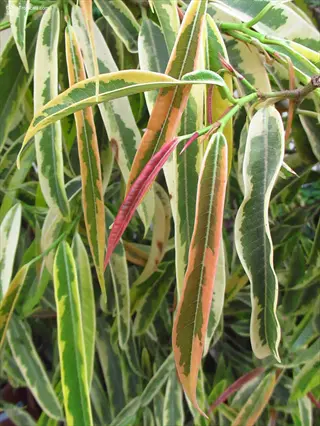
Ficus Benjamina Starlight
- Leaf Pattern: Starlight features striking white and cream variegation across its glossy green leaves, making it one of the most decorative cultivars available for indoor spaces.
- Light Needs: This variety requires brighter indirect light than solid green cultivars because the white leaf portions contain less chlorophyll and contribute less to photosynthesis.
- Growth Habit: Starlight grows at a moderate pace and reaches 6 to 8 feet (1.8 to 2.4 meters) indoors with an upright branching structure and graceful weeping tips.
- Best For: Ideal for bright living rooms, offices with large windows, or conservatories where it receives consistent filtered light throughout the day.
- Care Note: Variegation fades in low light conditions, and the plant may revert to producing solid green leaves if not given sufficient brightness.
- Availability: Available at most garden centers and online nurseries, often sold under the alternative name Twilight in European markets.
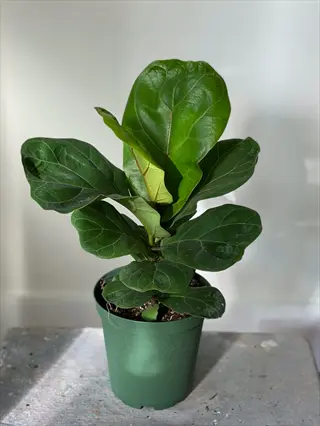
Ficus Benjamina Danielle
- Leaf Pattern: Danielle produces deep, rich green leaves with a glossy finish that are thicker and more leathery than the standard species form.
- Light Needs: Tolerates lower light conditions better than most ficus varieties, making it a reliable choice for rooms with moderate natural light.
- Growth Habit: Grows into a compact, dense tree shape reaching 4 to 6 feet (1.2 to 1.8 meters) indoors with a full canopy requiring less pruning.
- Best For: Well-suited for bedrooms, hallways, and interior spaces where light levels fluctuate throughout the year.
- Care Note: Known for being one of the more resilient cultivars with less tendency toward leaf drop compared to other ficus benjamina varieties.
- Availability: Common in plant shops across Europe and North America, often recommended by nurseries as the best beginner ficus variety.
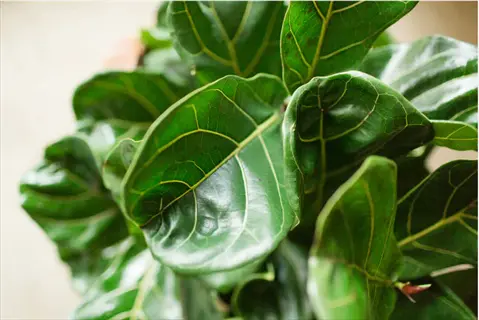
Ficus Benjamina Barok
- Leaf Pattern: Barok stands out with its curled and twisted leaves that spiral inward, creating an eye-catching sculptural appearance unlike any other ficus cultivar.
- Light Needs: Prefers bright indirect light similar to the standard species, though its curled leaves capture light differently and may need slight position adjustments.
- Growth Habit: A slow to moderate grower that reaches 3 to 5 feet (0.9 to 1.5 meters) indoors with a artistic branching pattern.
- Best For: Perfect as a decorative statement plant in modern interiors where its unusual leaf shape draws attention and sparks conversation.
- Care Note: The curled leaves can trap dust more easily than flat-leaved varieties, so regular gentle cleaning with a damp cloth keeps the plant healthy.
- Availability: Less common than other cultivars and may require ordering from specialty nurseries or online plant retailers.
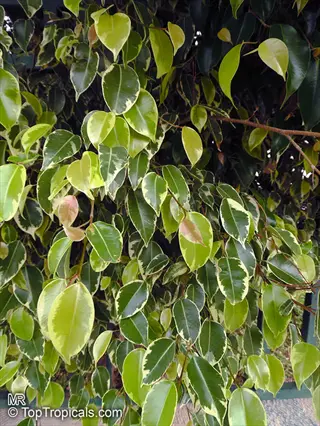
Ficus Benjamina Golden King
- Leaf Pattern: Golden King displays elegant cream to yellow margins along the edges of its green leaves, giving the entire canopy a warm golden glow in bright light.
- Light Needs: Requires bright filtered light to maintain its variegation pattern, and the golden edges may darken or disappear in dim conditions.
- Growth Habit: Reaches 6 to 8 feet (1.8 to 2.4 meters) indoors with a graceful upright form and dense canopy that responds well to shaping.
- Best For: Ideal for sunrooms, bright living areas, or near south-facing windows where filtered light brings out the warm leaf coloring.
- Care Note: More sensitive to overwatering than solid green varieties, so allow the top layer of soil to dry between waterings.
- Availability: Available at most well-stocked garden centers, though selection may be seasonal depending on your region.
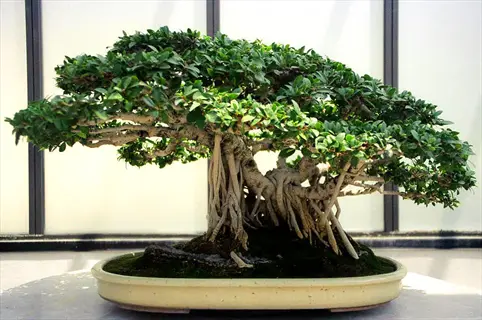
Ficus Benjamina Too Little
- Leaf Pattern: Too Little produces tiny, densely packed leaves on compact branches, creating a miniature tree appearance perfect for bonsai styling and training.
- Light Needs: Thrives in bright indirect light and can tolerate lower light conditions than variegated types due to its fully green leaf coverage.
- Growth Habit: A dwarf cultivar that stays under 2 feet (60 centimeters) tall, making it the smallest ficus benjamina variety available.
- Best For: Made for bonsai enthusiasts and perfect for desks, shelves, or small spaces where a full-sized ficus tree would not fit.
- Care Note: Requires more frequent watering than larger cultivars because its small pot and dense root system dry out faster in indoor conditions.
- Availability: Found through bonsai specialty shops and online retailers that carry dwarf houseplant cultivars.

Ficus Benjamina Exotica
- Leaf Pattern: Exotica features elongated, twisted dark green leaves with prominent veining that gives the foliage a refined tropical appearance.
- Light Needs: Adapts well to a range of indoor light conditions from moderate to bright, making it one of the most versatile cultivars for different room settings.
- Growth Habit: A vigorous grower that can reach 8 to 10 feet (2.4 to 3 meters) indoors with an open, airy canopy and characteristic weeping branch tips.
- Best For: Excellent as a large floor specimen in spacious rooms, lobbies, or commercial interiors where its height and spread can develop fully.
- Care Note: Benefits from regular pruning to maintain shape and prevent the canopy from becoming too sparse or leggy over time.
- Availability: One of the most popular and available cultivars, found at most garden center and home improvement store year-round.

Ficus Benjamina Natasja
- Leaf Pattern: Natasja produces small, rounded bright green leaves that are more compact than the standard species, giving the plant a neat and tidy look.
- Light Needs: Performs well in moderate to bright indirect light and maintains its compact form even without intensive pruning in good conditions.
- Growth Habit: A semi-dwarf variety reaching 3 to 4 feet (0.9 to 1.2 meters) indoors with a bushy growth pattern and dense branching.
- Best For: Popular for table displays, windowsills, and as a braided trunk specimen because its flexible young stems train easily into decorative forms.
- Care Note: Responds well to braiding when young, and three or more stems planted together can be woven into an attractive braided trunk feature.
- Availability: Sold across European and North American markets, often found pre-braided at garden centers and home decor stores.
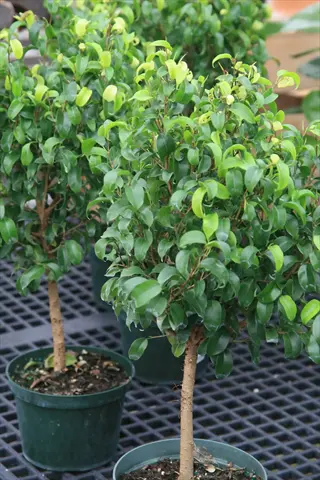
Ficus Benjamina Wintergreen
- Leaf Pattern: Wintergreen holds rich, deep green leaves that retain their color well even during darker winter months when other ficus varieties may look dull.
- Light Needs: More tolerant of low light than most ficus cultivars, maintaining leaf color and density in conditions that would stress variegated types.
- Growth Habit: Grows to 6 to 8 feet (1.8 to 2.4 meters) indoors with a sturdy upright structure and less tendency to drop leaves during seasonal changes.
- Best For: An excellent choice for rooms with limited natural light or for growers who have struggled with leaf drop in more sensitive ficus varieties.
- Care Note: One of the hardiest cultivars available, with better cold tolerance and resistance to environmental stress than the standard species form.
- Availability: Available through specialty plant nurseries and online retailers, though less often stocked than Starlight or Danielle.
Care Essentials at a Glance
This ficus care guide gives you exact numbers instead of vague tips you find on most blogs. I spent years testing different conditions with my own trees and these ranges gave me the best results. Your ficus light requirements sit between 400 and 800 foot candles of bright filtered light for the best growth.
NC State Extension rates this plant at USDA zones 10a to 12b with high drought tolerance outdoors. Growth rate falls between medium and fast based on whether your tree lives inside or outside. The table below covers watering ficus timing and ficus soil mix. You also get ficus humidity and ficus temperature ranges so you can bookmark this page.
Pruning and Shaping
Ficus pruning works a lot like giving your tree a good haircut. You cut above an outward facing node and the new growth pushes away from the center. I tried cutting at random spots on my first weeping fig pruning attempt and ended up with a lopsided mess that took months to fix.
NC State Extension says light pruning in late autumn or winter works best for ficus shaping. Heavy cuts shorten your tree's life so you want to take it slow. Whether you want a braided ficus trunk, a lollipop top, or a ficus bonsai style, the 4 methods below will walk you through each step.
Standard Tree Form
- Method: Remove all side branches from the lower third of the trunk to create a clear stem with a rounded canopy on top, resembling a miniature tree.
- Timing: Start shaping when the plant reaches 3 feet (90 centimeters) tall, making gradual cuts over several months rather than removing everything at once.
- Maintenance: Pinch back new growth at the canopy edges every four to six weeks during the growing season to encourage dense, compact branching.
Braided Trunk Style
- Method: Plant three young flexible stems together and weave them in an over under pattern, securing with soft ties as you braid upward.
- Timing: Begin braiding when stems are still green and bendable, at about 12 to 18 inches (30 to 45 centimeters) in height.
- Maintenance: Remove the ties once the trunks fuse together after about one year, and continue braiding new growth as the plant gains height.
Lollipop Shape
- Method: Select a single strong central stem and remove all side shoots until the desired trunk height is reached, then allow the top canopy to grow free.
- Timing: Shape during the active growing season in spring and summer when the plant recovers fastest from pruning cuts and produces new growth quick.
- Maintenance: Trim the round canopy every six to eight weeks to maintain its shape and remove any shoots that sprout below the canopy line.
Bonsai Training
- Method: Use the Too Little cultivar or a young standard ficus in a wide flat bonsai pot, wiring branches to direct growth into the desired shape.
- Timing: Wire branches in early spring before new growth hardens, and remove wires after three to four months before they cut into the expanding bark.
- Maintenance: Root prune every two to three years during repotting, removing about one third of the root mass to keep the plant sized right for its container.
Propagation Methods
Ficus propagation gives you free plants from the tree you already own. UF/IFAS documents that ficus cuttings and layering are the two proven methods for this species. I used rooting hormone on my first batch of weeping fig propagation attempts and got roots in under 4 weeks on most stems.
Water rooting feels like watching a science experiment unfold right on your windowsill. You can see the roots form each day through the glass jar. The ficus air layering method takes more patience but works great on thick branches that are too big for normal cuttings.
Stem Cuttings in Soil
- When to Cut: Take cuttings in late spring or early summer when the plant grows strong, selecting healthy stems with at least three to four leaf nodes.
- Preparation: Cut a 4 to 6 inch (10 to 15 centimeter) section below a leaf node using clean sharp scissors, remove the lower leaves, and dip the cut end in rooting hormone powder.
- Planting: Insert the cutting about 2 inches (5 centimeters) deep into moist perlite and peat mix, then cover with a clear plastic bag to keep humidity above 70%.
- Timeline: Roots form within four to six weeks, and you can confirm rooting by giving the cutting a gentle tug to feel resistance before removing the humidity cover.
Water Propagation
- Setup: Place a fresh stem cutting in a clear glass jar filled with room temperature filtered water, making sure at least two leaf nodes sit below the waterline.
- Maintenance: Change the water every three to four days to stop bacteria from growing, and put the jar in bright indirect light away from direct sun that could heat the water.
- Root Development: White root nubs show up within two to three weeks, and cuttings are ready for potting once roots reach 2 inches (5 centimeters) in length.
- Transition: Move water rooted cuttings into a light soil mix with care, keeping the soil moist for the first two weeks while the roots adjust to their new home.
Air Layering
- Target Area: Pick a healthy branch at least pencil thick and make a 1 inch (2.5 centimeter) upward cut about one third through the stem, then insert a small wedge to keep it open.
- Wrapping: Pack damp sphagnum moss around the cut area in a ball about the size of a tennis ball, then wrap it tight with plastic wrap and secure both ends with twist ties.
- Monitoring: Check the moss every week to make sure it stays damp, and watch for white roots visible through the plastic within six to ten weeks.
- Separation: Once a dense root network fills the moss ball, cut the branch below the new root zone and pot it in fresh well draining soil, keeping humidity high for the first month.
Multiple Cuttings Method
- Purpose: Plant three to five rooted cuttings together in one pot to create a fuller, bushier plant that looks like a mature ficus without years of waiting.
- Spacing: Place each cutting about 2 inches (5 centimeters) apart in a 6 inch (15 centimeter) pot, angling them a bit outward so the tops spread as they grow.
- Care Advantage: Grouped cuttings support each other and create a denser root system that handles watering changes better than a single cutting growing alone.
- Growth Result: Within one growing season, the combined cuttings will fill out to look like a single bushy plant, and their flexible young stems can be braided together for a decorative trunk.
Pests and Treatments
Ficus pests show up when you least expect them and can spread fast if you miss the early signs. Spider mites ficus problems are the most common based on NC State Extension data. Mealybugs ficus owners report and ficus scale insects on stems come in close behind. I noticed my first mealybug outbreak on a Monday and it had spread to 3 branches by Friday.
The key to beating any pest is early action with the right insecticidal soap or neem oil treatment. UF/IFAS also warns about verticillium wilt and sooty mold. Both are fungal problems that often follow pest damage. Below you will find each common pest ranked from most to least frequent along with the exact steps to treat your tree.
You can make your own insecticidal soap at home by mixing 1 tablespoon of pure liquid soap with 1 quart of warm water in a spray bottle. Test the mix on one leaf first and wait 24 hours to check for damage before you spray the whole tree.
Leaf Drop Troubleshooting
Ficus leaf drop is the number one issue indoor growers report according to NC State Extension data. Your weeping fig dropping leaves acts like a stress response, much like how you lose your appetite when life gets hectic. The tree sheds foliage to save energy until its world feels stable again. I found that ficus losing leaves is almost always tied to one of 5 clear causes listed below.
Before you panic about ficus yellow leaves or ficus brown leaves, check for tiny white spots on the leaf surface first. These are cystoliths, which are natural calcium deposits and not signs of disease at all. Once you rule those out, work through the list below from top to bottom to find your exact problem.
Sudden Location Change
- Symptom: Healthy green leaves drop fast within days of moving the plant to a new spot, often affecting 20% to 30% of the canopy in the first week.
- Cause: Ficus adapts its leaf angle to get the most from a specific light source. Moving it forces the plant to shed old leaves and grow new ones aimed at the new light.
- Fix: Place the plant in its new location and resist the urge to move it again, as each move restarts the process and extends total recovery time to several weeks.
Overwatering Damage
- Symptom: Leaves turn yellow starting from the lower branches and feel soft or limp rather than crisp, while the soil surface stays wet for more than five days between waterings.
- Cause: Waterlogged soil chokes the roots by filling air pockets that roots need for oxygen exchange, which leads to root rot and blocks nutrient uptake.
- Fix: Allow the top 1 to 2 inches (2.5 to 5 centimeters) of soil to dry before watering again, and check that the drainage holes are not blocked by packed soil or roots.
Cold Drafts and Temperature
- Symptom: Leaves curl inward and drop after cold air hits them, most often during winter months near windows, outer doors, or air conditioning vents.
- Cause: Ficus is tropical and suffers tissue damage when temps drop below 55°F (13°C) even for short bursts.
- Fix: Move the plant at least 3 feet (1 meter) away from drafty windows and doors, and use a thermometer to confirm the area stays between 60°F and 75°F (16°C to 24°C).
Low Humidity Stress
- Symptom: Leaf tips turn brown and crispy while edges curl upward, and the plant drops older leaves inside the canopy while trying to hold moisture in newer outer growth.
- Cause: Indoor heating in winter can drop humidity below 30%, far below the 50% to 70% range that ficus needs for healthy breathing.
- Fix: Group the ficus with other houseplants to create a microclimate, place a pebble tray filled with water beneath the pot, or run a humidifier nearby during dry winter months.
Insufficient Light
- Symptom: The plant thins out over weeks with sparse new growth and long leggy stems reaching toward the nearest window, dropping inner and lower leaves first.
- Cause: Ficus needs 400 to 800 foot candles of bright indirect light, and anything below 200 foot candles triggers the plant to shed leaves it cannot keep alive.
- Fix: Move your tree to within 3 to 5 feet (1 to 1.5 meters) of a bright window with filtered light, or add a full spectrum grow light running 10 to 12 hours each day.
Air Quality and Allergens
You may have heard that your ficus works as a ficus air purifier for your home. The NASA clean air study from 1989 tested this claim in sealed chambers and found real results. Ficus removed 47.4% of formaldehyde, 30% of benzene, and 10.5% of trichloroethylene from the test space.
Here is the catch most blogs won't tell you about indoor air quality claims. Those tests ran in sealed rooms, not real homes with open windows and HVAC systems. You would need 10 to 1,000 plants per square meter to match what normal air exchange already does in your house. So yes, your ficus cleans some air, but don't expect one tree to replace a good ventilation setup.
The ficus allergen risk is something I wish someone told me about before I bought my first plant. Research shows this tree ranks as the third most common indoor allergen after dust mites and pets. Scientists found 11 allergenic parts in the plant sap, with 3 classified as major. The main way you get exposed is through breathing in leaf dust. If you have a ficus latex allergy or react to fig fruit, take extra care since PubMed studies confirm cross reactions between the two.
5 Common Myths
Ficus benjamina is a low-maintenance plant that requires very little attention to thrive indoors.
Ficus benjamina actually has high maintenance needs including consistent watering, humidity control, and sensitivity to environmental changes that demand regular monitoring.
Placing a ficus benjamina near a window with direct sunlight is the best way to help it grow faster.
Direct sunlight scorches ficus leaves and causes brown spots; bright indirect light filtered through a sheer curtain produces the healthiest growth.
Ficus benjamina purifies indoor air so effectively that one plant can clean an entire room of toxins.
The NASA study tested plants in sealed chambers; real buildings would need 10 to 1,000 plants per square meter to match natural air exchange rates.
When a ficus drops its leaves, it means the plant is dying and cannot be saved or recovered.
Leaf drop is a natural stress response to environmental changes; once conditions stabilize, ficus benjamina typically regrows its foliage within weeks.
All ficus benjamina varieties look the same and only differ in their scientific classification names.
Over thirteen named cultivars exist with distinct features including variegated leaves like Starlight, curly foliage like Barok, and dwarf forms like Too Little for bonsai.
Conclusion
Ficus benjamina care comes down to giving your weeping fig a stable routine and sticking to it. You need 400 to 800 foot candles of bright filtered light and 50% to 70% humidity. Your soil should drain well at a pH between 6.0 and 6.5. With over 13 cultivars to pick from, there is a ficus houseplant for every room in your home.
I also want you to keep the allergen data in mind since this is the third most common indoor allergen after dust mites and pets. If you or anyone in your home has sensitivities, take steps to reduce leaf dust and wash your hands after handling the sap. This is something most guides skip and it matters for your indoor ficus tree.
Your ficus has a reputation for being difficult but I learned that the plant is quite simple once you stop making sudden changes. Give it the same spot, the same light, and the same water schedule each week. A ficus benjamina can live up to 70 years as a houseplant when you treat it right.
Start with the care table from this guide and check your plant against it once a week. Before long you will see new leaves pushing out and a canopy that fills in thicker than before. Your weeping fig will reward your patience in ways that few other houseplants can match.
External Sources
Frequently Asked Questions
Was mag der Ficus Benjamini nicht?
Ficus benjamina dislikes cold drafts, sudden location changes, overwatering, and direct harsh sunlight.
Wo steht der Ficus am besten?
A bright spot with indirect light, away from drafts and heating vents, is ideal for ficus benjamina.
Wie oft muss man einen Benjamini gießen?
Water when the top inch of soil feels dry, typically once a week in summer and every two weeks in winter.
Was tun, wenn der Ficus Benjamini seine Blätter verliert?
Check for drafts, overwatering, or sudden light changes and stabilize the environment to stop leaf drop.
Wie kann ich meinen Ficus glücklich machen?
Provide consistent light, humidity above 50 percent, regular feeding in spring and summer, and avoid moving it.
Ist Kaffeesatz gut für Ficus benjamini?
Coffee grounds can slightly acidify soil, but should be composted first and used sparingly to avoid mold.
Wie oft sollte man einen Ficus besprühen?
Mist ficus leaves two to three times per week, or daily during winter when indoor heating lowers humidity.
Wie wird Benjamini buschiger?
Regular pruning of branch tips in spring encourages branching and produces a fuller, bushier growth pattern.
Kann ich Kaffeesatz als Dünger für Ficus verwenden?
Composted coffee grounds work as a mild fertilizer, but fresh grounds can attract fungus gnats and cause mold.
Wie sieht ein übermäßig bewässerter Ficusbaum aus?
Overwatered ficus shows yellow drooping leaves, mushy stems near the base, and a sour smell from the soil.