

Introduction
The first spring flowers push through cold soil while snow still patches the yard. That sight alone can shift your whole mood after months of gray skies. They act like nature's alarm clock, telling every living thing that warmer days have arrived. I've grown them for over 15 years and still feel a rush when I spot the first crocus tips poking through the mulch.
What shocked me most is the science behind that good feeling. A 2021 study tracked brain waves and heart rates of 50 people who looked at flowers for just 3 minutes. Yellow spring blooms scored best for relaxation. They cut stress faster than red or white blooms in every test the team ran.
Climate shifts are also changing when these spring blooms appear each year. Close to 10,000 plant records show blooms now open 1.8 to 2.3 days sooner for every 1 degree Celsius of warming. That means your spring garden today runs on a different clock than it did a decade ago. A smart mix of early, mid, and late picks keeps color going all season long.
This guide covers the best spring flowers for every type of yard. You'll find which blooms support pollinators, which colors boost your mood, and how to care for your plants from planting day through the last petal drop.
Best Spring Flowers by Bloom Time
I tested and grew these popular spring flowers in my own beds over the years. I grouped them by bloom time so you can plan for color from February through June. Early crocus bulbs kick things off, then mid-spring tulips and hyacinths fill in. Late bloomers like peonies close the show with big, showy petals.
Each flower below gets a "best for" tag so you can make fast choices for your garden. Some spring bulbs shine in cut vases while others work best when you let them spread across a lawn. You can choose from close to 4,000 tulip cultivars and about 32,000 daffodil types. That means you have options no matter your taste or style.
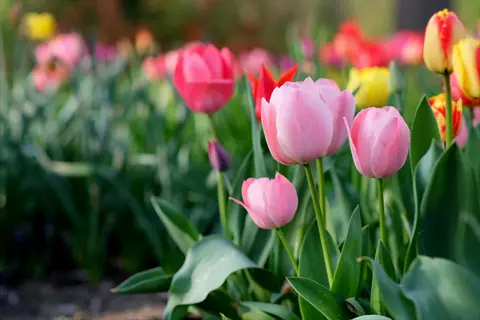
Tulips
- Bloom Time: Tulips flower from early to late spring depending on the variety, with early types opening in March and late types lasting into May across zones 3 through 8.
- Colors: Available in nearly every color including red, pink, yellow, purple, white, orange, and bi-color blends, with close to 4,000 registered cultivars to choose from.
- Growing Needs: Plant bulbs in fall about 6 inches (15 centimeters) deep in well-drained soil with full sun exposure for the strongest stems and brightest blooms.
- Best For: Cut flower arrangements and formal garden beds where you want bold, uniform color blocks that make a strong visual statement from the street.
- Pollinator Value: Early-blooming tulips provide nectar for bees emerging from winter dormancy when few other food sources are available in the garden.
- Care Tip: Leave foliage standing after petals drop so the plant can photosynthesize and store energy in the bulb for next year's display.
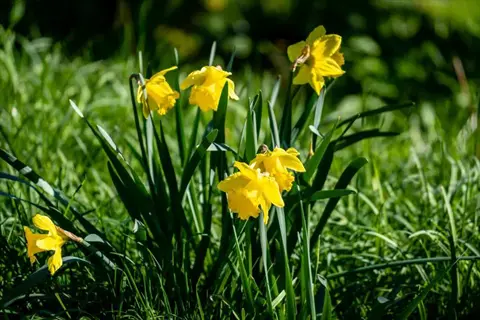
Daffodils
- Bloom Time: Daffodils bloom from late winter through mid-spring, with some early varieties opening as soon as February in warmer zones 6 through 9.
- Colors: Most recognized for their cheerful yellow and white trumpets, daffodils also come in orange, pink, and cream across about 32,000 registered cultivars.
- Growing Needs: Plant bulbs 6 inches (15 centimeters) deep in fall in well-drained soil with full to partial sun, and they will spread and grow back year after year.
- Best For: Naturalizing in lawns and woodland edges where they can spread freely and create large drifts of early spring color without much maintenance.
- Pollinator Value: Daffodils are one of the first nectar sources available to early pollinators, and their trumpet shape attracts long-tongued bees and butterflies.
- Care Tip: Daffodils are deer and rodent resistant thanks to toxic alkaloids in the bulb, making them a reliable choice for gardens with wildlife pressure.
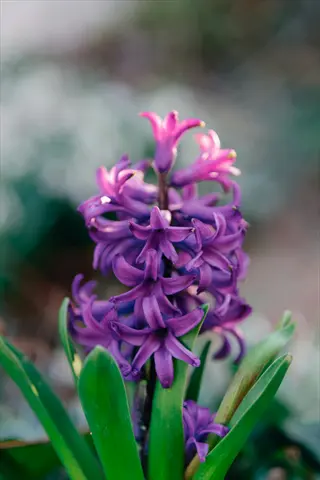
Hyacinths
- Bloom Time: Hyacinths flower in early to mid-spring, often April, producing dense spikes of star-shaped florets that last about two to three weeks in the garden.
- Colors: Available in purple, blue, pink, white, yellow, and deep red, hyacinths offer some of the richest, most saturated colors of any spring bulb.
- Growing Needs: Plant bulbs 6 inches (15 centimeters) deep in fall in fertile, well-drained soil with full sun, and wear gloves as bulbs can irritate skin.
- Best For: Fragrance lovers who want a powerful sweet scent that can perfume an entire patio or room when cut and placed in a vase indoors.
- Pollinator Value: The clustered florets provide easy landing platforms for bees and the strong fragrance attracts pollinators from a considerable distance in the garden.
- Care Tip: After the first year the flower spikes may be smaller, but hyacinths still produce lovely, looser blooms that look natural in cottage-style gardens.
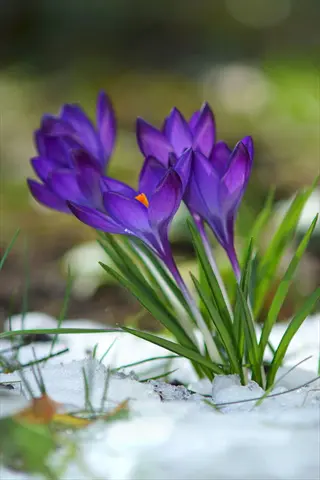
Crocuses
- Bloom Time: Crocuses are among the earliest spring flowers, often pushing through snow in late February to March in zones 3 through 8.
- Colors: Found in purple, yellow, white, and striped combinations, crocuses create a colorful carpet when planted in large groups across a lawn or border.
- Growing Needs: Plant corms 3 inches (7.5 centimeters) deep in fall in well-drained soil with full to partial sun, spacing them 3 inches apart in clusters.
- Best For: Planting in lawns where they naturalize freely and provide the very first color of the season before the grass even needs mowing.
- Pollinator Value: Crocuses are critical early-season food sources for bees, providing both pollen and nectar when almost nothing else is blooming in the landscape.
- Care Tip: Avoid mowing the lawn until crocus foliage has yellowed and died back naturally, which takes about six weeks after flowering ends.
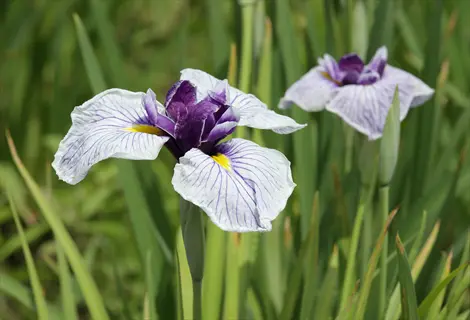
Irises
- Bloom Time: Irises bloom from mid to late spring, with bearded varieties peaking in May and Siberian types extending into early June across zones 3 through 9.
- Colors: Irises come in nearly every color of the rainbow including blue, purple, yellow, white, bronze, and black, with about 300 species worldwide.
- Growing Needs: Plant rhizomes just below the soil surface in late summer or early fall in a sunny spot with good drainage, as buried rhizomes are prone to rot.
- Best For: Adding vertical interest and dramatic sword-shaped foliage to mid-spring gardens when early bulbs have finished and summer flowers have not yet started.
- Pollinator Value: The large, open blooms of bearded irises attract bumblebees and other large pollinators that use the fuzzy 'beard' as a landing strip.
- Care Tip: Divide clumps every three to four years in late summer to prevent overcrowding, which reduces flowering and increases the risk of disease.
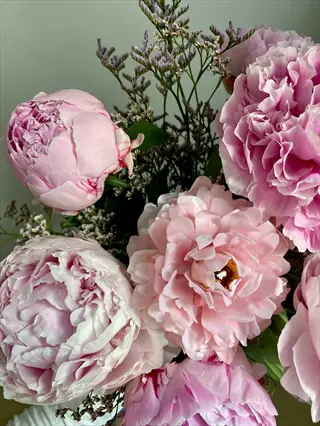
Peonies
- Bloom Time: Peonies bloom in late spring, often May to early June, producing large, showy flowers that last about 7 to 10 days per variety in zones 3 through 8.
- Colors: Available in white, pink, red, coral, and yellow, peony blooms can reach 6 to 10 inches (15 to 25 centimeters) across with lush, layered petals.
- Growing Needs: Plant bare roots in fall with the eyes no more than 2 inches (5 centimeters) below the soil surface, as planting too deep prevents flowering.
- Best For: Stunning cut flower arrangements and wedding bouquets thanks to their romantic, ruffled appearance and sweet fragrance that fills a room.
- Pollinator Value: Peonies with single or semi-double blooms give pollinators easy access to pollen and nectar, while fully double types may be harder for insects to use.
- Care Tip: Peonies can live for 50 years or more in the same spot with minimal care, making them one of the most long-lived perennials you can plant.
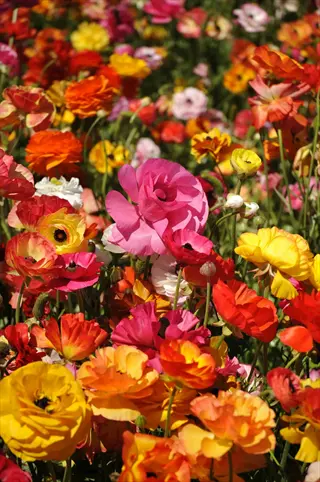
Ranunculus
- Bloom Time: Ranunculus flowers in mid to late spring, producing papery, rose-like blooms from April through May in zones 8 through 11 or as annuals in cooler regions.
- Colors: Available in vibrant shades of red, pink, orange, yellow, white, and burgundy, each stem produces multiple layered blooms that resemble tiny peonies.
- Growing Needs: Soak corms overnight before planting them 2 inches (5 centimeters) deep in well-drained soil with full sun, spacing them 4 inches (10 centimeters) apart.
- Best For: Cut flower gardens and floral arrangements where their long vase life of up to 10 days and delicate, layered petals create a high-end look.
- Pollinator Value: Ranunculus attracts small bees and hoverflies with its open centers, making it a useful addition to a varied pollinator garden in spring.
- Care Tip: In zones cooler than 8, lift corms after foliage dies back and store them in a cool, dry place for replanting the following spring.
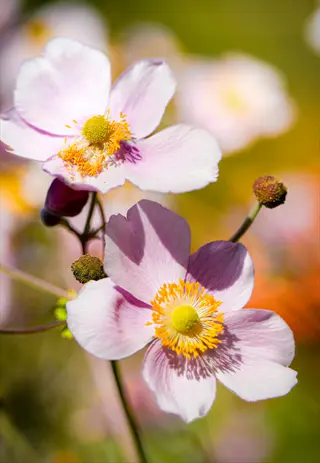
Anemones
- Bloom Time: Anemones bloom in mid-spring, producing daisy-like or poppy-like flowers from April into May depending on the species and your local climate zone.
- Colors: Found in white, pink, red, blue, and purple, anemones have dark centers that create a striking contrast against their delicate, papery petals.
- Growing Needs: Soak corms for 4 hours before planting 2 inches (5 centimeters) deep in well-drained soil with full to partial sun in zones 7 through 10.
- Best For: Cottage gardens and naturalized woodland settings where their simple, open-faced blooms create a relaxed, wildflower-meadow look throughout mid-spring.
- Pollinator Value: The open flower form gives bees and beneficial insects easy access to pollen, and anemones bloom during a critical mid-spring feeding window.
- Care Tip: Japanese anemones are perennial in zones 4 through 8 and bloom later in fall, offering a second wave of anemone color after spring types finish.
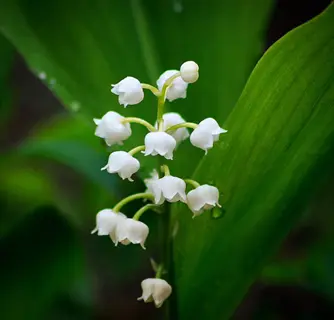
Lily of the Valley
- Bloom Time: Lily of the valley blooms in late spring, often in May, producing delicate bell-shaped flowers on arching stems in shaded woodland-style gardens across zones 3 through 8.
- Colors: Comes in white with a green tinge, though a pink variety called Convallaria majalis var. rosea exists, both producing a strong sweet and well known fragrance.
- Growing Needs: Plant pips 1 inch (2.5 centimeters) deep in moist, humus-rich soil in partial to full shade, where they spread fast through underground rhizomes.
- Best For: Shady areas under trees or along north-facing walls where most other spring flowers struggle, creating a fragrant ground cover that fills bare spots.
- Pollinator Value: The bell-shaped flowers attract small bees and are an important nectar source in shaded garden areas where fewer flowering plants grow.
- Care Tip: All parts of this plant are toxic if eaten, so keep it away from areas where children or pets play and wash hands after handling.
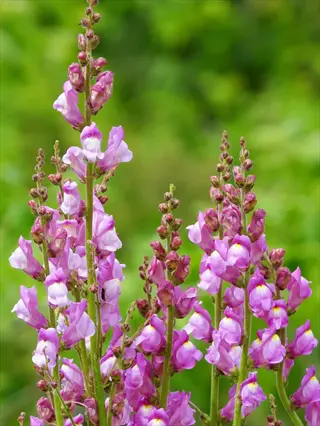
Snapdragons
- Bloom Time: Snapdragons bloom from mid-spring through early summer when planted out after the last frost, continuing to flower for 8 to 10 weeks in cool weather.
- Colors: Available in red, pink, yellow, orange, white, purple, and bi-color combinations, snapdragons add vertical spikes of color to borders and containers.
- Growing Needs: Plant seedlings after the last frost in full sun with rich, well-drained soil, spacing them 6 to 12 inches (15 to 30 centimeters) apart for bushy growth.
- Best For: Adding height and structure to spring borders and container arrangements, where their tall flower spikes create a dramatic backdrop for shorter plants.
- Pollinator Value: Bumblebees are strong enough to open the hinged flowers to reach the nectar inside, making snapdragons especially valuable for large bee species.
- Care Tip: Pinch the growing tip when plants reach 4 inches (10 centimeters) tall to encourage branching, which produces more flower spikes per plant over the season.
The biggest mistake I see new gardeners make is planting for one bloom window only. You get 3 weeks of color and then bare soil for the rest of spring. Pick at least one flower from the early, mid, and late groups above. Your garden will stay full of color from the last frost through early summer.
Planting and Growing Tips
Good spring flower planting starts months before the first bloom opens. I learned this the hard way when I put tulip bulbs in the ground in March and waited for blooms that never came. Most spring bulbs need fall planting so they can chill through winter and trigger growth in spring.
Your soil matters more than the bulbs you buy. Here's a simple test from the University of Maryland Extension. Dig a hole 10 inches deep and fill it with water. If water stays past 8 hours, your drainage needs work. Mix 1 to 2 inches of compost into the top 6 inches of soil before you plant anything. A water based, high phosphate starter feed helps new roots grab hold fast.
The timeline below shows you when to plant spring flowers based on your USDA hardiness zones. The best growing tips spring flowers need follow this same order, from fall bulb prep through container gardening spring tasks. I keep this same schedule taped to my garden shed door every year.
Container gardening in spring gives you the most control over soil and drainage. I use 12 inch pots with holes in the bottom and a layer of gravel under the soil mix. This setup works great for tulips, hyacinths, and snapdragons on a patio or balcony where you don't have garden beds at all.
Spring Flower Colors and Mood
Most guides list spring flower colors without telling you what those colors do to your brain. A 2021 study measured 50 people with EEG caps and heart monitors while they looked at flowers. Yellow flowers scored a mood disturbance rating of just negative 2.38, crushing red at 1.11 and white at 3.68. That means yellow blooms made people feel the most relaxed and the least stressed of any color tested.
I started planting more yellow flowers along my front walkway after reading that study. Guests comment on how cheerful the entry feels every spring, and now I know the science backs up what they sense. You can use flower color combinations to shape how different parts of your colorful spring garden make you feel.
The table below pairs each spring flower color with its mood effect and the best blooms to use. Fragrant spring flowers like lilacs and hyacinths add another layer of mood boost on top of what color alone can do for you.
Spring Flowers for Pollinators
Your spring flowers for pollinators do more than add beauty to your yard. Around 75% of flowering plants need pollinators to make seeds. About 35% of your food crops need them too. When you plant pollinator-friendly flowers, you feed your local bees and protect your own food supply at the same time.
I like to think of my bee-friendly garden like a restaurant with a full season menu. Your early crocuses are the appetizer, mid-spring irises serve as the main course, and your late peonies bring dessert. I set up my own butterfly garden and pollinator habitat this way. Bees showed up in higher numbers within my first season because they had food from February through June.
Early Season Nectar Sources
- Crocuses: These are among the first flowers to bloom, often pushing through late snow, and provide critical early nectar for queen bumblebees emerging from hibernation in February and March.
- Snowdrops: Blooming as early as January in mild zones, snowdrops offer pollen when almost nothing else is available, supporting early solitary bees and hoverflies.
- Hellebores: These shade-tolerant perennials bloom from late winter into early spring and attract small bees with their downward-facing flowers that shelter pollen from rain.
Mid-Spring Pollen Providers
- Tulips: Early-blooming tulip varieties provide nectar to honeybees and bumblebees during April, and open-cupped single varieties are easier for insects to access than double types.
- Hyacinths: The dense flower clusters of hyacinths serve as efficient feeding stations where a single bee can visit many florets without flying far, saving energy during cool spring days.
- Wallflowers: These fragrant spring bloomers attract cabbage white butterflies and various bee species, and they self-seed to provide food sources year after year.
Late Spring Pollinator Magnets
- Peonies: Single and semi-double peonies are great late spring food sources for bees, offering large amounts of pollen in their open centers during May and early June.
- Lilacs: These fragrant shrubs attract butterflies, hummingbirds, and many bee species with their large panicles of tubular flowers that provide rich nectar in May.
- Coneflowers: Planted in spring for summer blooms, coneflowers attract the widest range of pollinators including bees, butterflies, and beneficial beetles through the growing season.
Creating a Pollinator Habitat
- Plant in Groups: Cluster at least 3 to 5 plants of each type together so pollinators can spot them from a distance and forage without wasting energy flying between isolated plants.
- Provide Ground Nesting Sites: About 70% of native bee species nest in the ground, so leave some patches of bare, undisturbed soil near your flower beds rather than mulching every surface.
- Avoid Pesticides: Even organic insecticides can harm good pollinators if applied while flowers are open, so spray in the evening when bees have returned to their nests.
Flowering Shrubs and Trees
Bulbs give you ground level color but spring flowering shrubs and trees add height, structure, and a much bigger visual punch to your yard. I planted my first forsythia and flowering quince about 10 years ago. Both still bloom strong every spring with almost no effort from me at all.
Your lilacs, azalea, magnolia, and forsythia all need correct pruning or you'll lose an entire year of blooms. Prune right after flowers fade and remove up to one third of the oldest stems. Cut at the wrong time and you'll lose next year's flower buds.
Lilacs
- Bloom Period: Lilacs flower in mid to late spring, often May, producing large panicles of tiny tubular flowers in purple, white, pink, and blue that scent the entire garden.
- Growing Needs: Plant in full sun with well-drained, alkaline soil in zones 3 through 7, and expect to wait 1 to 2 years before new shrubs produce their first blooms.
- Pruning Guide: Prune right after flowering by removing spent flower heads and up to one third of the oldest, thickest stems to encourage fresh growth and next year's blooms.
- Garden Role: Lilacs serve as flowering hedges, privacy screens, and focal points that grow 5 to 15 feet tall depending on variety.
Azaleas
- Bloom Period: Azaleas bloom from mid to late spring in a bold display of pink, red, white, orange, and purple flowers across about 800 species and 10,000 registered varieties.
- Growing Needs: Plant in partial shade with acidic, well-drained soil rich in organic matter in zones 5 through 9, and mulch with pine needles to maintain soil acidity.
- Pruning Guide: Prune after flowering to shape the plant, but avoid cutting after mid-summer since azaleas set next year's flower buds on the current year's growth.
- Garden Role: Azaleas work as foundation plantings, woodland borders, and mass plantings where their dense flowering habit creates walls of spring color.
Forsythia
- Bloom Period: Forsythia is one of the first shrubs to bloom in early spring, covering bare branches with bright yellow bell-shaped flowers before any leaves appear in March or April.
- Growing Needs: Plant in full sun with average, well-drained soil in zones 5 through 8, and allow extra space as forsythia can grow 8 to 10 feet wide.
- Pruning Guide: Prune right after flowering ends by cutting the oldest branches to the ground, which keeps the arching shape graceful and prevents the shrub from getting leggy.
- Garden Role: Forsythia works as a bold specimen plant, informal hedge, or forced-branch arrangement that brings early spring color indoors weeks before outdoor blooming.
Magnolias
- Bloom Period: Magnolias bloom from early to mid-spring depending on the species, with star magnolias opening in March and saucer types following in April with large cup-shaped flowers.
- Growing Needs: Plant in full sun to partial shade in moist, well-drained, acidic soil in zones 5 through 9, and protect from cold north winds that can damage early buds.
- Pruning Guide: Magnolias rarely need pruning beyond removing dead or crossing branches in late spring after flowering, since cuts heal slow and heavy pruning reduces future blooms.
- Garden Role: Magnolias serve as stunning specimen trees that can reach 15 to 25 feet tall and provide a dramatic canopy of pink or white spring blooms.
One mature magnolia or lilac can become the star of your spring yard. Plant low bulbs like crocuses at the base for color from the ground all the way up to the treetop.
Care and Maintenance
Good spring flower care follows a month by month rhythm that keeps your garden strong from the first shoot through the last petal. I used to skip steps and my blooms paid the price. Once I started using a fixed schedule, my flowers lasted weeks longer and came back stronger every year.
The biggest spring flower maintenance mistake I see is cutting bulb leaves too early. Your tulip and daffodil foliage needs to stay until mid-summer so the plant can store energy for next year. It looks messy but that green growth is what fuels your blooms 12 months from now.
For cut flowers spring gardens produce, trim stems at an angle and change your vase water every 2 days to boost vase life by up to a week. Deadheading spent blooms on garden plants sends energy back to the roots and helps with extending bloom time across your whole bed. The calendar below maps out every care task you need.
5 Common Myths
You should cut back tulip and daffodil leaves right after the flowers fade to keep the garden tidy.
Bulb foliage must stay standing until mid-summer so the plant can photosynthesize and store energy for next year's blooms, according to the University of Minnesota Extension.
All spring flowers need full, direct sunlight for at least eight hours a day to grow properly.
Many spring flowers like hellebores, bleeding hearts, and lily of the valley thrive in partial shade, and some actually prefer cooler, shaded conditions.
Spring bulbs should be planted in the spring so they bloom during the same season you put them in the ground.
Most spring-blooming bulbs such as tulips, daffodils, and crocuses need to be planted in the fall so they can undergo a cold period required to trigger flowering.
Flowers are just decoration and have no real impact on a person's mental or physical health.
Peer-reviewed research shows that viewing yellow or red flowers for just 3 minutes significantly increases relaxation and reduces stress, measured through brain activity and heart rate.
Climate change has no noticeable effect on when spring flowers bloom each year.
Studies of nearly 10,000 herbarium records show spring flowers now bloom 1.8 to 2.3 days earlier for every 1 degree Celsius increase in spring temperature.
Conclusion
A good spring garden gives you more than pretty views from your window. The best spring flowers bring real value to your yard and your health. Research shows that yellow blooms cut stress in just 3 minutes of viewing. Your beds also feed the bees and butterflies that keep 75% of flowering plants alive across the planet.
I've spent years testing which spring flowers perform best across different soils, zones, and budgets. The biggest lesson I've learned is that timing matters more than money. A $20 bag of mixed bulbs planted in October will beat a $200 garden center haul planted at the wrong time every single year.
Climate shifts mean your spring blooms now open earlier than they did a decade ago. Plant a mix of early, mid, and late bloomers so you keep color going from February through June. Add pollinator-friendly flowers and you'll help your local bees while making your yard the best looking one on the block.
Start planning your spring garden today. Order bulbs for fall planting or grab containers for a patio display this weekend. Your future self will thank you the moment those first crocuses push through the soil and the whole yard comes back to life.
External Sources
Frequently Asked Questions
What flowers are in season in spring?
Popular spring flowers include tulips, daffodils, hyacinths, crocuses, irises, peonies, lilacs, ranunculus, magnolias, and azaleas, with bloom times varying by region and hardiness zone.
What are the early spring flowers in Germany?
Early spring flowers in Germany include snowdrops, crocuses, winter aconite, hellebores, primroses, and grape hyacinths, many of which bloom as early as February.
What flowers signify spring?
Daffodils, tulips, and cherry blossoms are among the flowers most associated with spring, symbolizing renewal, new beginnings, and the return of warmth.
What are 10 types of flowers?
Ten well-known flower types include roses, tulips, daffodils, sunflowers, lilies, orchids, peonies, dahlias, chrysanthemums, and lavender.
What is the rarest kind of flower?
The Middlemist Red camellia is often considered the rarest flower in the world, with only two known living plants in existence.
What is the rare flower in Germany?
The Edelweiss and the Lady's Slipper orchid are among the rarest flowers found in Germany, both protected under conservation laws.
What's the most popular spring flower?
The tulip is widely considered the most popular spring flower, with nearly 4,000 cultivars available in almost every color imaginable.
What flowers will last all spring and summer?
Flowers that bloom from spring through summer include coneflowers, geraniums, black-eyed Susans, marigolds, and petunias.
What plant says "I love you"?
Red roses are the most recognized flower for saying I love you, though red tulips and carnations also carry romantic meaning.
What plant is often kissed under?
Mistletoe is the plant most often kissed under, a tradition rooted in Norse mythology and popularized during the holiday season.

