
Introduction
Every spring, the yoshino cherry tree wraps the Washington D.C. Tidal Basin in what visitors call "white clouds" of blossoms. About 3,800 cherry trees grow along those famous paths today, and the Yoshino makes up roughly 70% of every tree you see. This Japanese flowering cherry is to spring what the sugar maple is to autumn. One single species defines an entire season in the public mind.
I planted my first Yoshino cherry blossom tree over 8 years ago after a trip to see the D.C. blooms in person. What most people don't know is that the first shipment of 2,000 trees from Japan in 1910 arrived infested with insects and disease. President Taft ordered every last one of them burned. The successful gift of 3,020 trees didn't arrive until 1912, and those are the ones that started the tradition we know today.
This guide covers everything you need to grow a healthy Yoshino cherry as an ornamental tree in your own yard. You'll learn about 6 named cultivars with different shapes and colors. I break down the exact soil and sun conditions these trees demand. I also show you how to handle the pests that threaten them and bust some common myths along the way.
You can pick from classic white forms or pink weeping shapes based on your yard size. The right Yoshino cherry will reward you with stunning spring blooms for decades.
6 Yoshino Cherry Cultivars
Most people assume every Yoshino cherry looks the same. There are in fact 6 distinct cultivars worth knowing about, and each one brings a different shape, size, or bloom color to your yard. I've grown 3 of these types of yoshino cherry and the differences matter more than you'd expect.
The yoshino cherry cultivars below range from classic upright forms to weeping shapes. Some hold a deeper pink color while others stick to the traditional white. Match the right cultivar to your space and you'll get the exact look you want from day one.
Somei-Yoshino (Classic White)
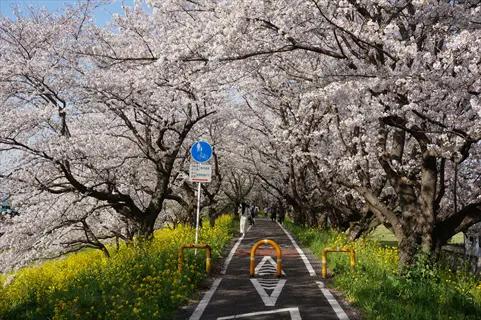
- Form: The original and most widely planted Yoshino cultivar, producing the iconic white cloud effect seen along the Washington D.C. Tidal Basin each spring.
- Flowers: Single white blossoms with a faint pink blush at opening, appearing in clusters of 2 to 5 with a mild almond fragrance detectable up close.
- Size: Reaches 30 to 40 feet (9 to 12 meters) tall with a broad, spreading canopy up to 40 feet (12 meters) wide at full maturity.
- Growth: Propagated only by grafting since it is a hybrid clone, which means every Somei-Yoshino tree is an exact genetic match to the others.
- Landscape Use: Ideal as a specimen tree, along driveways, or grouped for a dramatic spring display in parks and large residential properties.
- Consideration: Genetic uniformity means all trees share the same disease vulnerabilities, which is why the USDA runs ongoing variety programs.
Akebono (Daybreak Cherry)
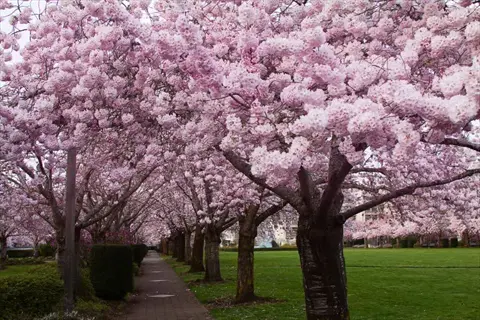
- Form: A natural mutation of Somei-Yoshino first found in the 1920s, known for retaining a stronger pink tone throughout the entire bloom period.
- Flowers: Soft pink single blossoms that hold their color longer than the standard Yoshino, creating a warmer visual effect in the landscape.
- Size: A bit smaller than Somei-Yoshino, reaching 25 to 35 feet (7.5 to 10.5 meters) tall with a rounded, spreading crown.
- Growth: Grows at the same rapid rate of 1 to 2 feet (30 to 60 centimeters) per year and shares the same hardiness range of USDA zones 5a to 8b.
- Landscape Use: Popular for homeowners who want the Yoshino shape and bloom timing but prefer a pinker display than the standard white variety.
- Consideration: Makes up about 3% of cherry trees in the D.C. parks and is sometimes sold as 'Daybreak' at garden centers.
Shidare-Yoshino (Weeping Form)
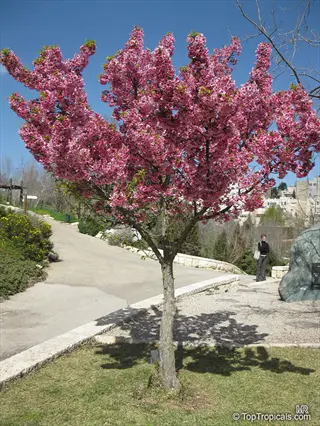
- Form: A graceful weeping yoshino cherry cultivar with long, pendulous branches that cascade downward, creating a fountain-like silhouette in the garden.
- Flowers: White to pale pink single blossoms identical in fragrance and cluster size to the standard Yoshino, arranged along drooping branches.
- Size: Reaches 15 to 25 feet (4.5 to 7.5 meters) tall with a spread that depends on training and pruning during the first several years.
- Growth: Moderate growth rate, a bit slower than upright Yoshino forms, and often grafted onto a straight trunk to achieve the desired weeping height.
- Landscape Use: Excellent as a focal point near water features, patios, or in Asian garden designs where the weeping form adds movement and texture.
- Consideration: Requires more careful pruning than upright cultivars to prevent branches from dragging on the ground and developing fungal problems.
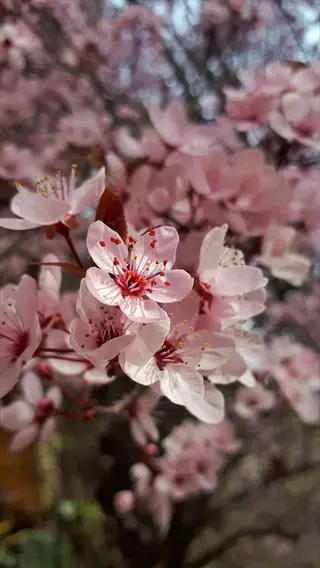
Afterglow (Warm Pink Tones)
- Form: A lesser-known cultivar valued for its warm pink flower color that runs deeper than Akebono cherry, standing out in mixed cherry plantings.
- Flowers: Single pink blossoms that open a rich rose-pink and then soften, offering about 2 weeks of vivid color before petals fall.
- Size: Reaches about 25 to 30 feet (7.5 to 9 meters) tall with a rounded to vase-shaped crown similar in proportion to Akebono.
- Growth: Grows at a steady rate and performs well in USDA zones 5 through 8 with the same soil and moisture requirements as other Yoshino types.
- Landscape Use: Works well as a street tree or in rows where the deeper pink provides visual contrast against standard white Yoshino plantings nearby.
- Consideration: Less common at retail nurseries, so gardeners may need to order from specialty growers or online tree suppliers.
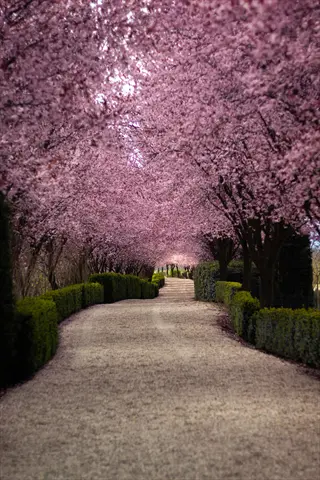
Pink Shell (Delicate Blooms)
- Form: A refined cultivar with a lighter, more open branching structure that gives the tree an airy, delicate appearance even when not in bloom.
- Flowers: Shell-pink single blossoms that are a touch smaller than standard Yoshino flowers, creating a softer, more understated spring display.
- Size: Reaches 20 to 30 feet (6 to 9 meters) tall with a moderate spread, making it a good choice for smaller yards and garden spaces.
- Growth: Moderate growth rate with a balanced crown that requires less corrective pruning than some of the larger Yoshino cultivars.
- Landscape Use: Suits cottage gardens, mixed borders, and butterfly gardens where its lighter branch structure allows underplanting with shade-tolerant perennials.
- Consideration: The delicate branching may be more susceptible to storm damage in exposed locations, so sheltered planting sites work best.
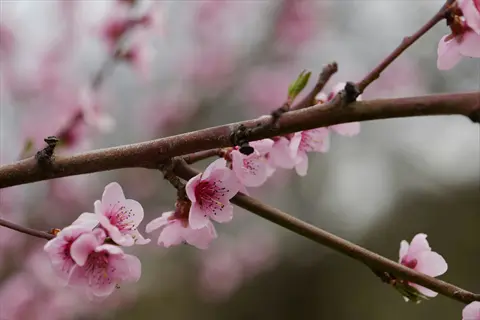
Perpendens (Arching Branches)
- Form: A semi-weeping to arching cultivar that sits between the upright Somei-Yoshino and the pendulous Shidare-Yoshino in growth habit.
- Flowers: White to pale pink single blossoms appearing in the typical March to April window, with the same almond scent found across all Yoshino types.
- Size: Reaches 20 to 30 feet (6 to 9 meters) tall with branches that arch outward and downward without weeping all the way to the ground.
- Growth: Moderate to rapid growth rate, performing best in full sun with consistent moisture and well-drained soil in USDA zones 5a through 8b.
- Landscape Use: A versatile choice for gardeners who want some weeping character without the full maintenance demands of a true weeping form.
- Consideration: Like other Yoshino types, it is susceptible to borers, scale, and fungal diseases and benefits from regular seasonal monitoring.
Planting Your Yoshino Cherry
Getting your planting yoshino cherry right from the start matters more than most people think. I've seen too many trees die in the first 2 years from bad timing or a poor spot. The good news is that Yoshino cherries grow in clay, loam, sand, and even thin rocky soils as long as the ground drains well.
When to plant cherry tree stock depends on your zone. If you live in USDA zones 5 or 6, stick to spring planting after the last frost so roots can settle before winter hits. Gardeners in zones 7 and 8 can plant in fall, which gives the roots months of cool weather to spread before summer heat arrives. Either way, pick a spot with full sun and at least 6 hours of direct light each day.
When you learn how to plant yoshino cherry tree stock the right way, the process is straightforward. Dig your hole twice as wide as the root ball but no deeper. A common mistake is burying the trunk flare under the soil line. This invites rot and fungal problems that can kill the tree fast. Set the root ball placement so the top sits level with the surrounding ground, then backfill with the same soil you removed.
Your cherry tree soil requirements are simple but important. The ground must drain well because standing water around the roots causes problems fast. Stay away from spots near streets and parking lots where reflected heat and limited water create constant stress. I lost a tree to drought stress next to a driveway before I learned that lesson. After planting, spread 2 to 4 inches of mulch around the base but keep it several inches from the trunk to prevent bark rot.
Yoshino Cherry Care Essentials
Good yoshino cherry tree care changes with the seasons. What your tree needs in March looks very different from August. I break my care routine into 4 blocks so nothing gets missed. The calendar below covers watering cherry tree stock and fertilizing cherry tree roots at the right time. It also shows you when to focus on pruning cherry tree branches and mulching cherry tree bases each season.
One thing most guides get wrong is treating all trees the same regardless of age. A tree you planted last spring needs much more water than one that has been growing for 10 years. New trees demand 1 to 2 inches of water per week, while established trees can rely on rainfall except during dry stretches. Keep this in mind as you follow the slow-release fertilizer and care schedule below.
Spring Care (March to May)
- Fertilizing: Apply a balanced 10-10-10 slow-release fertilizer in early spring before new growth begins, using about 1/10 pound of nitrogen per year of tree age.
- Watering: Provide 1 to 2 inches (2.5 to 5 centimeters) of water per week for newly planted trees, reducing to rainfall-only for established trees except during dry spells.
- Mulching: Refresh the mulch ring to a depth of 2 to 4 inches (5 to 10 centimeters) around the base, keeping it several inches away from the trunk to prevent rot.
- Monitoring: Inspect for aphids and tent caterpillars as temperatures warm, treating early infestations with insecticidal soap or neem oil before populations explode.
Summer Care (June to August)
- Watering: Increase watering during heat waves and drought periods, as Yoshino cherries have medium drought tolerance and will show stress through leaf wilting and early drop.
- Pest Watch: Monitor for spider mites, scale insects, and borers during hot months, checking the undersides of leaves and bark crevices for signs of infestation.
- Pruning: Avoid major pruning in summer to reduce stress and disease entry points, though removing dead or crossing branches is acceptable at any time of year.
- Heat Stress: Watch for sunscald on thin-barked young trees in zone 8, and consider temporary shade cloth if temperatures exceed 100°F (38°C) for extended periods.
Fall Care (September to November)
- Pruning Window: Perform major structural pruning after leaves drop in late fall, removing crossed branches, water sprouts, and any diseased wood before winter dormancy.
- Watering: Continue watering until the ground freezes, as trees need adequate moisture going into winter to prevent root desiccation and dieback.
- Leaf Cleanup: Rake and remove fallen leaves promptly, especially if the tree showed any signs of cherry leaf spot or powdery mildew during the growing season.
- Preparation: Apply a final deep watering before the first hard frost, and inspect the mulch ring to ensure adequate insulation for the root zone through winter.
Winter Care (December to February)
- Protection: Wrap the trunk of young trees with tree guard material to prevent sunscald and frost cracking, which occurs when bark heats up on sunny winter days then freezes at night.
- Frost Heaving: Check for frost heaving around the root zone after freeze-thaw cycles, pressing displaced soil back around the base to protect exposed roots.
- Planning: Order any needed pest treatments, fertilizer, or replacement mulch in winter so supplies are ready when the spring care season begins in your zone.
- Dormant Spray: Apply a dormant oil spray in late winter before buds swell to smother overwintering scale insects and their eggs on branches and trunk bark.
Pests, Diseases, and Fixes
Yoshino cherry tree diseases and cherry tree pests pose the biggest threats to your tree's health. I've fought aphids cherry tree clusters on my own Yoshino more times than I can count. Powdery mildew cherry outbreaks hit me 2 summers in a row before I got smart about air flow. Borers cherry tree damage also showed up on a stressed tree I forgot to water one dry August. The trick is catching problems early before they spread across your whole canopy.
Below you'll find the most common problems paired with fixes you can use right away. I list the identification signs first so you know what to look for in your yard. Each entry also includes prevention tips to stop cherry leaf spot and other issues before they take hold.
Aphids and Scale Insects
- Signs: Clusters of small green or black insects on new growth and leaf undersides, often accompanied by sticky honeydew residue and sooty mold on leaves below.
- Organic Fix: Spray affected areas with insecticidal soap or neem oil solution every 7 to 10 days until populations drop, focusing on leaf undersides where insects hide.
- Prevention: Encourage natural predators like ladybugs and lacewings by planting companion flowers nearby, and avoid over-fertilizing with nitrogen which promotes the tender growth aphids prefer.
Borers and Tent Caterpillars
- Signs: Sawdust-like frass at trunk entry holes indicates borers, while silken web tents in branch crotches signal tent caterpillar colonies feeding on foliage.
- Organic Fix: Remove tent caterpillar nests by hand or with a stick in early morning when insects are clustered, and apply Bacillus thuringiensis spray for active feeding caterpillars.
- Prevention: Keep trees healthy and well-watered since borers target stressed trees, and wrap trunks of young trees with protective guards during the first 3 to 5 years.
Powdery Mildew
- Signs: White, powdery coating on leaf surfaces that starts as small spots and spreads to cover entire leaves, often appearing in late summer when humidity is high.
- Organic Fix: Apply a baking soda spray of 1 tablespoon per gallon of water or a sulfur-based fungicide at the first sign of white patches on foliage.
- Prevention: Improve air circulation by pruning interior branches, avoid overhead watering, and clean up fallen leaves each autumn to reduce fungal spore carryover.
Cherry Leaf Spot
- Signs: Small purple to brown spots on leaf surfaces that enlarge and merge, eventually causing yellowing and premature leaf drop by midsummer in severe cases.
- Organic Fix: Apply copper-based fungicide sprays starting at petal fall and repeating every 10 to 14 days through wet spring weather when the fungus spreads most aggressively.
- Prevention: Remove and destroy all fallen leaves in autumn since the fungus overwinters on leaf debris, and avoid wetting foliage when watering established trees.
Deer and Pet Toxicity
- Deer Damage: NC State Extension notes Yoshino cherries are frequently damaged by deer, which browse on lower branches, bark, and new growth during winter months.
- Pet Warning: All parts of the Yoshino cherry contain cyanogenic glycosides that are toxic to cats, dogs, and horses, with wilted leaves being especially dangerous.
- Protection: Install deer fencing or use repellent sprays during dormant season, and plant the tree away from pet play areas or fence off the drip line to prevent access to fallen leaves and fruit.
Cherry Species Compared
Picking the best flowering cherry tree for your yard starts with a good cherry tree comparison. People ask me about Yoshino cherry vs Kwanzan all the time. These ornamental cherry varieties each fill a different spot in your yard. Each species shines in a different role. You can plant multiple types for weeks of continuous blooms from early to late spring.
The Okame cherry blooms first in the season. The Yoshino follows, and the Kwanzan finishes about 2 weeks after the Yoshino fades. A weeping cherry tree blooms around the same time as the Yoshino but brings a different shape. The table below shows you the key differences so you can match each species to your needs.
If you have a small yard, the Okame cherry gives you the most bloom for the least space at just 15 to 25 feet tall. For bigger properties, the Yoshino creates that classic cloud of white blossoms that stops traffic every spring. Want fall color too? The Kwanzan delivers orange to copper tones that the Yoshino can't match.
History and Conservation
The cherry blossom history you see in D.C. today started with Eliza Scidmore back in 1885. She pushed for cherry trees along the Tidal Basin for over 20 years. Nobody cared until First Lady Helen Taft got behind the idea. Japan then offered to send trees as a gift of goodwill.
The first try in 1910 failed badly. Those 2,000 trees arrived full of insects and disease. President Taft ordered them all burned on the spot. Japan sent a second batch, and the 1912 cherry tree gift brought 3,020 trees to Washington D.C. First Lady Taft and Viscountess Chinda planted the first 2 on March 27, 1912. You can still visit those 2 original trees near the John Paul Jones Memorial today.
The Washington D.C. cherry blossoms now draw about 600,000 visitors each spring. The first National Cherry Blossom Festival took place in 1935. Peak bloom hits when 70% of the blossoms open. The earliest peak on record came on March 15 in 1990. The latest fell on April 18 in 1958. If you plan a trip, those dates show you how much the timing can shift.
Here's the cherry tree conservation story most people miss. By 1999, only about 125 of the original 3,020 trees still stood. That's just 4% of the gift. USDA geneticist Margaret Pooler ran DNA tests on the survivors. Her work confirmed which trees were real originals. Ruth Dix then grew 500 new trees from cuttings of those survivors. She hit an 80% success rate with that method.
The USDA also gathered over 500,000 seeds from Japan between 1982 and 1986. Every Somei-Yoshino is a clone, so they needed fresh genes in the mix. One bad disease could wipe out an entire population of identical trees. Japan sent another 3,800 Yoshino trees in 1965. You can see how much effort goes into keeping these trees alive for future visitors to enjoy.
5 Common Myths
Yoshino cherry trees live for 80 to 100 years with basic care and rarely need replacement in a home landscape.
USDA research shows the average lifespan is approximately 40 years, and even the famous Washington D.C. trees require ongoing replacement programs.
Yoshino cherry blossoms are always pure white and never show any pink coloring throughout the bloom period.
Yoshino blossoms open pale pink and gradually fade to white, and certain cultivars like Akebono hold a stronger pink tone throughout blooming.
You can grow a true Yoshino cherry tree from seed and it will produce identical flowers to the parent tree.
Yoshino cherries are hybrids propagated by grafting or cuttings. Seeds produce unpredictable offspring that rarely match the parent tree qualities.
Yoshino cherry trees produce edible cherries that you can harvest and eat just like any other cherry variety.
Yoshino cherries produce small, bitter ornamental fruits that are not suitable for eating. The pits, leaves, and bark also contain compounds toxic to pets.
Cherry trees are completely maintenance-free once established and do not need any regular pruning or pest monitoring.
Yoshino cherries are susceptible to borers, aphids, scale insects, powdery mildew, and cherry leaf spot, requiring regular monitoring and seasonal pruning.
Conclusion
Growing a Yoshino cherry tree comes down to getting a few basics right. Give it full sun, moist soil with good drainage, and consistent water during the first few years. Stay on top of seasonal pruning and pest monitoring. Your tree will reward you with those iconic white blossoms every spring. The flowering cherry care routine I've outlined above keeps things simple without cutting corners.
Take the time to pick the right cultivar for your space before you buy anything. A classic Somei-Yoshino needs a big yard, while an Akebono or Pink Shell fits smaller properties just fine. And if you have pets at home, keep in mind that all parts of the ornamental cherry are toxic to cats, dogs, and horses. Plan your placement to keep animals away from fallen leaves and fruit.
About 600,000 people visit the Washington D.C. cherry blossom tree display each spring, and that number tells you everything about how much people love these trees. Growing your own Yoshino connects you to a tradition that goes back over a century to the famous 1912 gift from Japan. The blooms last just 2 to 3 weeks each year, and that short window is part of what makes them special.
My own Yoshino has been blooming strong for 8 years now, and every spring feels like a small celebration. With the right care and attention, your tree will do the same for decades to come.
External Sources
Frequently Asked Questions
How big do Yoshino Cherry trees get?
Yoshino cherry trees typically reach 30 to 50 feet (9 to 15 meters) tall with a spread of 20 to 50 feet (6 to 15 meters), forming a round-topped, wide-spreading canopy.
Where is the best place to plant a Yoshino cherry tree?
Plant in a spot with full sun to partial shade, well-drained moist soil, and protection from strong winds. Avoid areas near power lines or parking lots.
Do Yoshino Cherry trees smell?
Yes, Yoshino cherry blossoms produce a pleasant, mild almond scent that is noticeable up close, especially on warm spring days.
Are Yoshino cherries edible?
The small fruits are technically not poisonous to humans but are extremely bitter and not considered edible. The leaves, bark, and seeds contain cyanogenic compounds toxic to pets.
How fast do Yoshino cherries grow?
Yoshino cherry trees grow at a rapid rate of 1 to 2 feet (30 to 60 centimeters) per year under good conditions.
What not to plant next to a cherry tree?
Avoid planting black walnut trees, which release juglone toxins, and heavy root competitors like large maples or elms that steal moisture.
What is the lifespan of a Yoshino cherry tree?
The average lifespan is approximately 40 years according to USDA research, though some specimens with excellent care survive longer.
What is the struggle of the cherry tree?
Cherry trees face challenges from borers, fungal diseases like cherry leaf spot and powdery mildew, shallow root vulnerability, and environmental stress from drought and temperature swings.
How long does a cherry tree take to bear fruit?
Yoshino cherry trees may produce small ornamental fruits within 2 to 3 years, but these are not culinary cherries. Fruiting cherry varieties take 3 to 5 years.
Do Yoshino Cherry trees lose their leaves in fall?
Yes, Yoshino cherry trees are deciduous. Their leaves turn yellow in autumn before dropping completely for winter.