
Introduction
The sansevieria plant gets more bad advice than almost any other houseplant you can buy. People claim it purifies all your air and needs zero attention to grow. Some of those claims hold a grain of truth. But most of them set you up for a dead plant within months.
I've grown over 20 sansevieria varieties in the past 8 years. The biggest lesson I learned is that snake plant care matters more than people think. This is a low maintenance houseplant, but low maintenance does not mean no maintenance. Sansevieria is the cactus of the houseplant world. It survives neglect, but it thrives with real attention.
About 70 species exist in this genus. They come from Africa, Madagascar, and southern Asia. Scientists moved the group under the Dracaena genus in 2017 based on DNA evidence. You'll still see both names at garden centers, so don't let the label confuse you.
This guide helps you pick the right variety and keep it alive for years. You'll find real data from studies, honest care advice, and tips from hands on growing with indoor plants. Every section tackles the mistakes that kill these plants before their first birthday.
8 Popular Sansevieria Varieties
Sansevieria varieties range from 8 inches to 9 feet tall based on the species you choose. Different sansevieria types have their own look, growth speed, and light needs. I've grown most of these snake plant varieties at home and can tell you they each have a distinct feel.
Laurentii remains the most common dracaena trifasciata you'll find at stores. But rare picks like the whale fin sansevieria and the moonshine snake plant have built strong demand among collectors. The list below breaks down 8 favorites with real care data for each one.
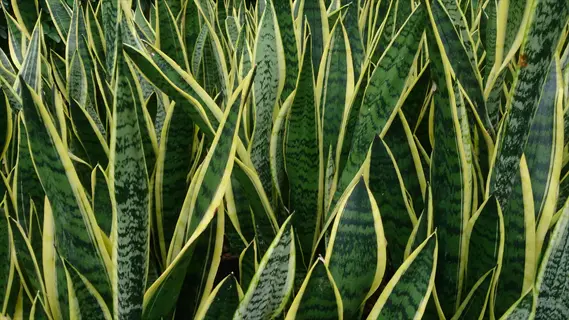
Dracaena trifasciata Laurentii
- Height: Grows up to 3 to 4 feet (0.9 to 1.2 meters) tall with stiff, upright sword-shaped leaves edged in bright golden yellow margins.
- Light: Performs best in bright indirect light but tolerates low light conditions, though the yellow variegation may fade in dimmer rooms.
- Watering: Water every two to six weeks depending on season, allowing the soil to dry out completely between each watering session.
- Growth Rate: Considered a moderate grower that produces two to four new leaves per year under favorable indoor conditions.
- Best For: First-time plant owners who want a dramatic vertical accent piece that requires almost no daily attention.
- Special Note: Propagation through leaf cuttings causes the yellow border to disappear; use rhizome division to preserve the variegation pattern.
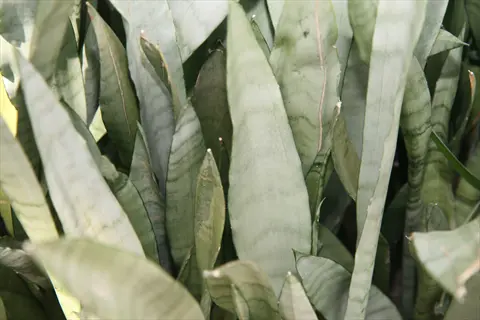
Dracaena trifasciata Moonshine
- Height: Reaches 2 to 3 feet (0.6 to 0.9 meters) tall with broad, pale silvery-green leaves that stand out among darker-foliaged houseplants.
- Light: Needs bright indirect light to maintain its signature silver color; low light turns leaves progressively darker green over time.
- Watering: Water every three to six weeks and reduce frequency in winter; this variety is especially sensitive to soggy soil conditions.
- Growth Rate: Slower than Laurentii, producing about one to three new leaves per year in typical indoor environments.
- Best For: Growers who want a modern, minimalist look with a cool-toned plant that pairs well with white or gray decor.
- Special Note: The pale leaf color makes early signs of overwatering more visible, which actually helps beginners catch problems sooner.
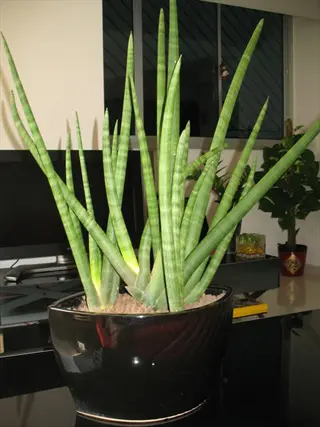
Dracaena angolensis (Cylindrica)
- Height: Grows 3 to 5 feet (0.9 to 1.5 meters) tall with round, tubular leaves that differ completely from the flat blades of other snake plants.
- Light: Thrives in bright indirect light and handles a few hours of direct morning sun without leaf burn or discoloration.
- Watering: Water every three to eight weeks; cylindrical leaves store more water than flat varieties, making overwatering the main risk.
- Growth Rate: Slow grower that adds roughly one to two new spears per year, but individual leaves can grow impressively tall over time.
- Best For: Collectors and interior designers looking for an architectural, sculptural plant that doubles as a living art piece.
- Special Note: Sometimes sold braided or fanned; these trained shapes are purely cosmetic and do not affect the health of the plant.
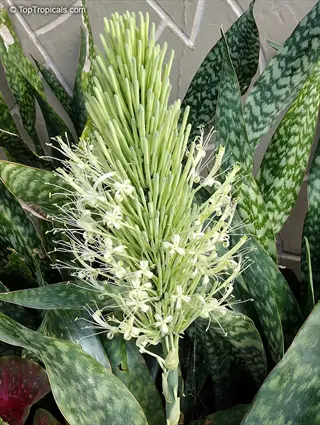
Dracaena trifasciata Hahnii (Bird's Nest)
- Height: Compact rosette that stays 6 to 8 inches (15 to 20 centimeters) tall, making it one of the smallest snake plant varieties available.
- Light: Adapts well to low to medium light, though brighter conditions produce tighter rosettes with more vivid leaf patterns.
- Watering: Water every two to four weeks in a small pot; the compact size means less soil volume, so it dries out faster than larger varieties.
- Growth Rate: Moderate for its size, producing offsets around the base that fill out the pot within one to two growing seasons.
- Best For: Desk, shelf, or windowsill placement where a full-sized snake plant would be too tall or take up too much space.
- Special Note: Available in golden, silver, and jade versions, each with unique leaf coloring that adds variety to a small collection.
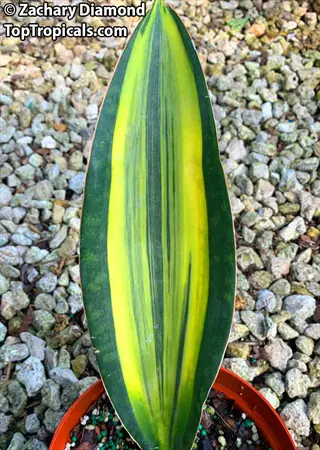
Dracaena masoniana (Whale Fin)
- Height: A single leaf can reach 3 to 4 feet (0.9 to 1.2 meters) tall and 10 inches (25 centimeters) wide, creating a bold focal statement.
- Light: Prefers bright indirect light; low light dramatically slows an already slow-growing plant and mutes the mottled green pattern.
- Watering: Water every four to eight weeks; the massive leaf stores significant moisture, making this one of the most drought-tolerant varieties.
- Growth Rate: Very slow, often producing just one new leaf per year, which makes mature specimens with multiple leaves especially prized.
- Best For: Plant collectors and anyone who wants a single dramatic specimen that draws attention without needing a group planting.
- Special Note: Whale Fin prices have dropped as propagation has become more common, but large mature plants still command premium prices at nurseries.
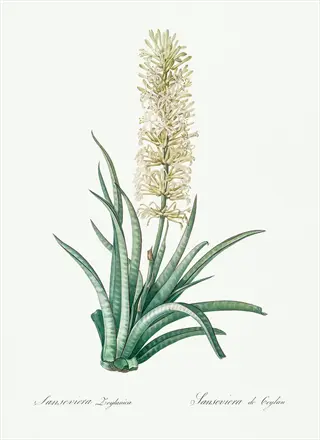
Dracaena trifasciata Zeylanica
- Height: Reaches 2 to 3 feet (0.6 to 0.9 meters) with dark green leaves covered in lighter wavy horizontal bands and no yellow edging.
- Light: One of the most shade-tolerant varieties, maintaining healthy growth in low-light bathrooms, hallways, and north-facing rooms.
- Watering: Water every two to six weeks; its robust constitution handles inconsistent watering schedules better than most other varieties.
- Growth Rate: Moderate grower that fills a pot with multiple offsets over two to three years, creating a full and bushy appearance.
- Best For: Rooms with limited natural light where other snake plant varieties would lose their variegation or grow leggy.
- Special Note: Often confused with the standard trifasciata, but Zeylanica lacks the golden border and has more pronounced silver-green banding.
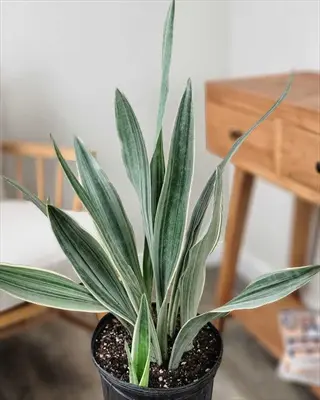
Dracaena trifasciata Sayuri
- Height: Grows 2 to 3 feet (0.6 to 0.9 meters) tall with elegant silver-green leaves edged in fine pale white margins and subtle striping.
- Light: Performs best in medium to bright indirect light; low light dulls the silvery sheen that makes this variety distinctive.
- Watering: Water every three to six weeks, following the same dry-out-completely approach used for all sansevieria varieties.
- Growth Rate: Moderate, producing several new leaves per year and forming attractive clumps within two to three growing seasons.
- Best For: Anyone looking for a softer, more refined alternative to the bold colors of Laurentii or the darkness of Zeylanica.
- Special Note: Sayuri has become more widely available in recent years and offers a sophisticated look that complements both modern and traditional interiors.
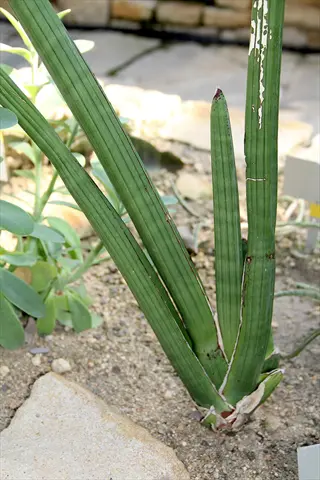
Dracaena pearsonii (Rhino Grass)
- Height: Stays compact at 6 to 12 inches (15 to 30 centimeters) with thick, stubby leaves that curve slightly inward and end in a sharp red spine.
- Light: Handles full sun to partial shade outdoors and bright indirect light indoors, showing excellent versatility in placement options.
- Watering: Water every four to eight weeks; the succulent leaves hold substantial moisture and are extremely prone to rot if kept damp.
- Growth Rate: Very slow, often taking several years to produce noticeable size changes, which contributes to its value among collectors.
- Best For: Succulent enthusiasts and collectors who appreciate unusual forms and do not mind waiting years for a specimen to mature.
- Special Note: The distinctive red-tipped spine gives this variety its common name and adds a unique color accent that few other snake plants offer.
Your best starting point depends on the light in your room. Bright spots work great for Moonshine and Whale Fin types. Dark corners suit Zeylanica best since it keeps its color with less light than other picks.
Sansevieria Care Essentials
Good snake plant care comes down to 5 basics: light, water, soil, snake plant temperature, and snake plant fertilizing. I killed my first 3 plants before I figured out the right balance between these factors. The trick is a simple mental model I call the finger test plus calendar method.
Stick your finger 2 inches into the soil before you water. If it feels dry, check the calendar. During spring and summer, dry soil means it's time to water. In fall and winter, wait another week even if the soil feels dry. This approach handles snake plant light requirements, pot size, and season all at once. Sansevieria watering gets much easier once you trust this system.
The snake plant soil you use matters just as much as how often you water. Bad soil holds too much moisture and causes root rot, which is the number one killer of these plants. Below you'll find care details for every factor that keeps your sansevieria alive and growing strong.
Light Requirements
- Ideal Range: Bright indirect light for four to six hours per day produces the fastest growth and most vivid leaf patterns across all sansevieria varieties.
- Low Light Tolerance: Survives in dimly lit rooms, hallways, and offices, but expect slower growth and potential fading of variegated leaf markings over months.
- Direct Sun: Can handle two to three hours of gentle morning sun, but harsh afternoon sun through south-facing windows may scorch leaf tips.
- Transition Tip: When moving a plant from low light to bright light, increase exposure gradually over seven to ten days to prevent leaf bleaching.
Watering Schedule
- Spring and Summer: Water every two to three weeks when the top two inches (five centimeters) of soil feel completely dry to the touch.
- Fall and Winter: Reduce watering to once every four to eight weeks as growth slows and the plant uses less moisture during shorter days.
- Pot Size Factor: Small pots under six inches (fifteen centimeters) dry out faster and may need water every ten to fourteen days in warm months.
- Warning Signs: Wrinkled or curling leaves indicate underwatering, while yellowing bases and mushy texture signal overwatering and potential root rot.
Soil and Potting Mix
- Best Mix: Use a cactus and succulent soil blend amended with extra perlite or coarse sand for fast drainage and proper root aeration.
- Avoid: Standard potting soil retains too much moisture and creates the waterlogged conditions that lead to root rot within weeks.
- Pot Choice: Terracotta pots wick away excess moisture and provide better airflow than plastic or glazed ceramic containers.
- Drainage Rule: Every pot must have at least one drainage hole; saucers should be emptied within thirty minutes after watering to prevent standing water.
Temperature and Humidity
- Comfort Zone: Thrives between 55 and 85 degrees Fahrenheit (13 and 29 degrees Celsius), matching typical home temperatures throughout the year.
- Cold Damage: Exposure below 50 degrees Fahrenheit (10 degrees Celsius) causes cellular damage, leading to mushy, water-soaked leaf patches that do not recover.
- Humidity: Tolerates normal household humidity between 30% and 50% and does not need misting, pebble trays, or humidifiers.
- Drafts: Keep away from cold window drafts in winter and direct airflow from heating or cooling vents that create rapid temperature fluctuations.
Fertilizing Schedule
- Frequency: Feed once or twice per year during spring and summer using a balanced liquid fertilizer diluted to half the recommended strength.
- Winter Rest: Do not fertilize from late fall through winter; the plant enters a slower growth phase and cannot use extra nutrients effectively.
- Over-Fertilizing Risk: Excess fertilizer causes salt buildup in the soil, leading to brown leaf tips and potential root damage over time.
- Organic Option: A thin top dressing of worm castings in spring provides gentle, slow-release nutrition without the risk of chemical burn.
Propagation Methods
Snake plant propagation gives you free plants from the ones you own. I've tried all 3 methods over the years and each one has its own strengths. Water rooting looks great on camera, but snake plant division beats it for speed and success rate every time.
One big warning before you start propagating snake plants: leaf cuttings snake plant methods will destroy any variegation. Your golden Laurentii cuttings will grow back as solid green plants no matter what you do. Use division if you want to keep those colored edges. Think of division as splitting up roommates. Each one can stand on its own right away.
Check the details below to compare timelines and snake plant pups output for each method. You'll know which one fits your goals best.
Leaf Cuttings in Water
- Process: Cut a healthy leaf into 3 to 4 inch (7.5 to 10 centimeter) sections, mark the bottom end, let them callous for 24 to 48 hours, then place in clean water.
- Timeline: Roots typically appear within three to six weeks, and small pups emerge from the base of the cutting after another four to eight weeks in water.
- Container Tip: Use a clear glass jar so you can monitor root development and change the water every five to seven days to prevent bacterial growth.
- Variegation Warning: Leaf cuttings produce genetically different offspring that lose variegated coloring, resulting in solid green plants regardless of the parent leaf.
Leaf Cuttings in Soil
- Process: Cut a healthy leaf into sections, let them callous for one to two days, then insert the bottom end about one inch (2.5 centimeters) deep into moist succulent mix.
- Timeline: Root formation takes four to eight weeks underground, and the first visible pup emerges in two to four months under warm, bright conditions.
- Advantage: Soil propagation skips the transplant shock that sometimes occurs when moving water-rooted cuttings into soil for the first time.
- Moisture Balance: Keep soil barely moist but never soggy; a light misting every seven to ten days is enough to encourage rooting without causing rot.
Rhizome Division
- Process: Remove the entire plant from its pot, shake off soil, and use a clean sharp knife to separate clumps where rhizomes naturally connect individual rosettes.
- Timeline: Divided plants resume active growth within two to four weeks because each section already has an established root system ready to support new leaves.
- Best Timing: Divide during spring or early summer when the plant is entering its active growth phase and can recover from root disturbance most quickly.
- Variegation Preserved: This is the only propagation method that guarantees offspring retain the exact variegation pattern of the parent plant, including golden and silver edges.
Pup Separation
- Process: Wait until baby plants (pups) growing beside the mother plant reach at least 4 inches (10 centimeters) tall, then gently separate them with attached roots.
- Timeline: Separated pups establish in their new pots within two to three weeks and begin producing their own new leaves within one to two months.
- Root Check: Each pup should have at least two to three roots of its own before separation; if roots are too small, wait another month for stronger development.
- Pot Size: Start pups in small 3 to 4 inch (7.5 to 10 centimeter) pots to prevent excess soil moisture that could overwhelm their limited root system.
Troubleshooting Leaf Problems
Snake plant troubleshooting starts with reading what your leaves tell you. Every problem shows up as a visible change in shape, color, or texture. In my experience, I've dealt with snake plant yellow leaves, snake plant brown tips, and snake plant curling leaves on my own plants over the years.
Snake plant root rot from overwatering causes more deaths than every other issue combined. Snake plant drooping is another sign you'll spot early if you know what to look for. The table below gives you a quick reference guide to match symptoms with causes and fixes.
Most leaf problems trace back to water or light issues rather than pests or disease. Check your watering habits first before you look for bugs. I tested this approach on my own sick plants and found the cause was overwatering 9 times out of 10. That one step saves you time and keeps your plant from getting worse.
Science Behind Sansevieria
Your dracaena trifasciata hides some cool science that most plant blogs skip over. I spent weeks reading the actual studies so you don't have to. We'll cover CAM photosynthesis first. Then we'll look at the sansevieria reclassification and NASA clean air study.
CAM photosynthesis works like a night shift worker. Your plant clocks in after dark and opens its pores to collect carbon dioxide when water loss is lowest. A 2019 peer reviewed study confirmed this process in 7 of 10 species tested. This is why people call it a great bedroom plant. It produces oxygen while you sleep.
The snake plant air purifying claim needs more context than most sites give you. The NASA clean air study showed it removed 52.6% of toxins in a sealed test chamber. That sounds great, but a real room with normal air flow would need hundreds of plants to match one open window. The plant cleans air, but not enough to replace your HVAC system.
The leaves hold steroidal saponins inside them. A 2021 study found about 40 different saponins in this one species alone. These compounds cause mild pet sickness in small doses. But they also show promise in medical research for fighting inflammation and fungi.
The table below sums up the key findings from each major study.
Feng Shui and Symbolism
Snake plant feng shui is a topic most care guides skip over, but it adds a whole new layer to why people love this plant. In Chinese culture, the snake plant ties to the Eight Virtues: health, beauty, long life, strength, art, poetry, intelligence, and prosperity. That makes it one of the most valued lucky indoor plant choices for your home.
Snake plant symbolism centers on its strong, upward growth pattern. Feng shui teachers say this shape pushes snake plant positive energy up through your space. I placed one near my front door 3 years ago and noticed the entry felt more alive right away. Smart snake plant placement in each room brings a different benefit based on what that space needs.
Entryway or Front Door
- Feng Shui Benefit: Placing a snake plant near the front entrance is believed to filter negative energy before it enters the home and attract protective chi.
- Practical Benefit: Entryways often have limited natural light, and sansevieria tolerates these low-light conditions better than most decorative houseplants.
- Styling Tip: Choose a tall Laurentii or Zeylanica variety in a simple ceramic pot to create a welcoming vertical accent that does not block foot traffic.
Home Office or Study
- Feng Shui Benefit: The sharp upward leaf growth is associated with mental clarity and focus, making it a popular choice for workspaces and reading corners.
- Practical Benefit: The CAM photosynthesis cycle means the plant continues releasing oxygen even in enclosed rooms with limited ventilation during long work sessions.
- Styling Tip: A compact Hahnii on the desk paired with a taller Moonshine on the floor creates visual interest at two different heights.
Bedroom
- Feng Shui Benefit: Despite the sharp leaf shape, feng shui experts consider the snake plant acceptable for bedrooms because its oxygen release supports restful sleep.
- Practical Benefit: Night oxygen production through CAM photosynthesis makes sansevieria one of the few houseplants scientifically suited for sleeping areas.
- Styling Tip: Place a medium-sized variety on a nightstand or in a corner where it receives indirect light from a window during daytime hours.
Bathroom
- Feng Shui Benefit: Bathrooms are considered areas where energy drains away, and a living plant is believed to help counterbalance this loss of positive chi.
- Practical Benefit: Sansevieria handles the fluctuating humidity of bathrooms well, and the lower light common in these spaces does not harm the plant significantly.
- Styling Tip: A small Hahnii or Cylindrica on a shelf or windowsill adds greenery without taking up valuable counter space in tight bathroom layouts.
You don't need to believe in feng shui to enjoy the benefits of good plant placement. Putting the right variety in the right room based on light and space just makes practical sense too.
5 Common Myths
A few snake plants in your living room can purify all the air you breathe and replace an air filter system entirely.
The NASA study used sealed chambers; in a real home with normal air exchange, you would need hundreds of snake plants per room to match mechanical filtration.
Snake plants are completely safe for pets because they are natural and non-toxic like most common houseplants.
Sansevieria contains steroidal saponins that cause nausea, vomiting, and diarrhea in cats and dogs if chewed or ingested.
Snake plants need frequent watering just like other tropical houseplants to keep their leaves looking green and healthy.
Overwatering is the number one killer of snake plants; they store water in their thick leaves and prefer soil that dries out completely between waterings.
You cannot grow snake plants outdoors because they are strictly indoor houseplants that cannot handle direct sunlight or weather changes.
Snake plants grow outdoors year-round in USDA zones 9 through 12 and tolerate direct sun once gradually acclimated over one to two weeks.
Sansevieria and Dracaena are two completely different plant families with no biological connection to each other.
Molecular phylogenetic studies in 2017 reclassified Sansevieria under the Dracaena genus because DNA evidence showed they share a common evolutionary lineage.
Conclusion
The sansevieria plant proves that simple snake plant care gets the best results with indoor plants. Keep your temps between 55 and 85°F (13 and 29°C) and water every 2 to 8 weeks based on the season. In my experience, those two rules alone prevent most of the problems that kill these plants early.
You now know the real science behind CAM photosynthesis and what the NASA study did and didn't prove. You also know which varieties fit your home and how to grow more plants for free. When I first learned about the cultural meaning and feng shui side, it gave me a whole new reason to keep growing them.
I've watched this low maintenance houseplant stay at the top of best seller lists for years. The name change to Dracaena hasn't slowed its fans down one bit. New growers and veteran collectors both keep coming back to it for good reason.
Pick one variety that matches the light in your room and give it a try. Start with a Laurentii if you want a safe bet, or grab a Whale Fin if you want a conversation piece. Either way, you'll have a tough, beautiful indoor plant that rewards you for years.
External Sources
Frequently Asked Questions
Is Sansevieria a good indoor plant?
Sansevieria is one of the best indoor plants for beginners because it tolerates low light, infrequent watering, and a wide range of temperatures from 55 to 85 degrees Fahrenheit (13 to 29 degrees Celsius).
What are the disadvantages of snake plants?
Snake plants contain saponins that are mildly toxic to pets, they grow slowly, and overwatering quickly leads to root rot.
Does Sansevieria purify the air?
The 1989 NASA study showed sansevieria removed formaldehyde and benzene in sealed chambers, but real-world purification would require hundreds of plants per room.
Where should I place a snake plant in my house?
Place your snake plant near an east or north-facing window for indirect light, or in a living room corner where it gets bright filtered light for several hours a day.
Can I sleep with a snake plant in my room?
Yes, snake plants use CAM photosynthesis to absorb carbon dioxide and release oxygen at night, making them one of the few houseplants that actively improve bedroom air quality after dark.
What is the lifespan of a snake plant?
A healthy snake plant can live 15 to 25 years or longer with proper care, and many growers report specimens thriving for decades when given well-draining soil and minimal watering.
What plant removes 78% of airborne mold?
No single plant has been scientifically confirmed to remove exactly 78 percent of airborne mold; however, several studies suggest certain houseplants can reduce mold spore counts in enclosed spaces.
What toxins do snake plants remove?
The NASA Clean Air Study found snake plants removed formaldehyde, benzene, trichloroethylene, and xylene from sealed test chambers within 24 hours.
Do snake plants give oxygen at night?
Yes, snake plants use Crassulacean Acid Metabolism to open their stomata at night, fixing carbon dioxide and releasing oxygen while most other houseplants do the opposite.
What is the luckiest plant inside the house?
In feng shui tradition, the snake plant is considered one of the luckiest indoor plants because its upward-growing leaves are believed to channel positive energy and the Eight Virtues.