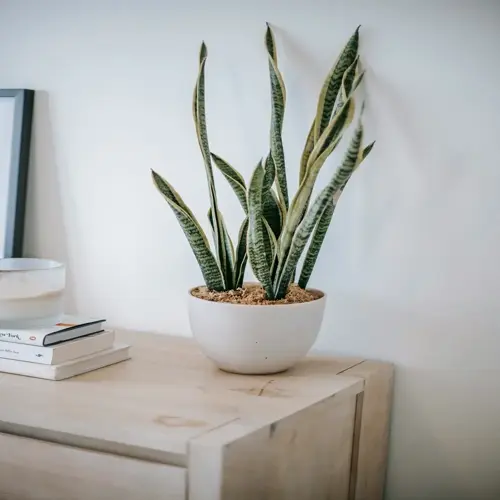

You should water a rattlesnake plant when the top inch of soil feels dry to the touch. That rule works better than any fixed schedule. Your plant's needs shift with the seasons, your room's humidity, and the size of its pot.
The rattlesnake plant watering schedule I follow breaks down into two main phases. During summer when the plant grows fast, I water every 7-10 days because the soil dries out quicker in the heat. Once fall arrives and growth slows down, I stretch that to every 14-21 days through winter. My first year I kept watering on the same summer schedule all through December and the roots turned mushy. That taught me to always check the soil before adding water.
Calathea watering frequency depends on what happens below the soil line. Rattlesnake plants have a fine, thin root system near the surface that needs consistent moisture but can't handle sitting in water. When soil stays soggy for days, those thin roots lose access to oxygen and start to rot. The trick is keeping the soil lightly moist like a wrung-out sponge, never soaking wet and never bone dry.
Water quality matters just as much as timing. The New York Botanical Garden says to use tepid water. They also warn against hard water with high mineral content. Growfully says to try distilled or filtered water instead. Rainwater works great too if you can collect it. I noticed brown leaf tips clearing up within a month after I stopped using tap water. The minerals in hard water accumulate in the soil over time and burn the sensitive leaf edges.
The Finger Test
- How to do it: Push your index finger about 1 inch deep into the soil near the pot's edge, not right next to the stem.
- When to water: If the soil feels dry at that depth, go ahead and water. If it feels damp or cool, wait another two or three days.
- Why it's reliable: This method accounts for your specific room conditions instead of following a calendar that ignores temperature and humidity changes.
The Pot Weight Check
- How to do it: Lift the pot right after watering and memorize how heavy it feels when the soil is fully saturated with moisture.
- When to water: Pick up the pot every few days and compare the weight to your mental baseline. A light pot means dry soil that needs water.
- Why it's reliable: Pot weight gives you a full picture of moisture levels throughout the entire root zone, not just the top inch of soil.
Bottom Watering Option
- How to do it: Set the pot in a tray of room-temperature water for 20-30 minutes and let the soil wick moisture up from below through the drainage holes.
- When to use it: Bottom watering works great when the soil has pulled away from the pot edges and top watering just runs straight through without soaking in.
- Why it's reliable: This method ensures even moisture distribution and encourages roots to grow downward toward the water source for a stronger root system.
Never water on a fixed calendar. People ask how often water calathea plants need, and the answer is always the same: check the soil first. A plant near a sunny window dries out twice as fast as one in a dark hallway. Pot size, soil mix, and room temperature all change the equation. Trust the finger test over the calendar every single time.
Stick with filtered water, check before you pour, and cut back during winter. Those three habits solve 90% of rattlesnake plant watering problems and keep your plant healthy year-round.
Read the full article: Rattlesnake Plant Care Guide