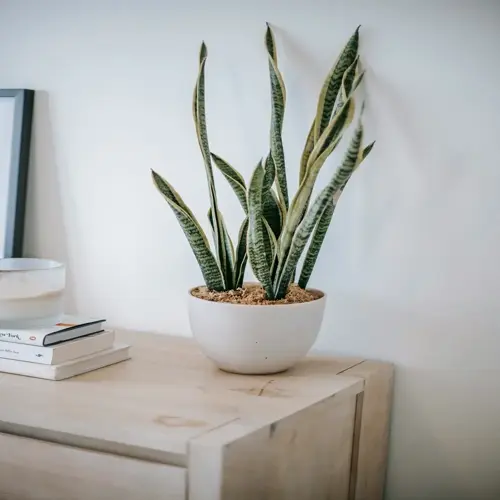

You take care of a rattlesnake plant by getting five things right. Those five areas are light, water, humidity, temperature, and feeding. Nail them all and your plant will reward you with bold patterned leaves that keep growing season after season.
Use this rattlesnake plant care guide as your weekly checklist. Every Sunday I spend about 8 minutes on my plant. I stick my finger an inch into the soil to check moisture. Then I wipe dust off the top leaves with a damp cloth and top off the pebble tray. That short routine keeps the plant looking sharp all week.
Light is where most people go wrong with calathea lancifolia care. These plants need bright indirect light to keep their dark wave patterns vivid. Direct sun fades those markings in weeks and leaves pale burn spots on the thin foliage. A north-facing window works great. A spot 3-4 feet back from an east window also gives you the sweet spot without any risk of leaf damage.
NC State Extension lists the ideal temperature at 65-75°F (18.3-23.9°C) with humidity above 50%. They also note a soil pH of 5.5-6.5 for best results. Those numbers match what most homes provide during spring and summer. Winter is the tricky part because heating systems dry the air and drop humidity to 30% or lower. A pebble tray or small humidifier near the plant solves that problem fast.
Water quality matters more than how often you water this plant. Stick to filtered or distilled water that feels warm to the touch. Only pour water when the top inch of soil feels dry to your finger. Cold water shocks the roots and tap water leaves mineral deposits that burn leaf tips over time. I lost half the tips on my first rattlesnake plant before I learned this lesson the hard way.
Stop feeding your plant in late October and don't start again until March. Giving fertilizer during winter forces weak growth that the plant can't support. I made this mistake my first year and ended up with leggy pale leaves. Those weak stems took months to bounce back once spring arrived.
Humidity is the one factor most homes struggle with during cold months. Dry winter air can drop your room to 25-30% humidity while your plant wants at least 50%. Group your plants together on a large pebble tray to raise the moisture level in their area. A small humidifier set nearby works even better if you live in a dry climate. I run mine from November through March and it keeps all my calatheas happy through the heating season.
Repot your plant every 2 years using a well-draining mix of peat, perlite, and orchid bark. Fresh soil gives the roots new nutrients and prevents compaction that chokes off air flow. Spring is the best time to repot because the plant enters its fastest growth phase and recovers from root stress in just a few weeks.
Rattlesnake plant maintenance gets easier once you build these habits into your routine. The whole process takes under 10 minutes a week. Your reward is a tropical plant that moves its leaves up at night and down each morning. Stick with the seasonal schedule above and your plant will keep growing strong for years to come.
Read the full article: Rattlesnake Plant Care Guide