Introduction
The poisonous plants you are most likely to meet split into two buckets. Poison ivy, poison oak and poison sumac hurt your skin the moment you brush past them, and the damage stops at the skin. Poison hemlock does the opposite. It leaves your skin alone and it kills people who swallow it after taking it for wild carrot. Which bucket a plant sits in changes everything about how worried you should be.
All three of the rash plants carry urushiol, a clear oily resin in their sap. A smear of it smaller than a grain of salt raises a rash on 80 to 90% of adults, which is why the CDC lists these plants as a workplace hazard for anyone who cuts brush, fights fire or works outdoors. The swallowing group is far rarer in the numbers. Plant ingestion makes up about 3% of Poison Control cases, and only a slice of those go badly.
Poisonous and deadly are not the same word, and the evidence sits further apart than the plant lists suggest. One hospital study of 71 children admitted for plant poisoning graded 52.1% of the cases as mild, with nothing severe and no deaths. A 2018 review pooling 127 studies found the far end of the range in the same breath, with liver failure, seizures, coma and fatal outcomes on record. Both results are real. What separates them is what went in the mouth and how much of it.
These species grow in every state except Alaska and Hawaii, so no region gets a free pass. Plant identification does most of the work here, and it is worth more than any memorized list of names. Learn the three leaflets, the hollow purple-blotched stem, and the habit of never eating anything you cannot name with total certainty.
Poisonous Plants You Meet Most
The itch started on the inside of my wrist, then ran up the forearm in two red lines by the next morning. I had cleared my back fence line that weekend, the first spring after moving in, and it was already two days behind me. A rash from urushiol can show up within hours or take a full 24 to 48 hours to develop, so the timing almost never points at the plant. Poison ivy, poison oak and poison sumac all make the same resin.
It takes very little. An amount of urushiol smaller than a grain of salt raises a rash in 80-90% of adults, and the resin stays active on tools, gloves and clothing for up to 5 years. That is where the mystery rash comes from. You never touched a leaf, but you did grab the pruners you used last August.
Leaves of three, let it be holds for poison ivy and poison oak. Poison sumac breaks the rule. Its stems carry 7 to 13 leaves in pairs, so a leaflet count on its own will walk you right past it. They also keep to different ground. Poison ivy wants shade and damp along the East Coast. Poison oak grows on the West Coast and in parts of the South, and poison sumac sits in swampy ground near rivers.
The carrot family works on a different hazard. Poison hemlock leaves skin alone. It hurts you when you swallow it, and people swallow it because it looks like wild carrot. Water hemlock runs the same way, and the tell is the root, which has separate chambers inside and a musky smell. Giant hogweed flips that, because its sap blisters skin on contact, so cover your arms before you go near it.
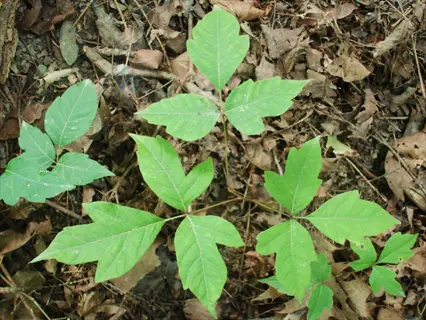
Poison Ivy
- Look for: three leaflets on each stalk, often a climbing vine in shady, damp ground along the East Coast.
- Toxin: urushiol, a colorless resin on the stems and leaves that also helps the plant hold water.
- Reaction: a rash can start within hours or take a full 24 to 48 hours to develop.
- Spread risk: urushiol stays active on tools, gloves and clothing for up to five years after contact.
- Rule of thumb: leaves of three, let it be applies here, though leaflet counts vary by species and season.
- First move: rinse skin at once with rubbing alcohol, poison plant wash, or dish soap and plenty of water.
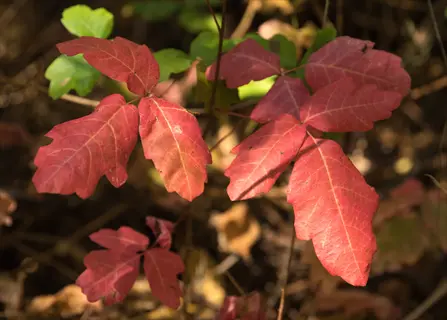
Poison Oak
- Look for: three leaflets like poison ivy, but growing as a low shrub rather than a climbing vine.
- Where: UAB places it on the West Coast and in parts of the South rather than along the East Coast.
- Extra clue: UAB notes that poison oak may bear greenish-yellow or white berries alongside its leaflets.
- Toxin: the same urushiol resin found in poison ivy and poison sumac, with the same rash risk attached.
- Reaction: less than a grain of salt of urushiol causes a rash in 80-90% of adults, according to CDC.
- First move: wash skin and scrub under the fingernails, then wash clothing on its own before wearing it again.
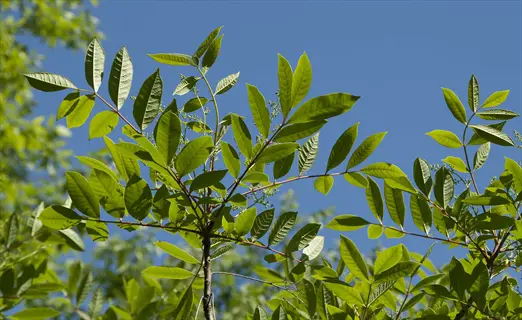
Poison Sumac
- Look for: smooth-edged leaves in pairs, with 7 to 13 leaflets on each stem rather than three.
- Where: swampy and marshy ground near rivers, growing as a tall shrub or small tree.
- Size: it can exceed 15 feet (4.6 m), so the rash plant may sit well above head height.
- Toxin: urushiol again, so the rash and the treatment ladder match poison ivy and poison oak.
- Common error: the leaves of three rule does not describe this plant at all and will mislead you.
- First move: treat exposure the same way, and never burn cut material from any of these three plants.
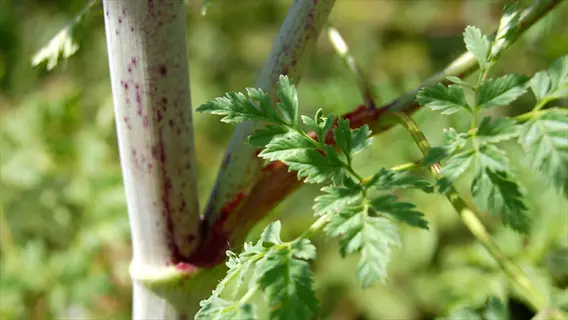
Poison Hemlock
- Look for: hairless, hollow, ridged stems marked with purple spots, plus fern-like leaves and a musty odor.
- Size: it stands 3 to 8 feet (0.9 to 2.4 m) and carries umbrella-shaped white flower clusters.
- Hazard type: it does not cause skin irritation, and it is dangerous only when any part is swallowed.
- Severity: all parts are highly poisonous, and ingestion of even small amounts may cause death.
- Why people are exposed: it is often confused with wild carrot, also called Queen Anne's lace, and grows on streamside and ditch banks.
- First move: anyone who has swallowed part of it needs immediate medical attention rather than home treatment.
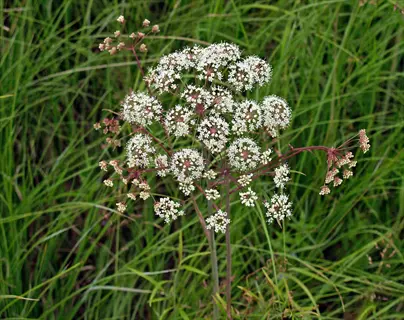
Water Hemlock
- Look for: smooth, hollow stems on a plant 3 to 6 feet (0.9 to 1.8 m) tall, shorter than giant hogweed.
- Root clue: the Utah Poison Control Center describes roots with separate chambers inside and a musky odor.
- Reputation: the Fish and Wildlife Service notes it is often called the most deadly plant in North America.
- Severity: all parts are highly toxic, and poisoning can bring convulsions, seizures, delirium and often death.
- Toxic group: USDA places it in the neurotoxic and myotoxic group, alongside poison hemlock and death camas.
- First move: never taste, chew or forage anything from this family without a sure identification.
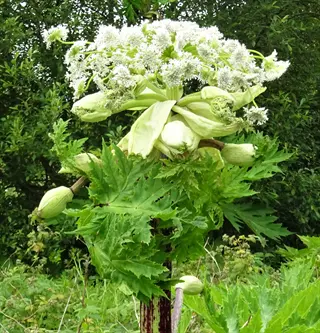
Giant Hogweed
- Look for: thick, hollow, ridged stems with purple spots, topped by very large white flower heads.
- Size: the Fish and Wildlife Service reports it often tops 6 feet (1.8 m) and sometimes reaches 18 feet (5.5 m).
- Hazard: contact with the sap may cause blistering rashes, permanent scarring and even blindness in reported cases.
- Lookalike: native cow parsnip reaches 4 to 10 feet (1.2 to 3 m) and has fuzzy grooved stems instead.
- Handling: cover skin fully and keep sap off bare arms, since this is a contact hazard rather than an eating one.
- First move: wash sap off at once and keep the affected skin out of sunlight while you seek advice.
Leaves of three, let it be fits poison ivy and poison oak, but poison sumac usually carries clusters of 7 to 13 leaves, and leaflet counts can shift with species and season.
Contact Harm vs Eating Harm
Family names tell you little about danger. The federal research program that sorts poisonous plants uses toxic syndromes instead. It groups them by what the toxin does and which organ system takes the damage. That same logic works in the field. Three routes cover nearly everything you meet: a resin that binds to skin, a plant part someone swallows, and sap that burns after sunlight hits it. Each route needs a different first move.
So what changes when a plant only harms you if you swallow it? The answer is your whole first response. Poison hemlock causes no skin irritation at all. UAB emergency medicine is clear that the danger comes on ingestion alone. Brush a stem on the walk past and nothing happens, so there is no rash to watch for and no wash that helps. Urushiol works the other way. The resin sticks to skin on contact, and the allergic contact dermatitis that follows may show within hours or take a full 24 to 48 hours.
- Poison ivy, poison oak and poison sumac all carry urushiol, the resin behind most plant rashes.
- Giant hogweed and wild parsnip sap can blister skin, and hogweed contact may leave permanent scarring.
- A reaction may begin within hours or take a full 24 to 48 hours to appear.
- Rinsing early with rubbing alcohol, poison plant wash, or dish soap and water limits how much resin stays.
- Poison hemlock is documented as an ingestion hazard that does not irritate skin, and water hemlock is highly toxic when swallowed.
- Castor bean, jimson weed, deadly nightshade and pokeweed act after ingestion rather than after contact.
- Reported symptoms include nausea, abdominal pain, vomiting and bradycardia, with complications extending to seizures, organ failure and coma.
- Swallowing part of a plant is a call to Poison Control at 1-800-222-1222, not a wash-and-wait problem.
The third route sits between those two columns and slips past most people. Giant hogweed and wild parsnip sap do little on their own. Sunlight is the trigger, and the burn that follows is phytophotodermatitis. That mechanism changes what you do. Get the sap off the skin, then keep that skin out of the light. Hogweed earns the most respect here, since its sap can blister skin and leave permanent scars. Blindness has been reported too.
Plant poisoning symptoms make the split obvious once you know the pattern. The reported ones run from nausea and stomach pain to vomiting and a slowed heart rate, with the worst cases reaching seizures and organ failure. A rash never turns into any of that, so sort by route first. Wash and watch after skin contact. Keep sap out of the sunlight, and call 1-800-222-1222 for anything swallowed, with the plant's name ready.
How To Identify The Look-Alikes
The stand on the creek bank behind my yard came up past my shoulders by the third week of June. I broke one off at the base. The stem was hollow, ridged, and hairless, and purple spotted stems ran the length of every plant in that patch. That is poison hemlock. I pulled the whole stand in long sleeves and gloves and bagged it.
Stem texture sorts this family faster than the flowers do. Fuzzy stems with shallow grooves point you to cow parsnip or Queen Anne's lace. A hairless hollow stem with ridges and purple spots leaves you with poison hemlock or giant hogweed, and hogweed is the one that towers over your head. A smooth hollow stem with no spots means water hemlock, whose roots have separate chambers inside and a musky odor when you slice one open. Yellow flowers take you out of this group and into wild parsnip.
Height is the weakest tell of the bunch. The U.S. Fish and Wildlife Service puts poison hemlock at 3 to 8 feet (0.9 to 2.4 m), while UAB describes mature plants at 6 to 10 feet (1.8 to 3 m). Neither one is wrong, because a plant grows to the soil and water it gets. Use height to narrow the field, then let the stem make the call.
The mix-up that kills people is poison hemlock dug up as wild carrot. People have died after that exact mistake, and the root is the part that ends up in the basket. Nothing in this family is worth foraging on a maybe. If you cannot name the plant with certainty, leave it in the ground.
The main cause of exposure to poison hemlock is misidentification. Because it is often confused with the wild carrot, poison hemlock is accidentally ingested. If you are not 100% sure of the type of plant you are encountering, avoid ingesting it or foraging it.
Houseplants and Young Children
The plants that send small children to the hospital are the ones sitting at ankle height in the living room. A six-year study at a single Romanian pediatric hospital looked at 71 admissions for plant poisoning, and houseplants outranked wild plants as the source. Elephant ear topped that list at 18.3% of cases. Dumb cane came next at about 9.9%, and castor bean at roughly 7%.
Age drives the whole pattern. Children 5 and under made up 71% of those admissions, and 92.9% of the exposures were unintentional. Picture a toddler with a leaf already in her mouth. Those numbers come from one hospital over six years, so read them as a ranking of which toxic houseplants reach young kids, not as a United States national rate.
Elephant Ear (Colocasia)
- Cohort share: it was the most implicated plant in a six-year pediatric hospital study, at 18.3% of cases.
- Where it sits: a large-leaved pot plant usually kept at floor level, exactly where a crawling child can reach it.
- Also flagged by: the 2018 systematic review names Colocasia among the plants frequently implicated in child poisonings.
- Practical step: raise the pot above reach or keep it out of rooms where small children play unsupervised.
Dumb Cane (Dieffenbachia)
- Cohort share: it accounted for roughly 9.9% of admissions in that same six-year pediatric hospital study.
- Also flagged by: the National Capital Poison Center lists dieffenbachia among its poisonous plants, alongside elephant ear.
- Where it sits: a common living-room and office plant, often placed on the floor beside furniture.
- Listed as: the Utah Poison Control Center places it in the houseplant category of its poisonous plant database.
Castor Bean (Ricinus)
- Cohort share: it made up about 7% of cases in the same six-year pediatric hospital study.
- The risky part: the seeds contain ricin, and the plant appears on the National Capital Poison Center list.
- Where it grows: it is usually grown as a bold garden ornamental rather than kept as an indoor plant.
- Practical step: poison.org advises keeping poisonous plants out of children's reach and watching young children outdoors.
Peace Lily, Philodendron and Pothos
- Category: the Utah Poison Control Center groups all three as houseplants, alongside calla lily and umbrella tree.
- Severity range: poison.org states plant danger runs from mild irritation to severe illness, so do not assume any of them is harmless.
- Where they sit: trailing pothos and philodendron often hang low enough for toddlers and pets to reach.
- Practical step: learn the names of the plants you own, because expert help depends on accurate identification.
Fixing this costs nothing. Crouch to toddler height in each room and look at what a philodendron trailing off a low shelf looks like from down there. Keep plants out of reach by moving pots to high shelves or to rooms where small children do not play. Learn the real names of the plants you own too, because accurate identification is what makes expert help fast.
Poison Control answers at 1-800-222-1222. Anyone who ingests a toxic plant and becomes ill should call immediately, before symptoms worsen.
Poison Ivy First Aid and Contaminated Gear
Poison ivy treatment climbs a ladder, and you start at the bottom rung every time. Wash with soap and water first, and the sooner you get to a sink the better. Over-the-counter hydrocortisone cream comes next. A prescription topical or an oral steroid follows if the rash keeps spreading, and you head for emergency care when the reaction runs past your skin. A contact rash can take 24 to 48 hours to show up in full, so wash even when your arm still looks clean.
A rash came up across the back of my wrist one March, weeks after the last vine I had touched. The gloves did it. The same pair of leather work gloves I used to pull ivy off a fence had sat in the shed all winter with the resin still on them. Urushiol stays active on tools, gloves and clothing for up to 5 years, which is why a rash can show up when you never went near the plant.
Rinse the skin with rubbing alcohol, a poison plant wash, or dish soap and lots of water as soon as you can.
Scrub under the fingernails, where resin hides and later transfers to the face, the eyes and other people.
Wash clothing separately and clean tools, since urushiol stays active on objects for up to five years.
Use wet compresses, calamine or hydrocortisone, and an oral antihistamine, all of which CDC lists for rash care.
Seek emergency care for a severe reaction, or for a rash on the face or the genitals.
Anything that touched the vine carries the resin too. Boot laces, a tool handle, the steering wheel, the dog's coat after a run through the ditch. Clean tools with rubbing alcohol before they go back on the shelf, and run the gloves through a wash of their own. Do not burn poison ivy you have pulled. The smoke carries the allergen into your lungs, and CDC/NIOSH puts firefighters on the same exposure list as farmers, landscapers, gardeners, roofers and forestry workers.
Burning poison ivy, oak or sumac is dangerous because the allergens irritate the lungs. CDC advises NIOSH-certified R-95 or P-95 respirators, or better, where such exposure cannot be avoided.
How Dangerous Is It Really
How dangerous are poisonous plants? Less than the word makes them sound, most of the time. Plant ingestion accounts for about 3% of Poison Control cases, and the plant part and the amount both change the answer. A toddler who gums one pothos leaf and an adult who eats a root by mistake are not in the same trouble at all.
The plant poisoning statistics worth knowing come from two studies, and neither one is US data. A 2018 review pooled 1,453 cases from 127 studies across several countries. The second followed 71 children through one Romanian hospital over six years. Doctors grade cases like these on a poisoning severity score that runs from mild up to fatal, and here is what those two groups recorded.
Those figures belong to those patients, not to your county. The same 2018 review also records deaths, plus liver failure, kidney failure, seizures and coma at the bad end of the range. Poison hemlock sits nowhere near the mild column, since eating even a small amount of it may cause death. Mild was the common outcome in both cohorts, and that is a pattern, not a promise about the next case.
So what do you do with the toxic plants already growing in your yard? Pulling every one of them is the reflex, and it is often the wrong call, because plenty of toxic natives and ornamentals feed birds and pollinators while they sit there. Fence it, label it, or watch the kids near it before you reach for the shovel.
Just because a plant has some toxic properties does not mean it should not be used in a landscape or that it must be removed.
Common Myths
Poinsettias are deadly plants that must be kept far away from children and pets during the holidays.
Poison centers disagree here: the National Capital Poison Center lists poinsettia as non-poisonous, while the Utah Poison Control Center includes it among houseplant entries.
Leaves of three, let it be covers every rash-causing plant you are likely to meet outdoors.
It fits poison ivy and poison oak, but poison sumac usually carries clusters of 7 to 13 leaves, and leaflet counts vary by species and season.
The fluid inside poison ivy blisters spreads the rash across your body and onto other people.
CDC states that fluids in blisters will not cause blisters to spread on you or others; fresh urushiol contact is what spreads a rash.
Poison hemlock burns bare skin the way poison ivy does, so brushing past a stand starts a rash.
Poison hemlock does not cause skin irritation. It is dangerous when swallowed, and ingestion of even small amounts may cause death.
If a plant is missing from a poisonous plant list, it is safe around people and animals.
Cornell states plainly that many poisonous plants are not represented on its list, so absence from any list is never proof of safety.
Conclusion
Give yourself an hour this week and walk the yard, putting a name to every plant on it. Plant identification is the part that pays off later. The advice you get on the phone depends on what you can tell the person taking your call, and a guess costs you time. Start at the fence lines, move to the beds by the door, then check the pots inside. Save 1-800-222-1222 in your phone before you need it.
Then make the decision on what goes. A plant earns removal when it sits somewhere a small child or a dog can reach it and you cannot watch that spot. Everything else can stay, with a boundary you set around it. Toxic houseplants are the ones people misjudge, since a pot on the floor sits at mouth height for a toddler. In one hospital cohort of 71 children, elephant ear and dumb cane topped the list ahead of anything growing wild.
Four short seasonal checks cover the rest of the year. Spring, learn the fence lines and the creek banks while growth is low and the stems are easy to read. Summer, cover your skin for yardwork. Fall, wash tools and gloves after clearing, since CDC rates urushiol as active on a blade for up to 5 years. Winter, get down to child height and look at your indoor plants from there.
Plant safety has a hard limit worth saying out loud. No plant list is complete, and a plant missing from one is not proof that it is safe to touch or eat. If someone has swallowed part of a plant you cannot name, call poison control instead of treating it at home, and call before symptoms start rather than after.
The rash plants and the killers are two separate problems, and only one of them ends at the sink.
Glossary
- Bradycardia
- A heartbeat that is slower than normal, which is one of the effects reported after some plants are swallowed.
- Contact dermatitis
- An itchy, red skin reaction that appears where the skin touched something it is sensitive to, such as plant resin.
- Leaflet
- One of the separate small blades that together make up a single compound leaf, such as the three leaflets on poison ivy.
- Phytophotodermatitis
- A skin burn that happens when plant sap lands on the skin and sunlight then falls on the same spot.
- poison hemlock
- A tall carrot-family weed with hairless, hollow, purple-spotted stems that is toxic to eat but harmless to touch.
- Poisoning Severity Score
- A scale doctors use to rate a poisoning case as none, mild, moderate, severe or fatal.
- Toxic syndrome
- A way of grouping poisonous plants by the kind of harm their toxins cause rather than by which plant family they belong to.
- Urushiol
- The colorless, oily resin in poison ivy, poison oak and poison sumac that causes the itchy rash most people get from plants.
External Sources
Frequently Asked Questions
Which plant is the most poisonous in North America?
The U.S. Fish and Wildlife Service notes that water hemlock is often called the most deadly plant in North America. All parts are highly toxic, and its roots have separate chambers inside plus a musky odor.
What is the most poisonous plant to touch?
Two answers, depending on what you mean by worst:
- Giant hogweed sap may cause blistering rashes, permanent scarring and even blindness.
- Poison ivy, oak and sumac cause far more rashes, since urushiol smaller than a grain of salt affects 80-90% of adults.
- Poison hemlock, despite its reputation, does not irritate skin at all and is dangerous only when swallowed.
Which indoor plants are poisonous?
Poison center houseplant lists include these:
- Dumb cane (Dieffenbachia) and elephant ear (Colocasia), the two most implicated plants in one pediatric hospital cohort.
- Peace lily, philodendron, pothos, calla lily, Easter lily, rubber tree and umbrella tree.
- Poinsettia is disputed: poison.org lists it as non-poisonous, while the Utah Poison Control Center includes it.
What are the symptoms of plant poisoning?
Reported symptoms differ by exposure route. After swallowing, a 2018 systematic review lists nausea, abdominal pain, dehydration, vomiting, arrhythmia and bradycardia, plus oral burning and facial flushing. Skin contact instead brings rash, itching, swelling and blisters that may take 24 to 48 hours to develop fully.
Is every part of a poisonous plant toxic?
No. The National Capital Poison Center states that for some plants all parts are poisonous, while for others only certain parts are. Poison hemlock and water hemlock are toxic throughout, baneberry is worst in the root stock and sap, and rhubarb leaves and apple seeds are the risky parts of otherwise ordinary food plants.
What should you do if a child eats part of a plant?
Contact Poison Control at 1-800-222-1222 immediately, before symptoms worsen, and be ready to name the plant, because expert help depends on accurate identification. In one six-year hospital cohort, 92.9% of pediatric exposures were unintentional and most cases were mild, but severity depends entirely on the species involved.
Are poisonous plants also toxic to pets?
Often, but not always. UF/IFAS notes that some plants are toxic only to pets, others only to people, and some to livestock as well. Pokeweed is toxic to all three groups, while nightshade effects vary by species and by whether the victim is a person, a pet or livestock. Cornell keeps a list of roughly 130 plant names considered poisonous to livestock.
Which common berries are poisonous?
Poison center lists name these berry hazards:
- Pokeweed berries, toxic to people, pets and livestock, and able to cause death in large amounts.
- Nightshade berries, which can cause stomach problems, weakness, hallucinations and even death.
- Holly berries, Jerusalem cherry, baneberry, cotoneaster and firethorn, all named by poison centers.
Are wild mushrooms poisonous plants?
Mushrooms are fungi rather than plants, which is why most plant guides leave them out. The National Capital Poison Center still warns that eating any amount of any wild mushroom could be very dangerous, and Cornell's list includes death cap, destroying angels, fly agaric and ergot.
Should you remove poisonous plants from your yard?
Not automatically. UF/IFAS makes the point that a plant with toxic properties does not have to be removed from a landscape, and pokeweed feeds wildlife while remaining toxic to people. The decision depends on who uses the space, especially small children and pets.