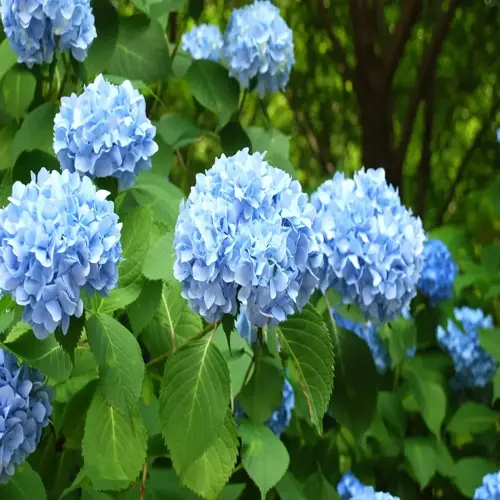

Most hydrangea trees reach 8 to 15 feet (2.4 to 4.6 meters) tall at full growth, though hydrangea tree size varies a lot between cultivars. Some compact types stop at just 3 feet. Others push past 12 feet in the right spot. Your final result depends on the variety you pick, how you prune it, and where you plant it.
I first saw how big do hydrangea trees get when I visited a friend's front yard. She had a full-sized Limelight next to a compact Little Lime. The Limelight towered over the porch railing at about 7 feet tall. The Little Lime sat below the windowsill at just under 4 feet. Same genus and same care routine, but two very different plants in scale. That visit changed how I pick cultivars for specific garden spots.
Your tree's final size depends on four main factors. Cultivar genetics set the upper limit. Pruning habits control how tall and wide the canopy grows each year. Your growing zone affects the length of the season and how much new wood forms. How big do hydrangea trees get also depends on whether the plant was trained or grafted into tree form. Grafted trees tend to have a rounder canopy. Trained trees can grow taller since you guide the strongest stem without restricting its natural habit.
The Chicago Botanic Garden ran long-term trials on hydrangea tree height for popular cultivars. Their data gives you real numbers to plan around. Little Lime topped out at 3 to 5 feet (0.9 to 1.5 meters), perfect for small beds and foundation plantings. Limelight reached 6 to 8 feet (1.8 to 2.4 meters) and worked well as a focal point. Big Ben grew to 8 to 10 feet (2.4 to 3 meters) with massive flower panicles that weighed down the branches after rain.
Pick a cultivar that fits your space at hydrangea tree mature size, not at the size you see on the nursery tag. That cute little tree in a 5-gallon pot will double or triple within three to four years. Measure your planting area and leave 6 to 10 feet (1.8 to 3 meters) between each tree. The canopy needs room to spread without crowding your other plants. Compact varieties like Bobo or Little Quick Fire need less room, around 4 to 5 feet of clearance.
Growing conditions in your yard also push hydrangea tree size up or down from the catalog numbers. A tree in rich soil with steady water and six hours of sun grows bigger than the same cultivar in dry clay with heavy shade. I've seen Limelights in well-fed gardens hit 10 feet even though the tag said 8 feet max. Soil quality and moisture make a bigger difference than most people expect. In my experience, feeding with compost each spring adds an extra 6 to 12 inches of growth per year on top of what the cultivar would produce on its own.
You can slow growth with hard pruning each late winter, but you can't make a big cultivar stay small forever. A Tardiva crammed into a 4-foot gap beside a walkway will fight you every season. Save yourself that headache and match the tree to the space from the start. Your garden will look better and your weekends will stay free for the fun parts of gardening.
Read the full article: Hydrangea Tree: Complete Growing Guide