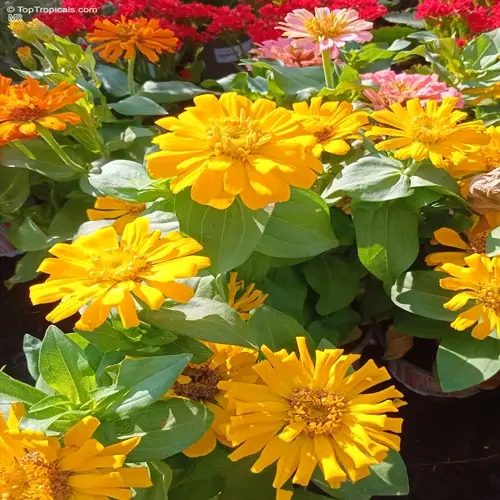

No, zinnias grow back every year is a common misconception. Zinnias are true annuals that die after the first hard frost and do not return from their roots the following spring. Each season requires a fresh planting either from new seeds or from seeds the plants dropped the previous fall.
You might ask are zinnias annuals or perennials because you sometimes see them pop up in the same spot year after year. I noticed this in my own garden three springs ago. Pink and orange sprouts appeared right where my red zinnias had been the summer before. The colors didn't match the parents at all. That told me these were volunteer seedlings from dropped seeds, not the old plants coming back.
The zinnia life cycle explains why they can't come back. As true annuals, zinnias complete every stage of life in one growing season. They sprout, grow stems and leaves, produce flowers, set seeds, and then die. This entire process takes about 60-90 days from seed to final bloom. Once your plant has made seeds, it has finished its job and starts to decline. This happens even without frost. You'll see the stems go woody and the leaves start to yellow as the plant winds down.
NC State Extension lists Zinnia elegans as an annual across USDA Zones 2a through 11b. Even if you live in a frost-free zone like southern Florida, your zinnias won't last as perennials. The plants wear themselves out after making seeds and fade away no matter how warm it stays. Heat and humidity in your area can speed up this decline even faster.
The good news is that zinnias self seed with very little help from you. When flower heads dry out on the plant, seeds fall to the ground below. Those seeds sit in your soil over winter. They sprout when conditions warm up in spring. This can make it feel like your zinnias came back on their own. But you're seeing a brand new batch of plants growing from last year's dropped seeds.
You can encourage this natural process with a few simple steps. At the end of your growing season, leave 3-5 flower heads on each plant to dry out and drop their seeds. Don't cut these plants down until the seed heads have turned brown and papery. In spring, skip tilling or raking that area so you don't bury the seeds too deep. Give the spot a light watering when warm weather arrives to help trigger sprouting. You can also collect dried seed heads in a paper bag over winter and scatter them yourself in spring for more control over where the new plants grow.
Your self-seeded zinnias won't look the same as the parent plants. Hybrid varieties make offspring with mixed colors and sizes. If you want the exact same flowers each year, buy fresh seed packets of named types. But if you enjoy surprises, let your zinnias self seed for a unique garden display. It changes every season and you never know what colors will pop up.
Either way, plan on putting new seeds in the ground each spring as your main approach. Treat any volunteer plants that show up on their own as a happy bonus. I always plant a fresh round and then watch to see what extras the garden gives me for free. Some years I get dozens of volunteers and other years just a handful. You can't count on self-seeding alone, but it's a nice reward for leaving a few spent flower heads on your plants at the end of fall.
Read the full article: How to Grow Zinnia Seeds Successfully