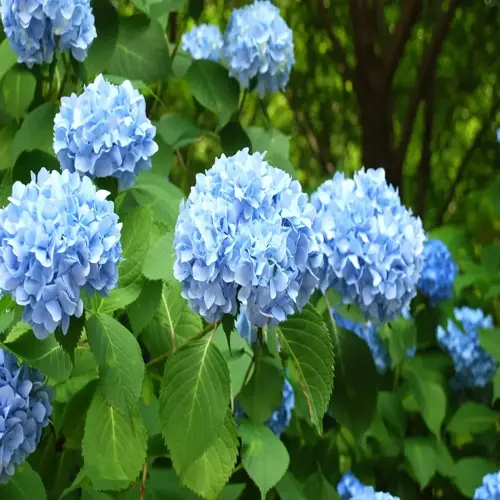

Growing hydrangeas in pots or ground both work, but in-ground planting makes stronger growth and bigger blooms with far less effort. Ground-planted trees get open root space, steady moisture, and natural soil insulation. Containers can give you a beautiful tree too. You just need to put in more work to get there.
I tested this with two Little Lime trees from the same nursery batch. One went into a garden bed. The other went into a 24-inch ceramic pot on the patio. By the end of summer, the ground tree had grown twice as much new stem length. Its flower panicles were bigger too. The container hydrangea tree still looked healthy. But it needed water every day in July and August. The garden one got by on deep soaks twice a week. By year two, I had to repot the container hydrangea tree because roots had filled every inch of soil.
The trade-offs explain why this gap exists. In-ground roots spread outward and downward on their own. They tap into deeper moisture during dry spells. The soil around them buffers wild temperature swings. It keeps roots cool in summer and warm in winter. A hydrangea tree in pot deals with a fixed block of soil that heats up fast in the sun. It dries out quick and freezes solid in cold months. The roots can't escape when things get harsh.
That said, containers work great in some cases. Renters, apartment dwellers, and anyone with bad native soil can still grow a nice hydrangea tree in pot. Containers let you move the tree to chase sunlight or bring it under cover before a frost. You pick the soil mix and drainage setup instead of fighting your yard's clay or sand.
Pot Size and Material
- Minimum width: Start with a pot at least 24 inches (61 cm) wide and move up a size every two years as roots grow.
- Best materials: Thick resin or fiberglass pots guard roots better than thin plastic and weigh less than ceramic or clay.
- Drainage holes: Your pot must have at least three drain holes in the bottom to stop soggy soil that rots roots fast.
Soil and Feeding
- Mix ratio: Use 60% good potting soil with 30% compost and 10% perlite for a blend that holds water but still drains well.
- Feed schedule: Put down slow-release granules in early spring and liquid feed every two weeks from May through July.
- Top dressing: Swap out the top 2 inches of soil each spring to add fresh nutrients without digging into the roots.
Winter Protection
- Cold zones: In zones 5 and colder, wrap the pot in bubble wrap or burlap and push it against a south-facing wall.
- Garage storage: An unheated garage keeps the tree dormant without exposing roots to killing cold that cracks pots.
- Spring timing: Move your container back outside once nights stay above 35°F (2°C) for a full week.
Growing hydrangea in container works best with compact types like Little Lime, Bobo, or Little Quick Fire. These top out at 3 to 5 feet tall and won't outgrow their pots as fast as big types. A full Limelight in a pot needs constant repotting and hard pruning to stay in check. Match the cultivar to pot life from the start and save yourself that hassle.
I now keep one compact hydrangea in a large pot on my back deck and the rest in the ground. The potted one adds a nice focal point near the seating area. But I water it three times as often as the ones in garden beds during hot weeks. If you're ready for that extra work, a container tree can look stunning. If you prefer low upkeep, stick with ground planting and your tree will handle most of its own needs.
Read the full article: Hydrangea Tree: Complete Growing Guide