
Introduction
Most people look at their yard in January and see nothing but bare branches. But the best winter flowers prove that your garden can stay colorful even when freezing temps hit. I grow over a dozen cold weather flowers in my own beds. They put on a show that rivals anything I see in spring.
Research backs up what gardeners like me have felt for years. A 2021 study found that viewing yellow flowers for just 3 minutes cut stress markers in test subjects. Your winter garden does more than look pretty. It gives your mind a real break during the shortest, darkest days of the year.
Winter blooming plants also serve a purpose most guides skip over. Bees still forage on warmer winter days above 55°F (13°C) and they need nectar to survive. Your winter garden becomes a lifeline for pollinators when wild food runs low. Think of winter flowers as one leg of a relay race that keeps your garden ecology running all 12 months.
This guide covers the 10 best cold weather flowers for your beds and the science behind how they survive frost. You'll also find tips for growing them indoors or out. Whether you want a full winter garden or just a few pots of color, you'll find what you need right here.
10 Best Winter Flowers
I've grown every one of these cold-hardy flowers in my own garden over the past 8 winters. Each plant on this list earned its spot by blooming when most of my yard sat frozen and bare. I sorted them by bloom time so you can plan for continuous color from December all the way into early spring.
Some of these flowers, like the hellebore and witch hazel, start blooming in December. Others, like crocus and winter aconite, close out the season in late February and March. Plant a mix from this list and you won't see a single flowerless week all winter long.
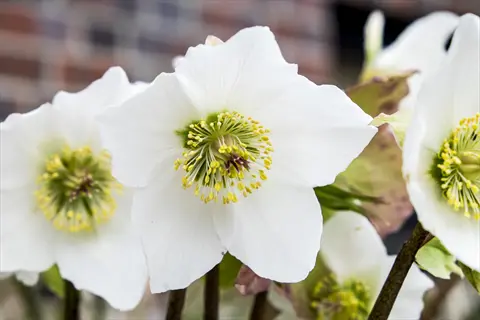
Hellebore (Christmas Rose)
- Bloom Period: Hellebores flower from December through March, making them one of the longest-blooming winter flowers available for home gardens across USDA zones 4 through 9.
- Colors Available: These elegant perennials produce nodding blooms in white, pink, deep purple, green, and speckled bicolor patterns that add sophistication to any winter border.
- Growing Conditions: Plant hellebores in partial to full shade with rich, well-drained soil amended with compost, spacing them about 18 inches (46 centimeters) apart for best results.
- Fragrance and Appeal: While most hellebore varieties have little scent, their rose-like blooms and evergreen foliage provide unmatched visual interest during the dreariest winter months.
- Companion Pairing: Hellebores pair beautifully with snowdrops, winter aconite, and early crocus to create a layered woodland garden display that blooms in waves.
- Care Tip: Remove old, tattered leaves in late fall to showcase emerging flower stems and reduce the risk of fungal leaf spot spreading to new growth.
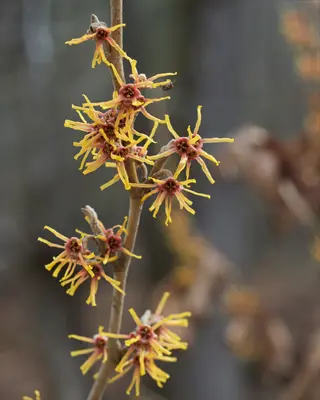
Witch Hazel
- Bloom Period: Witch hazel blooms from December through February on bare branches, producing spidery, ribbon-like flowers before most other plants show any sign of life.
- Colors Available: Flowers appear in bright yellow, copper orange, and deep red shades, with each color releasing a sweet, spicy fragrance that carries well on cold winter air.
- Growing Conditions: Plant witch hazel in full sun to partial shade in moist, acidic, well-drained soil across USDA zones 5 through 8, giving it room to spread 15 to 20 feet (4.5 to 6 meters).
- Historical Use: Witch hazel has a long history in traditional medicine and cosmetics, with extracts used today by major skincare brands for its natural astringent and anti-inflammatory properties.
- Pollinator Value: The early bloom time makes witch hazel a critical nectar source for bees active on warmer winter days when few other flowers are available.
- Care Tip: Witch hazel requires minimal pruning, but if shaping is needed, prune immediately after flowering ends in late winter before new leaf buds form.
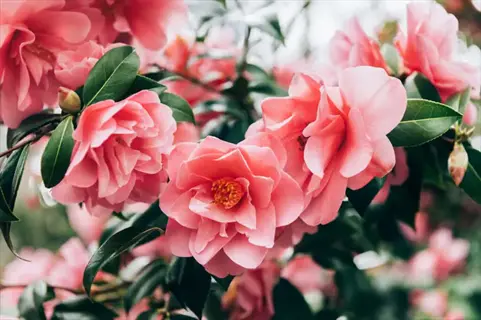
Camellia
- Bloom Period: Camellia japonica blooms from mid-winter through early spring, while Camellia sasanqua starts flowering in fall and continues into December for extended seasonal color.
- Colors Available: Camellias produce large, rose-like blooms in white, pink, red, and bicolor patterns, with single, semi-double, and fully double petal forms available.
- Growing Conditions: Grow camellias in partial shade with acidic, well-drained soil in USDA zones 7 through 9, though newer cold-hardy hybrids can tolerate conditions in zone 6.
- Garden Design: Often called the Queen of winter flowers, camellias work as specimen shrubs, foundation plantings, espalier on walls, or as a privacy screen with year-round evergreen foliage.
- Indoor Potential: Cut camellia branches can be forced indoors in a vase of water, bringing their spectacular blooms inside where they last for several days as floating arrangements.
- Care Tip: Mulch around camellias with pine bark or oak leaves to maintain soil acidity and protect surface roots from temperature swings during freeze and thaw cycles.
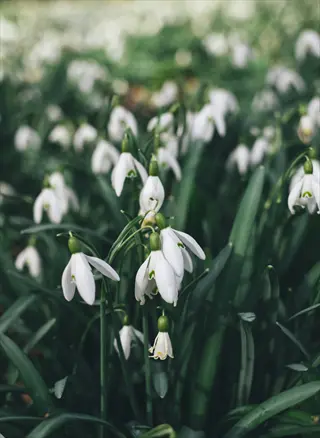
Snowdrop
- Bloom Period: Snowdrops emerge from January through March, often pushing through snow cover to display their delicate white bell-shaped flowers as one of the earliest winter signals.
- Colors Available: Pure white drooping blooms with small green markings at the petal tips give snowdrops a classic, understated beauty that works in any garden style.
- Growing Conditions: Plant snowdrop bulbs 3 inches (7.5 centimeters) deep in partial shade with moist, humus-rich soil across USDA zones 3 through 7 for reliable winter blooming.
- Naturalizing Ability: Snowdrops spread freely by self-seeding and bulb division, creating larger colonies each year that carpet woodland floors and borders with white in late winter.
- Medicinal Interest: Snowdrops contain galantamine, a compound studied for its potential cognitive health applications, adding a fascinating scientific dimension to this familiar garden flower.
- Care Tip: Plant snowdrop bulbs in the green (while still in leaf after flowering) rather than as dry bulbs in fall, as they establish much more reliably this way.
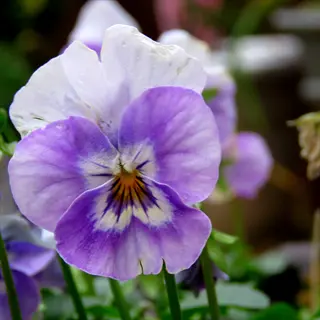
Pansy
- Bloom Period: Pansies flower from late fall through winter and into early spring, providing months of continuous color in USDA zones 6 through 10 with proper care.
- Colors Available: Available in nearly every color including yellow, purple, blue, red, orange, white, and striking bicolor face patterns, pansies offer unmatched winter color variety.
- Cold Tolerance: Pansies survive freezing temperatures by producing sugar alcohols that act as natural antifreeze in their cells, preventing ice crystal damage to delicate tissue.
- Container Gardening: Pansies are ideal for winter window boxes, porch pots, and container gardens where they add instant color and can be easily replaced if damaged by severe cold.
- Edible Use: Pansy flowers are edible and can be used as garnishes on salads, desserts, and drinks, adding both visual appeal and a mild, slightly sweet flavor to dishes.
- Care Tip: Deadhead spent pansy blooms regularly to encourage continuous flowering throughout winter, and apply a light liquid fertilizer every two to three weeks during mild spells.
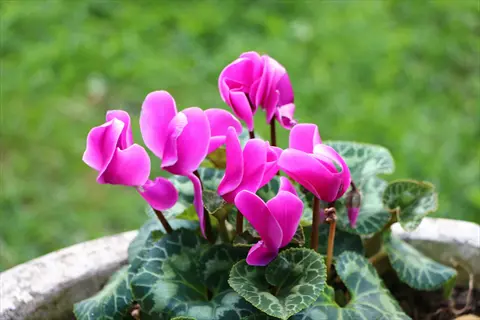
Cyclamen
- Bloom Period: Hardy cyclamen (Cyclamen coum) flowers from January through March, while florist cyclamen (Cyclamen persicum) blooms indoors throughout winter as a popular houseplant.
- Colors Available: Cyclamen produce swept-back petals in shades of pink, magenta, red, and white, often with attractive silver-marbled foliage that adds interest even when not in bloom.
- Growing Conditions: Plant hardy cyclamen tubers 1 inch (2.5 centimeters) deep in partial shade with well-drained soil in USDA zones 5 through 9 beneath deciduous trees or shrubs.
- Naturalizing Ability: Hardy cyclamen self-seeds readily and naturalizes over time, eventually forming large sweeps of color beneath trees where other plants struggle to grow in winter.
- Indoor Growing: Florist cyclamen thrives in cool rooms between 50 and 65 degrees Fahrenheit (10 to 18 degrees Celsius) near a bright window, making it perfect for winter windowsills.
- Care Tip: Water cyclamen from the bottom by placing the pot in a saucer of water for 15 minutes, as overhead watering can cause the tuber crown to rot.
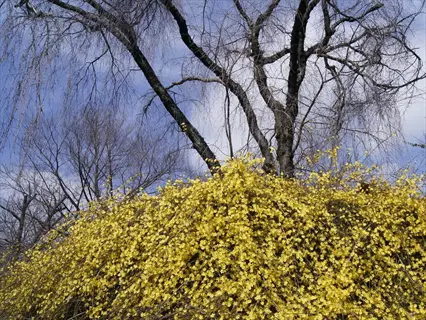
Winter Jasmine
- Bloom Period: Winter jasmine produces bright yellow flowers on bare green stems from December through March, creating a cheerful cascade of color against walls and fences.
- Growing Habit: This deciduous shrub grows in an arching, vine-like habit reaching 10 to 15 feet (3 to 4.5 meters) long, making it ideal for training on trellises, walls, or slopes.
- Growing Conditions: Plant winter jasmine in full sun to partial shade with average, well-drained soil across USDA zones 6 through 10 for reliable winter flowering each year.
- Design Use: Train winter jasmine along a south-facing wall for maximum winter sun exposure, or allow it to cascade over retaining walls and banks as a colorful ground cover.
- Fragrance Note: Unlike summer jasmine, winter jasmine has little to no fragrance, but its vivid yellow color and early bloom time more than compensate for the lack of scent.
- Care Tip: Prune winter jasmine immediately after flowering by cutting back flowered stems to strong side shoots, which encourages dense new growth for next winter's blooms.
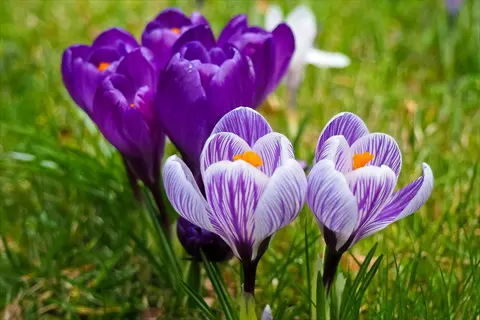
Crocus
- Bloom Period: Early-flowering crocus varieties bloom from late January through March, popping up through snow and frozen ground to signal that spring is on its way.
- Colors Available: Crocus flowers come in purple, yellow, white, lavender, and striped bicolor patterns, with golden-yellow stigmas inside that are the source of the spice saffron.
- Growing Conditions: Plant crocus corms 3 to 4 inches (7.5 to 10 centimeters) deep in full sun to partial shade with well-drained soil across USDA zones 3 through 8.
- Naturalizing Ability: Crocus corms multiply freely and naturalize in lawns, meadows, and under trees, creating increasingly large displays of color each winter with no extra effort.
- Pollinator Value: Early crocus blooms are among the first nectar sources available to emerging bees in late winter, making them an essential plant for pollinator-friendly gardens.
- Care Tip: Plant crocus corms in groups of 25 or more for visual impact, and avoid mowing naturalized lawn areas until crocus foliage has yellowed and died back completely.
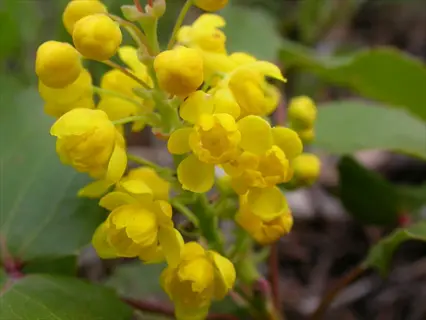
Mahonia
- Bloom Period: Mahonia produces clusters of bright yellow flowers from November through February, followed by blue-purple berries that attract birds throughout the winter garden season.
- Growing Habit: This evergreen shrub grows 6 to 12 feet (1.8 to 3.6 meters) tall with bold, holly-like compound leaves that add structural interest to winter landscapes year-round.
- Growing Conditions: Mahonia thrives in partial to full shade with average, well-drained soil across USDA zones 5 through 9, tolerating dry shade better than most flowering shrubs.
- Fragrance Note: Mahonia flowers release a sweet, honey-like fragrance that carries on winter air, making it a standout choice for planting near walkways and entryways.
- Wildlife Value: The early flowers feed winter pollinators while the berries provide food for birds including robins and waxwings, making mahonia a dual-purpose wildlife plant.
- Care Tip: Prune mahonia after flowering by removing the tallest stems at ground level to encourage bushy new growth and prevent the shrub from becoming leggy over time.
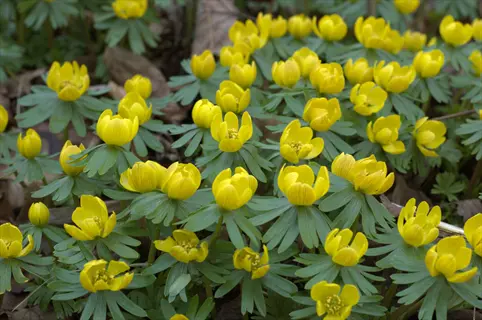
Winter Aconite
- Bloom Period: Winter aconite (Eranthis hyemalis) blooms from February through March, producing bright yellow buttercup-like flowers surrounded by a ruff of green leafy bracts.
- Growing Habit: These low-growing perennials reach only 3 to 6 inches (7.5 to 15 centimeters) tall, making them perfect for the front of borders and as a ground-hugging carpet of gold.
- Growing Conditions: Plant winter aconite tubers 2 to 3 inches (5 to 7.5 centimeters) deep in partial shade with moist, humus-rich soil across USDA zones 4 through 7.
- Naturalizing Ability: Winter aconite self-seeds generously and spreads to form large golden colonies beneath deciduous trees, creating a stunning display that grows more impressive each year.
- Companion Pairing: Plant winter aconite alongside snowdrops and early crocus for a layered late-winter display that combines yellow, white, and purple for maximum visual impact.
- Care Tip: Soak dried winter aconite tubers in warm water overnight before planting in fall to rehydrate them, which dramatically improves their establishment rate in the first season.
The Christmas rose, pansy, and cyclamen give you the best variety for small spaces and containers. For larger gardens, witch hazel and camellia create stunning focal points that draw your eye across the winter landscape. Mix tall shrubs with low ground covers to build layers of color that look natural and full.
Winter Flower Care Essentials
Good winter flower care starts long before the first frost hits your garden. I plant most of my cold-hardy flowers in early fall so the roots have time to settle in before freezing temps arrive. This single timing trick makes a bigger difference than any fertilizer or soil mix you could buy.
Your USDA hardiness zone tells you which plants can handle your local winters, but it doesn't tell the whole story. The updated 2023 zone map reflects 30 years of temperature data, so check your current zone before you shop. Wind, snow cover, and soil type all affect how your frost tolerant flowers perform beyond what the zone number says.
The table below gives you a quick side view of growing needs for all 10 winter flowers. Use it to match each plant to your garden's light and soil before you spend a dollar at the nursery. Most of these are low-maintenance winter flowers once you get the basics right.
Soggy soil is the number one killer I see in winter gardens. The fix is simple: well-drained soil keeps roots alive when cold rain won't stop. Add 2 to 3 inches of mulch after your first hard freeze to keep soil temps stable. Pull that mulch back a few inches from each stem so moisture doesn't rot the crown.
Watering in winter trips up a lot of new gardeners. Frozen ground locks moisture away from roots, so your plants can go thirsty even in wet weather. I water my beds on mild afternoons above 40°F (4°C) when the soil can soak it in. Skip fertilizer until late winter when you spot new growth pushing through the mulch.
Pruning at the wrong time is another common winter flower care mistake. Most winter bloomers set their buds on old wood, so you'll cut off next year's flowers if you prune in fall. Wait until blooms fade in late winter, then trim back spent stems. In my experience, less pruning gives you better results with these tough plants.
Science Behind Winter Blooms
You might wonder why plants flower in winter when the cold should shut everything down. Most garden guides skip the winter flower biology, but I think it's the most interesting piece. Your winter bloomers don't just survive the freeze. They've built millions of years of cold tolerance into their cells through some clever chemistry.
Think of vernalization like your plant keeping a diary of cold days. Each week below a set temperature adds another mark in that diary. Once your plant counts enough cold days, it flips a genetic switch that says it's time to bloom. Cold acclimation works the same way as putting on a winter coat. The deeper the cold goes, the more protective layers your plant builds around its cells.
The real key is plant antifreeze. When temps drop, your winter flowers pump out sugar alcohols that stop ice from forming in their cells. In my experience growing hellebores for 6 years, I've seen them bloom through a week of single digit temps without a scratch. Your plants fill their cells with natural antifreeze that keeps ice crystals from bursting the tissue. That's how your garden stays colorful when everything else looks dead.
Vernalization: Counting Cold Days
- What It Is: Vernalization is the process by which plants track weeks of cold exposure and use that information to time their flowering, ensuring they bloom only after winter has passed or during a safe window.
- How It Works: Plants silence flowering-repressor genes through epigenetic changes to their DNA packaging (histone modifications). This creates a molecular memory of cold that persists even after temperatures warm up.
- Evolutionary Origins: This cold-sensing ability evolved independently at least three times across major plant families (Brassicales, Caryophyllales, and Poales), showing that nature found multiple solutions to the same seasonal challenge.
Cold Acclimation: Building Defenses
- Rapid Response: When temperatures drop, plants detect the change through membrane rigidity shifts within approximately 15 minutes, triggering the ICE-CBF-COR signaling pathway that activates cold-defense genes.
- Scale of Response: This single cold acclimation pathway controls about 30% of all cold-induced gene changes in the plant, coordinating a massive cellular shift to prepare for freezing conditions.
- Protective Compounds: Acclimated plants produce antifreeze proteins, accumulate sugar alcohols (like sorbitol and mannitol), and modify their cell membrane lipid composition to prevent ice crystals from rupturing cells.
Epigenetic Memory of Winter
- Chromatin Remodeling: Plants store winter memory by restructuring the protein packaging around their DNA. They switch specific genes between active and silent states based on how much cold they've taken in.
- Perennial Strategy: In perennial plants, winter memory is temporary on purpose. Only mature growth points flower while younger ones stay vegetative, so the plant can bloom and grow at the same time.
- Photoperiod Trigger: Even after weeks of cold, most vernalization plants still need a second signal before they produce flowers. That signal is longer daylight hours, which creates a two-step safety system.
Tropical Origins, Cold Futures
- Ancient Beginnings: Flowering plants first spread out in tropical environments about 140 million years ago. The ability to tolerate cold and freezing evolved much later as global temperatures cooled.
- Limited Adaptation: Less than half of modern flowering plant families have members adapted to cold seasonal climates. That's why winter blooming flowers are still rare compared to spring and summer varieties.
- Climate Sensitivity: Projected climate warming of 1.1 to 6.4°C (2 to 11.5°F) over the coming decades could disrupt cold-adapted species that depend on extended cold periods for proper flowering timing.
Winter Flowers and Your Mood
Most garden blogs tell you that flowers and mental health go hand in hand during winter. But they never show you the proof. I noticed my own mood shift the first winter I filled my front beds with yellow witch hazel and winter jasmine. Turns out, science backs up what I felt in my gut about mood-boosting flowers.
A 2021 study by Xie and colleagues tested how flower color psychology affects your body. People who viewed yellow flowers for just 3 minutes dropped their Total Mood Disturbance score to negative 2.38. White flowers scored a 3.68. That's a massive gap from just a few minutes of looking at blooms. Yellow flowers also cut skin conductance from 2.41 down to 1.43 microsiemens, which shows a real drop in physical stress.
If you deal with the winter blues or seasonal affective disorder flowers can serve as one piece of your wellness plan. Stress relief gardening doesn't need a big budget or a large yard. A pot of yellow pansies on your windowsill gives you the same color boost that researchers found so strong. Pick yellow and red blooms for your winter garden. You'll turn flower color into a practical health tool that costs almost nothing.
Your color choices matter more than most gardeners realize. Plant yellow and red winter flowers near your windows and doors where you see them every day. That simple move gives you the biggest mood boost for your money during the darkest months of the year.
Winter Pollinator Garden
Your winter pollinator garden does more good than you might expect. In my experience, honey bees leave the hive whenever temps rise above 55°F (13°C). They need winter nectar sources to survive until spring. I've spotted bees on my witch hazel in January on mild afternoons. Most people assume all pollinators sleep through winter, but that's not true. Building a bee-friendly winter plants collection gives those foragers a lifeline when wild food runs out.
When I first started ecological gardening, I didn't think about my yard as part of a bigger food web. Wild winter flowers are scarce in most areas, so your cultivated blooms fill a gap that keeps local bee populations alive. Even weeds like henbit and deadnettle feed bees in late winter. But you can offer far more pollinator support with the right mix of shrubs and bulbs planted on purpose.
Witch Hazel for Early Bees
- Why Bees Visit: Witch hazel produces pollen-rich flowers from December through February when almost nothing else is blooming, providing a critical food source for honey bees on warmer winter days.
- Bee Activity Window: Honey bees leave the hive to forage whenever temperatures rise above 55°F (13°C), and witch hazel is often the only option available to them.
- Planting Tip: Place witch hazel in a south-facing location where winter sun warms the area fastest, creating a warmer microclimate that encourages both earlier blooming and more bee activity.
Mahonia for Sustained Nectar
- Why Bees Visit: Mahonia produces dense clusters of nectar-rich yellow flowers from November through February, offering one of the longest continuous winter food sources for bees and other pollinators.
- Berry Bonus: After flowering, mahonia produces blue-purple berries that feed winter birds, making it a plant that supports multiple types of wildlife through the coldest months of the year.
- Planting Tip: Group 3 or more mahonia shrubs together to create a concentrated nectar resource that is easier for pollinators to locate during their limited winter foraging flights.
Crocus for Spring Bumblebees
- Why Bees Visit: Early crocus flowers provide essential pollen for bumblebee queens emerging from hibernation in late February and March, when they need protein to start building new colonies.
- Mass Planting Impact: Planting crocus in large drifts of 50 or more corms creates a visible landing strip that pollinators can spot from a distance, increasing the chances they will find your garden.
- Planting Tip: Naturalize crocus in lawn areas that you can leave unmowed until the foliage dies back, combining a beautiful late-winter display with meaningful pollinator habitat support.
Winter Heath for Ground Cover
- Why Bees Visit: Winter heath (Erica carnea) produces small but abundant bell-shaped flowers from December through March that are packed with nectar accessible to short-tongued bees and flies.
- Ground Cover Benefit: Low-growing winter heath forms dense mats that suppress weeds while providing continuous bloom, making it a low-maintenance option that supports pollinators without extra work.
- Planting Tip: Combine winter heath with snowdrops and winter aconite in a dedicated pollinator border that provides overlapping bloom times from November all the way through early April.
Plan your winter flowers for bees by spreading bloom times across the full season. Start with mahonia and witch hazel in November and December. Then let crocus and winter heath carry your bees through February and March. This gives pollinators a steady food source all winter with no gaps.
Indoor Winter Flower Guide
You don't need a yard to enjoy indoor winter flowers. Forcing bulbs indoors is one of my favorite winter projects because the results come fast and look amazing. A paperwhite narcissus goes from bare bulb to full bloom in just 4 to 6 weeks with nothing more than pebbles and water. Amaryllis takes about 6 to 8 weeks and gives you huge trumpet blooms on your windowsill.
Indoor winter flowers also help your mood during the dark months. Research shows that windowsill flowers can give you the same stress relief as being outdoors in a garden. If you live in an apartment or a zone where nothing survives outside, winter blooming houseplants bring nature to you. I keep at least 3 pots of forced bulbs going from November through March in my kitchen window.
Paperwhite Narcissus
- Setup: Place paperwhite bulbs on a dish of pebbles or decorative stones, add water to just below the base of the bulbs, and set in a bright location at room temperature.
- Timeline: Paperwhites need no cold chilling period and bloom in just 4 to 6 weeks from planting, making them one of the fastest and easiest indoor winter flowers to grow.
- Pro Tip: Add a small amount of clear alcohol (one part to seven parts water) after stems reach 4 inches (10 centimeters) tall. This keeps plants compact and prevents the floppy growth that is common indoors.
Amaryllis
- Setup: Plant one amaryllis bulb per 6 inch (15 centimeter) pot with the top third of the bulb exposed above the soil surface. Water it once and place in a warm, bright window.
- Timeline: Amaryllis blooms in 6 to 8 weeks from planting. It produces dramatic trumpet-shaped flowers up to 8 inches (20 centimeters) across in red, white, pink, salmon, and striped patterns.
- Saving Bulbs: After flowering, cut the spent stem but keep the leaves growing in a sunny spot. Let the plant go dormant in fall for 8 weeks before restarting the cycle for blooms again.
Christmas Cactus
- Setup: Grow your Christmas cactus in a well-draining pot with cactus mix soil. Place it in bright indirect light and keep the soil a bit moist but never waterlogged during the blooming season.
- Triggering Bloom: Your Christmas cactus needs 6 to 8 weeks of long dark nights (14 or more hours of total darkness) and cool temps around 50 to 55°F (10 to 13°C) to set flower buds.
- Longevity: With basic care, Christmas cactus plants can live for decades. Some families pass them down through generations, with documented specimens blooming for over 100 years.
Florist Cyclamen
- Setup: Place florist cyclamen in a cool room between 50 and 65°F (10 to 18°C) near a bright window. Keep it away from heating vents and radiators that cause early wilting.
- Watering Method: Water from the bottom by placing the pot in a saucer of water for 15 minutes and then draining. Watering from above can cause the tuber crown to rot and kill the plant.
- Extended Bloom: With proper cool temps and bottom watering, florist cyclamen can bloom for 2 to 3 months indoors. That far outlasts most cut flower arrangements you'd buy during winter.
When I first tried forcing bulbs indoors, I planted everything at once and had 2 weeks of blooms followed by nothing. Now I stagger my planting every 2 weeks from November through January. This simple trick means you never go more than a few days without something blooming on your windowsill all winter long.
5 Common Myths
Nothing can bloom during winter because freezing temperatures kill all flowers and prevent any new growth.
Many flowers are cold-adapted and produce natural antifreeze compounds like sugar alcohols that protect their cells from ice crystal damage, allowing them to bloom through frost.
Winter flowers are all white or dull-colored because cold weather prevents plants from producing bright pigments.
Winter flowers come in vibrant yellows, deep reds, rich purples, and bright pinks. Witch hazel produces bright yellow blooms, camellias offer deep reds, and pansies display nearly every color.
Bees and pollinators hibernate all winter long and do not need any flowers until spring arrives.
Honey bees are active on warmer winter days above 55 degrees Fahrenheit (13 degrees Celsius), and some bumblebee species forage as early as January. Winter flowers provide them critical nectar.
You must wait until spring to start any gardening because winter soil is too frozen and hostile for planting.
Fall is the ideal time to plant many winter-blooming perennials, bulbs, and shrubs so their roots establish before cold weather. Some pansies and violas can even be transplanted in winter.
Indoor forced bulbs like paperwhites and amaryllis are single-use plants that must be thrown away after they finish blooming.
Forced amaryllis bulbs can be saved, dried, and stored for replanting the following year. With proper care, they will bloom again, and some families pass Christmas cactus plants down for generations.
Conclusion
Your winter garden doesn't have to sit bare and lifeless from December through March. The cold weather flowers in this guide prove that hellebores, camellias, witch hazel, snowdrops, and pansies all thrive when most plants give up. I've grown every one of these in my own beds, and they deliver color when you need it most.
Winter flowers do more than look good in your yard. Research shows that viewing yellow and red blooms for just 3 minutes cuts your stress in a real, measurable way. Your winter blooming plants also feed bees and pollinators during the months when food is hardest to find. Every pot or bed of winter flowers you plant supports the insects your garden needs to thrive in spring.
Good winter flower care starts with your USDA hardiness zone and the right planting time. Get your bulbs, perennials, and shrubs in the ground by early fall so roots settle in before the cold arrives. That one step gives you the best shot at strong, reliable blooms the next winter.
Think of your winter garden as the first chapter of a full year of blooms, not the last. Your winter flowers hand off to spring bulbs, which pass the baton to summer perennials and fall color. Start planning your cold weather flowers this autumn and you'll never look at a bare winter yard the same way again.
External Sources
Frequently Asked Questions
What flowers bloom in winter?
Many flowers bloom in winter including hellebores, camellias, witch hazel, snowdrops, pansies, cyclamen, winter jasmine, crocus, mahonia, and winter aconite. The specific varieties that thrive depend on your USDA hardiness zone.
What are the most popular flowers of the winter season?
The most popular winter season flowers are:
- Hellebore (Christmas Rose)
- Camellia
- Witch Hazel
- Snowdrop
- Pansy
What flowers can you have in winter?
You can grow outdoor winter flowers like hellebores, pansies, and snowdrops in the ground, or enjoy indoor winter bloomers like amaryllis, paperwhite narcissus, Christmas cactus, and kalanchoe on a windowsill.
Which flower is Queen of winter?
The camellia is widely regarded as the Queen of winter flowers. Camellia japonica produces large, rose-like blooms from mid-winter through early spring in USDA zones 7 through 9, with newer cultivars tolerating zone 6.
What flowers are in January and February?
Flowers that bloom in January and February include:
- Witch hazel
- Hellebore
- Snowdrop
- Winter jasmine
- Crocus
- Winter aconite
- Camellia
Which flowers bloom in January?
January bloomers include witch hazel, hellebores (Christmas rose), snowdrops, winter jasmine, winter heath, mahonia, and early-flowering camellias. Witch hazel is especially notable for blooming on bare branches.
What flowers are in December?
December flowers include hellebores (Christmas rose), camellias, winter jasmine, cyclamen, pansies, ornamental kale, and mahonia. For indoor December blooms, amaryllis and paperwhite narcissus are popular holiday choices.
How do winter flowers survive frost?
Winter flowers survive frost through cold acclimation, a process where they produce antifreeze proteins, accumulate sugar alcohols, and modify their cell membranes to prevent ice crystal damage within minutes of sensing a temperature drop.
What are the best fragrant winter flowers?
The most fragrant winter flowers include:
- Witch hazel (sweet, spicy scent)
- Daphne (intensely sweet fragrance)
- Winter honeysuckle (honey-like aroma)
- Mahonia (honey-scented clusters)
- Sarcococca (vanilla-like scent)
Can you grow winter flowers in pots?
Many winter flowers thrive in containers including pansies, violas, cyclamen, ornamental kale, winter heath, and small hellebores. Use well-draining potting mix and protect pots from extreme cold by grouping them near a south-facing wall.