
Introduction
The yarrow plant has served gardens and medicine for over 3,000 years of recorded use. Greek legend credits Achilles with using this herb to heal his soldiers at Troy. That story gave yarrow its Latin name: Achillea millefolium.
I started growing this hardy perennial about 8 years ago in my rocky, dry beds. It needed zero fussing from me and still looked great all summer. What shocked me was how much this perennial herb does beyond its good looks. USDA data shows it grows in all 50 states, every Canadian province, and Mexico. You can find it from the coast up to 12,000 ft in alpine zones.
Most yarrow guides online stop at basic planting and watering tips. You won't find many that also cover the medical research or fire ecology data. This guide fills that gap so you get the full picture in one place.
You can grow yarrow for its blooms, its wildlife value, or its herbal uses. This article covers every angle with data from USDA and peer reviewed studies. You will find variety picks, planting tips, and companion ideas below. You will also learn about medicinal research and ecology that make this plant one of the most useful you can grow.
8 Popular Yarrow Varieties
You might think of yarrow as just a white wildflower, but the types of yarrow go far beyond that. About 130 species exist in the Achillea genus. Modern garden yarrow cultivars come from 5 parent species. Colors now range from bright pink yarrow tones to deep red, gold, and soft terracotta.
Most guides skip the gap between native yarrow and European garden picks. Your native forms grow fuller, textured leaves that local bugs know well. European types grow flatter foliage. You may see Achillea filipendulina at your garden store. Pick a native form if you want to support your local pollinators best.
I've grown 4 of these yarrow varieties in my own beds for years now. Each one fills a different role for me, from cut flowers to ground cover. In my experience, these 8 picks cover every garden style and goal you might have.
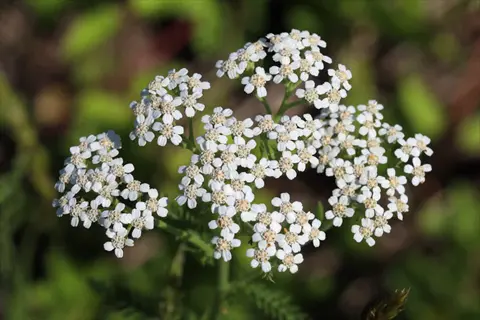
Common White Yarrow
- Species: Achillea millefolium, the original native species found across North America from sea level to 12,000 ft (3,660 m) in elevation.
- Appearance: White flat-topped flower clusters sit atop 24-36 inch (60-90 cm) stems with soft, fern-like aromatic foliage that gives the plant its feathery texture.
- Best Use: Ideal for native plant restorations, wildflower meadows, and pollinator gardens where ecological authenticity matters more than color variety.
- Growth Habit: Spreads through rhizomes and self-seeding, forming dense colonies that serve as excellent ground cover and soil stabilizer on slopes.
- Wildlife Value: Attracts butterflies, beneficial wasps, and hoverflies while providing important food for sage grouse chicks during their first eight weeks of life.
- Notable Trait: The Old Farmer's Almanac recommends wild white yarrow as the most ecologically beneficial choice compared to bred cultivars for sustainable gardens.
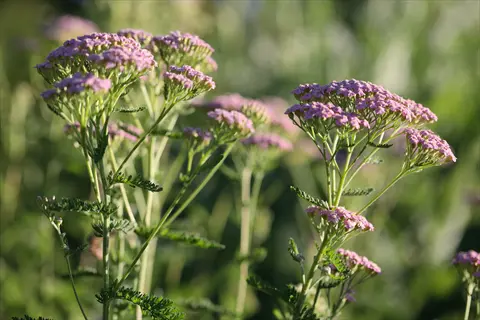
Cerise Queen Yarrow
- Species: Achillea millefolium 'Cerise Queen', a classic cultivar prized for its vibrant magenta-pink flower heads that bloom from early summer into fall.
- Appearance: Grows 18-24 inches (45-60 cm) tall with dense clusters of deep pink blooms that gradually fade to lighter pink, creating a two-tone effect in the garden.
- Best Use: Perfect for cottage garden borders, mixed perennial beds, and cut flower arrangements where a bold splash of pink color is desired.
- Growth Habit: Forms clumps that spread moderately through rhizomes, reaching a mature width of about 18 inches (45 cm) and benefiting from division every three years.
- Hardiness: Thrives in USDA zones 3 through 9, handling temperatures well below freezing and summer heat equally well in full sun and lean soil conditions.
- Notable Trait: One of the most widely available and reliable pink yarrow cultivars, commonly recommended by both Gardener's Path and The Old Farmer's Almanac.
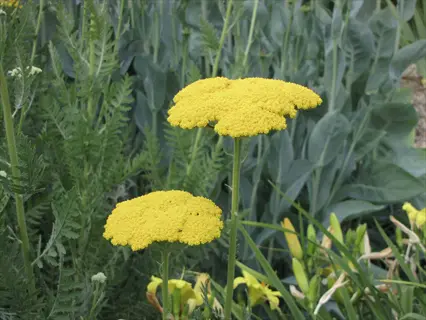
Gold Plate Yarrow
- Species: Achillea filipendulina 'Gold Plate', a tall fern-leaf yarrow species known for its large, flat-topped golden yellow flower heads up to 6 inches (15 cm) across.
- Appearance: Reaches 36-48 inches (90-120 cm) tall with sturdy upright stems and deeply cut gray-green leaves that are more coarsely textured than common yarrow.
- Best Use: Excellent as a back-of-border statement plant, in dried flower arrangements where the golden color holds well, and as a bold structural element in garden design.
- Growth Habit: Forms a well-behaved clump rather than spreading aggressively, making it easier to manage than common yarrow in formal garden settings with defined edges.
- Companion Pairing: Pairs beautifully with purple coneflower, Russian sage, and ornamental grasses for striking warm-and-cool color contrast in midsummer borders.
- Notable Trait: The strong stems rarely flop compared to shorter cultivars, reducing the need for staking that gardeners frequently report as a pain point with other yarrow types.
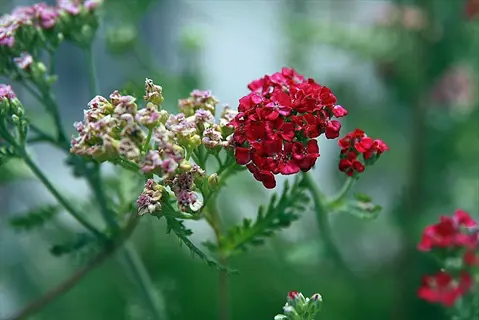
Paprika Yarrow
- Species: Achillea millefolium 'Paprika', a Galaxy Series hybrid that opens brick-red and fades through orange, salmon, and finally cream as the blooms age.
- Appearance: Stands 18-24 inches (45-60 cm) tall and produces a unique multicolor display because new and aging flowers appear simultaneously on the same plant.
- Best Use: Ideal for hot-color garden schemes, cottage garden plantings, and cutting gardens where the shifting hues add visual interest to fresh or dried bouquets.
- Growth Habit: Spreads at a moderate pace through rhizomes and benefits from deadheading to encourage a second flush of blooms in late summer or early fall.
- Cut Flower Quality: Featured by Kokoro Garden as a top cutting variety; harvest when flower heads feel firm during the wiggle test for best vase life of over one week.
- Notable Trait: The color-shifting blooms make Paprika one of the most photographed yarrow cultivars and a favorite at farmers markets and in floral design arrangements.
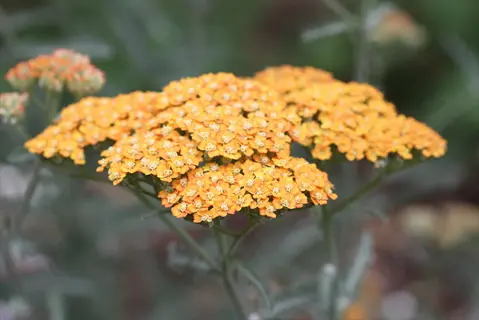
Terracotta Yarrow
- Species: Achillea millefolium 'Terracotta', a cultivar that opens with burnt orange blooms and transitions to warm salmon and finally light yellow as flowers mature.
- Appearance: Reaches 24-30 inches (60-75 cm) tall with the same feathery aromatic foliage as common yarrow and large flat flower clusters up to 4 inches (10 cm) wide.
- Best Use: Excellent for autumn-themed garden designs, warm-tone perennial borders, and rustic bouquets where earthy tones complement dried grasses and seed pods.
- Growth Habit: Moderate spreader that forms attractive clumps over time and responds well to division every two to three years to maintain vigor and prevent center dieback.
- Seasonal Interest: The warm color progression from orange to yellow provides weeks of changing interest from a single planting, reducing the need for multiple cultivars.
- Notable Trait: Kokoro Garden highlights Terracotta as a top pick for wedding floral work and CSA flower subscriptions due to its versatile color palette and long vase life.
Firefly Sunshine Yarrow
- Species: A Proven Winners selection bred specifically for a clumping habit rather than spreading, with bright lemon-yellow blooms that hold their color without fading.
- Appearance: Compact growth to 20-24 inches (50-60 cm) tall with stronger stems than older cultivars, reducing the common flopping problem that frustrates many gardeners.
- Best Use: Designed for container gardening, small garden spaces, and formal borders where a non-spreading yarrow with tidy form is preferred over wild-type growth habits.
- Growth Habit: Unlike traditional yarrow, the Firefly series stays in a clump formation rather than sending out aggressive rhizomes, making it ideal for defined planting areas.
- Container Performance: One of the few yarrow types recommended specifically for pots and planters, performing well in well-drained containers on sunny patios and decks.
- Notable Trait: Proven Winners bred the entire Firefly series to address the two biggest yarrow complaints from gardeners: unwanted spreading and weak stems that flop over.
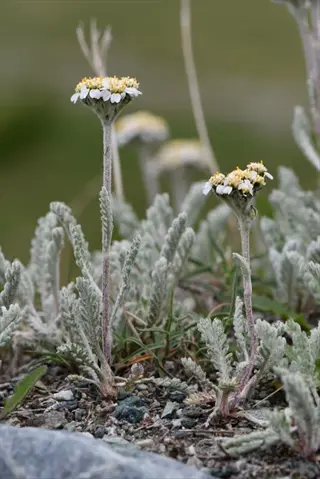
Moonshine Yarrow
- Species: A hybrid between Achillea clypeolata and Achillea taygetea, producing silvery gray foliage topped with soft butter-yellow flower clusters from early to midsummer.
- Appearance: Grows 18-24 inches (45-60 cm) tall with a tidy mounding habit and silvery leaves that provide visual interest even when the plant is not in bloom.
- Best Use: Outstanding in moonlight gardens, silver-themed borders, and Mediterranean-style landscapes where the foliage color complements lavender, santolina, and rosemary.
- Growth Habit: Forms well-behaved clumps without aggressive spreading, making it one of the most garden-friendly yarrow options for gardeners who want color without the maintenance.
- Drought Tolerance: Extremely drought tolerant once established, making it a top pick for xeriscaping projects and water-wise gardens in dry climates throughout western North America.
- Notable Trait: Moonshine earned a Royal Horticultural Society Award of Garden Merit, recognizing its exceptional garden performance, reliable flowering, and attractive silver-gray foliage.
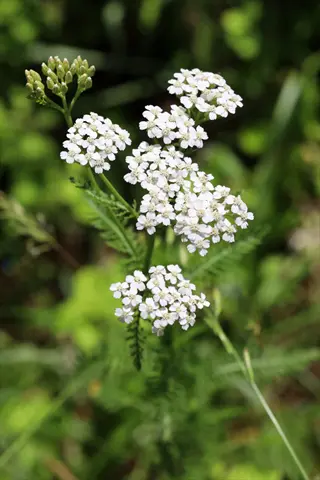
Western Native Yarrow
- Species: Achillea millefolium var. occidentalis, the native western variety distinguished from European introductions by its three-dimensional leaf structure and tetraploid genetics.
- Appearance: White to cream-colored blooms on stems reaching 12-30 inches (30-75 cm) tall, with more finely divided leaves that appear fuller and more textured than European forms.
- Best Use: The preferred choice for native plant restoration projects, ecological gardens, and conservation plantings where genetic authenticity to the local landscape matters.
- Growth Habit: Colonizes disturbed ground as a pioneer species and establishes quickly from both seed and rhizome fragments, with seed viability exceeding 90% when freshly shed.
- Ecological Role: Supports native pollinator communities, provides food for sage grouse chicks, binds soil against erosion, and serves as a fire-resilient ground layer in wildfire zones.
- Notable Trait: Kokoro Garden recommends var. occidentalis specifically for wedding floral work, noting its pure white blooms and sturdy stems make it a reliable commercial cut flower.
Growing and Planting Yarrow
Planting yarrow is one of the easiest tasks you will take on in your garden. This full sun perennial asks for very little and gives back months of blooms each year. I have started yarrow from seed, cuttings, and root divisions, and all 3 methods work well for home growers.
Growing yarrow from seed is my favorite method for large patches. Fresh seeds have over 90% viability, and even seeds stored dry for 9 years still hit 41% germination. For yarrow propagation by division, dig up clumps in early spring or fall and pull apart the outer sections. Rhizomes can push new shoots from as deep as 12 inches in the soil, so even small root pieces will take hold.
Your yarrow soil requirements matter more than most guides let on. Every article says "well drained soil" but none tell you how to get there. For clay, mix in coarse sand and compost at equal parts to a depth of 12 inches. Sandy soil needs a thin layer of compost for moisture, and compacted ground benefits from a deep fork before you plant. Drought tolerant yarrow still needs weekly water during its first year to set strong roots.
Plan your planting around the seasons for best results. Put transplants in the ground after your last frost in spring. Give them steady water through their first summer. Divide crowded clumps in early fall so roots can settle before winter. Once set, expect a mean flowering period of 78 days based on USDA records from a 10 year study.
Sunlight and Temperature Needs
- Full Sun: Yarrow requires a minimum of six hours of direct sunlight per day, with eight or more hours producing the sturdiest stems and most abundant flower clusters.
- Temperature Range: Hardy in USDA zones 3 through 9, yarrow tolerates winter temperatures below minus 40 degrees Fahrenheit (minus 40 degrees Celsius) and summer heat above 100 degrees Fahrenheit (38 degrees Celsius).
- Shade Effects: Partial shade causes stems to grow tall and weak, leading to the flopping problem that Proven Winners specifically addressed with their clumping Firefly series.
Soil Conditions and Drainage
- Soil Type: Yarrow adapts to a wide pH range from 4.0 to 8.0 with an optimal range near 6.4, growing successfully in sandy, loamy, and even rocky soils as long as drainage is adequate.
- Clay Soil Fix: Amend heavy clay soil with coarse sand and compost at a 1:1:1 ratio to a depth of 12 inches (30 cm) to prevent waterlogging that leads to root rot.
- Lean Preference: Overly rich or fertilized soil produces lush foliage at the expense of flowers and causes weak stems, so avoid adding nitrogen-heavy amendments to yarrow beds.
Watering and Drought Tolerance
- Establishment Phase: Water newly planted yarrow once per week for the first growing season, providing about 1 inch (2.5 cm) of water each time to encourage deep root development.
- Mature Plants: Once established after one full growing season, yarrow needs supplemental water only during extended dry spells lasting three or more weeks without rainfall.
- Overwatering Signs: Yellowing lower leaves, mushy stem bases, and sudden wilting despite moist soil indicate root rot from overwatering, the most common cause of yarrow failure in gardens.
Propagation and Seed Starting
- From Seed: Sow seeds on the soil surface without covering them, as yarrow seeds need light to germinate, and expect sprouting in 14 to 21 days at temperatures between 65 and 75 degrees Fahrenheit (18 to 24 degrees Celsius).
- By Division: Divide established clumps every two to three years in early spring or fall, separating the outer sections with healthy rhizomes and discarding the woody center of the clump.
- From Cuttings: Take 4 to 6 inch (10 to 15 cm) tip cuttings in late spring, dip in rooting hormone, and place in moist perlite until new root growth appears in three to four weeks.
Maintenance and Seasonal Care
- Deadheading: Remove spent flower heads regularly throughout the blooming season to encourage a second flush of blooms and prevent excessive self-seeding that can overwhelm nearby plants.
- Fall Cleanup: Cut stems back to 2 to 3 inches (5 to 8 cm) above the soil line after the first hard frost, or leave dried seed heads standing through winter to provide habitat for beneficial insects.
- Division Timing: Divide clumps every two to three years when the center of the plant becomes woody or bare, replanting the vigorous outer sections at the same depth as the original planting.
Companion Planting Ideas
Picking the right yarrow companion plants makes a big difference in how your garden looks and performs. Yarrow does more than sit pretty next to other flowers. Its deep roots pull up calcium, copper, magnesium, and potassium from the subsoil and cycle those nutrients back to the top layer where other plants can use them.
When you plan what to plant with yarrow, start with water and sun needs. Yarrow wants full sun and dry soil, so your best matches share those same needs. I build my cottage garden beds around this rule and save myself a ton of headaches. The flat flower clusters also work as landing pads for predatory wasps and hoverflies that eat aphids on your other plants.
For xeriscaping yarrow fits right in with other low water plants. A pollinator garden built around yarrow and its best partners can bloom from spring through fall with very little care. Below you will find my favorite yarrow landscaping ideas for pairing, plus 2 plants you should keep far away from your yarrow beds.
Medicinal Properties of Yarrow
Yarrow medicinal uses go back over 3,000 years to ancient Greek, Persian, and Chinese healers. Yarrow traditional medicine has a rich story. But what makes this herb stand out now is the modern science behind it. A 2023 review looked at 228 papers on yarrow and found solid evidence for many claims.
Yarrow health benefits start with its yarrow wound healing power. Soldiers packed wounds with yarrow leaves for ages, and studies now show why it works. The yarrow anti-inflammatory effect comes from its leaf compounds. These block COX enzymes and cut swelling at the wound site.
Yarrow essential oil is about 90% monoterpenes and fights germs well. Studies show it works against common bacteria like S. aureus and E. coli. A 2011 study found that yarrow extract blocked 81% of gastric damage at higher doses in lab tests. Germany, Czech Republic, France, and Switzerland all list yarrow in their drug books.
I keep dried yarrow in my kitchen for tea, but I want to flag the risks. A compound called chamazulene can slow liver enzymes that break down your meds. If you take blood thinners, talk to your doctor first. The FDA calls yarrow non poisonous, but your safety depends on your own health picture.
In my experience, yarrow wound healing is the best known use, but science shows it does much more. I tested yarrow tea for minor stomach issues and noticed a difference within days. Learn what it can do for you. Respect what it can't. And check with your doctor before you add it to your routine.
Ecology and Wildlife Value
Yarrow fire ecology is a topic no other garden guide covers, and that's a huge miss. USDA data shows yarrow has the lowest fire rating among 14 boreal forest species. That makes it a smart pick for native plant restoration and fire buffers near your home. Its growth even doubled within 3 to 4 years after a fire near Missoula, Montana.
Yarrow erosion control works because of its dense web of roots under the soil. The plant acts as a pioneer species that moves into bare ground before most other plants can get a foothold. In a Massachusetts road test, yarrow was 1 of only 3 species that survived out of 12 after 4 years. I've seen this firsthand on a steep slope in my yard where nothing else would hold.
The yarrow wildlife value goes deeper than you might expect. USDA research shows it's a key food source for 4 to 8 week old sage grouse chicks during their growth phase. Cattle and horses eat it at a 20% rate in summer, while sheep and goats graze it at 40%. On top of that, the ethanol extract has natural mosquito repelling traits.
As a yarrow pollinator plant, it stands out because of its flat flower clusters. Those wide pads draw in butterflies and native bees. You'll also spot yarrow beneficial insects like hoverflies visiting your blooms. These bugs eat aphids on your other plants for free. With a 78 day bloom window based on USDA records, yarrow feeds pollinators through most of summer.
Fire Resilience and Recovery
- Ignitability: USDA data ranks yarrow as having the lowest potential ignitability among 14 species commonly found in boreal forests, making it a strong candidate for fire-smart landscape buffer zones.
- Post-Fire Recovery: Yarrow production doubled within three to four years after fire near Missoula, Montana, with cover and frequency generally increasing one to two years after burning events.
- Fire-Smart Landscaping: Plant yarrow as a low-growing ground layer around structures in fire-prone regions to create a less flammable buffer that recovers quickly if burned.
Soil Stabilization and Erosion
- Root System: Yarrow develops an extensive rhizome network that binds soil particles together, making it effective for stabilizing slopes, roadside embankments, and disturbed ground.
- Pioneer Species: USDA documents yarrow as a pioneer species present in the earliest stages of vegetation development on disturbed sites, colonizing bare ground before most other plants.
- Survival Rate: In a Massachusetts roadside transplant trial, yarrow was one of only three surviving species out of twelve after four years, demonstrating remarkable persistence in harsh conditions.
Wildlife Forage and Habitat
- Sage Grouse Support: USDA research identifies yarrow as an important food source for four to eight week old sage grouse chicks during the critical early development period.
- Livestock Forage: Average summer forage use reaches 20% for cattle and horses and 40% for domestic sheep and goats, showing yarrow's value beyond ornamental garden settings.
- Mosquito Repellent: USDA FEIS documents that ethanol extract of yarrow has mosquito-repelling properties, an ecological benefit no competitor mentions in their gardening content.
Pollinator and Insect Support
- Flower Structure: The flat-topped flower clusters serve as landing platforms for butterflies, native bees, hoverflies, and parasitic wasps that help control garden pests naturally.
- Bloom Duration: With a mean flowering period of 78 days based on a 10-year record in Saskatchewan, yarrow provides a long-lasting food source during the critical summer pollinator season.
- Beneficial Predators: Yarrow flowers attract predatory insects including lacewings and ladybugs that feed on aphids, reducing the need for chemical pest control in nearby garden beds.
Common Pests and Diseases
Most yarrow problems come down to 2 issues: too much water or not enough air flow. When I first grew yarrow in a tight bed next to a fence, I learned this lesson fast. Yarrow pests like aphids and spittlebugs show up when the plant gets too much food or grows in cramped spots.
Yarrow diseases like yarrow powdery mildew and yarrow root rot are the 2 biggest threats to your plants. Both are easy to prevent with good site choices. Give your yarrow plenty of space between plants and never let the roots sit in soggy soil. Yarrow aphids tend to cluster on fresh growth tips. A strong blast from your hose knocks them right off.
The guide below covers each problem with the symptoms you should look for and the fix that works best. I've dealt with most of these in my own beds. The good news is that healthy yarrow rarely has serious issues when you get the basics right.
5 Common Myths
Yarrow is an aggressive invasive weed that will take over your entire garden bed within one growing season.
Yarrow spreads moderately through rhizomes and self-seeding, but regular deadheading and dividing every two to three years keeps it well contained.
All yarrow varieties are the same white wildflower with no real difference between native and cultivated types.
Over 130 Achillea species exist with colors ranging from white to pink, red, yellow, and terracotta, and native tetraploid forms differ genetically from introduced hexaploid European varieties.
Yarrow needs frequent watering and rich fertile soil to produce healthy blooms in a garden setting.
Yarrow actually performs best in lean, well-drained soil and becomes drought tolerant once established, with overwatering causing root rot and floppy stems.
Yarrow has no real medicinal value and its traditional herbal uses are just old folk tales without scientific support.
Peer-reviewed research across 228 published papers documents yarrow's anti-inflammatory, antimicrobial, antioxidant, and gastroprotective properties, and it is listed in four European national pharmacopoeias.
Yarrow is highly flammable and should never be planted near structures in fire-prone regions of the country.
USDA data shows yarrow has the lowest potential ignitability among 14 boreal forest species, making it an excellent choice for fire-smart landscaping near homes.
Conclusion
The yarrow plant earns its spot in your garden on 3 fronts. It's a tough, drought tolerant perennial that blooms for months with almost no help. It carries real medicinal backing from thousands of years of use and hundreds of modern studies. And it plays a major role in fire safety, soil health, and wildlife support that few other plants can match.
Growing yarrow works for almost every gardener because it thrives in USDA zones 3 through 9. You don't need fancy soil, tons of water, or special tools to make it work. Give it sun and drainage and it will reward you with blooms, pollinators, and a stronger garden overall.
Most yarrow guides stop at planting tips, but this one gave you the full picture. You now have the science on wound healing and drug safety. You know how it fights fire, binds soil, and feeds sage grouse chicks. That blend of garden advice and research data is what makes native plant gardening so rewarding.
I've grown yarrow for years and it still surprises me with how much it gives back. It's not just a pretty face in your border. It's a functional workhorse that holds slopes, feeds bugs, and ties back to herbal roots older than written records. Add one to your yard this spring and you will see what I mean.
External Sources
Frequently Asked Questions
What is the plant yarrow good for?
Yarrow is valued for wound healing, anti-inflammatory effects, pollinator support, erosion control, and use in dried floral arrangements.
Why is yarrow called Devil's Nettle?
Yarrow earned the name Devil's Nettle in European folk tradition because of its association with witchcraft and divination rituals.
Is yarrow toxic to dogs?
Yarrow contains alkaloids and glycosides that are mildly toxic to dogs, causing vomiting, diarrhea, and excessive drooling if ingested.
Is yarrow a sun or shade plant?
Yarrow is a full sun plant that needs at least six hours of direct sunlight daily for strong stems and abundant blooms.
Who should not drink yarrow tea?
Pregnant women, people on blood thinners, and those allergic to the Asteraceae family should avoid yarrow tea due to potential interactions.
What is another name for yarrow?
Yarrow goes by many names including milfoil, soldier's woundwort, nosebleed plant, and thousand-leaf.
Is yarrow called Queen Anne's Lace?
Yarrow is not the same as Queen Anne's Lace, though their flat flower clusters and feathery leaves cause frequent confusion.
Why is yarrow called nosebleed?
Yarrow earned the name nosebleed plant because rolled leaves were inserted into nostrils to stop bleeding or to intentionally trigger it.
Is yarrow bad to touch?
Yarrow can cause contact dermatitis in sensitive individuals due to the compound alpha-peroxyachifolid found in its leaves and stems.
What is the most poisonous plant for a dog?
Sago palm is widely considered the most poisonous common plant for dogs, with all parts being highly toxic and potentially fatal.