
Introduction
The azalea bush is the most popular flowering shrub genus in all of North America. The Rhododendron genus holds over 800 species and more than 10,000 named cultivars. Pick the right mix of varieties and you can enjoy up to 8 months of color from early spring through late fall.
I've grown azaleas in 3 states over the past 12 years. Every garden taught me more about what these plants need. Azaleas are the goldilocks of the garden. They need acidic soil, filtered light, and just enough water. Get those 3 things right and your bushes will bloom strong for decades.
More gardeners now pick native azalea species for fragrance and wildlife value. Hybrids can't offer those same perks. Whether you want a compact rebloomer for your patio or a tall native that draws hummingbirds, there's an azalea bush for you. Over 70 hybrid groups give you options that no other flowering shrub can match.
This guide walks you through azalea care step by step. You'll learn about variety picks, acidic soil prep, seasonal upkeep, and pest control. Each tip comes from university research and years of hands on growing.
8 Best Azalea Bush Varieties
I grouped these 8 azalea varieties by purpose so you can find the right fit fast. You'll see reblooming, cold hardy, native, and compact options all in one list. Each pick here earned its spot through real garden results across multiple growing zones.
UGA Extension lists 6 distinct flower forms for evergreen azalea types. These range from single petals to full double blooms and even hose in hose shapes. Deciduous azalea species bring fragrance and fall color that most evergreen types can't offer. The cold hardy azalea picks below include Northern Lights hybrids that handle minus 40°F with ease.
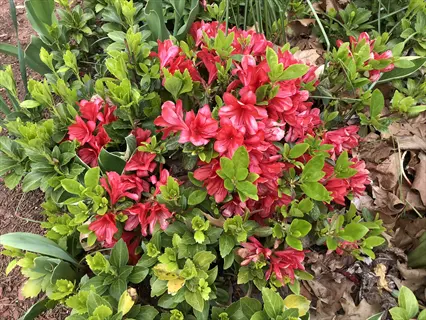
Encore Autumn Empress
- Type: Evergreen reblooming azalea that flowers in spring, summer, and fall for extended seasonal color lasting up to 8 months in mild climates.
- Hardiness: Grows well in USDA zones 6 through 9 and handles heat and humidity in southeastern gardens without losing bloom quality.
- Size: Reaches 4 to 5 feet (1.2 to 1.5 meters) tall and wide, making it a strong choice for foundation plantings and garden borders.
- Blooms: Produces rich pink semi-double flowers that repeat three times per year, far outperforming traditional single-bloom azaleas.
- Light: Performs best in partial shade with morning sun and afternoon protection, though tolerates more sun than many azalea types.
- Best For: Gardeners who want continuous color without replanting, especially in warmer regions where reblooming extends into October.
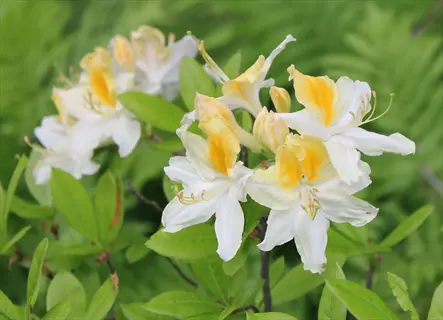
Northern Lights Rosy Lights
- Type: Deciduous hybrid developed by the University of Minnesota specifically for extreme cold tolerance in northern gardens.
- Hardiness: Survives temperatures as low as minus 40 degrees Fahrenheit (-40 degrees Celsius) including flower buds, rated for USDA zones 3 through 7.
- Size: Grows 4 to 6 feet (1.2 to 1.8 meters) tall with an upright, rounded habit suitable for mixed shrub borders.
- Blooms: Dark pink fragrant flower clusters appear in mid-spring before leaves fully emerge, creating a dramatic early-season display.
- Light: Thrives in partial shade to full sun, making it more flexible than many azalea varieties in terms of placement.
- Best For: Gardeners in cold climates who thought azaleas were impossible, since this variety extends azalea growing into zone 3.
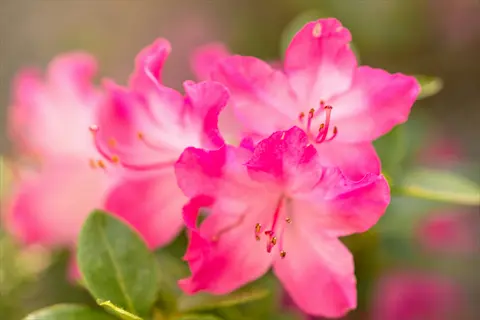
Perfecto Mundo Double Pink
- Type: Compact evergreen reblooming azalea bred for smaller gardens, containers, and tight foundation spaces.
- Hardiness: Hardy in USDA zones 6 through 9 with good tolerance for southern heat and periodic dry spells once established.
- Size: Compact growth at 2 to 3 feet (0.6 to 0.9 meters) tall and wide, one of the smaller reblooming options available.
- Blooms: Double pink flowers appear in spring and repeat in fall, with fuller petals than single-bloom varieties for a lush appearance.
- Light: Prefers filtered light or partial shade; can handle morning sun but needs protection from intense afternoon rays.
- Best For: Container gardening and small garden spaces where a full-size azalea would be too large but repeated blooms are still desired.
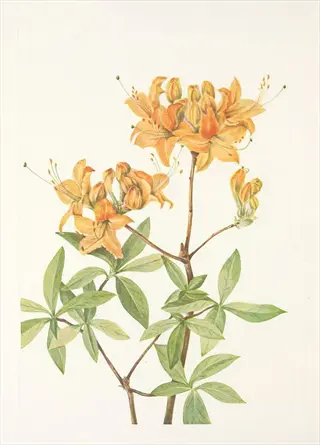
Flame Azalea (R. calendulaceum)
- Type: Native deciduous azalea found across the Appalachian region, one of 11 southeastern native species cataloged by UGA Extension.
- Hardiness: Naturally adapted to USDA zones 5 through 7 and well-suited to woodland gardens and naturalized landscapes.
- Size: Reaches 6 to 10 feet (1.8 to 3 meters) tall at maturity with an open, irregular growth habit typical of wild azaleas.
- Blooms: Produces spectacular orange, yellow, and red flowers in late spring that attract hummingbirds and native pollinators.
- Light: Grows naturally in dappled woodland shade and does not tolerate full sun as well as hybrid cultivars do.
- Best For: Native plant enthusiasts and pollinator gardens, offering fragrance and wildlife value that most hybrid azaleas lack.
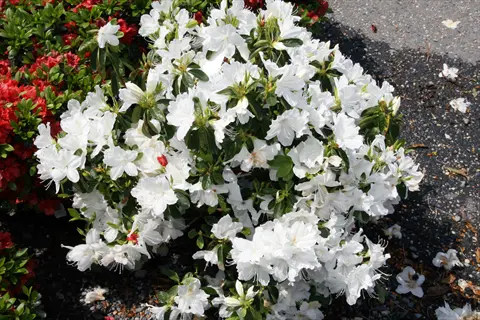
Bloom-A-Thon White
- Type: Evergreen reblooming azalea that produces white flowers in both spring and fall for twice the seasonal display.
- Hardiness: Performs well in USDA zones 5 through 9, offering wider cold tolerance than many reblooming series.
- Size: Grows 3 to 4 feet (0.9 to 1.2 meters) tall and wide with a dense, mounded shape that fills garden borders neatly.
- Blooms: Pure white semi-double flowers provide contrast when planted alongside pink or purple azalea varieties in mixed beds.
- Light: Prefers partial shade with morning sunlight; too much direct sun can fade the white petals and stress the plant.
- Best For: Gardeners wanting a clean white accent in mixed azalea plantings, especially effective against dark evergreen backgrounds.
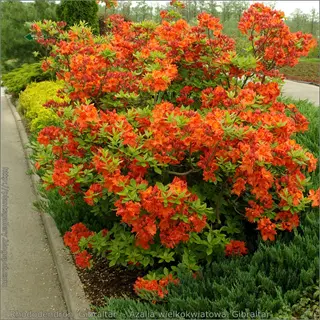
Gibraltar Azalea
- Type: Deciduous Exbury hybrid known for exceptionally vivid flower color and good cold tolerance in northern gardens.
- Hardiness: Hardy in USDA zones 5 through 8, making it a strong performer in mid-Atlantic and upper southern regions.
- Size: Reaches 5 to 6 feet (1.5 to 1.8 meters) tall with a broad, upright form ideal for specimen planting.
- Blooms: Intense orange ruffled flowers with a slight crimson blush appear in mid-spring and last 2 to 3 weeks.
- Light: Handles more sun than most azaleas but still performs best with afternoon shade protection in hot summers.
- Best For: Gardeners seeking a bold color statement in spring, particularly effective planted in groups of three or more.
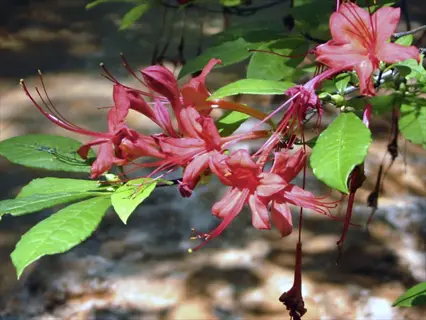
Plumleaf Azalea (R. prunifolium)
- Type: Rare native deciduous azalea from Georgia and Alabama that blooms in midsummer when other azaleas have finished.
- Hardiness: Hardy in USDA zones 6 through 8 and naturally adapted to hot, humid southeastern growing conditions.
- Size: Grows 8 to 12 feet (2.4 to 3.7 meters) tall at maturity, one of the larger native azalea species available.
- Blooms: Unusual orange-red to salmon flowers appear in July and August, filling the bloom gap between spring and fall azaleas.
- Light: Grows naturally in deep shade along stream banks, making it one of the most shade-tolerant azalea species available.
- Best For: Extending the azalea season into summer with a unique native species that supports local pollinators and wildlife.
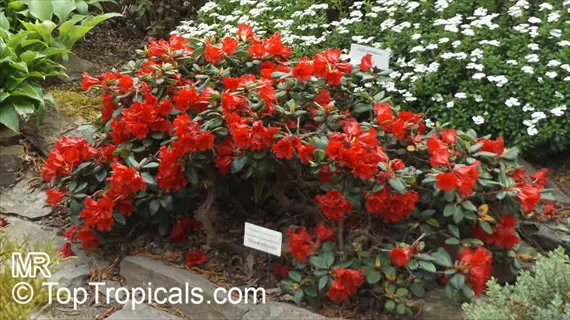
Gable Stewartstonian
- Type: Semi-evergreen hybrid developed by Joseph Gable with outstanding fall foliage color in addition to spring blooms.
- Hardiness: Hardy to USDA zone 6b, tolerating temperatures down to minus 5 degrees Fahrenheit (-21 degrees Celsius) reliably.
- Size: Compact growth at 4 to 5 feet (1.2 to 1.5 meters) tall and wide with dense branching that fills in naturally.
- Blooms: Bright red single flowers cover the plant in mid-spring, creating one of the most intense red displays among azaleas.
- Light: Performs well in partial shade and tolerates more sun than many varieties, especially in northern gardens with milder summers.
- Best For: Year-round garden interest with spring red flowers followed by deep maroon-red fall leaf color on semi-evergreen foliage.
I plant native azalea picks next to reblooming azalea hybrids in my own garden. The natives bring fragrance and pollinator support. The rebloomers add months of extra color that keeps the yard alive with blooms.
Planting Your Azalea Bush
Fall planting gives your azalea bush the strongest start possible. Cool temps let roots settle in through fall and winter before the stress of summer heat kicks in. I lost 2 azaleas to spring planting before I switched to fall. The difference in root growth was clear by the first bloom season.
Before you dig, run the MU Extension drainage test on your site. Dig a hole about 6 inches deep and fill it with water. If the water doesn't drain within 4 hours, that spot won't work for azaleas. You'll need to build a raised bed or pick a new location with better flow.
Think of planting azaleas at crown level like setting a hat on your head. The top of the root ball should sit level with or just above the soil surface. Never bury the crown below grade. This single mistake kills more azaleas than any pest or disease I've seen in my years of growing.
Azalea spacing matters more than most guides tell you. Clemson Extension found that roots can spread 3 times the distance from the trunk to the outer branches. Give compact types at least 3 feet of space. Larger varieties need 5 to 6 feet between plants so roots don't compete for water and nutrients.
Never add fertilizer at planting time. UGA Extension warns that it dries out new roots and can kill a young plant fast. For container planting, use the same acidic soil mix you'd use in the ground. Just make sure your pot has strong drainage holes at the bottom so water moves through clean.
Soil and Watering Needs
Azalea soil needs a pH between 4.5 and 6.0 to keep your plants fed and green. Soil that sits above pH 6.0 locks out iron and causes iron chlorosis. You'll see yellow leaves with green veins, and the plant will fade fast. A simple soil pH test from your local extension office tells you where you stand.
Too much water drowns near surface azalea roots in hours. Too little water in summer can kill your plant in days. The balance depends on your well-drained soil type. Water azaleas to a depth of 6 to 8 inches with drip irrigation or soaker hoses. Roots sit in the top 4 to 6 inches, so deep soaks work better than light misting.
If you garden in heavy clay, mix your acidic soil bed with 50% pine bark, 25% coarse sand, and 25% topsoil. This blend comes from MU Extension research and creates the drainage azaleas demand. I switched to this mix 4 years ago and stopped losing plants to root rot for good.
Apply your sulfur months before you plant and then test again after about a year. Watering azaleas on a set schedule keeps the upper root zone moist without flooding. I run my drip irrigation for 30 minutes every 3 days during dry spells and it keeps the soil just right.
Pruning and Seasonal Care
Knowing when to prune azaleas can make or break your bloom season. These plants set next year's flower buds on new growth that forms in summer. Prune too late and you cut off all those future blooms. The best window is right after flowers fade in late spring. I missed that window once and lost an entire season of color.
Rejuvenation pruning azaleas can save a bush that looks beyond help. Clemson Extension says you can cut old plants back to 6 to 12 inches above ground level. The plant pushes out fresh growth within a few months. Good azalea maintenance means waiting to feed. Use azalea fertilizer once new leaves show up.
Winter care is where most gardeners drop the ball. MU Extension lists sun and cold wind as the 2 main enemies of azaleas in winter. Set up burlap barriers around exposed plants to block both threats. If your evergreen azalea leaves curl and droop on cold days, don't panic. That's normal protection, not damage.
Spring Care (March to May)
- Fertilizing: Apply acid-forming fertilizer after new growth appears in late spring at a rate of 1 pound of actual nitrogen per 1,000 square feet (0.45 kilograms per 93 square meters) of root zone area.
- Pest Watch: Scout for azalea lace bug first generation in March because controlling early reduces the need for treatments later in the season when populations multiply.
- Pruning: Prune immediately after flowers fade in late spring since azaleas set next year's flower buds on new growth that forms during summer months.
Summer Care (June to August)
- Watering: Water deeply to 6 to 8 inches (15 to 20 centimeters) during dry spells using drip irrigation or soaker hoses, focusing on the upper root zone in the top 4 to 6 inches of soil.
- Fertilizer Cutoff: Stop all fertilizing by July 1 because late summer feeding forces tender new growth that winter cold will kill.
- Mulching: Maintain 2 to 3 inches (5 to 8 centimeters) of organic mulch like pine bark or pine straw to keep upper roots cool and retain soil moisture through hot months.
Fall Care (September to November)
- Planting: Fall is the best time to plant new azaleas because cool temperatures promote root establishment through fall and winter before spring growth begins.
- Watering: Continue watering until the ground freezes so plants enter winter fully hydrated, which reduces cold damage and bark splitting.
- Soil Testing: Test soil pH in fall and apply elemental sulfur if needed, allowing several months for amendments to take effect before spring growth.
Winter Care (December to February)
- Wind Protection: Install burlap barriers around exposed azaleas to block cold wind and winter sun, the two main causes of winter injury according to MU Extension.
- Mulch Adjustment: Add extra mulch around the root zone for insulation but pull it back from the trunk to prevent moisture rot at the base of the plant.
- Leaf Behavior: Expect evergreen azalea leaves to curl and droop on very cold days, which is normal protective behavior and not a sign of disease or damage.
Pests, Diseases, and Fixes
Most azalea problems show clear signs before real damage sets in. The trick is knowing what to look for and acting fast. I check my plants every week during the growing season and catch most issues before they spread. The table below connects what you see on your plant to the cause and the fix.
The azalea lace bug is the most common of all azalea pests. UGA Extension found that this bug produces 4 generations per year in warm areas. Hit the first batch in March with insecticidal soap and you cut down on every wave that follows. Root rot from poor drainage is the worst of the azalea diseases because there's no chemical fix that works in home gardens.
Iron chlorosis shows up as yellow leaves with green veins and points to a soil pH that's too high. Leaf gall creates swollen pale growths that look alarming but cause little real harm. Pick off the galls before they release spores and toss them in the trash, not the compost.
One last warning about azalea problems that many guides skip. ASPCA confirms that all parts of the azalea plant are toxic to dogs, cats, and horses. Keep pets away from your bushes, and if an animal eats any part of the plant, contact your vet right away.
Companion Plants for Azaleas
Picking the right companion plants for azaleas turns a good garden into a great one. Every pairing below works because the plants share the same soil needs and don't compete for root space. I built a shade garden bed with 3 of these combos and it gives me color from February through October.
The key to choosing what to plant with azaleas is matching soil pH, root depth, and bloom time. Your best options thrive in the same acidic soil and filtered light that azaleas love. Your woodland garden or foundation planting will look full all season when you use these combos to fill every bloom gap.
Japanese Maple
- Why It Works: Japanese maples provide dappled overhead shade that azaleas prefer while both thrive in acidic, well-drained soil with similar pH requirements.
- Pairing Benefit: The fine-textured maple foliage creates a layered canopy effect above broad azalea blooms, adding year-round visual depth to the garden bed.
- Spacing Tip: Plant azaleas at least 4 to 6 feet (1.2 to 1.8 meters) from the maple trunk to avoid root competition and allow air circulation.
Ferns (Autumn and Holly Fern)
- Why It Works: Ferns fill the ground layer beneath azaleas with textural contrast while thriving in the same partial shade and acidic soil conditions.
- Pairing Benefit: Evergreen fern varieties maintain visual interest during months when deciduous azaleas have dropped their leaves and are bare.
- Spacing Tip: Plant ferns 12 to 18 inches (30 to 46 centimeters) from azalea stems to create a natural woodland floor appearance without crowding.
Red Oak
- Why It Works: Red oaks develop deep taproots that avoid competing with near surface azalea root systems while both species prefer acidic soil conditions.
- Pairing Benefit: Fallen oak leaves acidify the soil over time and provide free organic mulch that breaks down into the humus azaleas need.
- Spacing Tip: Position azaleas on the east or north side of oaks to receive morning light and afternoon shade protection from the canopy.
Hostas
- Why It Works: Hostas thrive in the same partial shade and moist acidic soil that azaleas need, and their bold leaves contrast with fine azalea foliage.
- Pairing Benefit: Large hosta leaves shade the soil surface around azalea roots, acting as living mulch that keeps upper roots cool in summer.
- Spacing Tip: Plant hostas toward the front of azalea beds where their mounding habit fills gaps and hides bare azalea stems at the base.
Camellias
- Why It Works: Camellias share identical soil pH preferences and partial shade requirements, and their winter to early spring blooms precede azalea flowering.
- Pairing Benefit: Pairing camellias with azaleas extends the flowering season by providing blooms from late fall through winter before azaleas take over in spring.
- Spacing Tip: Allow 5 to 8 feet (1.5 to 2.4 meters) between camellias and azaleas since both develop wide root zones that can overlap.
A shade garden with camellias, azaleas, and hostas gives you blooms across 3 seasons with almost no gaps. Add a Japanese maple overhead and the whole bed stays cool and moist with no extra work on your part.
5 Common Myths
Azaleas need full sun to produce the most flowers and should be planted in the brightest spot available.
Azaleas actually prefer partial shade with filtered sunlight, and full sun exposure increases stress, leaf scorch, and lace bug infestations.
Adding aluminum sulfate is the best way to quickly lower soil pH for azaleas and other acid-loving plants.
University of Georgia research shows aluminum sulfate is toxic to azalea roots and should never be used; elemental sulfur is the safe alternative.
Azaleas should be fertilized heavily in spring and fall to encourage the biggest and most colorful blooms possible.
Azaleas have very low nutritional needs and overfertilization is a leading cause of plant death; fertilize only to correct deficiencies or boost slow growth.
All azaleas are evergreen shrubs that keep their leaves throughout the entire year in every climate zone.
Many azalea species are deciduous and lose their leaves each fall, including most native North American species valued for fragrance and wildlife support.
Azaleas cannot survive in cold northern climates and are only suitable for gardens in the southern United States.
Northern Lights hybrids developed by the University of Minnesota survive temperatures as low as minus 40 degrees Fahrenheit including flower buds.
Conclusion
Growing a healthy azalea bush comes down to a few key choices you make before you ever put a plant in the ground. Get your acidic soil to a pH between 4.5 and 6.0, pick the right spot with filtered light, and plant in fall for the strongest roots. These 3 steps set you up for decades of blooms.
When you grow azaleas with a smart cultivar plan, you can enjoy up to 8 months of color from one flowering shrub family. Mix rebloomers with native types and you fill every gap in the bloom season. I've grown my own collection from 2 plants to 14 over the years. Each one still blooms strong.
Whether you're planting your first azalea bush this fall or fixing up an old shrub, good soil prep makes all the difference. Good azalea care isn't hard once you know the basics. These plants live for 40 to 50 years when you treat them well, so the work you put in today pays off for a long time.
Your first step is simple. Test your soil pH this weekend. That one test tells you what your garden needs before you spend a dollar on plants or soil fixes. Once you know your numbers, everything else in this guide falls into place.
External Sources
Frequently Asked Questions
Where do azaleas grow best?
Azaleas grow best in partial shade with filtered sunlight, in well-drained acidic soil with a pH of 4.5 to 6.0, and in areas protected from harsh wind.
Can azaleas stay outside in winter?
Most azaleas can stay outside in winter within their hardiness zone, though cold-climate varieties like Northern Lights survive temperatures down to minus 40 degrees Fahrenheit.
Do azaleas come back every year?
Yes, azaleas are perennial shrubs that return every year, with deciduous types losing leaves in fall and evergreen types keeping foliage year-round.
What are the disadvantages of azaleas?
Azaleas require strict acidic soil, are toxic to pets, have shallow roots prone to drought, and are susceptible to lace bugs and root rot.
Do azaleas grow better in pots or ground?
Azaleas grow well in both pots and ground, but ground planting offers more stable moisture and temperature while pots allow better soil pH control.
Why are azaleas so hard to grow?
Azaleas seem hard to grow because they demand acidic soil, precise watering, filtered light, and are sensitive to overfertilization and poor drainage.
What is the lifespan of an azalea?
Azaleas can live for decades, with well-maintained plants often surviving 40 to 50 years or longer in favorable growing conditions.
Do coffee grounds help azaleas grow?
Used coffee grounds can slightly acidify soil over time, but they should be composted first and are not a substitute for proper soil amendments.
Can I plant azaleas in October?
October is an excellent time to plant azaleas because cool fall temperatures promote root establishment before winter dormancy.
What are common azalea problems?
Common azalea problems include lace bug damage, root rot from poor drainage, leaf gall, iron chlorosis from high pH soil, and failed blooming.