
Introduction
The right ornamental trees turn a plain yard into a place you want to spend time in all year. One great tree brings spring blooms, summer shade, fall color, and winter bark interest to your front door. USDA Forest Service research shows that every dollar spent on urban trees gives back $1.89 in real benefits.
In my experience planting over 30 landscape trees across two properties, I've learned what works the hard way. Some picks were winners from day one. A few died within months because I tested them in the wrong climate zone. The University of Maine Extension says hardiness zone matching is the most important step when you choose a tree.
Picking the best ornamental trees is like casting the lead in a garden show that runs all four seasons. You want a tree that shines in spring and earns its keep through summer. It should steal the show in fall and still hold your eye in winter. Great ornamental trees for landscaping fit tight urban lots while giving you that full display.
This guide covers 10 top landscape trees for home gardens with planting steps and care tips. You'll find species that work in yards of all sizes, from compact city plots to wide suburban lawns.
10 Best Ornamental Trees
I tested dozens of species over the years and these 10 flowering ornamental trees earned their spot. The list starts with the Japanese maple for its lace leaf canopy and the flowering dogwood for its layered branches. NMSU Extension says you should pick trees based on function first. That means shade, blooms, fall color, fruit, or wildlife support for your yard.
Every tree below includes its hardiness zone range and mature size. That info helps you find the best small trees for front yard plantings or larger landscape spots. Small ornamental trees under 25 feet tall fit most city lots without crowding your home.
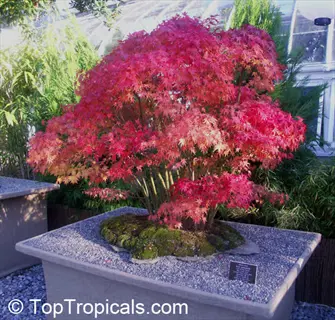
Japanese Maple
- Hardiness Zones: Thrives in USDA zones 5 through 8, tolerating winter lows down to negative 20 degrees Fahrenheit (negative 29 degrees Celsius) in sheltered spots with well-drained soil.
- Mature Size: Reaches 15 to 25 feet (4.6 to 7.6 meters) tall and wide depending on cultivar, with weeping forms staying under 10 feet (3 meters) for small spaces.
- Seasonal Interest: Delivers year-round beauty with spring bronze or red new growth, summer lace-leaf canopy, fiery fall reds and oranges, and elegant bare winter branching structure.
- Best Feature: Offers over 1,000 named cultivars ranging from deep purple Bloodgood to bright green Seiryu, giving gardeners a perfect match for any color scheme.
- Growing Conditions: Prefers morning sun with afternoon shade, consistently moist but well-drained acidic soil, and protection from harsh drying winds that scorch delicate leaves.
- Landscape Use: Works as a specimen tree, container plant, or understory accent near patios and entryways where its fine texture and graceful branching create a focal point.
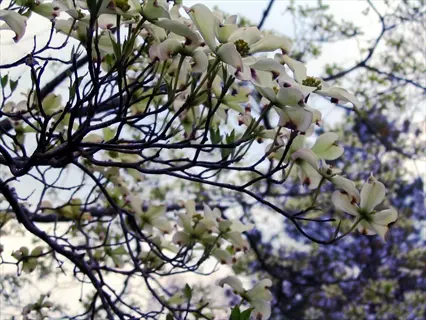
Flowering Dogwood
- Hardiness Zones: Grows well in USDA zones 5 through 9, with native populations stretching from southern Maine to eastern Texas across many woodland habitats.
- Mature Size: Reaches 15 to 30 feet (4.6 to 9.1 meters) tall with a wider horizontal spread, creating a layered branching pattern that defines its silhouette.
- Seasonal Interest: Puts on four seasons of display with white or pink spring bracts, deep green summer foliage, rich red-purple fall color, and distinctive checkered bark in winter.
- Best Feature: The horizontal branching layers create a natural tiered canopy that catches light in a striking way and adds strong architectural structure even when the tree is leafless.
- Growing Conditions: Needs partial shade to full sun, moist well-drained acidic soil, and good air circulation to reduce risk of powdery mildew and dogwood anthracnose.
- Disease Resistance: Choose improved cultivars like Appalachian Spring or Cherokee Brave that show strong resistance to anthracnose, a fungal disease that weakens native dogwoods.
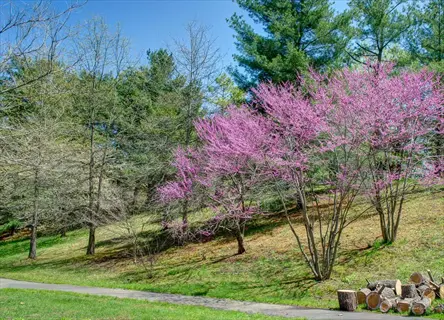
Eastern Redbud
- Hardiness Zones: Adapts across USDA zones 4 through 9, making it one of the most versatile ornamental trees in North America from Minnesota to Florida.
- Mature Size: Grows 20 to 30 feet (6.1 to 9.1 meters) tall with a rounded spreading canopy of similar width, fitting well under power lines and in smaller yards.
- Seasonal Interest: Produces clusters of magenta-pink flowers right on the branches and even the trunk in early spring before leaves emerge, followed by heart-shaped summer foliage.
- Best Feature: The flowers bloom on bare wood in a display called cauliflory, creating a striking burst of color in early spring when most other trees are still dormant.
- Growing Conditions: Tolerates a wide range of soils from slightly acidic to alkaline, handles partial shade or full sun, and once established needs only moderate watering.
- Cultivar Picks: Forest Pansy offers deep purple foliage all season, while The Rising Sun produces apricot, gold, and green leaves that shift color as they mature through summer.
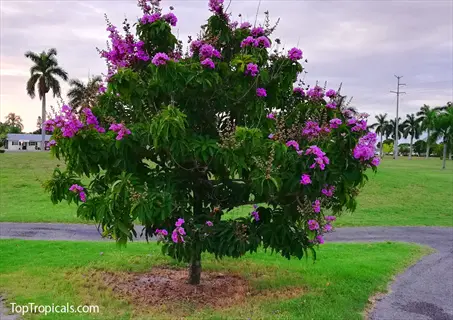
Crape Myrtle
- Hardiness Zones: Best suited to USDA zones 6 through 10, thriving in hot summers that fuel its extended bloom period from midsummer through early fall across southern regions.
- Mature Size: Ranges from 3-foot (0.9-meter) dwarf varieties to 30-foot (9.1-meter) tall tree forms, offering a size option for containers, borders, and full-sized landscape plantings.
- Seasonal Interest: Delivers the longest bloom period of any ornamental tree at up to 120 days, plus colorful fall foliage in orange and red and smooth exfoliating winter bark.
- Best Feature: The peeling cinnamon-colored bark becomes more dramatic with age, providing strong winter visual interest when flowers and leaves are gone from the canopy.
- Growing Conditions: Demands full sun for best flowering, tolerates heat and moderate drought once established, and needs good air flow to prevent powdery mildew on foliage.
- Cultivar Picks: Natchez (white flowers, cinnamon bark) and Tuscarora (coral-pink flowers) from the National Arboretum breeding program show strong mildew resistance and upright form.
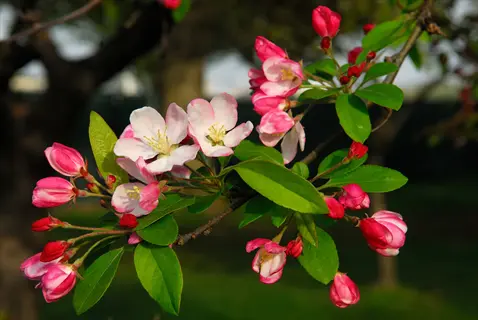
Crabapple
- Hardiness Zones: Extremely cold-hardy across USDA zones 3 through 8, surviving winter lows down to negative 40 degrees Fahrenheit (negative 40 degrees Celsius) in northern climates.
- Mature Size: Most ornamental varieties reach 15 to 25 feet (4.6 to 7.6 meters) tall, with compact forms like Lollipop staying under 10 feet (3 meters) for tight spaces.
- Seasonal Interest: Opens with masses of white, pink, or red spring blossoms, transitions to dense green summer foliage, shows warm fall color, and holds persistent small fruit into winter.
- Best Feature: Persistent fruit in red, orange, or gold feeds birds through winter while adding color to the bare canopy, making crabapples valuable for year-round wildlife support.
- Growing Conditions: Prefers full sun and well-drained soil of average fertility, tolerates clay and alkaline conditions, and handles cold winters better than most flowering ornamentals.
- Disease Resistance: Select disease-resistant cultivars like Prairifire, Sargent, or Sugar Tyme to avoid scab, fireblight, and cedar-apple rust that plague older crabapple varieties.
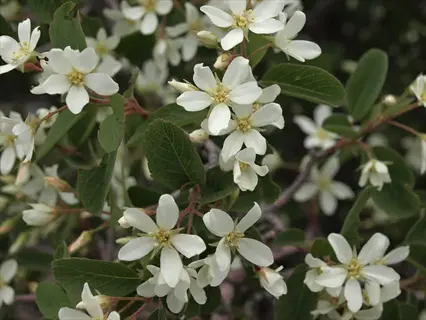
Serviceberry
- Hardiness Zones: Thrives in USDA zones 3 through 8, native to woodlands and stream edges across eastern and central North America with excellent cold tolerance.
- Mature Size: Grows 15 to 25 feet (4.6 to 7.6 meters) tall as a single-trunk tree or multi-stemmed large shrub, fitting naturally into woodland gardens and foundation plantings.
- Seasonal Interest: Provides white spring flowers, edible blueberry-like summer fruit, brilliant orange-red fall foliage, and smooth silvery-gray bark that stands out in winter landscapes.
- Best Feature: Produces sweet edible berries in June that taste similar to blueberries, attracting songbirds while giving gardeners fresh fruit for pies, jams, and fresh eating.
- Growing Conditions: Adapts to full sun or partial shade, prefers moist well-drained soil, tolerates occasional wet conditions, and seldom suffers from serious pest or disease problems.
- Cultivar Picks: Autumn Brilliance offers consistent vivid orange-red fall color and upright form, while Spring Flurry produces heavy flower displays with a uniform rounded canopy shape.
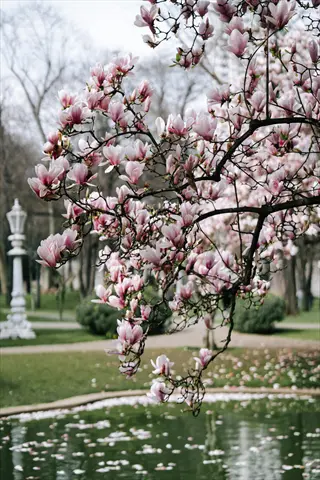
Magnolia
- Hardiness Zones: Varies by species from zones 4 through 9, with star magnolia and saucer magnolia handling cold climates and southern magnolia thriving in warmer regions.
- Mature Size: Ranges from 10-foot (3-meter) shrub-like star magnolias to 80-foot (24-meter) southern magnolias, so choosing the right species for your space is critical.
- Seasonal Interest: Famous for large fragrant flowers in white, pink, or purple that open in early spring before leaves appear, followed by glossy foliage and cone-like seed pods.
- Best Feature: The oversized flower blooms measuring up to 12 inches (30 centimeters) across create a dramatic spring display unmatched by any other ornamental tree in scale.
- Growing Conditions: Prefers moist acidic well-drained soil in a sheltered spot, with morning sun and afternoon protection from late frosts that can damage early flower buds.
- Cultivar Picks: Ann magnolia (zones 4-8) stays compact at 10 feet (3 meters) with tulip-shaped pink flowers, while Jane blooms later to avoid frost damage in northern gardens.
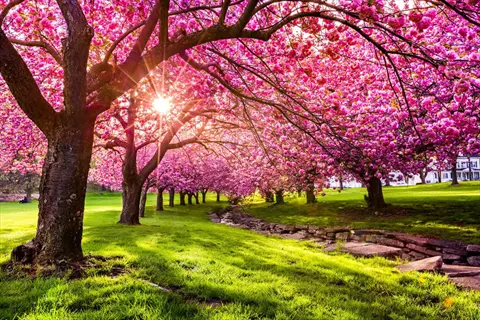
Flowering Cherry
- Hardiness Zones: Most varieties grow in USDA zones 5 through 8, with Yoshino cherry and Okame cherry showing the widest adaptability across temperate climates worldwide.
- Mature Size: Ranges from 8-foot (2.4-meter) weeping forms to 40-foot (12-meter) upright Yoshino types, offering options from small courtyard specimens to street tree plantings.
- Seasonal Interest: Erupts in clouds of white or pink blossoms in early to mid spring, displays glossy summer foliage that turns warm amber and gold in autumn months.
- Best Feature: The spring bloom creates the most recognizable ornamental tree display in the world, drawing visitors to festivals from Washington D.C. to Tokyo every year.
- Growing Conditions: Needs full sun and well-drained soil, does not tolerate wet feet, and benefits from annual pruning to remove crossing branches and maintain an open canopy.
- Important Note: Avoid planting Bradford or Callery pear which look similar but produce weak branch structure, invasive seedlings, and an unpleasant scent during spring flowering.
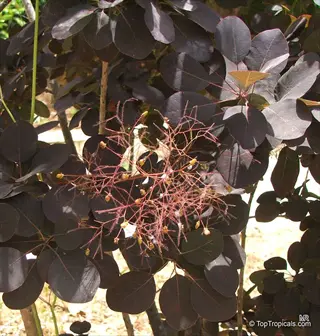
Smoketree
- Hardiness Zones: Grows well in USDA zones 4 through 8, tolerating both cold winters and hot summers with minimal fuss once established in a suitable planting location.
- Mature Size: Reaches 10 to 15 feet (3 to 4.6 meters) tall and wide as a small tree or large shrub, simple to manage with pruning to maintain a compact rounded shape.
- Seasonal Interest: Produces wispy pink or purple flower plumes in summer that look like puffs of smoke hovering over the canopy, followed by vivid orange and red fall leaves.
- Best Feature: The airy flower panicles last for weeks and give the tree its name, creating an ethereal hazy effect unique among ornamental trees available for home landscapes.
- Growing Conditions: Thrives in poor to average soil and full sun, tends to flower better in lean soil, and once established becomes one of the most drought-tolerant ornamental trees.
- Cultivar Picks: Royal Purple holds deep burgundy foliage all season, while Grace grows larger with pink smoke plumes and reaches up to 15 feet (4.6 meters) tall.
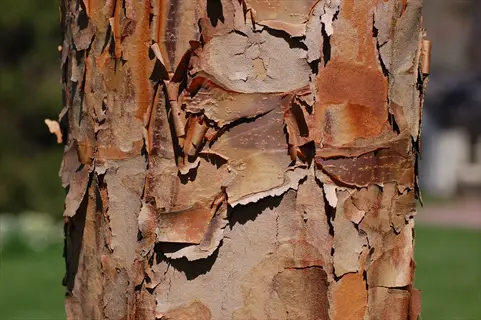
Paperbark Maple
- Hardiness Zones: Hardy in USDA zones 4 through 8, handling cold winters well while maintaining its signature peeling bark display throughout the dormant months of the year.
- Mature Size: Grows slowly to 20 to 30 feet (6.1 to 9.1 meters) tall with a rounded canopy of similar spread, making it suitable for medium yards and park settings.
- Seasonal Interest: Offers trifoliate blue-green summer leaves that turn brilliant scarlet in fall, but the true star is the cinnamon-red exfoliating bark visible in every season.
- Best Feature: The curling peeling bark in rich cinnamon and amber tones creates stunning winter interest and is considered one of the finest bark displays in the tree world.
- Growing Conditions: Prefers moist well-drained soil in full sun to partial shade, adapts to acidic or neutral soil pH, and needs protection from harsh drying winter winds.
- Landscape Use: Place it where low winter light can backlight the peeling bark, such as near a south-facing window or along a walkway where it can be appreciated up close.
My top pick for most yards is the Eastern redbud because it handles a wide zone range and puts on a great spring show. If you want year-round bark interest, go with the paperbark maple or crape myrtle instead.
Ornamental Trees by Season
Most people buy spring flowering trees and call it done. That leaves your yard bare for 9 months of the year. A smart plan fills every season with color and texture. MDPI Land journal research found that homeowners prefer 2 to 3 foliage colors in their yards. Conical or spreading tree shapes score highest for curb appeal.
The table below shows you which trees peak in each season so you can build a year-round interest plan. Pick at least one spring star and one fall color tree. Add a winter interest tree to keep your seasonal display going from January through December.
Want the best four-season interest combo on a budget? Plant a redbud for spring and a crape myrtle for summer. Add a Japanese maple as your fall color trees pick and a paperbark maple as your winter interest trees anchor. Those 4 trees give you 12 months of year-round interest with no dead gaps.
Planting Ornamental Trees
Knowing how to plant ornamental trees the right way can mean the difference between a tree that thrives and one that dies in its first year. I lost 3 trees before I learned these planting tips from university extension research. The biggest mistake most people make is skipping soil preparation and the drainage test before they dig.
When to plant trees depends on your format. Bare root trees go in the ground in early spring before buds open. Container stock does well in spring or fall. Set the root ball at the correct tree planting depth so the root flare sits level with the soil surface.
Test Your Soil Drainage First
- Why It Matters: Soil drainage is the greatest limitation to successful transplants in urban soils according to Oklahoma State University Extension, making this step more important than any fertilizer or amendment you could add to the planting hole.
- How To Test: Dig a hole 12 inches (30 centimeters) deep and fill it with water, then time how long it takes to drain completely -- if water remains after 24 hours the site needs amended drainage before planting.
- What To Do: If drainage is poor, consider raised planting beds, a different location, or mixing coarse sand and organic matter into a wide area rather than just the planting hole.
Dig the Right Size Hole
- Width Rule: Dig the planting hole two to three times wider than the root ball diameter but never deeper than the root ball itself, which encourages roots to spread outward into native soil.
- Depth Check: Set the root ball so the root flare sits at or slightly above the surrounding soil surface, because planting too deep suffocates roots and causes bark rot at the trunk base.
- Backfill Method: Use only the native soil you removed from the hole without adding compost or fertilizer, as studies show amended backfill delays root establishment and may cause root rot.
Handle the Root Ball Properly
- Container Plants: Gently loosen circling roots on the outside of the root ball before planting, as roots that continue growing in circles will eventually strangle the trunk and kill the tree.
- Balled and Burlapped: Remove all wire baskets, twine, and burlap from the top half of the root ball after placing it in the hole, since these materials restrict root growth and girdle the trunk.
- Root Loss Reality: Balled and burlapped plants lose 90% or more of their roots during digging according to Oklahoma State Extension, which is why proper planting technique is essential for survival.
Water and Mulch Correctly
- Watering Schedule: Newly planted ornamental trees need the equivalent of 1 inch (2.5 centimeters) of rain per week at minimum during the first growing season, applied slowly to soak the entire root zone.
- Mulch Application: Spread 2 to 3 inches (5 to 7.6 centimeters) of wood chip or bark mulch in a circle extending to the drip line, keeping mulch 3 inches (7.6 centimeters) away from the trunk.
- Staking Guidance: Only stake if the tree cannot stand upright on its own, and remove all staking materials after one growing season because prolonged staking weakens trunk development.
Choose the Best Purchase Size
- Optimal Size: A 5-gallon container provides the best balance of cost and transplant success for homeowner purchases according to Oklahoma State University Extension research and guidelines.
- Larger Is Not Always Better: Bigger trees experience more transplant shock, take longer to establish, and may not outgrow a smaller tree planted the same year within the first five years of growth.
- Local Sourcing: Buy from local nurseries whenever possible because local stock is more conditioned for your climate than mail-order plants shipped from distant growing regions.
Foundation-Safe Tree Picks
Planting ornamental trees near foundation walls is one of the biggest mistakes I see homeowners make. NMSU Extension data shows that 90% of tree roots grow in the top 12 to 18 inches of soil. Those roots can spread 1.5 times the tree's height from the trunk. California spends over $70 million per year fixing root damage.
The rule for foundation-safe trees is simple. Measure the mature canopy width of your tree and plant at least that distance from any structure. Trees with non-invasive roots make the best picks for spots near your house. The table below shows you the safe planting distance from house walls for popular species.
I keep all my trees near foundation walls at a minimum of 5 feet from the house and check the roots each spring. Avoid silver maples and willows close to your home since their aggressive roots seek out water lines and crack foundations over time.
Ornamental Tree Care Guide
Good ornamental tree care starts the day you bring your tree home from the nursery. In my experience the first 3 years matter more than the next 30. Get your watering ornamental trees routine right and most other problems stay small. Skip it and you'll fight pest and disease issues for years.
I break care into 4 key tasks: water, prune, feed, and protect. Each one has a best time and method. The steps below give you a clear disease prevention and maintenance plan that keeps your trees strong through every season.
Watering Through Establishment
- First Year Rule: Provide at least 1 inch (2.5 centimeters) of water per week through the first full growing season, applied at the base to soak the entire root zone rather than wetting the surface soil.
- Deep Soaking Method: Water for 20 to 30 minutes with a garden hose at a trickle or use a soaker ring around the tree, which encourages roots to grow downward rather than staying near the surface.
- When To Reduce: After the second or third year most established ornamental trees need extra watering during extended dry spells lasting 2 weeks or more without natural rainfall.
Pruning for Health and Shape
- Best Timing: Prune most flowering ornamental trees right after they finish blooming so you do not remove next year's flower buds. Summer bloomers like crape myrtle can be pruned in late winter instead.
- What To Remove: Focus on removing dead, damaged, or crossing branches first. Then thin for air circulation which reduces fungal disease pressure through the growing season.
- What To Avoid: Never remove more than 25% of the canopy in a single year. Avoid topping or heading cuts that destroy the natural branching structure and invite decay into the trunk.
Feeding and Soil Health
- First Year: Do not fertilize new ornamental trees during the first growing season because excess nitrogen pushes tender leaf growth at the expense of critical root development below ground.
- Annual Feeding: In the second year and beyond, apply a slow release balanced fertilizer in early spring before new growth begins. Follow the product label rate for the size of your tree.
- Soil Testing: Test your soil every 2 to 3 years to check pH and nutrient levels before adding any amendments. Over feeding causes more ornamental tree problems than under feeding does.
Disease and Pest Prevention
- Cultivar Choice: The most effective pest management starts at purchase by selecting resistant cultivars such as Prairifire crabapple for scab resistance and Appalachian Spring dogwood for anthracnose.
- Air Circulation: Maintain proper spacing between trees and prune to open the interior canopy. Good airflow reduces the humidity that powdery mildew, scab, and fireblight need to spread.
- Early Detection: Inspect ornamental trees each month during the growing season for discolored leaves, oozing cankers, or unusual spots. Remove affected branches right away to prevent spread.
University of Maine research warns that crabapples are prone to mildew and scab while silver maples have weak wood that splits in storms. Lombardy poplars die from canker disease at a young age. Pruning ornamental trees at the right time and proper fertilization keeps your trees strong for decades.
Design Ideas With Trees
Smart landscape design with trees does more than just look nice. MDPI research shows that tree shading cuts your home energy use by about 12%. USDA data from Modesto found that every dollar put into trees returned $1.89 in real savings. These ornamental tree landscaping ideas help you boost curb appeal and cut your bills at the same time.
I used these 4 rules in my own front yard and saw my home value go up at the next assessment. You don't need a pro to get your specimen tree and foundation planting spots right. Just follow the guide below for your privacy screen and focal point needs.
Specimen Focal Point Placement
- Purpose: Place a single standout ornamental tree such as a Japanese maple or weeping cherry in an open area where it draws the eye from the street and front door approach.
- Spacing Rule: Position the specimen at least 15 feet (4.5 meters) from the house and other large plantings so its full canopy and branching structure remain visible from every angle.
- Seasonal Payoff: A well placed specimen delivers four season interest when you choose a tree with spring blooms, summer canopy, fall foliage color, and attractive winter bark or branching.
Layered Height Groupings
- Purpose: Combine a taller ornamental tree, a mid height flowering shrub, and a low ground cover in the same bed to create depth and continuous bloom from the canopy to the soil line.
- Odd Number Rule: Group trees and companion shrubs in odd numbers such as 3 or 5 to create a natural look that professional landscape designers use for visual balance in every project.
- Color Flow: Stagger bloom times so one layer is in flower at all times. For example, pair an Eastern redbud in spring above a hydrangea that peaks in summer over creeping phlox.
Privacy and Screening Lines
- Purpose: Plant a row of columnar or upright ornamental trees along a property line to block sight lines without the density of a solid fence or wall between you and your neighbors.
- Spacing Rule: Space screening trees 8 to 12 feet (2.4 to 3.7 meters) apart so canopies touch within 3 to 4 years and form a continuous visual barrier while still allowing air flow.
- Added Value: Living screens reduce wind speed by up to 50% on the protected side and muffle street noise better than solid walls according to USDA agroforestry research studies.
Foundation and Entryway Framing
- Purpose: Flank a front door or garage entry with a matched pair of compact ornamental trees such as dwarf crape myrtles or columnar Japanese maples to frame your entrance and boost curb appeal.
- Safe Distance: Keep ornamental trees at least 5 feet (1.5 meters) from the foundation wall so roots do not interfere with footings, drainage lines, or underground utilities over the tree's lifespan.
- Scale Tip: Choose trees that mature at no more than two thirds the height of the roofline so the planting enhances the architecture rather than hiding it from the street view.
5 Common Myths
Fast-growing ornamental trees are the best choice because you get shade and beauty sooner than with slow growers.
Fast-growing trees often have weak wood, short lifespans, and higher disease susceptibility, making slower growers a better long-term investment according to university extension research.
You should prune the top branches of a newly planted ornamental tree to compensate for the roots lost during transplanting.
Oklahoma State University research shows pruning top growth at planting is counterproductive and can slow establishment rather than help the tree recover.
Adding compost or fertilizer to the planting hole gives ornamental trees a strong head start in their new location.
Studies show amending backfill soil delays root establishment and may cause root rot because roots stay confined in the enriched pocket instead of spreading outward.
Ornamental tree roots grow deep into the ground so you can safely plant them right next to your home foundation.
Research from multiple universities confirms that 90% of tree roots grow in the top 12 to 18 inches (30 to 46 centimeters) of soil and spread 1.5 times the tree height outward.
All crabapple trees are messy and disease-prone so they should be avoided in residential landscapes entirely.
Disease-resistant cultivars like Prairifire and Sargent crabapple resist scab, mildew, and fireblight, providing beautiful blooms and clean foliage with minimal maintenance.
Conclusion
Ornamental trees do more for your yard than just add beauty to the view. Every dollar you put into landscape trees returns $1.89 in value from energy savings and home worth. One tree alone cuts surface runoff by about 50% versus pavement according to MDPI research.
In my experience the best ornamental trees are the ones matched to your climate zone and soil. I've watched well chosen trees grow into stunning focal points over 10 to 15 years. The wrong picks cost me time, money, and a lot of trips back to the nursery. Your success starts with getting those basics right.
Here are your 3 next steps. First, check your USDA hardiness zone on the official map. Second, test your soil drainage with the hole and water method from the planting section. Third, visit a local nursery and buy a species that fits your zone and yard size.
The ornamental trees for landscaping that you plant today will reach their best form in 10 to 20 years. That makes this one of the highest return investments you can make in your home. Start with one great tree and build from there.
External Sources
Frequently Asked Questions
What is an ornamental tree?
An ornamental tree is a smaller landscape tree grown primarily for visual appeal such as flowers, colorful foliage, interesting bark, or architectural shape rather than fruit or timber production.
What is the most popular ornamental tree?
The Japanese maple is widely regarded as the most popular ornamental tree due to its striking leaf shapes, vibrant fall color, and adaptability to many climates and garden sizes.
What are the 10 examples of trees?
Ten well-known examples of trees include:
- Japanese maple
- Flowering dogwood
- Eastern redbud
- Crape myrtle
- Crabapple
- Magnolia
- Oak
- Birch
- Pine
- Spruce
Which are the ornamental plants?
Ornamental plants are any species grown for decorative purposes rather than food or industrial use, including flowering trees, shrubs, perennials, annuals, and ornamental grasses.
What does ornamental mean?
Ornamental means serving a decorative purpose, referring to plants or objects valued for their appearance rather than practical or utilitarian function.
What is the difference between ornamental and decorative?
Ornamental typically describes living plants grown for visual appeal in gardens, while decorative is a broader term for any object or element that adds beauty to a space.
What is the meaning of ornamented tree?
An ornamented tree refers to a tree that has been physically adorned with decorations such as lights or ribbons, unlike an ornamental tree which is naturally grown for its beauty.
What are the five trees?
Five commonly recommended trees for home landscapes are:
- Japanese maple for year-round foliage color
- Eastern redbud for spring flowers
- Flowering dogwood for layered branching
- Crape myrtle for summer blooms
- Serviceberry for edible berries and fall color
What are the 30 plants?
Thirty popular plants span categories including flowering trees, shade trees, shrubs, perennials, and ground covers commonly found in home gardens and public landscapes.
What is the meaning of ornamental tree?
An ornamental tree is a tree cultivated specifically for its aesthetic qualities such as showy flowers, colorful leaves, attractive bark, or distinctive shape rather than for lumber or fruit harvest.