
Introduction
Pruning hydrangeas at the wrong time is the fastest way to lose a full season of blooms. My neighbor cut back her bigleaf hydrangea in October. She spent the next summer staring at green leaves with zero flowers. The buds were already formed inside those stems, and she removed every one.
The real issue is that over 100 hydrangea varieties exist across 5 main species groups. Each group follows different pruning rules. Pruning the wrong type at the wrong time is like erasing a painting before it dries. The work was already done inside those stems, but you could not see it yet.
This hydrangea pruning guide shows you how to prune hydrangeas based on their type. I've grown and pruned all 6 major species over the past 12 years. The timing rules are simpler than most people think once you know what to look for.
You'll learn which species bloom on old wood versus new wood, when to make your cuts, and what tools keep your plants healthy. The right cut at the right time gives you bigger blooms and a stronger plant year after year.
6 Hydrangea Types and Pruning
Your first step before picking up the shears is to figure out which of the 6 main hydrangea types you have in your yard. Each species has its own pruning window and technique. Get the type wrong and you could cut off next year's flowers without knowing it.
The bigleaf hydrangea is the most common species and the one gardeners mess up the most. People confuse it with the panicle hydrangea, which can handle hard cuts that would ruin a bigleaf. Below is a breakdown of all 6 species with their pruning windows, methods, and one pro tip for each.
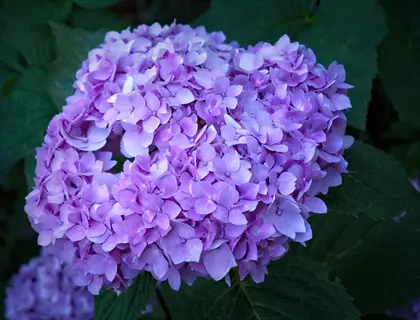
Bigleaf Hydrangea (H. macrophylla)
- Bloom Wood: Flowers form on old wood, meaning the plant sets its buds in late summer and early fall for the following year's display of mophead or lacecap blooms.
- Best Pruning Window: Prune immediately after flowering finishes in July or August, and never later than mid-August to protect developing buds for next season.
- Technique: Remove spent flower heads just above the first set of large, healthy leaves and thin out up to one-third of the oldest canes at soil level each year.
- Height Guidance: Avoid top-pruning because it creates a candelabra branching structure that breaks under the weight of heavy flower clusters during summer rain.
- Special Note: Reblooming varieties like Endless Summer flower on both old and new wood, giving you a wider pruning window and a second flush of blooms in late summer.
- Color Factor: Bloom color depends on soil pH rather than pruning -- acidic soil produces blue flowers while alkaline soil produces pink flowers through aluminum uptake.
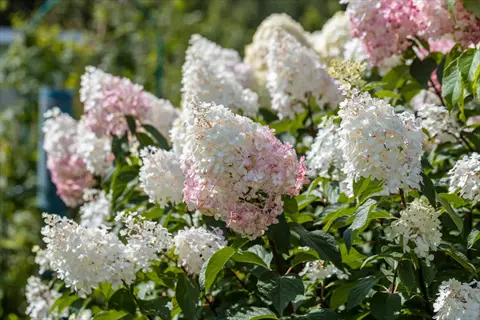
Panicle Hydrangea (H. paniculata)
- Bloom Wood: Flowers form on new wood, meaning the plant produces buds on the current season's growth, so late winter or early spring pruning does not affect blooming.
- Best Pruning Window: Prune in late February or March before new growth emerges, cutting back stems to a framework of strong buds about 10 inches (25 centimeters) from the ground.
- Technique: Use heading cuts to shape the plant and remove any crossing or inward-growing branches that reduce air circulation within the canopy.
- Height Guidance: For tree-form or standard panicle hydrangeas, remove all side shoots below the desired canopy height and thin the top to three to five main branches.
- Popular Varieties: Limelight, Quick Fire, Fire Light, and Pinky Winky are widely grown panicle cultivars that respond well to annual hard pruning for larger flower clusters.
- Growth Habit: Panicle hydrangeas are among the most cold-hardy species and tolerate full sun better than bigleaf types, making them versatile across USDA Zones 3 through 8.
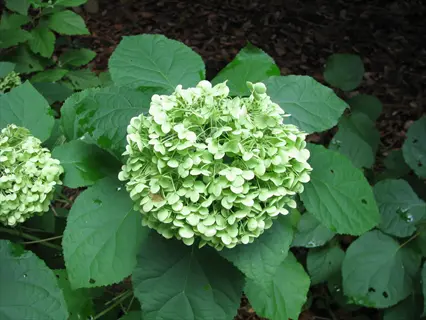
Smooth Hydrangea (H. arborescens)
- Bloom Wood: Flowers form on new wood, allowing you to prune hard in late winter or early spring without losing any blooms for the coming season.
- Best Pruning Window: Cut back in late February or March to 18 to 24 inches (45 to 60 centimeters) above ground level for the best balance of stem strength and flower size.
- Technique: Cutting all the way to the ground produces the largest flower heads but results in weak, floppy stems that fall over in rain and need staking for support.
- Height Guidance: Leaving an 18 to 24 inch (45 to 60 centimeter) framework gives the plant structural support while still producing impressively large Annabelle-style flower clusters.
- Popular Varieties: Annabelle is the classic cultivar with white globe-shaped blooms, while Incrediball and Invincibelle offer stronger stems and pink or red color options.
- Recovery Speed: Smooth hydrangeas are vigorous growers that reach 3 to 4 feet (0.9 to 1.2 meters) tall by summer even after being cut back hard in late winter.
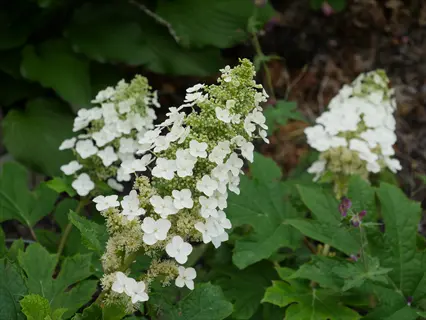
Oakleaf Hydrangea (H. quercifolia)
- Bloom Wood: Flowers form on old wood, so prune only after blooming ends in mid to late summer to avoid removing buds that are already developing for next year.
- Best Pruning Window: Prune in July or August right after the white cone-shaped flowers finish their display and begin transitioning from white to pink to tan.
- Technique: Remove dead or damaged branches at any time of year, but limit structural pruning to the post-bloom window and remove no more than one-third of old stems.
- Height Guidance: Oakleaf hydrangeas naturally develop an attractive open form and rarely need heavy shaping, so focus on removing crossing branches and ground-level suckers.
- Fall Interest: Leave spent flower clusters and foliage through fall and winter because oakleaf hydrangeas offer stunning burgundy and red autumn leaf color alongside dried flower heads.
- Growth Habit: This species tolerates more shade and drier conditions than other hydrangeas, growing 4 to 8 feet (1.2 to 2.4 meters) tall depending on the cultivar.
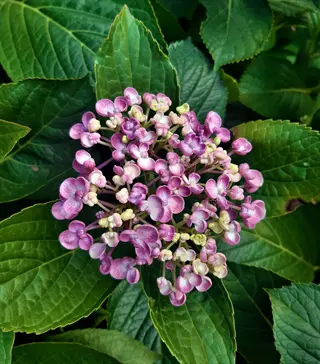
Mountain Hydrangea (H. serrata)
- Bloom Wood: Flowers form on old wood like the closely related bigleaf hydrangea, so the same late-summer pruning window applies to protect developing buds.
- Best Pruning Window: Prune immediately after flowering in July or August, focusing on removing spent flower heads and thinning one-third of the oldest canes at the base.
- Technique: Mountain hydrangeas are more compact than bigleaf types and require lighter pruning overall -- removing dead wood and shaping lightly is usually sufficient.
- Height Guidance: Most mountain hydrangeas grow 2 to 4 feet (0.6 to 1.2 meters) tall, making heavy pruning unnecessary for size control in most garden settings.
- Cold Hardiness: Mountain hydrangeas are hardier than standard bigleaf types, with lacecap-style flowers that tolerate cooler climates and handle light frost better than mopheads.
- Special Note: This species benefits from the same soil pH color-change effect as bigleaf hydrangeas, producing blue flowers in acidic soil and pink in alkaline soil.
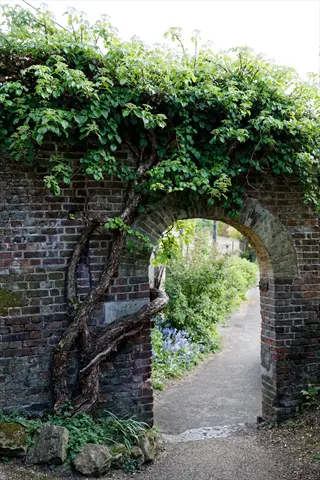
Climbing Hydrangea (H. petiolaris)
- Bloom Wood: Flowers form on old wood, and established climbing hydrangeas are not routinely pruned because they can take years to recover their flowering pattern after major cuts.
- Best Pruning Window: Prune lightly right after flowering in summer if needed, and stagger any drastic renovation pruning over 3 to 4 years to avoid losing flowers entirely.
- Technique: Limit pruning to removing wayward shoots that grow away from the support structure and trimming back overly long side branches after blooming finishes.
- Height Guidance: Climbing hydrangeas can reach 30 to 50 feet (9 to 15 meters) on a wall or tree, so plan the support structure carefully before the plant becomes established.
- Establishment Warning: These plants are slow to establish during the first 2 to 3 years but become vigorous once rooted, and they can be difficult to remove once attached to structures.
- Growth Habit: Climbing hydrangeas attach to surfaces using aerial rootlets and produce flat lacecap-style white flowers that provide excellent coverage on north-facing walls.
The biggest takeaway here is that old wood bloomers need summer pruning right after flowers fade. New wood bloomers give you more freedom to cut in late winter or early spring. When in doubt, wait until you see where the new buds form before you make any cuts.
Old Wood vs New Wood Blooming
The old wood versus new wood question trips up more gardeners than anything else about hydrangeas. Old wood is like a time capsule. The flower buds are packed inside last year's stems just waiting for spring warmth to open them. Cut those stems in fall or winter and you throw away the entire show.
Hydrangeas that bloom on new wood form their buds on fresh growth that sprouts in spring. You can cut these plants back hard in late winter and they'll still bloom on new wood that same summer. Panicle and smooth hydrangeas fall into this group, which makes them much more forgiving to prune.
Species that bloom on old wood include bigleaf, oakleaf, mountain, and climbing hydrangeas. These plants set their flower buds in late summer as days get shorter. A warm spell in winter can trick the terminal buds into sprouting early. If a hard freeze follows, it kills those buds and you get smaller flowers or none at all.
Then there's a third group that most guides skip over. Remontant or reblooming hydrangeas like the Endless Summer series bloom on both old and new wood. This means you get two flushes of flowers and a wider pruning window. Even if frost kills the old wood buds, the plant still produces blooms on its new growth.
I keep this table saved on my phone so I can check it right before I prune each spring and summer. Knowing whether your hydrangea blooms on old or new wood saves you from the most common pruning mistake gardeners make.
Pruning Tools and Technique
Good pruning techniques start with the right tools in your hands. I've ruined more stems with dull shears than I care to admit. You want bypass pruning shears for stems under 3/4 inch thick. They make clean cuts that heal fast. Avoid anvil pruners because they crush the stem and invite disease.
For thicker old canes, grab a pair of loppers that give you more leverage. You also need to sterilize tools between each plant. Use rubbing alcohol or a diluted bleach solution on the blades. This one step prevents leaf spot disease from jumping between your hydrangeas. I keep a spray bottle of alcohol right in my garden cart.
When you cut, aim for a 45 degree angle about one quarter inch above an outward facing bud. This angle lets water run off the cut instead of pooling on the wound. Directing growth outward keeps the center of the plant open for better air flow. Below are the 4 main pruning techniques you should know.
Deadheading Spent Flowers
- Purpose: Remove faded flower clusters to redirect the plant's energy from seed production into root growth, stem strengthening, and bud development for next season.
- Method: Cut the spent flower head just above the first set of large, healthy leaves using sharp bypass pruning shears, making a clean angled cut without tearing the stem.
- Timing: Deadhead as soon as flowers fade in late summer, or leave dried flower heads through winter for visual interest and frost protection of buds directly below.
Thinning for Air Circulation
- Purpose: Remove select branches entirely at the base or main stem junction to open up the interior of the plant, improving airflow and reducing the risk of leaf spot disease.
- Method: Cut the chosen cane or branch flush with the main stem or at ground level, removing it completely rather than shortening it to avoid stimulating dense regrowth.
- Timing: Thin old wood bloomers right after flowering in summer and new wood bloomers in late winter, removing no more than one-third of total canes per season.
Heading Back for Shape
- Purpose: Shorten stems to a specific height or bud to control plant shape, encourage branching, and produce a denser growth habit with more flower clusters.
- Method: Cut each stem at a 45-degree angle about one-quarter inch above an outward-facing bud, directing new growth away from the center to maintain an open vase shape.
- Timing: Head back panicle and smooth hydrangeas in late winter to a framework of 10 to 24 inches (25 to 60 centimeters), matching the height to your stem-strength preference.
Renewal for Neglected Plants
- Purpose: Rejuvenate old, overgrown, or declining hydrangeas by removing the oldest and woodiest canes to make room for vigorous new growth from the base.
- Method: Cut the oldest one-third of canes to ground level each year over a three-year cycle, gradually replacing the entire framework without shocking the plant all at once.
- Timing: Renewal pruning may cause the plant to produce few or no flowers for a year or longer, especially on old wood bloomers, so plan for a temporary bloom gap.
Match the right technique to your goal before you start cutting. Deadheading and thinning handle most annual maintenance. Save heading back and renewal pruning for times when your plant needs a bigger reset.
Post-Pruning Aftercare
Most pruning guides stop the moment you put down the shears. That's a mistake. Aftercare is the medicine that helps your plant heal and push out bigger blooms. I learned this the hard way when I pruned a bigleaf and left it with no mulch or food for an entire season.
Spread 2 to 4 inches of organic mulch around the base of the plant right after you finish cutting. Shredded bark, pine straw, or leaf compost all work great for mulching hydrangeas. Keep the mulch a few inches away from the main stems to prevent rot at the crown.
Feed your hydrangeas with a balanced slow-release fertilizer in early spring as new growth starts. Avoid anything high in nitrogen because it pushes leafy growth at the expense of flowers. I use a 10-10-10 formula and it gives me strong stems with plenty of blooms. Fertilizing hydrangeas at the right time makes a clear difference in flower size.
Water deep and steady for the first 4 to 6 weeks after pruning. This lets the plant focus on healing its cuts and pushing new growth. If you pruned in summer after blooms faded, your hydrangea needs extra water during the heat. Check the soil 2 inches down and water when it feels dry to the touch.
For winter protection, leave dried flower heads on old wood bloomers through the cold months. Those spent blooms act as a shield for the developing buds sitting right below them. In colder zones, add a fresh layer of organic mulch in late fall to insulate the roots from freeze and thaw cycles.
Troubleshooting Bloom Failure
When I first started growing bigleaf hydrangeas, I had 3 plants that refused to bloom for 2 straight years. I tested every fix I could find before I figured out the real cause. If you have hydrangeas not blooming, the problem falls into one of these patterns. Match your symptoms to the right cause and fix below.
Symptom: Healthy green leaves but zero flowers. Cause: You pruned too late and removed the flower buds that formed in late summer. Fix: Only prune right after blooming ends in July or August. Never cut stems after mid-August on old wood bloomers. I made this exact mistake my first year.
Symptom: Small, weak flowers instead of full clusters. Cause: A winter warm spell triggers terminal bud sprouting. A hard freeze then kills those buds. The plant pushes out secondary buds that produce smaller flowers. Fix: Leave dried flower heads on the plant through winter as natural frost damage shields for the buds below.
Symptom: Dead stem tips that looked fine in fall. Cause: Winter damage from cold snaps killed the top growth. Fix: Wait until spring growth starts. Look for green buds pushing out from living wood. Cut just above the highest green bud and let the plant fill in from there.
Symptom: Branches split and snap under flower weight. Cause: Over-pruning the tops created a candelabra structure where stems fork into weak branches. Fix: Stop top pruning bigleaf types. Remove old canes at soil level instead. This keeps the stems strong and upright.
Symptom: Brown spots on leaves and weak growth. Cause: Dense foliage blocks air circulation and invites leaf spot disease. Fix: Thin out a few interior branches so air flows through the canopy. In my experience, better airflow solved this issue within one growing season.
If none of these fixes work, your hydrangea variety may not suit your local climate zone. NC State Extension found that climate mismatch is one of the top 2 reasons bigleaf hydrangeas fail to bloom. Check your USDA zone and swap in a variety rated for your area.
Container Hydrangea Pruning
A container hydrangea faces challenges that plants in the ground never deal with. Pots dry out faster, freeze harder, and run out of root space sooner. I keep 4 potted hydrangeas on my patio and they need a different pruning approach than my garden plants. You have to adjust your routine to match these tougher growing conditions.
The same old wood and new wood rules apply to potted hydrangea pruning. Most hydrangea in pots from garden centers are bigleaf varieties, which means they bloom on old wood. Prune them right after flowers fade in summer. For a 2 foot container plant, remove no more than 30% in a single session. That's about 8 inches of growth at most.
Root bound plants stop producing strong blooms even when you prune them at the right time. Check the drainage holes every spring for roots poking out. When you see a thick mat of roots circling the bottom, move the plant up one pot size. Trim back any roots that wrap around themselves before you repot.
Winter protection container plants need is different from what ground plants require. Exposed pots freeze solid much faster than garden soil does. Move your pots to an unheated garage or shed once the plant goes dormant. If you can't move them, wrap the pot in burlap or bubble wrap to shield roots from cold.
Water your container hydrangeas more often after pruning than you would for in ground plants. The limited soil volume dries out fast in summer heat. I water my potted hydrangeas every other day during the first month after pruning. This keeps them on track for strong recovery and good blooms.
5 Common Myths
You should prune all hydrangeas in the fall to prepare them for winter dormancy and encourage strong spring growth.
Only new wood bloomers like panicle and smooth hydrangeas tolerate fall pruning. Old wood bloomers have already set next year's flower buds by fall, so cutting them removes blooms.
Cutting hydrangeas to the ground every year produces the biggest flowers and keeps the plant healthy and compact.
Hard pruning smooth hydrangeas to ground level produces large flowers on weak, floppy stems. Cutting to 18 to 24 inches (45 to 60 centimeters) gives structural support while still producing large blooms.
Pruning hydrangeas heavily will control their size and prevent them from growing too large for the garden space.
Pruning actually stimulates new growth, making size control through cutting ineffective. Transplanting or replacing with a compact variety is a better long-term solution for oversized plants.
You only need to deadhead hydrangeas for appearance because leaving spent flowers has no effect on plant health or future blooming.
Leaving spent flowers causes the plant to direct energy toward seed production instead of root and stem growth. On reblooming varieties, prompt deadheading encourages a second flush of flowers.
Any sharp pair of scissors or kitchen shears will work fine for pruning hydrangeas without causing damage to the stems.
Dull or unsterilized cutting tools crush stems and spread disease between plants. Use bypass pruning shears sterilized with rubbing alcohol or a diluted bleach solution for clean cuts.
Conclusion
This hydrangea pruning guide boils down to a simple checklist you should follow before picking up your shears. Ask why you're pruning, when your species needs it, and how to make the cut. I've used this why, when, how framework for over a decade and it works every single time.
Figure out your hydrangea species before you make any cuts. Old wood or new wood determines everything about your timing. The safest rule for all types is simple. Never remove more than one third of old canes in a single season. This keeps the plant strong and blooming.
Most guides on pruning hydrangeas skip the aftercare steps that matter just as much as timing. Mulch with 2 to 4 inches of organic material after every pruning session. Feed with a balanced fertilizer and sterilize your tools between plants. In my experience, these extra steps are what separate good blooms from great ones.
Here's my best hydrangea bloom tips for long term success. Mark your calendar with your hydrangea type and its pruning window right now. Set a seasonal reminder so you never miss it. Knowing how to prune hydrangeas at the right time is the entire secret to those big, full flowers that make your garden shine every summer.
External Sources
Frequently Asked Questions
What month do you cut back hydrangeas?
The best month depends on your hydrangea type. Bigleaf and oakleaf hydrangeas should be pruned in July or August, right after flowering. Panicle and smooth hydrangeas are best cut back in late February or March before new growth starts.
What is the mistake for pruning hydrangeas?
The biggest mistake is pruning old wood bloomers like bigleaf hydrangeas in fall or winter, which removes the flower buds that formed during summer for next year's blooms.
How hard should you cut back hydrangeas?
Remove no more than one-third of old canes per season. Smooth hydrangeas can be cut to 18 to 24 inches (45 to 60 centimeters) for structural support, while bigleaf types need lighter pruning.
When should I cut the heads off my hydrangeas?
Deadhead spent flower clusters as soon as they fade in late summer. You can also leave dried flower heads on the plant through winter for visual interest and frost protection of buds below.
How to trim hydrangeas for the winter?
For old wood bloomers, only remove dead or damaged stems before winter. For new wood bloomers like smooth and panicle types, wait until late winter to cut back stems to a framework of healthy buds.
Which hydrangeas should not be cut back in the fall?
Bigleaf, oakleaf, mountain, and climbing hydrangeas should never be cut back in the fall because they bloom on old wood and their flower buds are already set for the following year.
How do you prepare hydrangeas for fall and winter?
Stop fertilizing by late summer, leave dried flower heads on the stems for frost protection, apply 2 to 4 inches (5 to 10 centimeters) of mulch around the base, and protect bigleaf types with hardware cloth if rabbits are a problem.
Will hydrangeas grow back if cut down to the ground?
Yes, most hydrangeas regrow from the roots if cut to the ground. However, old wood bloomers like bigleaf and oakleaf types will produce few or no flowers for one to two seasons after severe cutting.
What happens if you don't deadhead hydrangeas after?
Skipping deadheading allows the plant to put energy into seed development rather than new growth and blooms. On reblooming varieties, deadheading after the first flush encourages a second round of flowers.
Can you prune hydrangeas in September?
September pruning is risky for most hydrangea types. Old wood bloomers have already set their flower buds by September, so cutting removes next year's blooms. New wood bloomers are better pruned in late winter.