
Introduction
The first time I brushed my hand across an asparagus fern, the soft feathery foliage felt nothing like the stiff fronds on my Boston ferns. That single touch made me want to learn everything about this plant. Stems can stretch up to 6 feet long and each one is covered in tiny green needles that give the whole plant a cloud like look.
Here is a fun fact that surprises most new owners. This popular houseplant is not a true fern at all. It belongs to the Asparagaceae family, so it is closer to lilies than forest ferns. What we call leaves are actually cladodes, short flattened stems that act like leaves. This makes the plant a true master of disguise.
Asparagus fern care is simpler than most people think, which is why new growers love this plant so much. The roots store water in thick tubers underground, so a missed watering won't send you into a panic. That built in safety net makes it one of the most forgiving textured plants you can own.
This guide walks you through each step of growing a healthy plant at home. You will learn watering tricks, light setups, and soil mixes that I tested across 3 varieties in my own space.
6 Popular Asparagus Fern Types
You can find about 6 common varieties at most garden stores, even though the genus holds around 300 species. Asparagus fern identification matters before you buy because each type grows in its own way. Think of it like picking a pet. The sprengeri fern is your easy going golden retriever, while the plumosa fern is your high maintenance Persian cat.
I have grown 3 of these asparagus fern varieties in my home and each one needs its own care routine. My foxtail fern wants more water than my Sprengeri, and the ming fern drops needles when I move it to a new spot too fast. In my experience, you should study each type below so you can pick the best match for your home and your skill level.
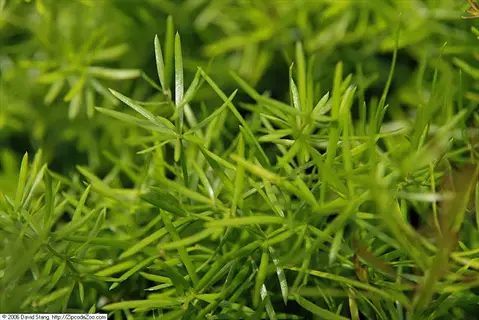
Sprengeri Fern (Asparagus densiflorus 'Sprengeri')
- Growth habit: Sprengeri fern produces arching, cascading stems that can reach up to 6 feet (1.8 m) long, making it a favorite for hanging baskets and elevated shelves.
- Light needs: This variety handles a wider range of light conditions than other asparagus ferns, from bright indirect light down to moderate shade without losing much color.
- Difficulty level: Sprengeri is the most forgiving asparagus fern for beginners because its thick tuberous roots store extra water and tolerate occasional missed waterings.
- Invasive risk: This cultivar produces abundant red berries that birds eat and spread, so outdoor growing should be limited to containers in zones 9 through 11.
- Appearance: Dense clusters of bright green needle-like cladodes line each stem, creating a full, fluffy look that softens the edges of pots and planters.
- Best for: First-time asparagus fern owners, hanging baskets, and spaces with moderate to bright indirect light where a trailing plant adds texture.
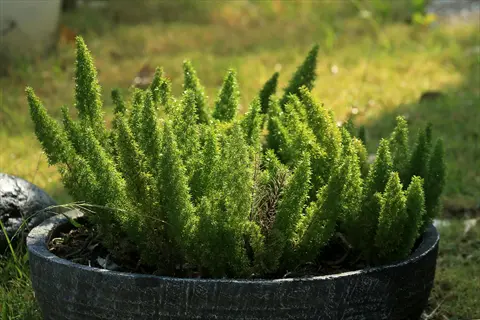
Foxtail Fern (Asparagus densiflorus 'Meyeri')
- Growth habit: Foxtail fern produces upright, plume-shaped stems that resemble fox tails, growing up to 2 feet (0.6 m) tall in a symmetrical, bushy mound shape.
- Light needs: This variety prefers bright indirect light and tolerates a few hours of gentle morning sun, but harsh afternoon rays will scorch the dense foliage.
- Difficulty level: Foxtail fern is moderately easy to grow and slightly less drought-tolerant than Sprengeri, needing more consistent watering to keep its dense plumes full.
- Invasive risk: Meyeri produces fewer seeds than Sprengeri, making it the more responsible choice for gardeners in warm climates concerned about ecological spread.
- Appearance: Each stem is densely packed with fine cladodes that taper to a point, creating the distinctive bottle-brush or fox tail shape that gives this plant its name.
- Best for: Tabletop displays, symmetrical arrangements, and gardeners who want an upright asparagus fern with a striking architectural silhouette.
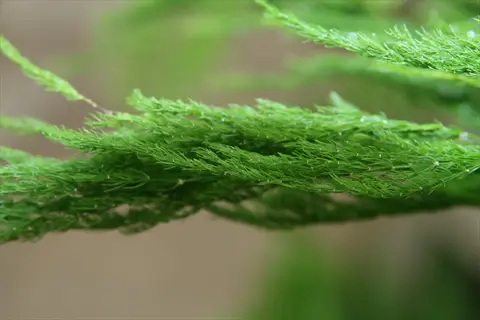
Plumosa Fern (Asparagus setaceus)
- Growth habit: Plumosa fern develops delicate, flat, horizontal frond-like sprays that can climb or trail up to 10 feet (3 m) with thin wiry stems and tiny thorns.
- Light needs: This variety requires bright indirect light and is the most sensitive to direct sunlight among asparagus ferns, burning quickly in harsh conditions.
- Difficulty level: Plumosa is the trickiest asparagus fern to keep happy indoors because it demands higher humidity and more consistent moisture than other varieties.
- Invasive risk: Plumosa sets seed readily and has established invasive populations in several warm regions, so outdoor planting should be avoided in sensitive areas.
- Appearance: The ultra-fine, lace-like cladodes create flat triangular sprays that look almost identical to maidenhair fern fronds and are prized in floral arrangements.
- Best for: Experienced plant growers, terrariums, and humid rooms where the delicate lace-like texture adds elegance to any display.
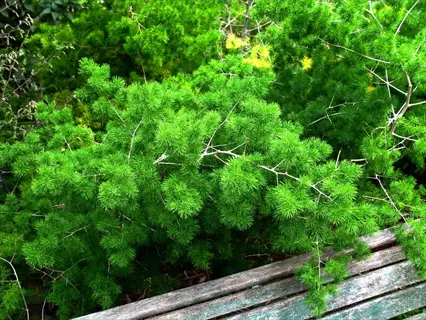
Ming Fern (Asparagus retrofractus)
- Growth habit: Ming fern grows in a unique zigzag pattern with stiff, woody stems that reach 6 to 8 feet (1.8 to 2.4 m) tall, creating a tree-like or bonsai silhouette.
- Light needs: Ming fern prefers bright indirect light but tolerates lower light levels better than Plumosa, making it suitable for rooms with filtered natural light.
- Difficulty level: This variety is moderately challenging because it drops its needle clusters when stressed by sudden temperature changes or inconsistent watering.
- Invasive risk: Ming fern has lower invasive potential compared to Sprengeri due to its slower growth rate and less prolific berry production in most climates.
- Appearance: Clusters of soft, fluffy green needles grow in tufts along stiff angular stems, giving this plant a sculptural quality unlike any other asparagus fern variety.
- Best for: Plant collectors looking for an unusual architectural specimen, modern minimalist spaces, and growers who appreciate bonsai-like structural plants.
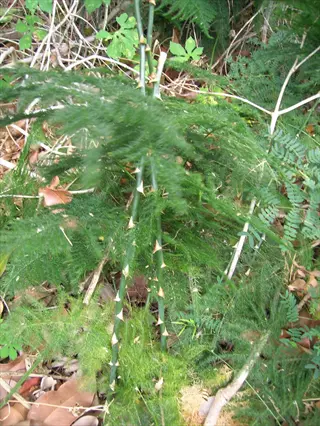
Climbing Asparagus Fern (Asparagus plumosus)
- Growth habit: This vigorous climber uses small hooked thorns to grip supports and can reach impressive lengths of 15 feet (4.5 m) or more when given a trellis or frame.
- Light needs: Climbing asparagus fern thrives in bright indirect to dappled light conditions and can tolerate slightly more sun exposure than Plumosa or Ming varieties.
- Difficulty level: This variety requires regular pruning to manage its vigorous growth and needs sturdy support structures, making it better suited for experienced growers.
- Invasive risk: The climbing habit and prolific berry production make this species a significant invasive concern in tropical and subtropical regions worldwide.
- Appearance: Flat, triangular sprays of extremely fine cladodes emerge from thorny stems, creating a billowing curtain of green when trained along wires or trellises.
- Best for: Vertical gardens, trellises, and conservatories where the climbing habit can be managed with regular trimming and structural support.
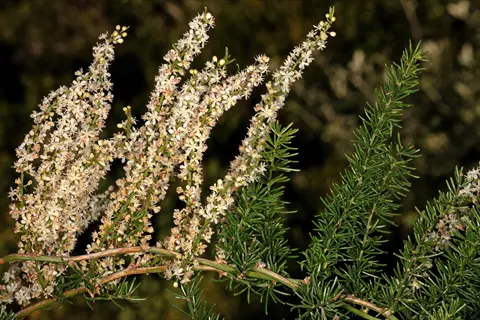
African Asparagus Fern (Asparagus aethiopicus)
- Growth habit: African asparagus fern is a robust, sprawling groundcover species that forms dense mats of arching stems reaching 2 to 3 feet (0.6 to 0.9 m) in height.
- Light needs: This tough variety handles full sun to partial shade outdoors and adapts to a wide range of indoor light conditions from bright to moderate levels.
- Difficulty level: African asparagus fern is extremely hardy and drought-tolerant, making it one of the easiest varieties to grow but also the hardest to contain outdoors.
- Invasive risk: Cal-IPC rates this species as a Watch-level invasive in California, and the IUCN assigns a risk score of 15 recommending rejection for import in some regions.
- Appearance: Dense, arching stems are covered in bright green cladodes and the plant produces clusters of white flowers followed by bright red berries in warm conditions.
- Best for: Outdoor container gardens in warm climates, low-maintenance groundcover in controlled settings, and experienced growers aware of invasive management needs.
Light and Temperature Needs
Think of your asparagus fern light needs like a beach umbrella. The plant wants the brightness of a sunny coast without the direct burn of unfiltered rays. I keep mine near an east facing window where it gets gentle morning sun and bright indirect light for the rest of the day. That spot has kept my foliage green and full for over 2 years now.
A north facing window works well too since these plants are low light tolerant compared to most tropical houseplants. South and west windows can scorch the needles unless you hang a sheer curtain to create filtered sunlight. I learned this the hard way when my Sprengeri turned yellow after a week in a south window with no shade.
During winter months, your plant may need a boost from a basic grow light if your rooms get dark before 4 PM. I run a small LED panel for about 4 hours each evening from November through February. This keeps my plants from going thin and leggy during the short days when natural light drops off.
Your asparagus fern temperature sweet spot falls between 55°F and 80°F for indoor growing. The plant can handle cold hardiness down to 30°F outdoors in USDA zones 9 through 11. Roots may even survive in zone 7 with heavy mulch over winter. Keep your plant away from cold drafts near doors and heating vents that blast dry hot air.
I bring my outdoor pots inside when night temps drop below 50°F in early fall. This gives the plant time to adjust to indoor conditions before the real cold hits. A sudden move from warm porch to cool basement will cause needle drop within days, so make the shift slow and steady.
Watering and Humidity Tips
Asparagus fern watering trips people up because you get mixed advice. Some guides say keep the soil moist. Others say let it dry out between drinks. The truth sits in the middle, and the tuberous roots explain why. These thick white tubers act like tiny water tanks. They store reserves that let your plant skip a watering without the dramatic wilting you see in calatheas.
I use the pot lifting test that I learned from a grower friend years ago. Pick up your pot right after you water it and feel the weight. Check it again every 2 to 3 days and water when the pot feels noticeably lighter. This method beats the finger test because asparagus fern roots fill the entire pot and make it hard to reach the soil surface.
During spring and summer, your plant drinks more because it pushes out new stems fast. Water about once a week and use tepid water to avoid shocking the roots. In winter, cut back to every 10 to 14 days since growth slows down. Overwatering in the cold months is the number one killer I see new growers make with this plant.
Your asparagus fern craves humidity above 50% to keep its needles green. Misting gives a quick boost but the moisture fades within minutes. It won't fix a dry room on its own. A pebble tray filled with water under the pot works much better for steady moisture. I also keep 2 of my plants in the bathroom where shower steam does the job for free.
The plant is more drought tolerant than most tropical houseplants thanks to those underground tubers. Still, don't push your luck. I let my Sprengeri go 3 weeks without water once during a vacation and it dropped half its needles. The tubers kept it alive, but it took 2 months to fill back out.
Soil, Potting, and Repotting
Your asparagus fern soil needs good drainage above all else because soggy roots lead to rot fast. A well-draining soil mix lets water flow through while the tubers grab what they need. I lost my first plant to root rot because I used dense garden soil that held water like a sponge.
Root bound asparagus ferns are like feet in too tight shoes. The tubers keep swelling until something gives, and that something is usually your pot. The roots are strong enough to crack ceramic and plastic containers within 2 to 3 years. You want a terracotta pot for most setups because the porous clay pulls extra moisture from the soil. I check for repotting signs every spring by looking for roots poking out of the drainage holes at the bottom.
Standard Indoor Mix
- Ingredients: Combine two parts regular potting soil with one part perlite and one part coarse sand or pumice for a balanced, free-draining mixture.
- Drainage: This mix allows excess water to flow through quickly while the potting soil retains enough moisture for the tuberous roots between waterings.
- Best for: Everyday asparagus fern growing in standard indoor conditions where humidity levels stay between 40 and 60% throughout the year.
- Pot pairing: Works well in terracotta pots because the porous clay pulls extra moisture from the soil, reducing root rot risk during cooler months.
High Humidity Mix
- Ingredients: Mix one part potting soil with one part perlite and one part orchid bark to create an airy blend that prevents waterlogging in damp environments.
- Drainage: The chunky orchid bark creates large air pockets in the soil that keep oxygen flowing to the roots even when ambient humidity runs above 60%.
- Best for: Asparagus ferns kept in bathrooms, kitchens, or near humidifiers where the surrounding air already provides significant moisture to the foliage.
- Pot pairing: Pair with plastic or glazed ceramic pots to retain some moisture, since the extra-airy mix dries out faster than standard blends.
Outdoor Container Mix
- Ingredients: Use one part potting soil, one part coarse perlite, and one part composted pine bark for a sturdy outdoor blend that handles rain and wind exposure.
- Drainage: This heavier mix resists compaction from rain while still draining well enough to prevent the waterlogged conditions that cause root rot outdoors.
- Best for: Asparagus ferns grown in patio containers in USDA zones 9 through 11, where they may receive occasional rainfall and wider temperature swings.
- Pot pairing: Choose heavy terracotta or stone containers that resist tipping in wind and provide the weight needed to anchor tall, top-heavy asparagus fern stems.
Seedling Starter Mix
- Ingredients: Blend equal parts fine peat moss and perlite for a lightweight, moisture-retentive medium that supports germinating asparagus fern seeds for their first weeks.
- Drainage: The fine texture holds consistent moisture around tiny roots without creating the heavy wet conditions that cause damping off in asparagus fern seedlings.
- Best for: Starting asparagus fern seeds indoors, which germinate in three to four weeks at room temperature according to University of Wisconsin-Madison Extension research.
- Pot pairing: Use small individual cells or seedling trays with clear plastic covers to maintain the warm, humid environment that asparagus fern seeds need to sprout.
You should repot your asparagus fern every 2 years or when you see roots cracking the pot walls. Go up just one pot size each time you repot. A pot that is too big holds excess water around the roots and invites rot even with the best potting mix.
Propagation Methods
Asparagus fern propagation works best through root division or seed starting. Forget about asparagus fern cuttings because the stems don't form new roots the way pothos or philodendron stems do. I tried stem cuttings 3 times before I gave up and learned the right methods.
Division is the fastest way to get new plants. Think of it like separating a bundle of carrots. Each section needs its own cluster of tuberous roots to fuel new growth. Pull your plant from its pot in early spring and shake off the loose soil. Then tease apart the root ball into 2 or 3 sections with your hands. Each piece should have at least 3 to 4 healthy tubers attached.
Seed propagation takes more patience but it lets you grow many plants at once. Nick each seed with a file and soak them in warm water for 24 hours before planting. Press the seeds into moist peat and perlite mix about half an inch deep. Germination takes 3 to 4 weeks at room temperature when you keep the soil damp and covered.
Seeds can sprout at any time of year, but you get the best flush in spring or autumn based on the plant's natural cycle. I started 12 seeds from my Sprengeri berries last March and 9 of them sprouted within a month. The key is to keep the soil warm and moist without making it soggy.
Toxicity and Invasive Status
The asparagus fern toxic risk is real for cats, dogs, and humans according to the ASPCA. The harmful agent is a steroid called sapogenin that sits in the stems, leaves, and berries. You need to know about 2 types of exposure. Skin contact with the sap causes allergic dermatitis and rashes. Eating the berries causes vomiting, stomach pain, and diarrhea.
Pet safety is a real concern if you have curious cats or dogs at home. I wear gloves when I prune my plants because the thorns can also prick your skin and cause local irritation. Keep your asparagus fern on a high shelf or hanging basket where pets and small children can't reach the bright red asparagus fern berries.
The invasive species problem is just as serious. A single berry eaten by a bird is like planting a tiny time bomb in the nearest forest. Bird-dispersed seeds sprout where they land. The plants that grow from them can smother forest floors to heights of 8 to 16 feet. Florida, Hawaii, Texas, and parts of California all list this plant as invasive.
If you grow yours outdoors, keep it in a container and clip off berries before they ripen and turn red. The IUCN gave this plant a risk score of 15 out of 15 in their Pacific region review. That score means they want to block it from import. You can still enjoy the plant indoors without any risk to local nature. Just manage berries and toss trimmings in sealed bags.
5 Common Myths
Asparagus ferns are true ferns that reproduce through spores and need the same care as Boston ferns.
Asparagus ferns belong to the Asparagaceae family and reproduce by seed, requiring different care than actual ferns like Boston ferns.
Misting an asparagus fern once a day provides enough humidity to prevent needle drop and browning.
Misting offers only temporary moisture that evaporates within minutes, so a pebble tray, humidifier, or bathroom placement works much better.
Asparagus ferns need constantly wet soil to survive because they come from tropical rainforest environments.
These plants are native to coastal South Africa and store water in tuberous roots, so they actually prefer soil that dries slightly between waterings.
You can safely grow asparagus ferns outdoors anywhere without any environmental concerns or restrictions.
Asparagus ferns are classified as invasive in Florida, Hawaii, Texas, and California because birds spread their seeds into natural areas.
Asparagus fern berries are safe to eat because the plant shares its name with the edible asparagus vegetable.
The red berries contain sapogenin, a toxic steroid compound that causes vomiting and diarrhea in humans and pets according to the ASPCA.
Conclusion
Asparagus fern care comes down to a few simple habits that keep your plant healthy for decades. Give it bright filtered light, water when the pot feels light, and keep the humidity above 50%. Those 3 steps handle most of what this resilient houseplant needs to thrive in your home.
The right asparagus fern varieties make a huge difference in your success as a grower. Sprengeri works best for beginners while Plumosa rewards those with more skill and patience. Each variety has its own look and needs, so pick one that matches your space and your comfort level with indoor plant care.
I have seen roots grow strong enough to break pots within a couple of years, so check for signs of crowding each spring. Seeds sprout in 3 to 4 weeks with a quick soak, and stems can reach 6 feet long with good care. These plants reward your attention with fuller growth year after year when you stay on top of container gardening basics.
Spring is the perfect time to repot, divide, or start seeds from your asparagus fern. Check for berries and clip them off before birds can spread them into wild areas. Keep pets away from the foliage and thorns. With those simple steps, your asparagus fern will keep growing into a stunning focal point in your home for many years to come.
External Sources
Frequently Asked Questions
How do you take care of an asparagus fern?
Provide bright indirect light, keep the soil lightly moist, maintain high humidity, and fertilize monthly during the growing season.
Are asparagus ferns hard to keep alive?
Asparagus ferns are relatively easy to grow because their tuberous roots store water and they tolerate a range of light conditions.
Where is the best place to put an asparagus fern?
Place your asparagus fern near an east-facing or north-facing window where it receives bright indirect light without harsh afternoon sun.
Is asparagus fern good for the bathroom?
Bathrooms are excellent for asparagus ferns because the natural steam and humidity keep the foliage lush and prevent needle drop.
How often should I water an Asparagus Fern?
Water your asparagus fern about once a week during the growing season, allowing the top inch of soil to dry between waterings.
What are common Asparagus Fern problems?
Yellowing leaves, needle drop, spider mites, mealybugs, and root rot from overwatering are the most frequent issues.
How to make Asparagus Fern happy?
Keep humidity above 50 percent, provide bright filtered light, water consistently, and repot when roots outgrow the container.
Why put salt on asparagus plants?
Salt was historically used to suppress weeds around edible asparagus beds, but it is not recommended for ornamental asparagus ferns.
Are coffee grounds good for Asparagus Ferns?
Used coffee grounds can slightly acidify the soil, which asparagus ferns appreciate, but they should be composted first to avoid mold.
Does Asparagus Fern last through winter?
Asparagus ferns survive winter indoors easily and can tolerate outdoor winters only in USDA zones 9 through 11.