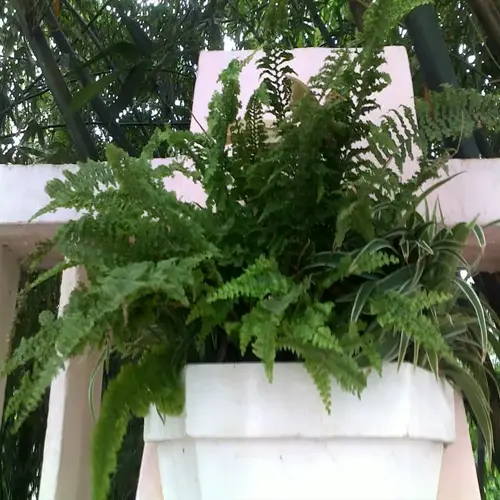

Asparagus fern care rests on four pillars: good light, proper watering, humidity, and feeding. Get these four things right and your plant will reward you with thick green fronds that look stunning in any room.
Asparagus fern watering trips up most new owners because these plants hate sitting in soggy soil. I check the top inch of soil with my finger before each watering. If it feels dry, I give the pot a good soak until water runs out the bottom. During summer months my fern needs water about twice a week, but in winter I cut back to once every ten days. The tuberous roots store extra moisture, so letting the soil dry out a bit between waterings won't cause any harm.
Asparagus fern light requirements trip people up in two ways: scorching and stretching. These plants thrive in bright indirect light, so an east-facing window works best for morning sun without afternoon heat. I tested mine on a south-facing windowsill one summer and the fronds turned pale yellow within three weeks. Moving it back to my east window fixed the problem in about a month. A north-facing window also works if the room gets plenty of ambient light throughout the day.
Here is something most care guides skip. Asparagus ferns don't have true leaves. Those tiny green needles are called cladodes, which are modified stems that act like leaves. Cladodes lose moisture much faster than the broad flat leaves on most houseplants. This is why your asparagus fern drops needles in dry air while your pothos looks fine in the same spot. You need 50-60% humidity around the plant to keep those cladodes happy and green.
I run a small humidifier near my fern during winter when the heating system dries out the air. Misting helps for about thirty minutes at best. A pebble tray or humidifier gives much better results. Grouping your asparagus fern with other plants raises the local humidity around all of them too.
Feed your fern with a half-strength balanced liquid fertilizer once a month from April through September. This gives it the nutrients for strong growth. I use a 10-10-10 formula diluted to half and pour it into moist soil so the roots don't burn. Stop feeding in October and don't start again until spring because the plant rests during the cold months.
Spring Pruning And Feeding
- Dead stem removal: Cut any brown or yellow stems at the base to make room for fresh spring growth that should appear within weeks.
- Fertilizer restart: Begin monthly half-strength feeding in April when you see new shoots emerging from the soil.
- Repotting window: Move your fern to a pot one size up if roots are pushing out of drainage holes or circling the bottom.
Summer Growth Monitoring
- Watering increase: Check soil moisture every 3-4 days since warmer temperatures and active growth drain water fast.
- Light check: Watch for pale or bleached fronds that signal too much direct sun and move the plant back from the window.
- Pest patrol: Inspect cladodes for spider mites or mealybugs that love the warm humid conditions around your fern.
Fall Indoor Transition
- Temperature trigger: Bring outdoor ferns inside when nighttime temperatures drop below 50°F (10°C) to prevent cold damage.
- Gradual adjustment: Move the plant to a shaded porch for a week first so it can adjust to lower indoor light levels.
- Reduce feeding: Cut fertilizer applications to every six weeks in September and stop completely by late October.
Winter Reduced Watering
- Water less often: Stretch watering intervals to every 10-14 days since the plant grows very little during short winter days.
- Humidity boost: Run a humidifier nearby because indoor heating drops humidity well below the 50% minimum your fern needs.
- Skip fertilizer: Give no plant food from November through February and let your fern rest until growth resumes in spring.
My asparagus fern care routine has stayed the same for over four years and the plant keeps thriving. The biggest shift I made was learning that winter means doing less, not more. Cut the water back, stop the fertilizer, and keep humidity up. Your fern will slow down and that is completely normal. Come spring, you will see fresh green shoots poking through the soil and the whole cycle starts again.
Read the full article: Asparagus Fern Care and Growing Guide