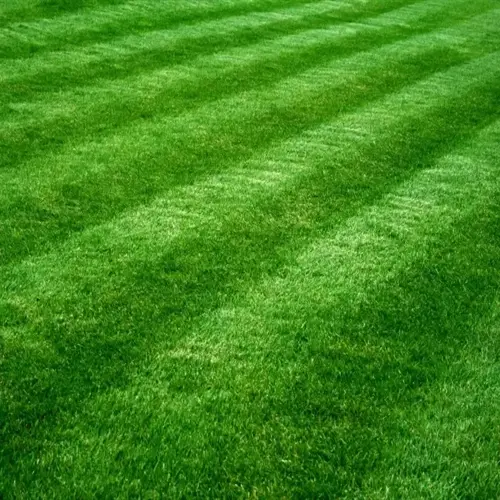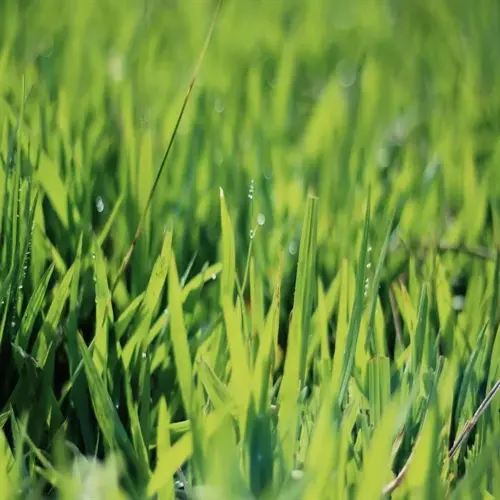

Introduction
Perennial ryegrass is the sprinter of the cool-season grass world. No other turf grass goes from seed to a mowable lawn faster. Its scientific name is Lolium perenne. This grass germinates in just 5 to 7 days and gives you a dense, dark green lawn in about 3 weeks.
I've grown this grass on 4 different properties over the past 12 years. Each time, the speed caught me off guard. You drop the seed on a Tuesday and by the next weekend you can see green fuzz covering the bare dirt. Wimbledon Centre Court has used 100% ryegrass since 2001, and that fact says it all about the quality.
What most guides skip is the full story behind this plant. Farmers have grown it for animal forage for over 300 years per Oregon State University. The first turf type cultivar came along in 1961. Today this cool-season grass serves double duty on lawns and in pastures.
This guide covers everything from planting and care to disease control and regional tips. You'll learn what makes this grass shine and where its real limits show up so you can decide if it fits your yard or farm.
10 Best Uses for Ryegrass
You might think of ryegrass as just a lawn grass, but the list of perennial ryegrass uses goes far beyond your front yard. UC ANR gives it the highest wear tolerance rating of any cool-season grass. That's why you'll find it on sports fields, golf courses, and public parks.
I've used this grass for overseeding thin spots, starting new lawns from scratch, and seeding a small pasture grass plot for my neighbor's goats. Each job showed me a different strength. From erosion control on steep banks to cover cropping between harvests, here are the 10 best uses for this plant.
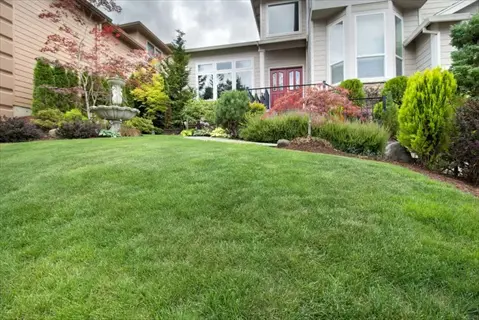
Home Lawns in Cool Climates
- Climate fit: Perennial ryegrass thrives in USDA hardiness zones 3 through 8, performing best in regions with moderate summers and cold winters across the northern United States and Pacific Northwest.
- Appearance: The fine-textured, dark green blades create a lawn that closely resembles Kentucky bluegrass in color and density, giving homeowners a polished and attractive yard.
- Establishment speed: From seed to a mowable lawn in roughly 3 weeks, perennial ryegrass fills in bare areas faster than any other cool-season turfgrass option available.
- Maintenance level: Expect moderate to high upkeep with 4 to 8 pounds of nitrogen per 1,000 square feet (0.2 to 0.4 kilograms per square meter) annually and about 1 inch (2.5 centimeters) of water per week.
- Thatch benefit: Oregon State University confirms perennial ryegrass produces the least thatch of all commonly planted cool-season turfgrasses, reducing dethatching labor significantly.
- Mowing range: Homeowners can mow between 1.5 and 3 inches (3.8 and 7.6 centimeters) depending on preference, with the one-third rule applying to every cut.
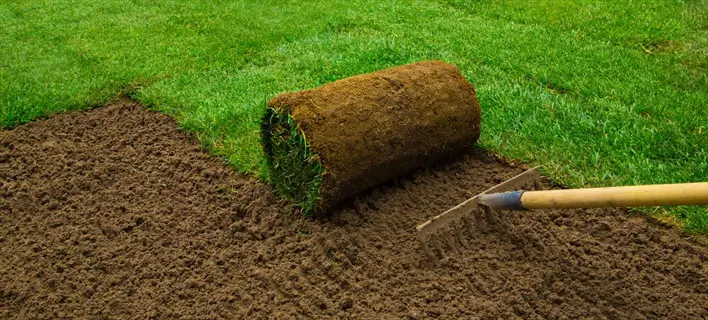
Professional Sports Fields
- Wear recovery: UC ANR rates perennial ryegrass as having the highest wear and traffic tolerance of any cool-season grass, making it the standard for high-use athletic surfaces.
- Famous example: Wimbledon Centre Court has used 100% perennial ryegrass since 2001, relying on its dense growth and rapid recovery between matches during the tournament.
- Striping ability: The upright growth habit and fine leaf texture allow grounds crews to produce crisp mowing stripes on soccer pitches, football fields, and baseball outfields.
- Quick repair: After heavy game day damage, overseeding with perennial ryegrass at 8 to 10 pounds per 1,000 square feet (0.4 to 0.5 kilograms per square meter) fills divots within weeks.
- Blending option: Many sports turf managers mix perennial ryegrass with Kentucky bluegrass to combine fast establishment with the self-repair capability of rhizome-spreading bluegrass.
- Low mowing tolerance: Professional turf can be mowed as low as 5/8 inch (1.6 centimeters) for precise playing surfaces, per Oregon State University specifications.
Winter Overseeding in the South
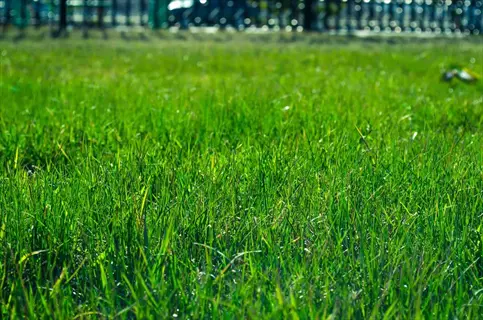
- Purpose: Southern homeowners and golf courses overseed dormant warm-season grasses like Bermudagrass and Zoysia with perennial ryegrass to maintain green color through winter months.
- Timing: Overseeding works best when warm-season grass begins to go dormant in fall, typically when soil temperatures drop below 65 degrees Fahrenheit (18 degrees Celsius).
- Seeding rate: Apply 3 to 5 pounds per 1,000 square feet (0.15 to 0.25 kilograms per square meter) for overseeding, which is lower than new lawn establishment rates.
- Transition concerns: NC State Extension warns that in the transition zone, perennial ryegrass can survive cool summers and become clumpy, creating a difficult-to-remove weed problem.
- Color match: The dark green color and fine texture of turf-type perennial ryegrass closely matches the appearance of a healthy warm-season lawn, providing seamless winter coverage.
- Spring transition: As warm-season grasses resume growth in late spring, perennial ryegrass naturally declines from heat stress, allowing the permanent lawn to take over again.

Golf Course Fairways and Tees
- Low cut capability: Perennial ryegrass can be maintained at heights as low as 5/8 inch (1.6 centimeters), meeting the precise mowing demands of golf course fairways and tee boxes.
- Ball lie quality: The dense, upright growth creates a consistent playing surface that supports clean ball contact, which golfers prefer on approach shots and tee areas.
- Rapid divot repair: After golfers take divots on fairways and tees, ryegrass seed mixed with soil fills the damage within 7 to 14 days thanks to its fast germination rate.
- Year-round play: Golf courses in the southern United States overseed with perennial ryegrass each fall to keep fairways green and playable during the cooler months.
- Disease management: Course superintendents monitor closely for grey leafspot, which Oregon State identifies as the latest emerging disease threat driving new cultivar breeding programs.
- Cultivar selection: Turf-type cultivars bred specifically for golf use offer improved density, color retention, and disease resistance compared to older forage-type varieties.
Livestock Pasture and Grazing
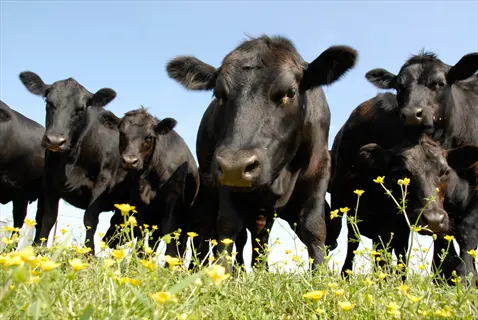
- Forage history: Oregon State University documents that perennial ryegrass has been used for animal forage for over 300 years, making it one of the oldest cultivated pasture grasses.
- Yield data: Penn State Extension reports five-year yield averages of 6,346 to 6,492 pounds per acre (7,110 to 7,274 kilograms per hectare) for perennial ryegrass cultivars.
- Seeding rate: For pasture establishment, seed at 15 to 20 pounds per acre (16.8 to 22.4 kilograms per hectare) alone, or 4 to 8 pounds per acre when mixed with a legume.
- Nitrogen needs: Profitable returns require approximately 150 pounds of nitrogen per acre (168 kilograms per hectare) per year, split between spring and post-grazing applications.
- Digestibility: Tetraploid cultivars have higher sugar content and greater digestibility than diploid types, and grazing animals show a strong preference for tetraploid varieties.
- Legume pairing: Ryegrass-alfalfa mixtures are superior to orchardgrass-alfalfa in crude protein production, digestible dry matter, and alfalfa persistence under grazing conditions.
Erosion Control on Slopes
- Fast coverage: Germination in 5 to 7 days means exposed soil on slopes receives protective grass cover faster than with any other cool-season species, reducing runoff damage.
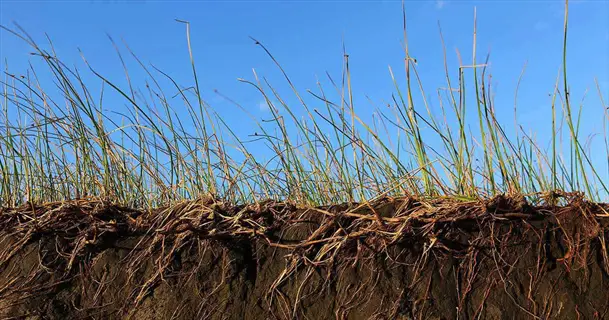
- Dense root system: The fibrous root system of perennial ryegrass holds topsoil in place on construction sites, road cuts, and newly graded residential lots.
- Seeding method: Hydroseeding with perennial ryegrass is a common commercial technique for large-scale slope stabilization on highway embankments and commercial developments.
- Temporary protection: On sites where permanent warm-season grass will be planted later, perennial ryegrass provides interim erosion protection during the cooler establishment months.
- Weed suppression: The rapid germination outcompetes weed seedlings for sunlight, moisture, and soil nutrients, reducing the need for herbicides on freshly disturbed ground.
- Cost advantage: Perennial ryegrass seed is relatively affordable at approximately 19 to 44 dollars per 5-pound (2.3-kilogram) bag, making it economical for large-area erosion projects.
School Yards and Public Parks
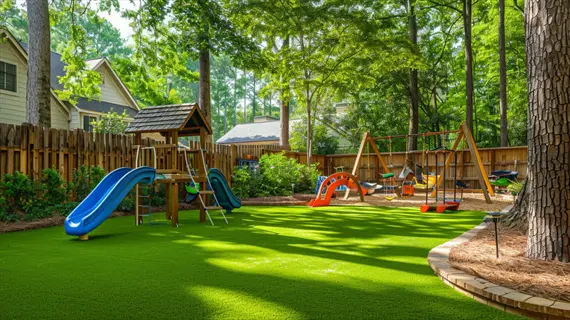
- Traffic durability: With the highest wear tolerance of any cool-season grass per UC ANR, perennial ryegrass handles the constant foot traffic from children, athletes, and park visitors.
- Safety surface: The dense turf creates a cushioned playing surface that is safer for children compared to thin or patchy grass, reducing playground injury risks.
- Quick recovery: After school events, sports days, and heavy weekend use, ryegrass recovers faster than Kentucky bluegrass or fine fescue, maintaining an attractive appearance.
- Budget friendly: Municipal maintenance crews appreciate the fast establishment from seed, which costs significantly less than sodding large park areas and school grounds.
- Low thatch: Parks departments benefit from minimal thatch buildup, meaning less specialized equipment and fewer labor hours spent on dethatching public green spaces.
- Overseeding schedule: Schools can overseed thin areas during fall break or spring break, with visible results by the time students and visitors return in just a few weeks.
Cover Crop Between Seasons
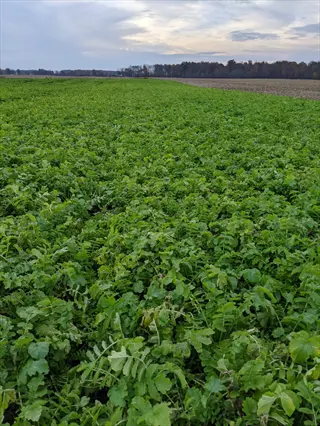
- Soil protection: Farmers plant perennial ryegrass as a cover crop after harvesting cash crops to prevent soil erosion, nutrient leaching, and weed invasion during fallow periods.
- Nutrient cycling: The dense root system captures residual nitrogen from previous crops and prevents it from leaching into groundwater during heavy fall and winter rains.
- Organic matter: When terminated in spring, ryegrass biomass decomposes and adds organic matter back to the soil, improving structure and water-holding capacity for the next planting.
- Weed suppression: Fast germination and dense canopy formation shade out winter annual weeds that would otherwise establish in bare crop fields between growing seasons.
- Establishment timing: Plant cover crop ryegrass in early fall when soil temperatures remain above 50 degrees Fahrenheit (10 degrees Celsius) for reliable germination before winter.
- Termination methods: Farmers can terminate ryegrass cover crops through mowing, crimping, or herbicide application before planting the next cash crop in spring.

Roadside and Highway Medians
- Low maintenance fit: Once established, perennial ryegrass on highway medians and roadsides requires infrequent mowing, typically just a few times per growing season by road crews.
- Salt tolerance: Perennial ryegrass shows reasonable tolerance to de-icing salt spray along roads, making it a practical choice for highway median strips in northern states.
- Visual appeal: State transportation departments choose perennial ryegrass for its clean, green appearance along major roadways, contributing to a maintained and pleasant driving experience.
- Dust control: The dense turf cover on unpaved shoulders and medians reduces airborne dust from passing vehicles, improving air quality near residential areas along busy roads.
- Hydroseeding efficiency: Large-scale roadside establishment through hydroseeding allows rapid coverage of miles of roadway shoulders in a single application season at reasonable cost.
- Companion planting: Road crews often mix perennial ryegrass with tall fescue for deeper drought tolerance on roadsides where irrigation is not practical or cost-effective.

Sod Production Farms
- Fast harvest: Sod farms appreciate perennial ryegrass for its rapid establishment, allowing harvest-ready sod in significantly less time than Kentucky bluegrass or fine fescue crops.
- Blend component: Most commercial sod blends include perennial ryegrass alongside Kentucky bluegrass, combining fast coverage with the long-term self-repair ability of bluegrass rhizomes.
- Uniform appearance: The consistent dark green color and fine leaf texture produce sod rolls that look immediately attractive after installation on residential and commercial landscapes.
- Market demand: Sod containing perennial ryegrass sells at approximately 0.40 to 0.85 dollars per square foot (4.30 to 9.15 dollars per square meter), supporting profitable farm operations.
- Root strength: The dense fibrous root system creates strong sod that holds together well during harvesting, transport, and installation, reducing waste and customer complaints.
- Year-round sales: In southern markets, sod farms produce perennial ryegrass sod specifically for the winter overseeding season, creating a revenue stream during otherwise slow months.
Planting and Establishment
Learning how to plant perennial ryegrass the right way saves you time and seed money. The ryegrass germination time is just 5 to 7 days under good conditions, but poor soil prep can push that out to 2 weeks or more. I wasted a whole bag of seed on my first try because I skipped the soil test.
Your soil temperature needs to sit between 50 and 65 degrees Fahrenheit for the best results. Fall planting gives you the longest growth window before summer heat arrives. Follow these 4 steps and you'll have a thick stand of grass in about 3 weeks.
Test and Prepare Your Soil
- Soil pH check: Test your soil pH before planting and aim for a range of 6.0 to 7.0, though perennial ryegrass can tolerate soil as acidic as pH 5.0 per Penn State Extension recommendations.
- Soil amendment: Apply lime if your soil pH falls below 6.0 and incorporate it at least 4 to 6 weeks before seeding to allow the pH adjustment to take effect throughout the root zone.
- Tilling depth: Loosen the top 4 to 6 inches (10 to 15 centimeters) of soil with a tiller or garden fork to create a loose seedbed that allows young roots to penetrate without resistance.
- Drainage check: Ensure your planting site drains well because perennial ryegrass does not tolerate waterlogged conditions, and standing water promotes Pythium blight and root rot diseases.
Choose the Right Planting Time
- Fall is best: Plant perennial ryegrass in early fall when soil temperatures range between 50 and 65 degrees Fahrenheit (10 and 18 degrees Celsius) for the fastest and most reliable germination.
- Spring alternative: If you miss the fall window, early spring planting works but gives the grass less time to establish deep roots before summer heat stress arrives in warmer regions.
- Overseeding timing: For winter overseeding on warm-season lawns in the South, wait until the warm grass begins going dormant, in October or November depending on your location.
- Soil temperature tool: Use a soil thermometer inserted 2 inches (5 centimeters) deep to confirm temperatures before seeding rather than guessing based on air temperature alone.
Seed at the Correct Rate
- New lawn seeding rate: Spread 8 to 10 pounds of seed per 1,000 square feet (0.4 to 0.5 kilograms per square meter) for new lawn jobs to achieve dense, uniform coverage without overcrowding.
- Overseeding rate: Use 3 to 5 pounds per 1,000 square feet (0.15 to 0.25 kilograms per square meter) when overseeding an existing lawn to fill in thin spots without smothering current grass.
- Pasture rate: For pasture work, Penn State Extension recommends 15 to 20 pounds per acre (16.8 to 22.4 kilograms per hectare) alone, or 4 to 8 pounds when mixed with a legume.
- Seed depth: Press seeds into the soil surface or cover with no more than 1/4 inch (0.6 centimeters) of soil, as perennial ryegrass seeds need light exposure for the best germination rates.
Water for Successful Germination
- Initial watering: Keep the seedbed moist with light watering 2 to 3 times per day for the first 7 to 10 days until germination occurs, which happens in 5 to 7 days under good conditions.
- Reduce frequency: After seedlings emerge, cut watering down to once per day, then every other day, training roots to grow deeper into the soil for long-term drought resilience.
- Established schedule: Once the lawn is set at about 4 to 6 weeks, give it about 1 inch (2.5 centimeters) of water per week, applied in 1 to 3 sessions.
- Morning timing: Water in the early morning to cut evaporation loss and reduce the time leaf blades stay wet, which helps prevent fungal disease during the establishment phase.
The most common mistake I see people make is overseeding too thick. More seed does not mean more grass. Crowded seedlings compete for water and light, and you end up with a weaker stand than if you'd used the right seeding rate from the start.
Lawn Care and Maintenance
Good ryegrass lawn care follows a clear seasonal rhythm. Your mowing height, fertilization plan, and watering schedule should change with the weather. I learned this the hard way when I kept the same routine all year and watched my lawn thin out every summer.
Oregon State University puts the ideal mowing height at 1 to 2 inches for the best density. Your nitrogen needs run between 4 to 8 pounds per 1,000 square feet each year. One bonus you'll enjoy with this grass is thatch management. Ryegrass makes the least thatch of all cool-season grasses, so you can spend less time on that chore.
Here's a critical tip most guides miss. Too little nitrogen invites red thread and crown rust. Too much nitrogen causes Fusarium patch and leafspot. You need to hit the right balance or you'll fight disease problems all season long. The table below breaks down what to do each season.
Newer cultivars can use up to 30% less water than older varieties. With 1 to 3 waterings per week during most summers, your watering schedule stays simple. Just make sure you apply that water in the morning so the blades dry before nightfall.
Disease and Pest Management
Most perennial ryegrass diseases trace back to one thing: your nitrogen level. Get it wrong in either direction and fungal disease takes hold fast. Low nitrogen brings red thread and crown rust. High nitrogen triggers Fusarium patch and leafspot. In my experience, this is the most important fact about ryegrass health that other guides leave out.
I dealt with a bad case of grey leafspot 2 summers ago when a heat wave hit my area. The turf went from green to brown patches in about 10 days. Oregon State now calls grey leafspot the latest threat driving new breeding programs. For pest control, your best bet is choosing endophyte-enhanced varieties that fight insects from the inside out.
Red Thread and Pink Patch
- Trigger condition: These diseases appear most often when nitrogen fertility is too low, causing the grass to weaken and become vulnerable to fungal infection during cool, wet weather in spring and fall.
- Visual symptoms: Look for irregular patches of tan or pink grass with red or pink thread strands visible on leaf tips, most noticeable in the early morning when dew sits on the lawn.
- Prevention strategy: Maintain adequate nitrogen fertility of 4 to 8 pounds per 1,000 square feet (0.2 to 0.4 kilograms per square meter) per year, split across multiple applications throughout the growing season.
- Recovery outlook: Red thread and pink patch seldom kill the grass crown, so affected lawns recover within 2 to 3 weeks after a proper nitrogen application restores plant vigor and growth.
Grey Leafspot
- Emerging threat: Oregon State University calls grey leafspot the latest emerging disease threat to perennial ryegrass, driving new cultivar breeding programs across the turfgrass industry.
- Favorable conditions: This disease thrives in hot, humid weather with temperatures above 80 degrees Fahrenheit (27 degrees Celsius) combined with too much nitrogen and frequent evening watering.
- Damage potential: Grey leafspot can destroy ryegrass stands fast during summer heat waves, sometimes killing large areas of turf within just 7 to 14 days if you don't treat it.
- Management approach: Cut back nitrogen applications during peak summer heat, water in the morning, and pick newer cultivars bred with improved grey leafspot resistance genetics.
Crown Rust and Dollar Spot
- Crown rust cause: Like red thread, crown rust shows up under low nitrogen conditions and produces orange and yellow pustules on leaf blades that rub off on shoes, mowers, and clothing.
- Dollar spot signs: Small, bleached spots the size of a silver dollar appear across your lawn, often during warm days with cool nights and heavy dew on nitrogen starved turf.
- Fertility connection: Both diseases signal that your nitrogen program needs a fix. Increasing fertility to the recommended 4 to 8 pounds per 1,000 square feet per year clears up most outbreaks.
- Cultural controls: Improve air flow by pruning nearby shrubs, drag a hose across morning dew, and skip evening watering to cut the humidity that helps fungal spores spread.
Sod Webworm and Billbugs
- Insect damage: Sod webworms chew grass blades at the soil surface creating irregular brown patches, while billbug larvae bore into grass stems and crowns causing widespread thinning.
- Detection method: Check for sod webworms by pouring soapy water over a brown patch. The caterpillars will rise to the surface within minutes and confirm their presence in your lawn.
- Endophyte protection: Endophyte-enhanced varieties of perennial ryegrass contain helpful fungi that produce compounds toxic to sod webworms, billbugs, and chinch bugs without any chemical spray.
- Selecting seed: When you buy perennial ryegrass seed, look for labels that state the seed contains endophyte-enhanced varieties, giving you built-in insect resistance from the very start.
Fusarium Patch and Brown Patch
- Over-fertility link: Unlike red thread and crown rust, Fusarium patch and brown patch appear when nitrogen levels run too high, creating lush growth that's vulnerable to fungal attack in humid conditions.
- Fusarium timing: Fusarium patch shows up in late fall through early spring during cool, wet weather on lawns that received heavy late-season nitrogen applications.
- Brown patch symptoms: Circular patches of wilted, brown grass ranging from 6 inches to several feet (15 centimeters to over 1 meter) across appear during hot, humid summer nights.
- Balance is key: The critical takeaway is that perennial ryegrass disease control depends on balanced nitrogen. You need to apply the right amount at the right times throughout the year.
Perennial Ryegrass Compared
Every cool-season grass comparison comes down to what you need most from your lawn. In the ryegrass vs bluegrass debate, the answer depends on whether you value fast results or self-repair over time. When you look at ryegrass vs fescue, drought tolerance becomes the deciding factor.
I've grown all 4 of these grasses on different parts of my property to test them head to head. Kentucky bluegrass fills in bare spots on its own thanks to rhizomes, but it takes 14 to 30 days just to germinate. Tall fescue handles heat and drought far better but doesn't give you that fine texture. Annual ryegrass is cheap and fast but dies after one season.
If you want speed and wear tolerance, pick perennial ryegrass. If your yard has shade or drought stress, tall fescue wins. For self-repairing turf, Kentucky bluegrass is the clear choice. Many turf managers blend ryegrass and bluegrass for the best of both worlds.
One new option worth knowing about is RPR, or Regenerating Perennial Ryegrass. These newer cultivars add some lateral spread to the traditional bunch type growth. They won't match bluegrass for filling gaps, but they give you better coverage than standard ryegrass alone.
Regional Climate Adaptation
Where you live changes everything about how well ryegrass works for your lawn. This grass grows in USDA hardiness zones 3 through 8. But your results will vary based on your local ryegrass climate zones. UC ANR says it does best in coastal regions with moderate temps throughout the year.
When I moved from Oregon to the Midwest, I saw firsthand how much region matters. I also need to give you an honest warning about shade tolerance. Oregon State rates this grass as a poor shade performer. In shady spots, other species like Poa trivialis and Poa annua will push it out fast. Don't plant it under trees or along north walls and expect good results. One more thing worth knowing: it's one of the last cool-season grasses to go into dormancy under drought stress.
Pacific Northwest
- Ideal climate: The mild, moist climate of Oregon, Washington, and northern California provides the best growing conditions for perennial ryegrass in the United States, making it the dominant lawn species.
- Year-round green: Unlike other regions where ryegrass goes dormant in summer heat, Pacific Northwest lawns stay green all year with adequate rainfall and moderate temperatures below 85 degrees Fahrenheit (29 degrees Celsius).
- Oregon seed capital: Oregon's Willamette Valley produces most of the perennial ryegrass seed grown in the United States, with the climate suited for both seed production and turf use.
- Higher nitrogen needs: Oregon State University recommends 4 to 8 pounds of nitrogen per 1,000 square feet (0.2 to 0.4 kilograms per square meter) per year in this region to maintain dense, dark green turf.
Northeast and Midwest
- Cold hardiness: Perennial ryegrass handles cold winters in USDA hardiness zones 3 through 8 without major winterkill in most years across the Northeast and Midwest regions.
- Blend strategy: Most homeowners in these regions plant perennial ryegrass in a blend with Kentucky bluegrass, combining fast establishment with the self-repairing rhizome spread of bluegrass.
- Summer stress period: Hot, humid summers in the Midwest can stress perennial ryegrass, so raising the mowing height to 2.5 to 3 inches (6.4 to 7.6 centimeters) during July and August helps reduce heat damage.
- Fall recovery: The best growth period occurs in September and October when cooler temperatures return, making fall the ideal time for overseeding, feeding, and thickening thin areas of your lawn.
Transition Zone Challenges
- Weed risk warning: NC State Extension warns that perennial ryegrass can survive cool or wet summers in the transition zone and become clumpy, at which point it becomes a tough weed to remove.
- Temporary use: In transition zone states like Tennessee, Virginia, and North Carolina, perennial ryegrass works best as a temporary overseeding grass on warm-season lawns rather than a permanent stand.
- Control timing: If perennial ryegrass persists into summer and becomes clumpy in warm-season turf, control it before it gets established, as removal becomes harder over time.
- Heat limitations: UC ANR rates perennial ryegrass heat tolerance as low to moderate, meaning transition zone summers with temperatures above 90 degrees Fahrenheit (32 degrees Celsius) can cause big decline.
Southern States Usage
- Winter color: In the deep South, perennial ryegrass serves as a winter overseeding grass on dormant Bermudagrass and Zoysia lawns, golf courses, and sports fields during cooler months.
- Timing window: Overseed in October or November after the warm-season grass goes dormant and soil temperatures drop below 65 degrees Fahrenheit (18 degrees Celsius) for reliable fall establishment.
- Natural transition: Perennial ryegrass dies back as summer heat returns above 90 degrees Fahrenheit (32 degrees Celsius), allowing the warm-season base grass to resume growth without competition.
- Golf course standard: Southern golf courses have used perennial ryegrass overseeding for decades to keep fairways green and playable during winter months when Bermudagrass goes dormant and brown.
5 Common Myths
Perennial ryegrass produces heavy thatch buildup that requires frequent dethatching to keep a healthy lawn surface.
Perennial ryegrass produces the least amount of thatch of all commonly planted cool-season turfgrasses, according to Oregon State University research.
Perennial ryegrass tolerates shade well and can be planted under trees or along north-facing walls without problems.
Perennial ryegrass is a poor shade performer and will be rapidly replaced by Poa trivialis, Poa annua, and other shade-tolerant grasses in low-light areas.
You should apply as much nitrogen fertilizer as possible to perennial ryegrass for the greenest and healthiest lawn.
Both too little and too much nitrogen cause disease problems: low nitrogen leads to red thread and crown rust, while high nitrogen promotes Fusarium and leafspot.
Perennial ryegrass and annual ryegrass are the same plant that just behaves differently depending on climate conditions.
They are different species: perennial ryegrass (Lolium perenne) has folded leaf buds and lives multiple years, while annual ryegrass (Lolium multiflorum) has rolled buds and lives one season.
Perennial ryegrass spreads through underground rhizomes and stolons to fill in bare spots across the lawn over time.
Perennial ryegrass is a bunch-type grass with no rhizomes or stolons, so it does not spread laterally and bare spots must be reseeded.
Conclusion
Perennial ryegrass earns its place as one of the best cool-season grass options for your lawn or pasture. UC ANR gives it the highest wear tolerance rating of any cool-season species. Oregon State confirms it germinates in 5 to 7 days and makes the least thatch. Those traits alone make it worth a serious look for your lawn care plans.
But you need to know the limits before you buy seed. I've seen this grass struggle in shade, wilt under long heat waves, and leave bare spots it can't fill on its own. If your yard has heavy shade or extreme summer heat, tall fescue or a bluegrass blend may serve you better. Good turf management starts with picking the right grass for your conditions.
What gets me excited is where this grass is headed. New cultivars with endophyte technology now fight insects without sprays. RPR types add some lateral spread to a grass that used to grow in bunches. Breeders are also tackling grey leafspot resistance. This grass has come a long way from a simple forage plant used for 300 years.
Start with a soil test and pick the right cultivar for your region. Follow the seasonal care plan in this guide and you'll get fast results backed by real science. Your lawn will show the difference within weeks.
External Sources
Frequently Asked Questions
Why avoid ryegrass?
Ryegrass has moderately low heat, drought, and shade tolerance, so it struggles in hot climates, dry spells, and shaded yards.
Is perennial ryegrass a good grass?
Perennial ryegrass is an excellent grass for cool-season lawns due to fast germination and superior wear tolerance.
What are the drawbacks of perennial ryegrass?
The main drawbacks include poor shade tolerance, moderate drought resistance, and high nitrogen requirements for dense turf.
How fast does perennial ryegrass grow?
Perennial ryegrass germinates in 5 to 7 days and produces a mowable lawn in about 3 weeks.
Can you just spread rye grass seed?
You can spread ryegrass seed on prepared soil, but proper soil contact and watering improve germination success.
What kills Perennial Ryegrass?
Extreme heat, prolonged drought, heavy shade, and certain herbicides like glyphosate can kill perennial ryegrass.
What is another name for perennial ryegrass?
Perennial ryegrass is also known as English ryegrass, and its scientific name is Lolium perenne.
What is the hardest grass to get rid of?
Bermudagrass is often considered the hardest grass to remove due to its aggressive rhizomes and stolons.
Is there a difference between ryegrass and perennial ryegrass?
Annual ryegrass lives one season and has rolled leaf buds, while perennial ryegrass lives for years and has folded leaf buds.
Can you mix ryegrass with other grasses?
Perennial ryegrass mixes well with Kentucky bluegrass for improved traffic tolerance and disease resistance.