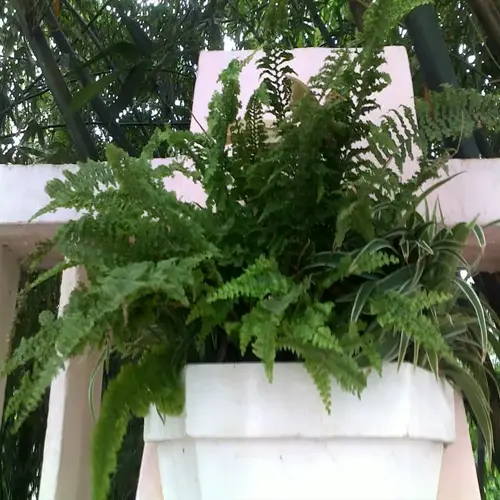

A happy asparagus fern needs three things from you: good humidity, bright light, and regular feeding. Aim for humidity above 50% and your plant will push out thick feathery fronds that fill its space with green.
I saw this play out when I moved a thin struggling fern from my dry living room to a bathroom with an east-facing window. The plant had been dropping needles for months despite my best misting efforts. Within six weeks the needle drop stopped and fresh green shoots started poking through the soil. That one move gave me an asparagus fern thriving like it never had before. The shower steam and morning sun did all the heavy lifting without extra gadgets or work from me.
Humidity matters so much because of how your fern is built. Those tiny green needles aren't true leaves. They're cladodes, which are modified stems that make food from light the same way leaves do. But cladodes lose moisture into the air faster than broad flat leaves on other plants. When your humidity sits below 50%, the plant sheds cladodes to save water. You'll see tiny green bits scattered around the pot as a first warning sign. A pebble tray, a humidifier, or a bathroom spot solves this for you.
You'll know your fern is happy when you spot a few key signs. Dense new growth shows up in spring as pale green shoots that uncurl from the center. Healthy fronds stay bright green from base to tip with no yellow edges. Your plant holds all its needles tight instead of dropping them. A mature fern that's doing well will even produce small white flowers in late summer. Red berries follow those flowers and add a nice splash of color to your display. I got my first flowers after about two years of consistent care and it felt like a real reward for all the effort.
Feeding your fern makes a bigger difference than you'd expect. Use a half-strength balanced liquid fertilizer once a month from April through September. I use a 10-10-10 formula at half the label rate and pour it onto moist soil. This protects your roots from fertilizer burn. Stop all feeding from October through March. Your plant rests during winter and extra fertilizer just builds up as salt in the soil.
Repotting once a year keeps your fern strong for the long run. Those tuberous roots fill a pot fast and start circling the bottom within 12 months. Move your fern to a pot one size up each spring using fresh potting mix that drains well. This gives your roots room to spread and swaps out tired soil for a fresh batch of nutrients. A lush asparagus fern depends on this yearly refresh because packed-down old soil traps water and starves your plant at the same time.
Put all of these habits together and your fern will grow into a full green showpiece that lasts for years. I've followed this routine with my bathroom fern for over three years now and it's the best-looking plant I own. The effort you put in early pays off every time you walk past those thick trailing fronds spilling over the edge of the pot. Give your fern what it needs and you'll have a happy asparagus fern that gets better with every passing year.
Read the full article: Asparagus Fern Care and Growing Guide