Introduction
Flowering bushes are multistem woody plants under 16 feet (4.9 m) tall that bloom. Picking one comes down to a single question. Does the plant's mature size fit the space you have? Virginia Cooperative Extension sorts flowering shrubs into three size classes. Small stays under 5 feet (1.5 m), medium runs 5 to under 9 feet (1.5 to 2.7 m), and large fills 9 to 15 feet (2.7 to 4.6 m). Measure your spot first, then shop inside the class that matches it.
A flowering bush earns its place by fitting the space and blooming on schedule. Most flowering shrubs bloom for about two weeks, and that is the number to plan around. Some run far longer. Bush cinquefoil and glossy abelia flower from June until frost, and panicle hydrangea holds from June into September. A lilac gives you two of those weeks in May, not a summer of color.
Run one test before you buy anything. Measure the height and width you can spare, then check the tag's mature size against that number. If the tag says 10 feet (3 m) and your bed is 4 feet (1.2 m) deep, the plant wins. Pruning will not fix that. Shear a big spring bloomer into a small spot year after year and you cut off next spring's flower buds along with the growth.
Bloom time is the second filter, and it shifts with where you live. One shrub can open in mid-April near the coast and two to three weeks later in the mountains of the same state. A hardiness zone tells you what survives winter, not what flowers on a given date. Good flowering shrub selection is those two checks in order, size and then timing. Get both right and the plant asks little of you once it settles in.
10 Flowering Bushes Worth The Space
The 10 flowering bushes in the table below split into two groups, and the label in the third column sets your pruning date. Old wood is the growth the plant made last season. New wood is the growth it makes this season. Spring bloomers set next year's buds soon after this year's flowers fade, so a tidy-up in fall or early spring cuts those buds off. Summer bloomers build their buds on fresh growth, so a late winter cut costs you nothing.
Bloom time is the column most people skim, and it is the one worth reading twice. Virginia Cooperative Extension clocks border forsythia and Koreanspice viburnum at about two weeks in midspring. Smooth hydrangea holds for about a month in late spring. Panicle hydrangea runs June to September, glossy abelia June to frost. Buttonbush flowers all summer, and its fruit feeds over 50 species of waterfowl and songbirds.
Try the table on a bush you already own. Say the lilac by your driveway opens in early May and is finished by the end of the month. A midspring bloom means old wood, so the pruning window is the few weeks right after the flowers fade. Cut it in March instead and you throw away buds the plant set last June. A panicle hydrangea still flowering in August is the opposite case, and its row sends you to late winter or early spring.
Controlling plant size is low on the list of reasons for pruning because pruning is not a substitute for proper plant selection.
That is the line to carry into the garden center. A bush you have to shear every year to keep it in its spot was the wrong bush for that spot, and no pruning schedule fixes the choice. The best flowering shrubs on this list are the ones whose mature size fits before you buy and whose bloom month hands you the pruning date. Get those two right and the rest is easy.
What Counts As A Shrub
What is a shrub? Virginia Cooperative Extension calls it a multistem woody plant under 16 feet (4.9 m) tall. That cutoff sorts the flowering bushes on a nursery bench into two piles, the ones that stay part of your garden and the ones that grow into trees. Many stems from the base, not one trunk. Woody, so the frame stays up all winter.
How much height does your spot have? Measure it before you shop, because the answer picks the class for you. Say you have 4 feet (1.2 m) of clear space under a window. Shop the small class, under 5 feet (1.5 m). Then check each tag for a mature height inside that 4 feet. A medium shrub at 5 to under 9 feet (1.5 to 2.7 m) grows up over the glass. Large shrubs run 9 to 15 feet (2.7 to 4.6 m) and belong at a corner or along a property line. The shrub size classes measure height and nothing else, so mature width is a separate number to hunt down on the label.
A shrub is a multistem woody plant that is less than 16 feet tall.
Bush vs shrub? The two words describe the same plant in everyday gardening and nobody at the garden center will correct you, though formal usage varies. The large shrub small tree line is partly a matter of interpretation, and pruning settles the rest. Leave the low stems alone and you have a bush. Cut them back to one or three trunks and the same plant now reads as a small tree.
The sources themselves disagree at the top of the range. Penn State lists common witch hazel (Hamamelis virginiana) at 15 to 30 feet (4.6 to 9.1 m). That is well past the 16 foot cap Virginia Tech uses, so one extension service calls a shrub what the other would size as a tree. Take each height from whoever published it and hold it against your own site. The number on the tag matters more than the word above it.
Match The Bush To The Site
The leaves on the Virginia sweetspire went pale yellow between the veins while the veins themselves stayed dark green. I planted it the fall before, in the south-facing front bed against the porch, with a Mount Airy fothergilla 3 feet (0.9 m) down the row doing the same thing by June. Virginia Cooperative Extension lists both of those shrubs as ones that turn chlorotic in alkaline soil, and I had never once tested that bed.
Work out what the spot actually gives you before you shop. Flowering shrubs for shade want a different list than full sun flowering shrubs do, and wet soil shrubs sit unhappy on a dry slope. A soil test answers the soil pH question before you spend anything, and pH is the one condition you cannot fix with a watering can. Every shrub below is tied to one documented condition instead of showing up under four headings at once.
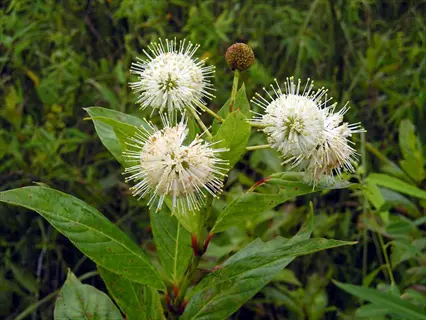
Buttonbush for wet, shaded corners
- Site: Penn State Extension lists buttonbush for light shade to shade and wet soil, which suits a downspout corner.
- Size: It is a multi-stemmed shrub reaching 6 to 12 feet (1.8 to 3.7 m), so give it room before planting it near a path.
- Bloom: The round white flower heads open throughout the summer rather than in a single short burst.
- Wildlife: Its red fruit is a documented food source for over 50 species of waterfowl and songbirds.
- Pollinators: It supports native bees, honey bees, butterflies, and titan sphinx and hydrangea sphinx moths.
- Pruning: As a summer bloomer on new wood, it is cut back in late winter or very early spring.
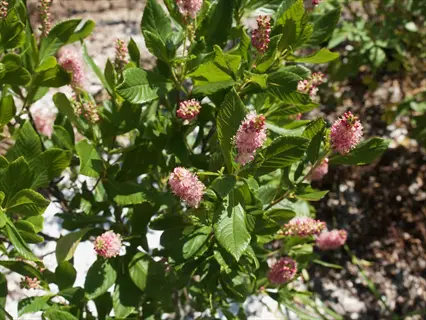
Summersweet for moist, acidic soil
- Site: Penn State Extension places summersweet in moist acidic soil, in full sun through to partial shade.
- Size: It reaches about 6 feet (1.8 m), and up to 12 feet (3.7 m) where growing conditions are optimal.
- Bloom: Flower spikes 3 to 6 inches (8 to 15 cm) long open in mid to late summer, later than most shrubs.
- Wildlife: The extension listing credits it with drawing bees, butterflies and hummingbirds together.
- Timing: Its late bloom fills the gap after spring shrubs have finished and before fall sets in.
- Pruning: Penn State groups it with the new-wood bloomers, so prune before new foliage develops.
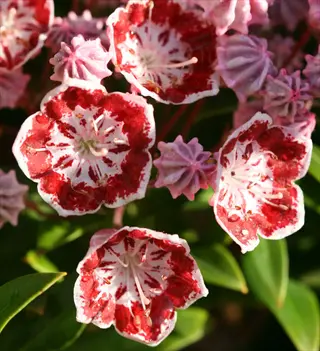
Mountain-laurel for acid soil and afternoon shade
- Site: Virginia Cooperative Extension calls for well-drained, loose acid soil plus part afternoon shade.
- Drainage: The requirement is loose and well drained, so heavy, poorly drained ground does not meet the documented conditions.
- Bloom: It is one of the species that extends its display with colorful flower buds before the flowers open.
- Placement: Part afternoon shade means the east side of a building or high shade from taller trees.
- Soil check: Confirm the soil is acidic and drains freely before buying; the source gives no numerical pH cutoff for this plant.
- Care: Match the site rather than amending a whole bed every year to keep the plant comfortable.
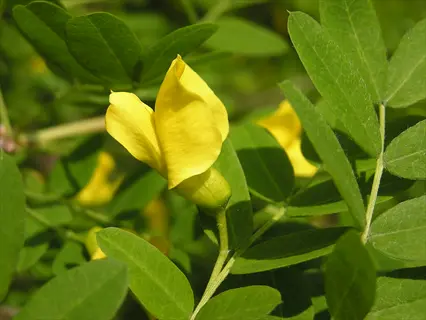
Siberian peashrub for harsh, exposed ground
- Site: Purdue Extension recommends it for poor soils, drought, alkaline soil, cold and wind together.
- Use: That combination fits the strip by a driveway or an exposed boundary where other shrubs sulk.
- Origin: It is a Central Asian species, not a North American native, so check local guidance before planting.
- Bloom: Purdue includes it among the ten spring-flowering shrubs, listed in order of flower appearance.
- Expectation: Treat it as a problem solver for a difficult spot rather than a centerpiece for a front bed.
- Care: Purdue lists it as drought tolerant, so follow local establishment guidance rather than a fixed watering routine.
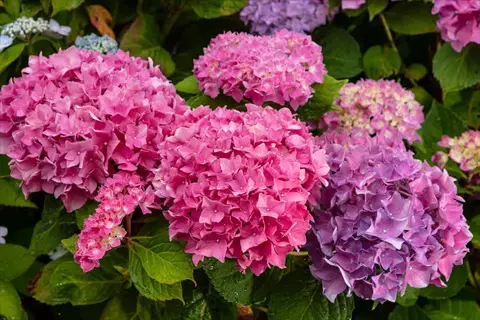
Bigleaf hydrangea where soil pH decides color
- Soil pH: Virginia Cooperative Extension reports pink flowers above pH 5.5 to 6.0 and blue below pH 4.5 to 5.0.
- In between: Intermediate soil pH gives purple flowers, which is why one plant can change color between yards.
- Buying: The color in the nursery pot reflects the grower's soil, not the soil the shrub is heading into.
- Test first: A soil test before purchase tells you which color you are actually going to get at home.
- Amending: Shifting the pH of a whole bed is an ongoing job, so treat the pH you already have as the constraint you plant to.
- Placement: Put it where the soil is already close to the color you want rather than where the color would look best.
One more condition belongs in those notes. Fragrant flowering shrubs only pay you back within a few feet of where you walk or sit, so scent gets planned alongside sun and drainage rather than after them. And the color of a hydrangea in the nursery pot tells you about the grower's soil, not yours. Buy for the spot you have and skip the shrub that needs conditions you would have to rebuild every year.
Purdue records Koreanspice viburnum and mock orange as fragrant, so site a fragrant shrub at an entry, along a walkway, or under a window you open, rather than at the back of a border.
How Long Blooms Really Last
How long do shrubs bloom? About two weeks, which is the general expectation Virginia Cooperative Extension gives for most flowering shrubs. Lilac fits that window. Smooth hydrangea is documented at about a month. Panicle hydrangea holds flowers from June into September, and bush cinquefoil keeps going until frost. Only a handful of species stretch that far, so the long blooming shrubs are worth knowing by name before you spend money at the nursery.
The Koreanspice viburnum by my front walk was finished in about two weeks. Midspring, the pink buds opened white and the scent caught you halfway up the path. Then it went back to being a plain green mound until leaf drop.
Late Winter
Witch hazel carries the earliest flowers; the Arnold Promise hybrid can flower from late winter into spring.
Midspring
Border forsythia and Koreanspice viburnum each hold flowers for about two weeks, and lilac follows for about two weeks more.
Late Spring
Smooth hydrangea is documented at about a month in late spring or early summer, running into the start of the summer group.
Summer
Panicle hydrangea flowers June to September while glossy abelia and bush cinquefoil run June until frost.
Fall To Winter
Common witch hazel blooms late fall to late winter, closing the year where the sequence began.
Bloom time is the thing to stagger. Put shrubs with different windows in one bed and the color runs well past the short display any single species manages on its own. That is what season long color takes in practice. Choose enough shrubs to cover the stretch you care about, each opening at a different point in the year. Reblooming shrubs get sold as the shortcut around all of that, and a panicle hydrangea does the same job with one long window and no gamble.
Virginia Tech recorded midspring bloom in mid-April on the coast at Norfolk and two to three weeks later in the Southwest Virginia mountains. Expect your own dates to shift within a single state.
Prune On The Right Wood
When to prune flowering shrubs? One question settles it for every shrub you own. Does the plant bloom on old wood or new wood? Spring bloomers set next year's buds soon after this year's flowers fade, so the wood carrying that display is a full year old by the time you see it. Your summer and fall bloomers build their flowering shoots from scratch each season, which is why you can cut them hard while they are bare and lose nothing.
I sheared the forsythia hedge along the drive flat one September, the hedge we planted that first spring after moving in. It had gone shaggy. The job took ten minutes and the next April gave me green leaves and maybe a dozen yellow flowers across the whole run. Every bud I wanted was sitting in the pile of clippings by the garage.
- Penn State lists azalea, forsythia, lilac, mock orange, ninebark, quince, rhododendron, Virginia sweetspire and viburnum here.
- They set next year's flower buds shortly after this year's flowers finish.
- Prune soon after flowering ends; routine pruning in summer, fall, winter or early spring removes the buds already set.
- Virginia Tech records the result of that mistiming as a poor or absent flower display that spring.
- Penn State lists butterfly bush, beautyberry, summersweet, buttonbush, smooth hydrangea, panicle hydrangea and chaste-tree here.
- They flower on growth the plant makes during the current season.
- Prune in late winter or very early spring, before new foliage develops.
- Cutting them while dormant costs no flowers, because the shoots that will carry them have not grown yet.
Where you make the cut matters as much as the month. Thinning cuts take a stem out at its point of origin, at the ground or at the branch it grew from, and that opens your shrub to sunlight and air circulation. Heading cuts only shorten stems from the top, so you end up with a dense outer shell and a bare middle. On suckering shrubs such as forsythia and lilac, pull the oldest, biggest stems out at ground level and thin the new suckers later in the summer.
A badly overgrown but healthy shrub can be cut back all at once, while an unhealthy one is better renewed over three years, removing one-third of the overgrown stems at ground level each year. Hard pruning is the exception to the timing rule above: Penn State says it should always be done in early spring before new foliage develops, so a spring bloomer cut that hard gives up that spring's flowers.
Rejuvenation pruning is the slow route for a lilac or forsythia that is struggling as well as overgrown. Take one-third of the overgrown stems at ground level each spring, three years running. If the plant is healthy and only too big, skip the slow version. Cut it back in early spring and let it rebuild in one season.
Showy Is Not Always Useful
Open a nursery catalog to two hydrangeas and both pictures sell the same promise. One flower head is a solid ball of sterile sepals, bred for size and color. The other mixes a few of those showy sepals with small open flowers, and only the open ones hold pollen and nectar. A bee that lands on the first plant finds little to work with and moves on. That single difference separates the flowering shrubs that attract bees from the ones that only photograph well.
Two entomologists at the University of Kentucky put numbers on it. Mach and Potter surveyed 72 flowering woody species at 373 urban and suburban sites. Their collections held 11,275 bees from 23 genera. It is the first count big enough to rank shrubs for pollinators by bee behavior instead of plant-tag copy, and double flowered cultivars came out badly.
Double flowers hide the reward
- Finding: Modified varieties of hydrangea, cherry and rose with double petals or showy sterile sepals attracted few bees.
- Reason: The floral rewards have either been bred out of the flower or obscured behind the extra petals.
- At the nursery: In these three groups, a flower head packed with petals or sterile sepals is the signal to check whether open flowers remain.
The hydrangea gap is measurable
- Top performer: Hydrangea paniculata averaged 31.4 bees per snapshot count, among the top five woody plants sampled.
- Zero counts: The Annabelle smooth hydrangea and Hydrangea macrophylla recorded zero bees observed in the same study.
- Choice: Both are hydrangeas, so the genus on the label tells you nothing about the value to bees.
Native and non-native both fed bees
- Result: There was no significant difference in bee counts (F=1.28, P=0.26) or genus diversity between native and non-native woody plants.
- Nuance: Some non-native species bloomed when native floral resources were scarce, extending the flowering season for bees.
- Scope: The sampling was in central Kentucky and southern Ohio, so treat it as a regional result.
Leaves feed the next generation
- Host counts: Ohio State reports shrub willow hosting roughly 300 caterpillar species and blueberry about 200.
- Mid-range: Shrub dogwood, rose and brambles each support about 100 butterfly and moth species.
- Cultivar caution: Colorful-leaf ninebark cultivars may be less palatable to caterpillars, citing Baisden and colleagues in 2018.
Native shrubs did not beat the imports on bee counts here. The study found no significant difference in bee visitation (F=1.28, P=0.26) or in bee genus diversity between native and non-native woody plants, and some non-natives bloomed in weeks when native flowers were scarce. Sampling ran in central Kentucky and southern Ohio, so treat it as a regional result. The strong case for natives sits in the leaf column instead, where shrub willow hosts about 300 caterpillar species.
Horticulturally-modified varieties of Hydrangea, Prunus, and Rosa with double petals or clusters of showy sterile sepals attracted few bees compared to related plants with more accessible floral rewards.
One more thing the plant tag leaves out. Penn State and Ohio State both list winterberry and spicebush as dioecious, so a lone female plant sets no berries and the birds get nothing from it. Buy a male to go with the females, or plant something else.
Common Myths
Flowering bushes give color all season, so one well-chosen shrub can carry a garden from spring to frost.
Most flowering shrubs bloom for about two weeks. Season-long color comes from sequencing several bushes with different bloom windows.
Native bushes always feed more bees than non-native ones, so a native-only planting is automatically the better pollinator choice.
A University of Kentucky study of 72 woody plants in Kentucky and Ohio found no overall difference in bee visits between native and non-native species.
If a bush gets too big, you can simply cut it back every year and hold it at any size you want.
Pruning is not a substitute for proper plant selection. Match mature size to the space instead of pruning a large shrub forever.
The showiest, fullest flower heads are the best ones for pollinators because they look like they hold the most nectar.
Double-petalled and sterile-sepal cultivars of hydrangea, cherry and rose attracted few bees, because the floral rewards are bred out or hidden.
Every flowering bush should be pruned in late winter, while it is dormant and the branches are easy to see.
That timing strips the flower buds spring bloomers set on old wood right after flowering, which leaves a poor display that spring.
Conclusion
Measure the bed before you shop. Write down the height and the width you can spare, then look at shrubs in that size class and skip the rest. Small ones stay under 5 feet (1.5 m), medium ones run 5 to under 9 feet (1.5 to 2.7 m), and large ones fill 9 to 15 feet (2.7 to 4.6 m). Choosing flowering shrubs in that order takes 10 minutes. It saves you years of cutting a plant back to a size it never wanted to be.
Hold that measurement against the mature size on the tag, and trust the tag over how small the plant looks in its pot. Then set your bloom expectations. Most flowering bushes flower for about two weeks, and a few, like panicle hydrangea or glossy abelia, keep going from June into fall. Two or three shrubs with bloom windows that follow each other beat one plant sold on a season-long promise.
Your pruning schedule falls straight out of that wood check. Prune spring bloomers right after the flowers fade, since they set next year's buds within weeks of blooming. Prune summer and fall bloomers in late winter or very early spring, before the new leaves push out. Miss the date on a lilac or a forsythia and you cut off the show you spent all year waiting for.
One caveat before you hand over money. If the open ground you have is a narrow foundation bed against the house, a large shrub is the wrong buy however good the flowers look in the photo. Put a small one there and save the big one for a corner of the yard. A flowering bush earns its place by fitting the space and blooming on schedule.
Glossary
- Chlorosis
- A yellowing of leaves that happens when a plant cannot take up enough iron, common in acid-loving shrubs planted in alkaline soil.
- Dioecious
- A plant that produces male and female flowers on separate individuals, so a female needs a male nearby to set fruit.
- Multistem woody plant
- A plant with hard, permanent branches that sends up several stems from the base rather than a single trunk.
- New wood
- Stems a shrub grows during the current season, which is where summer-flowering bushes produce their flowers.
- Old wood
- Stems a shrub grew in an earlier season, which is where spring-flowering bushes carry the buds they set right after blooming.
- Rejuvenation pruning
- Renewing an overgrown shrub by cutting the oldest, biggest stems down to ground level, either all at once or a third each year over three years.
- Sterile sepals
- The showy petal-like parts on flower heads such as mophead hydrangeas that carry no nectar or pollen for bees.
- Thinning cut
- A cut that removes a whole stem where it starts, opening the shrub to sunlight and air instead of just shortening the top.
External Sources
Frequently Asked Questions
What makes a plant a shrub instead of a tree?
A shrub is a multistem woody plant less than 16 feet (4.9 m) tall. Telling a large shrub from a small tree is partly a matter of interpretation and pruning.
What are some examples of spring flowering bushes?
Purdue Extension lists ten, in order of flower appearance:
- Witch-hazel
- Forsythia
- Quince
- Korean spice viburnum
- Flowering almond
- Shadblow serviceberry
- Lilac
- Black chokeberry
- Mock orange
- Siberian peashrub
What is the longest lasting flowering shrub?
Bush cinquefoil and glossy abelia are documented from June until frost, while most flowering shrubs bloom for about two weeks.
Which flowering bushes bloom all summer?
Panicle hydrangea blooms June to September, glossy abelia and bush cinquefoil June until frost, and buttonbush through the summer.
Are there any bushes that flower all year?
No shrub in these extension listings flowers year round. Witch hazel covers late fall to late winter, so gardeners sequence several shrubs instead.
What are the best flowering bushes for small gardens?
Match the mature height and width to the bed you actually have. Black chokeberry stays under 5 feet (1.5 m), and pruning cannot hold a larger shrub down forever.
Why did my flowering bush not bloom this year?
Usually it was pruned at the wrong time. Cutting a spring bloomer in summer, fall or winter removes the buds it set right after flowering.
Which flowering bushes are best for bees?
Shrubs whose flowers keep their rewards accessible. Panicle hydrangea averaged 31.4 bees per snapshot count in a University of Kentucky study.
Should I plant flowering bushes or perennials?
One good-sized shrub can offer more flowers than a single perennial, and some shrub species bloom earlier than perennials.
Do flowering bushes need full sun?
Many do, but not all. Buttonbush prefers light shade to shade, and mountain-laurel wants part afternoon shade.