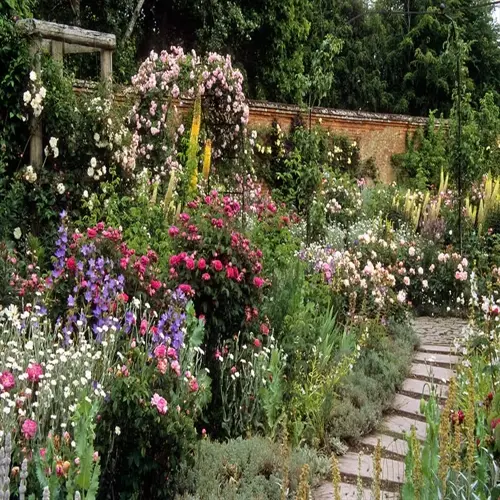
The best small flowering bushes are the ones whose mature height and width fit the bed you already have. Virginia Cooperative Extension frames the choice as a volume test. You pick a species or cultivar that suits the volume, height and width, of the available landscape space. Get that right and your plant never needs cutting back to fit. Get it wrong and you have bought yourself a yearly chore instead of a shrub.
Every March for eight years I have been under the front windows of this zone 6 garden with the loppers. Whoever planted that foundation bed chose large-maturing shrubs. My first spring here I just topped them below the sills. Now they reach for the 9 to 15 feet (2.7 to 4.6 m) a large shrub is built to hit, and by August they have closed back over the glass.
Your repair job belongs at the nursery. Penn State Extension ranks controlling plant size low on the list of reasons to prune, because pruning is not a substitute for proper plant selection. You can hold a big shrub down with the loppers for years and it will keep pushing back at you. The size is written into the plant, and it has nothing to do with your schedule. So the useful question in a small garden isn't which bush blooms hardest. It's which one quits growing at the height you have room for.
Height classes turn small flowering bushes into a short list you can shop from. Three of them cover the whole nursery bench, and the line between small and medium is the one that decides most front beds.
Black chokeberry shows you what the small class looks like in practice. Purdue Extension has it holding under 5 feet (1.5 m), blooming in May with white flowers in groups of 9 to 20, and growing in anything from part shade to full sun. It does spread and colonize, so give it room sideways or pull the suckers each year. That habit is your trade for a bush that stops at the height you measured for.
Dwarf flowering shrubs are worth your time too, though the word dwarf on a label only means smaller than the species. It is not a promise of a number. Read the mature height on the tag and hold it against what you measured, because a dwarf form of a large shrub can still land you in the medium class. Width earns the same check. A bush can sit inside the small class and still spread wider than your bed is deep.
Take a tape measure to the bed before you take a card to the nursery. Write down the width from the wall out to the front edge, and the height you can fill before you cover a window or block a walk. Then shop inside the class that matches those two numbers, and treat anything larger as the wrong plant rather than a pruning project. You'll pass over some handsome bushes that way, and that's the point of measuring.
Write down your bed width and the height you can fill, then shop only inside the matching class. Shrubs for small gardens should need no size pruning in a normal year.
Sheared hedges and screens are the one place this flips for you. There the annual shearing is the plan from the start, so a bigger shrub held at a set height is doing the job you bought it for. Everywhere else, reaching for the loppers to make a plant fit means the choice was wrong. The small flowering bushes worth your money are the ones that stop on their own.
Read the full article: 10 Flowering Bushes and How to Pick One