Houseplant · Araliaceae
Umbrella Tree
Heptapleurum arboricola
Bright indirect light and a little patience between waterings are all this Schefflera asks, and it forgives the small mistakes every new grower makes.
Bright indirect
USDA 10–12
3–8 ft · 0.9–2.4 m
Overview
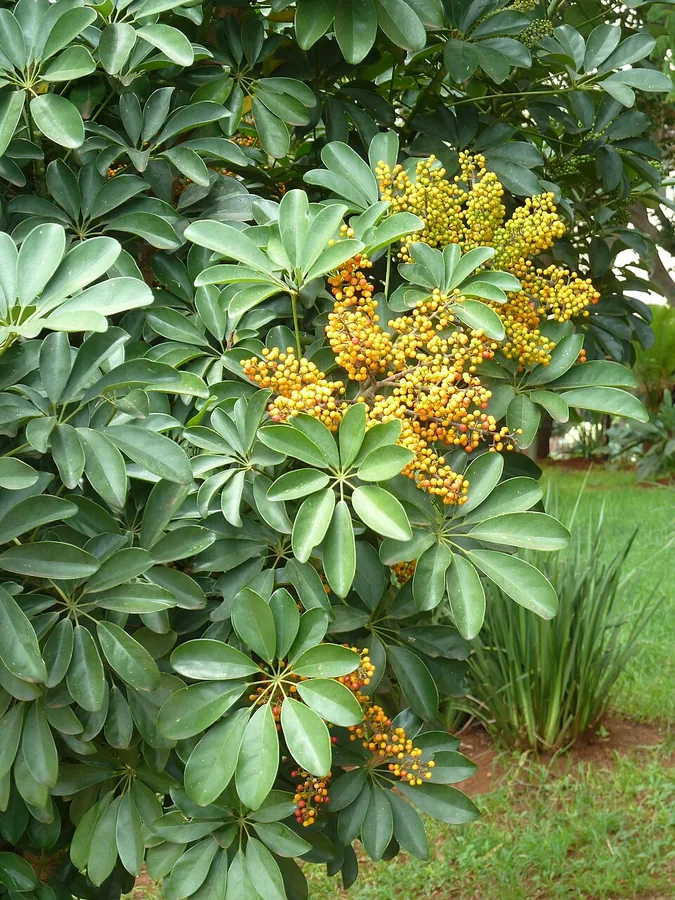
The umbrella tree gets its friendly name from the way its leaflets fan out from a single point, much like the ribs of an umbrella. It sits in the ivy family and hails from Taiwan and Hainan, where it grows into a small tree or shrub. Brought indoors, it settles to a comfortable size and keeps those glossy starry leaflets that make it such a welcoming plant to have around.
Here is the reassuring part: this is a genuinely easy plant to live with. It copes with a wide range of light, forgives a watering you forgot, and bounces back from a hard cutback, so you can keep it full and low or coax an older one into a small indoor tree. The single thing it truly resents is soggy roots, which is the quickest way to lose one, so err on the dry side and you will both be fine.
One gentle caution keeps it from being completely worry-free. Every part carries insoluble calcium oxalate crystals, which makes it toxic to cats and dogs and unsafe to eat for anyone. Set it somewhere pets and small children cannot reach a leaf, and this plant will keep you good company for years.
Care
The short version: bright indirect light, a drink only once the top half of the soil feels dry, and a warm spot above 60°F (15.6°C). Empty the saucer, trim it whenever you like, and it stays full and green with very little fuss.
Light
Aim for bright indirect light, the soft kind that comes through a curtain on an east, west, or south window for a few hours each day. A little shade is fine, though a dark corner leaves it stretched and weak, and harsh direct sun will scorch the leaves, so somewhere in between suits it best.
Water
Give it a good drink, then hold off until the top half of the soil has dried out before the next one. The one habit to avoid is letting water sit around the roots, so tip out the saucer each time. As fall slides into late winter it drinks much less, so slow right down.
Soil
A peaty, well-drained potting mix with plenty of organic matter is all it wants, in a pot with drainage holes so water can escape. It stays relaxed about pH, happy anywhere from 6.0 to 8.0, and gets along with clay, loam, or sandy blends.
Temperature
Keep it cozy and steady, comfortably above 60°F (15.6°C), and away from cold drafts, vents, and air conditioners. A sudden chill is one of the most common reasons leaves begin to drop, so a stable warm spot goes a long way.
Humidity
Everyday room humidity is plenty, so there is no target number to chase. When winter heating dries the air, a tray of wet pebbles or an occasional misting keeps the leaf tips from turning brown.
Feeding
Feed during the growing season, spring into summer, with a water-soluble or time-release houseplant fertilizer at the strength on the label. When the plant is resting in lower light and growing slowly, ease back and let it be.
Pruning
This plant handles hard pruning with grace, so do not be shy. Snip just above a leaf to keep its size in check and encourage fuller growth, and in time you can shape an older plant into a neat little tree. Wear gloves while you work, since the sap can irritate skin.
Repotting
When the roots fill the pot or growth slows, move it up to a slightly bigger container of general-purpose mix, at any time of year. There is no hurry, as an umbrella tree is quite content to sit a little snug in its pot.
Size & spacing
Indoors it usually reaches 3 to 8 feet (91 to 244 cm) tall and spreads 4 to 8 feet (122 to 244 cm) across. Leave it a little elbow room to fan out those leaves, and prune when you need to keep it within a tighter space.
Troubleshooting
Nearly every worry with an umbrella tree comes down to watering, light, or dry air, and the good news is the plant shows you early. Look closely at the leaves and stems, find the match below, and gently correct the cause before it spreads.
Wilting even though the soil is wet
If your plant droops while the soil still feels wet, the roots are suffocating and root rot has taken hold, usually from too much water or a pot that drains poorly. Slip it out, trim away any soft, brown, bad-smelling roots, and settle it into fresh, free-draining mix in a pot with proper holes. After that, let the top half of the soil dry and keep the saucer empty.
Fix:
- Allow the soil to dry appropriately between waterings
- Repot into fresh, well-drained potting mix and a pot with drainage holes
- Remove rotted roots and badly affected growth
Leaves falling off after a change in care
When an umbrella tree keeps losing leaves, the usual culprit is watering that lurches from soaked to parched, though a cold draft or a sudden move can set it off too. Ease into a steady rhythm, wait for the top half of the soil to dry before watering, and settle it in one warm, well-lit spot above 60°F (15.6°C). Give it a little time and most plants quietly leaf out again.
Fix:
- Adjust watering so the top half of the soil dries before rewatering
- Move the plant away from cold drafts, vents and air conditioners
- Keep temperatures above about 15.6°C (60°F)
- Give the plant a stable spot in bright indirect light and avoid frequent moves
Speckled leaves with fine webbing
Dusty, stippled leaves with delicate webbing underneath are the sign of spider mites, which move in fast when the air is hot and dry. Rinse the foliage and wipe each leaf with a damp sponge, then treat with insecticidal soap or horticultural oil. Nudging the humidity up makes the plant far less inviting to them.
Fix:
- Rinse foliage and wipe leaves with a damp sponge
- Treat with insecticidal soap or horticultural oil
- Raise humidity to discourage mites
Cottony fluff, small bumps, and sticky leaves
Little cottony tufts tucked into the leaf joints are mealybugs, while the small brown shell-like bumps along the stems are scale, and both often leave a sticky honeydew behind. Touch each insect with a cotton swab dipped in alcohol, then follow up with insecticidal soap or horticultural oil. Keep the plant apart from the others and repeat until no new bugs appear.
Fix:
- Dab insects with a cotton swab dipped in alcohol
- Treat with insecticidal soap or horticultural oil
- Repeat treatments and isolate the plant until cleared
Twisted, scarred new leaves
New leaves that come in curled or scarred usually mean aphids gathering on the tender tips or thrips scraping at the surface. Rinse the aphids away with a jet of water, treat with insecticidal soap or horticultural oil, and snip off any growth that is badly deformed. Spotting them early, before their numbers climb, is what turns it around.
Fix:
- Rinse off aphids with water
- Treat with insecticidal soap or horticultural oil
- Remove heavily infested growth
Stretched stems and pale, thin growth
Long, weak stems and yellowing leaves are simply the plant reaching toward more light. Shift it to a brighter window with sun softened by a curtain for a few hours a day, then trim the leggy stems just above a leaf, and it will thicken up fuller than it was.
Fix:
- Move to a brighter spot with bright indirect light (an east, west or south window with curtain-filtered sun for 3-4 hours daily)
- Prune leggy stems just above a leaf to encourage bushier regrowth
Brown leaf tips in dry rooms
Browning tips and the occasional lost leaf tend to mean the air has gone dry, something that shows up most in winter once the heaters kick in. Rest the pot on a tray of damp pebbles, keeping its base above the water, and mist the leaves or gather it with other plants to raise the moisture nearby.
Fix:
- Raise humidity by setting the container on a tray of wet pebbles (pot not sitting in water)
- Mist the foliage or group with other plants
Toxicity
This is the toxic Schefflera, not the safe umbrella pine, so it helps to know the difference. Every part holds insoluble calcium oxalate crystals that the ASPCA flags as toxic to cats and dogs, bringing a burning mouth, drooling, and vomiting if a pet chews it. No part is safe to eat, and the sap can bother skin, so keep it away from animals and children and slip on gloves before you prune.
Toxic to
Cats · Dogs · Horses · Rabbits · Livestock · Birds · People
Cats Moderate
The ASPCA marks this plant as toxic to cats. One bite of a leaf sets off a quick burning in the mouth, and then the cat drools heavily, paws at its face, gags up its food, and struggles to swallow.
Dogs Moderate
A dog reacts just as the ASPCA warns for cats. Gnawing on any part sets the mouth and tongue stinging, with drooling and vomiting close behind, because the same sharp oxalate crystals are doing the damage.
Horses Caution
A horse rarely runs into this one in pasture, yet the calcium oxalate crystals would sting a grazing muzzle and could start it drooling. Keep it safely out of reach and there is nothing to worry about.
Rabbits Caution
Keep it away from a nibbling rabbit. Those same irritant crystals can scald the mouth and unsettle the stomach, so this is not something to hand over or leave where a rabbit can reach.
Livestock Caution
Goats, sheep, and cattle would all feel the mouth burning and belly upset these oxalate crystals bring on. Farm animals seldom cross paths with it, but it is best kept off the menu.
Birds Caution
A nosy pet bird that tastes a leaf can end up with a sore, burning mouth from the crystals. Keep companion birds clear of the foliage.
People Caution
No part of this plant belongs on a plate. Chewing it leaves the mouth and throat sore, and the sap can make sensitive skin itch, so pull on gloves before pruning and keep the leaves away from little ones.
The sap can irritate sensitive skin; wear gloves when pruning or handling
Helpline numbers

United States
ASPCA Animal Poison Control: (888) 426-4435 (fee applies)
Poison Control: (800) 222-1222



Canada
Poison Centres: 1-844-764-7669
Varieties
Almost every umbrella tree sold for the home is the dwarf kind, and a handful of named cultivars are worth knowing, mostly for their variegation or their tidy, compact habit.
'Gold Capella'
This is a gold-variegated dwarf umbrella tree, its leaves brushed and rimmed with cheerful yellow.
'Trinette'
A well-loved variegated form of the dwarf umbrella tree, marbled in creamy yellow and green.
'Variegata'
Another variegated pick, showing those familiar starry leaves streaked in pale and deep green.
'Compacta'
A compact, slow-growing dwarf umbrella tree that keeps shorter and fuller, perfect when space is tight.
How to propagate
Making more umbrella trees is easier than you might expect, and there are a few gentle routes to choose from depending on the plant you already have.
Stem cuttingsEasy
Spring to summer · Several weeks to root
This is the friendliest route to a whole new plant. Snip a tip or stem cutting in spring or summer, settle it into a moist potting mix, and give it several weeks to grow roots. Keep it warm and shaded from direct sun while it finds its feet.
Air layeringModerate
Spring to summer · Several weeks
A handy option when a tall, leggy plant needs bringing down to size. During spring or summer, nick the stem, wrap the spot to trap moisture, and after several weeks roots appear where you can then sever the young plant just below them.
SeedModerate
When fresh seed is available · Slow
Doable, though this is the patient path. Plant fresh seed whenever you can find it and settle in for a wait, because sprouting and those first weeks of growth move slowly next to a rooted cutting.
Myths
People often assume the umbrella tree is safe for cats and dogs to nibble.
In fact the ASPCA flags it as toxic to both animals. The leaves and stems carry sharp insoluble calcium oxalate crystals, so a curious pet that bites in drools heavily, vomits, and feels a burning mouth. Keep this plant well out of reach of cats and dogs.
Any umbrella tree acts the same way planted outdoors in a warm climate.
It is easy to lump them together, but two very different plants share this name. The big umbrella tree, Schefflera actinophylla, is a non-native invader that Florida places on its Invasive Species Council list at Category I, whereas the dwarf kind you grow indoors is only naturalized and holds no invasive listing at all.