Ornamental · Asteraceae
Strawflower
Xerochrysum bracteatum
Give it a sunny spot with dry roots, and even a first-timer gets papery blooms that carry on long after the garden fades.
Full sun
75–90 days
USDA 8–10
1–5 ft · 0.3–1.5 m
Overview
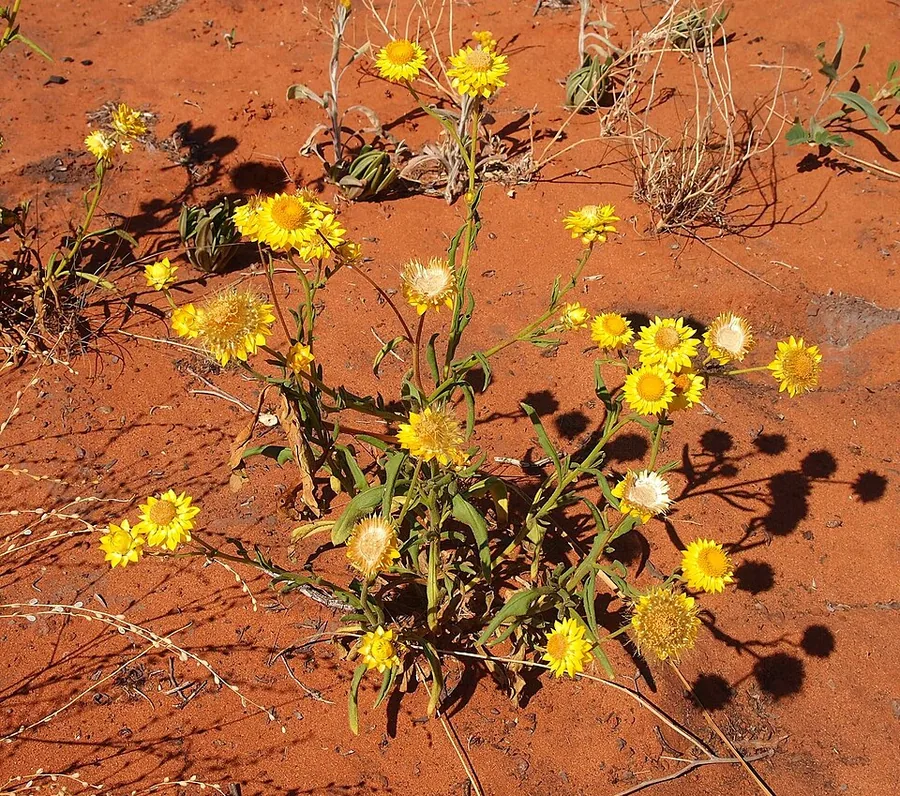
Do not let the long Latin name put you off, because the strawflower is one of the kindest flowers a beginner can pick. Also called the golden everlasting, it wears what look like petals but are really stiff little bracts, papery to the touch and faintly crackly, and they keep that color for months on end. It comes from Australia, sits comfortably in the daisy family, and settles into almost any sunny bed as a warm-season annual.
The good news is how little it asks of you. Find it full sun, plant it where water drains away, and it takes heat and dry stretches in stride once its roots take hold. Blooms arrive in a warm range of golds, bronzes, pinks, and whites, and the bees and butterflies will find them all season long.
Many gardeners grow it just for cutting, and that part is genuinely fun. Snip the stems while the bracts are still half-closed, hang the bunches upside down to dry, and you are left with lasting blooms that keep their shape and color for winter arrangements, long after the plant outdoors has finished.
Care
The short version: give it full sun and free-draining soil kept on the dry side. Water only once the surface has dried, snip off faded flowers to keep more coming, and support the tall kinds before they lean.
Light
Aim to give your strawflowers full sun, which means six or more hours a day whenever you can manage it. A little afternoon shade is fine, but if the light runs low the stems tend to stretch and lean and you will see far fewer of those papery blooms.
Water
Let the top half of the soil dry out before you reach for the watering can. Once settled in, these plants shrug off drought, so the thing to watch for is overwatering, which can bring on root rot. Ground that runs average to dry suits them much better than constant damp.
Soil
Give them well-drained loam of ordinary fertility and they will be content. They cope with a broad pH span, anywhere from 5.5 to 8.0, and take dry, lean ground in stride where pickier plants would sulk. Good drainage matters far more than rich soil.
Humidity
Everyday outdoor air is all they need, so there is no target level to fuss over. What really helps is steady air movement, since stagnant, muggy air around crowded plants is exactly what lets mildew get started.
Feeding
This is a gentle feeder that thrives in plain soil, so you can go easy. A balanced general-purpose fertilizer once a month across the growing season is all it wants, and there is no reason to push it any harder.
Pruning
Snip off spent blooms as they fade and the plant will keep flowering for you. A soft pinch on young plants builds a fuller, sturdier frame, and the taller kinds may lean on a stake to stay upright.
Size & spacing
Depending on the type, plants stretch from a neat 12 inches to a towering 1 to 5 feet (30 to 152 cm), spreading 6 to 18 inches (15 to 45 cm) across. Leave each one enough breathing space so air can drift freely between them.
When to plant
Strawflowers love warmth and cannot handle frost, so timing is your friend here. Sow the seeds indoors in early spring, wait to move the plants out until the chill is truly gone and the soil has warmed, and you will be cutting flowers from early summer right up to the first frost.
Northern hemisphere
Southern hemisphere
Typical months for a temperate climate: start earlier in warm zones, later where spring frosts linger.
- Sow: 6 to 8 weeks before the last spring frost; do not cover seed, as light aids germination
- Plant: After the last frost when soil has warmed
- Harvest: Blooms summer to fall (about June until frost); harvest for drying when bracts are partly open
Hardiness
USDA hardiness zones: 8–10
Temperature: down to -12°C
Troubleshooting
Given the right spot, strawflowers stay easygoing and healthy, and nearly every hiccup comes down to a bit too much water or not enough air. Catch the early hints on the leaves, stems, and roots, and a small worry stays small.
Drooping, yellowing leaves with a soft, rotten base
If your strawflower is flopping while the ground stays soggy, the trouble is root rot brought on by wet soil. The roots go dark and mushy and simply cannot drink anymore. There is a clear path back: hold off on watering, let the ground dry out, and then sort out the drainage or shift the plant to a spot where it never sits in water.
Fix:
- Stop overwatering and let soil dry
- Improve drainage or move to a better-drained site
A pale, dusty or fuzzy film spreading over the leaves
That coating is powdery or downy mildew, a fungus that takes hold when leaves stay wet and the air goes still around plants packed too close. Do not panic, because it is easy to turn around. Pick off the worst leaves, give the plants more elbow room so a breeze can pass through, and water down at the soil rather than over the top. A sunny, open spot keeps it from returning.
Fix:
- Improve spacing and air flow
- Water at the soil line and avoid wetting foliage
- Remove and discard affected leaves
Long stems leaning and tipping to one side
The bigger cultivars carry a lot of weight up top, so a gust or a shower can push those top-heavy stems right over. The fix is gentle and early: slip a stake in while the plant is still young and short. Pinching seedlings back helps too, since it coaxes a stockier, fuller shape that stands on its own.
Fix:
- Stake or provide support for tall plants
- Pinch young plants to promote sturdier branching
Toxicity
Here is a comforting note for anyone with pets or little ones: the strawflower is non-toxic from root to bloom. The ASPCA marks it safe for cats, dogs, and horses, and rabbits, livestock, birds, and people are just as clear. A stray nibble will not poison a soul.
Safe for
People · Cats · Dogs · Horses · Rabbits · Livestock · Birds
Cats None
You can relax if a cat gets curious. The ASPCA files the strawflower as non-toxic, so a little taste will not lead to poisoning.
Dogs None
Dogs have nothing to fear here. Chewing a leaf or a bloom carries no poison, though wolfing down a big pile of any plant might unsettle a tender tummy.
Horses None
Horses are safe too. With the strawflower marked non-toxic, browsing near a patch of it holds no threat.
Rabbits Safe
Rabbits may nibble away with no worry, since not one part of the plant is poisonous to them.
Livestock Safe
Cattle, goats, and sheep can graze alongside it in peace, because it carries nothing that would harm grazing animals.
Birds Safe
Birds are welcome to it, whether they pick at the drying seed heads or simply flit through the bed.
People Safe
People are safe as well. The papery flowers are a joy to dry, and little hands can help with the plant without any risk.
Varieties
Strawflowers span everything from knee-high dwarfs to three-foot standouts, so there is a fit for any bed or pot. These named ones are worth hunting down.
Bright Bikini
A compact little strain that stops around 15 inches tall and comes in a cheerful color mix, so it settles into pots with ease.
Dargan Hill Monarch
Its soft grey leaves set off big, warm golden-yellow flowers.
Kimberly Sunset
A second grey-leaved choice, this one opening in a gentle shade of pink.
Kingsize Mixed
Chosen for its extra-large blooms on plants that climb to roughly 3 feet.
How to propagate
You can begin with a packet of seed or copy a favorite plant from cuttings, and the choice simply comes down to whether you want a happy mix or an exact match.
SeedEasy
Start indoors 6 to 8 weeks before last frost; surface-sow as light aids germination · Germinates in roughly 1 to 3 weeks; blooms within the first season
Seed is the usual and forgiving way in, sown indoors 6 to 8 weeks before your last frost. Rest each seed on top of the mix and leave it bare, because it needs light to wake up, and sprouts tend to appear within 1 to 3 weeks. Once the cold has gone you can set the little plants outside, and they will flower the very same season.
Stem cuttingsEasy
During active growth in the growing season · Several weeks to root
When you want to hang on to a named cultivar exactly as it is, cuttings are your friend. Snip them while the plant is growing strong, give them several weeks to settle in and root, and each one grows up as a true copy of the parent instead of the surprises seed would bring.
Myths
Strawflowers are true everlasting flowers that never fade or die.
The name promises more than the plant can give. Once dried, the papery bracts keep their color and form for a long stretch, and that is where the everlasting nickname comes from, but the living plant is short-lived and grown as an annual. Think of it this way: the flowers linger, the plant itself does not.
You can save seed from a favorite cultivar and get identical plants.
Sadly, named cultivars do not come true from seed. Collect and sow that seed and you get a mixed bag of youngsters rather than matches for the parent. When you love a certain form, root a few stem cuttings instead, and you will keep exactly what you had.