Houseplant · Araceae
Pothos
Epipremnum aureum
Easygoing, quick to grow, and content in a shady corner, pothos may be the hardest houseplant to kill.
Bright indirect
Every 7–14 days
70–90°F · 21–32°C
USDA 10–12
Overview
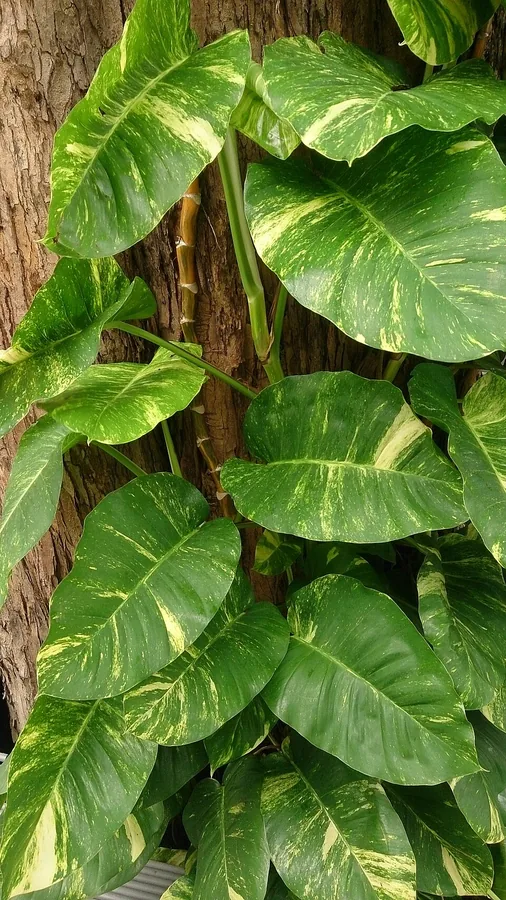
A member of the arum family, pothos hails from the South Pacific islands, where it climbs tree trunks as a sturdy-stemmed vine. Brought indoors it softens and tumbles instead, which is just why so many people let it cascade off a shelf or send it up a pole. Between the heart-shaped leaves and its laid-back temperament, it has become one of the best-loved houseplants anywhere.
Its real charm is how forgiving it is, and that is wonderful news if you are just starting out. It rolls with low light, doesn't mind the odd skipped watering, and carries right on when pickier plants would pout. Let it trail from a hanging pot and the vines pour down, or pinch the stems and watch it round out into a fuller, bushier shape.
There are two things worth keeping in mind, and both are easy to manage. Every bit of the plant is toxic to cats and dogs, so a spot above curious noses keeps everyone happy. It can also turn invasive in warm regions once it slips out of a pot, which is why most growers simply enjoy it as an indoor companion.
Care
The short version: give it bright indirect light when you can, though it happily makes do with much less, and only reach for the watering can once the top half of the soil feels dry. Set it in a well-drained potting mix, keep it cozy and clear of cold drafts, and trim the vines whenever they start to straggle.
Light
Pothos is happiest in bright indirect light, and yet it has won so many hearts because it gets by in medium light, partial shade, and even a dim corner. The plain green sorts hold up best in the darkest spots. The one thing to spare it is harsh direct sun, which can scorch the leaves.
Water
Wait for the top half of the soil to dry before reaching for the can, which tends to land somewhere around every 7 to 14 days. Since wet feet are the quickest way to lose a pothos, lean toward waiting whenever you're unsure. Pour off anything that gathers in the saucer below.
Soil
All it asks for is a well-drained peaty potting mix, and any everyday houseplant blend will do the job. Drainage is what truly matters, because roots left in soggy soil rot quickly. Choose a pot with holes underneath and your plant handles the rest.
Temperature
Aim to keep it between 70°F to 90°F (21°C to 32°C), a range most warm homes hit without any fuss. Frost is out of the question for it, and chill leaves it sulking. Steer it away from cold drafts and any rooms left unheated through winter.
Humidity
Ordinary household air suits it just fine, so there's no figure you need to chase. It does fill out a bit more in moister air, part of why it settles in so happily in a bathroom or kitchen. Very dry winter air, on the other hand, can crisp the leaf tips and tempt spider mites in.
Feeding
Offer a meal once a month across the spring-to-fall growing season using a diluted balanced houseplant fertilizer. Half of what the label suggests is more than enough. As winter arrives and growth winds down to almost nothing, let the feeding rest too.
Pruning
Pinch or snip the stems back any time the vines stretch too far or thin out near the base. A cut made just above a leaf node coaxes out new side shoots and keeps the whole plant looking full. Better still, every trimming you take is a free cutting waiting to be rooted.
Repotting
Shift it into a pot just one size up every 1 to 2 years, or whenever it clearly outgrows its current one. Roots winding around the rootball, slipping out the drainage holes, or soil that dries within a day all tell you the moment has come. Stepping up only a single size keeps the new soil from staying too wet.
Size & spacing
Indoors the vines stretch to 3 to 10 feet (90 cm to 3 m) in length, reaching out around 3 to 6 feet (90 to 180 cm) across. Leave a hanging plant plenty of clearance for the vines to spill, or guide them along a wall or up a moss pole.
Troubleshooting
When pothos struggles, the story almost always begins at the roots and surfaces in the leaves, and overwatering causes more of it than every other reason put together. Spot those early hints and you'll usually set things right long before a plant is in real trouble. Find what matches your plant below, then step in while it still does the most good.
Mushy, dark roots with a foul smell
Of all the pothos troubles, root rot is the one that moves quickly, but you can still turn it around if you catch it. It takes hold from overwatering when the mix won't let go of moisture. Gently lift the plant from its pot, snip off any roots that feel soft and look blackened, then settle it into fresh, well-drained soil and hold off on watering for a while.
Fix:
- Unpot and trim rotten roots
- Repot in fresh well-drained mix
- Withhold water until recovery
Yellow leaves creeping up from the base of the plant
Take heart: when pothos leaves go yellow, the cause is usually overwatering and not a plant that needs more to drink. When the mix stays wet, the roots can't breathe and the oldest leaves near the base fade first. Wait until the top of the soil feels dry before you water again, and make sure the pot can drain so nothing collects below.
Fix:
- Reduce watering frequency
- Check pot drainage
- Let soil surface dry before watering
White cottony fluff in the leaf joints
If you spot soft white tufts wedged where the leaves meet the stems, those are mealybugs, a sap-feeding pest that loves indoor pothos. Don't worry, they clear up nicely: dab each cluster with a cotton swab soaked in alcohol, then give the plant a treatment of insecticidal soap. Set it apart from your other plants until every last one is gone.
Fix:
- Dab with alcohol-soaked swab
- Apply insecticidal soap
- Isolate plant
Small brown bumps stuck along the stems
Firm brown bumps that cling to stems and foliage are scale insects, and they resist a quick wipe because a waxy armor shields them. Lift them off with your fingernail or a worn toothbrush, then coat the plant in horticultural oil. A single pass seldom gets them all, so plan to treat once more after a week or two.
Fix:
- Scrape off scale
- Apply horticultural oil
- Repeat treatment
Fine webbing and a speckled, dusty look
Wispy threads over the foliage and a faded, freckled surface are the work of spider mites, which take off in warm, dry air. Give the leaves a good rinse to send most of them packing, then lift the moisture in the air nearby. A round of insecticidal soap or a miticide takes care of any stragglers.
Fix:
- Rinse foliage
- Raise humidity
- Apply insecticidal soap or miticide
Gray fuzz or dark blotches appearing on the foliage
Dark patches or a soft gray fuzz across the foliage signal a fungus, set off by wet leaves and still air. Pluck the troubled leaves so it has nowhere to travel. Open up a little space around the plant for fresh airflow, and aim your water at the soil so the leaves stay dry.
Fix:
- Remove affected leaves
- Improve air circulation
- Avoid wetting foliage
Crispy brown edges and tips spoiling the foliage
Crispy edges most often come back to how you water, and a little too much will darken the rims faster than dryness ever does. A cold draft or very dry indoor air can play a part too. Steady your watering rhythm, set the plant somewhere away from frosty glass and warm vents, and give the air around it a touch more moisture.
Fix:
- Correct watering
- Keep away from drafts and cold
- Raise ambient humidity
New leaves coming in solid green
If the latest leaves arrive without their creamy gold streaks, your plant is simply asking for a brighter home. With too little light, a variegated pothos shifts back toward plain green so each leaf can soak up every bit it can. Find it a sunnier spot that still stays clear of direct rays, and the fresh growth comes back patterned.
Fix:
- Move to brighter indirect light
Toxicity
Pothos is a kind, undemanding companion, though it is one to admire rather than nibble. Every part of it holds fine, needle-like crystals of calcium oxalate that sting the mouth and throat. Keep the vines and any cuttings out of reach of pets and small children, and you're all set.
Toxic to
Cats · Dogs · Horses · Rabbits · Livestock · Birds · People
Cats Moderate
Should a cat nibble a leaf, those tiny sharp crystals fill its mouth right away. Watch for drooling, pawing at the face, vomiting, and difficulty swallowing.
Dogs Moderate
A dog responds much like a cat, with a stinging mouth, plenty of drool, and vomiting once it has had a chew. The good news is that most learn to leave it be after a single nibble.
Horses Moderate
Those same crystals leave a horse's mouth and throat sore, prompting drool and trouble swallowing. In a barn or stable, keep any trailing vines safely out of reach.
Rabbits Toxic
A rabbit's mouth and gut feel the burn of the crystals every bit as harshly. Set pots and dangling vines well beyond where any rabbit can reach.
Livestock Moderate
Cattle, goats, and sheep all suffer the same sore mouth and throat from the sap and foliage. Keep the plant nowhere near animals that graze.
Birds Toxic
A bird's mouth and crop sting from the sap. Keep pots and trailing vines clear of pet birds and poultry alike.
People Caution
Nobody eats this plant, and the sap irritates bare skin and the mouth. Rinse your hands once you finish pruning, and keep leaves and cuttings away from little ones.
Sap may irritate skin; wash hands after pruning
Helpline numbers

United States
ASPCA Animal Poison Control: (888) 426-4435 (fee applies)
Poison Control: (800) 222-1222



Canada
Poison Centres: 1-844-764-7669
Varieties
Nearly every pothos you'll find for sale is one of a small group of named forms, told apart by the color and pattern of their leaves. Here are the ones it helps to recognize.
Golden Pothos
This is the familiar one, with heart-shaped green foliage brushed through with golden yellow.
Marble Queen
So much white and cream washes through its leaves that it puts on growth more slowly than its cousins.
Neon
Here the markings give way entirely to glowing, single-toned leaves of bright chartreuse green.
Jade
Simple and steady, Jade shows rich green leaves with barely a hint of marbling.
Pearls and Jade
Born as a sport of Marble Queen, it carries green leaves rimmed in white and soft silvery gray.
How to propagate
Few plants are as rewarding to multiply as pothos, and just one thriving vine can hand you several fresh plants at no cost.
Stem cuttingsEasy
Year-round, spring to summer best · Roots in 3-4 weeks
This is the beginner-friendly route, open to you in any season, with spring and summer rooting quickest of all. Cut a stretch of vine just under a node, then settle it in a jar of water or a pot of damp vermiculite. Roots show up in about 3 to 4 weeks, and a whole new plant takes off from there.
Air layeringModerate
During active growth · Several weeks
Air-layering rewards a little patience and shines on a long, established vine you'd rather not shorten. Do the work while the plant is in its active growing season so the stem can root while still joined to the parent. Allow several weeks for roots to form before you part the new plant from the old.
Myths
A single pothos will keep your home's air fresh and pure.
Those famous experiments relied on sealed chambers, a far cry from a lived-in room. A peer-reviewed review showed that a potted plant barely touches the air in an ordinary home, where doors, windows, and the heating shift air on a whole different scale. You'd need hundreds of plants per square yard to match a single cracked window.
Pothos grows fine with no light at all.
It deserves its hardy name for soldiering on in shadowy spots, yet some light is still part of staying alive. Push it into deep shade and growth slows to a crawl while the variegation drains away. A spot with bright indirect light keeps it full and patterned.
Variegated pothos can live happily in the light a plain green one takes.
Those pale cream patches hold no chlorophyll, which means a variegated plant has to reach further to feed itself. Park it in the same dim nook a solid green one would shrug off, and its new leaves arrive plain. Bright indirect light is what holds the variegation.
Pothos is a pet-friendly plant that cats and dogs can chew safely.
Throughout the plant sit sharp calcium oxalate crystals that bite the instant a pet chews. That is exactly why the ASPCA names pothos toxic to cats and dogs both. Hang it well out of reach if animals share the room.
You can plant pothos in any outdoor garden without worry.
Where winters stay mild, the vines scale trees and crowd out native growth as soon as they slip past a garden's edge. For that reason UF/IFAS marks pothos a Category II invasive in Florida and urges homeowners to keep it out of the landscape. Keep it in a pot where the cold or the walls hold it in check.
Sources
- ASPCA Animal Poison Control
- NC State Extension Plant Toolbox
- Missouri Botanical Garden Plant Finder
- University of Wisconsin-Madison Division of Extension
- UF/IFAS Extension Charlotte County
- UF/IFAS Assessment of Non-native Plants
- Drexel University (Cummings & Waring, J. Exposure Science & Environmental Epidemiology)
- Royal Botanic Gardens Kew, Plants of the World Online