Houseplant · Asparagaceae
Ponytail Palm
Beaucarnea recurvata
A spot of bright light and a patient wait between waterings is nearly all this gentle plant ever wants.
Full sun
50–86°F · 10–30°C
USDA 10–11
6–8 ft · 1.8–2.4 m
Overview
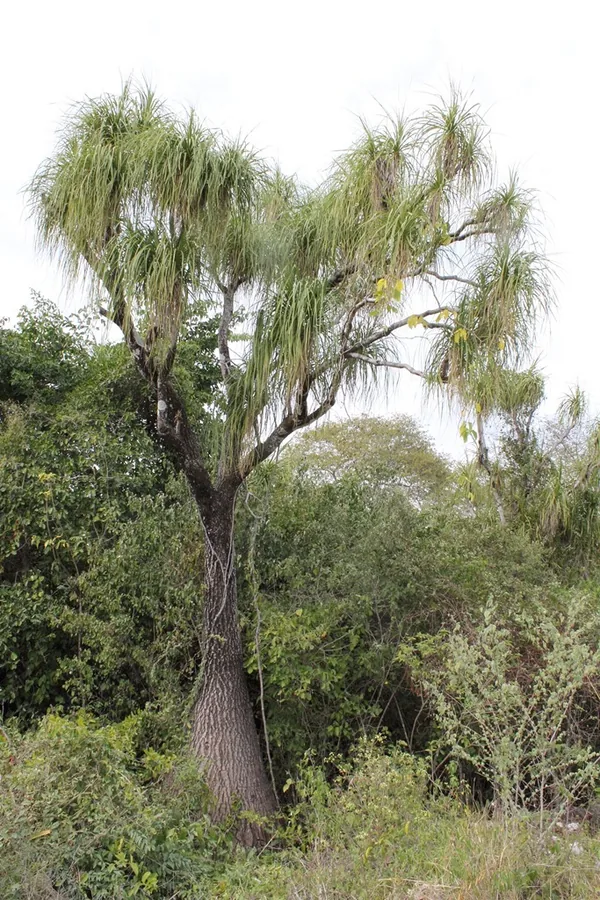
If keeping plants alive has ever made you nervous, the ponytail palm is a lovely place to begin. It looks exotic, yet it ranks among the gentlest houseplants you can grow, and it isn't truly a palm. Really it is a slow-growing succulent that hails from the dry stretches of eastern Mexico, carrying a plump, flask-shaped base that hoards water beneath a soft fountain of long, curling leaves. That swollen base has a name, the caudex, and it lends the plant its cozy nicknames, elephant foot and bottle palm.
The secret to its easy reputation is simple: this plant actually prefers to be left alone. Its chubby caudex keeps a private water store, so a forgotten watering troubles it far less than a soggy one ever would. Indoors it holds a comfortable size for years, growing slowly and seldom asking for a larger pot. Set it by a sunny window, let it dry between drinks, and you can look forward to keeping it for decades.
There is really just one mistake to guard against, and that is overwatering. When the roots sit in wet soil for too long, the base can go soft and rot, which is what brings down most ponytail palms that struggle. Treat it as the desert native it is, keep the soil on the dry side, and that worry mostly melts away. Even better, a soft base caught early can often be saved, so a slip here is rarely the end.
Care
The short version: give it all the bright light you can, pot it in a gritty fast-draining mix, and water deeply only after the mix has dried right through, easing back a lot through winter.
Light
This plant loves the sun, so offer it as much bright light as your home allows, with a full-sun window being ideal. It will happily manage in bright indirect light too, though the sunnier its spot, the fuller and healthier that spray of leaves becomes.
Water
Watering is where this plant most needs your gentle restraint. Soak it well, then wait until the mix has dried out completely before you water again, because that swollen base is already holding a reserve of its own. It would much rather be a touch too dry than too wet, and through winter it wants only the smallest sips.
Soil
Reach for a gritty, fast-draining mix meant for cactus or succulents, or lighten a sandy blend with extra grit of your own. The idea is simple and kind to the plant: water should slip straight through so that plump base is never left sitting in damp soil.
Temperature
Ordinary room warmth keeps it perfectly content, anywhere from 50°F to 86°F (10°C to 30°C). Just keep it clear of cold drafts and chilly windowsills in winter, since it has no defense against frost.
Humidity
Dry indoor air is no trouble at all here, which is one more reason this plant is so easy to live with. There is no humidity target to hit and no misting to remember.
Feeding
Feed sparingly, and only in spring and summer when the plant is truly growing. A diluted, balanced or cactus feed offered once or twice across the season is all it wants, and heavier feeding just leaves the leaf tips brown and crisp.
Pruning
There is next to nothing to do here, which is part of the charm. Simply trim away any dried or browned tips and lift off the odd dead lower leaf to keep it looking neat, then let the plant be.
Repotting
This is a plant that genuinely likes to be snug in its pot, and it can rest happily for years before needing a change. Keep it in a fairly small container with sharp drainage, and only size up once the roots and swollen base have plainly filled the space they have.
Size & spacing
Given time indoors it climbs to around 6 to 8 feet (183 to 244 cm) tall, opening to 3 to 5 feet (91 to 152 cm) wide at the crown. Because it grows so slowly, it stays a comfortable roommate for years before it ever feels large.
Troubleshooting
Happily, a content ponytail palm gives you very little to fix, and when something does go wrong, watering is nearly always behind it. Keep a friendly eye on two things: how firm the base feels and whether the leaf tips are browning. Notice a softening caudex soon enough and there is a good chance you can nurse the plant back.
When the firm base turns soft and spongy
A base that has gone soft and mushy is the sign of root and stem rot, and it nearly always comes from too much water. Take heart and act gently: stop watering, let the mix dry right out, then trim away any soft, rotted parts and settle the plant into fresh, dry, gritty soil. Give it a warm, bright spot and only the lightest watering while it finds its feet again.
Fix:
- Stop watering and allow the soil to dry out completely
- Cut away soft, rotted tissue and repot into dry, gritty fast-draining mix
- Move to a warm spot with bright light and water only sparingly once recovered
Crispy brown tips edging healthy green leaves
Those dry brown tips usually trace back to uneven watering, heavy feeding, or salts collecting in the pot. Settle into a steady rhythm of deep but occasional watering, go easier with the fertilizer, and now and then flush the soil through to rinse the salts away. The crisped tips won't green up again, so just trim them for a tidy look and don't take it to heart.
Fix:
- Adjust to deep but infrequent watering, letting soil dry between waterings
- Flush the soil periodically to leach out accumulated salts
- Reduce fertilizer frequency and strength
- Trim browned tips for appearance
Toxicity
You can relax completely on this one. The ponytail palm is safe for the whole household, listed by the ASPCA as non-toxic to cats, dogs, and horses, and it holds no compounds that would harm other pets or people. Place it wherever you like, and a curious sniff or nibble is nothing to fret over.
Safe for
People · Cats · Dogs · Horses · Rabbits · Livestock · Birds
Cats None
Cats are perfectly safe around it, since the ASPCA rates the ponytail palm non-toxic to them, and a playful nibble on those strappy leaves will do no harm.
Dogs None
Dogs are welcome near it too. The ASPCA marks this plant non-toxic to dogs, though a big mouthful of stringy leaves might still leave any pet with a briefly unsettled stomach.
Horses None
Horses can nose and graze around it in safety, as the ASPCA includes it on the non-toxic list for them as well.
Rabbits None
Rabbits have nothing to fear from it either, since the plant carries no toxin that troubles them. The tough, fibrous leaves aren't a natural rabbit snack, but a chewed one brings no risk of poisoning.
Livestock None
Grazing animals such as goats, sheep, and cattle are safe near the ponytail palm, which holds none of the compounds that make certain other ornamentals a danger to them.
Birds None
A pet bird can peck at the foliage without worry, because the plant contains nothing that would harm it.
People None
It sits easily in a home with children, carrying no toxic parts to cause concern. The plant isn't grown to be eaten, so there is nothing tempting to taste, and a stray touch or bite does no harm.
Varieties
The choice here is refreshingly simple. Just one species shows up as a houseplant, and it is the only one you really need to know.
Beaucarnea recurvata
This is the familiar houseplant form, easy to know by its lone swollen, flask-shaped base crowned with a fountain of strappy, curling leaves, and it stands as one of roughly seven species in its genus.
How to propagate
Growing new plants leans on patience far more than any special talent, and there are two friendly paths to try: coaxing roots from the little pups at the base, or raising one from seed.
Offsets & pupsModerate
Spring · Several months to a year or more to root and grow on
Come spring, gently ease away the little offsets, often called pups, that cluster around the base and pot each one up to root on its own. This asks for patience, since they can take several months to a year or more to settle in, and it helps to know that these basal pups don't always take root.
SeedModerate
Spring · Germinates readily at about 18-21°C (64-70°F); seedlings grow slowly over years
You can also start seed in spring, keeping it cozy at about 64°F to 70°F (18°C to 21°C), and it will sprout on its own with no fussy pre-treatment. The only real test is patience, because the seedlings inch along and take years to grow into a plant you would recognize.
Myths
The ponytail palm is a genuine palm tree.
The name is a little misleading, because it is no palm whatsoever. Beaucarnea recurvata is really a caudex-forming succulent in the family Asparagaceae, sitting far closer to Dracaena and Agave, and it only takes on that palm-like look when seen from across a room.