Ornamental · Violaceae
Pansy
Viola × wittrockiana
Set them out when the weather cools and pansies reward you with color through fall, winter, and spring.
Full sun
Every 2–4 days
19–64°F · -7–18°C
USDA 6–10
Overview
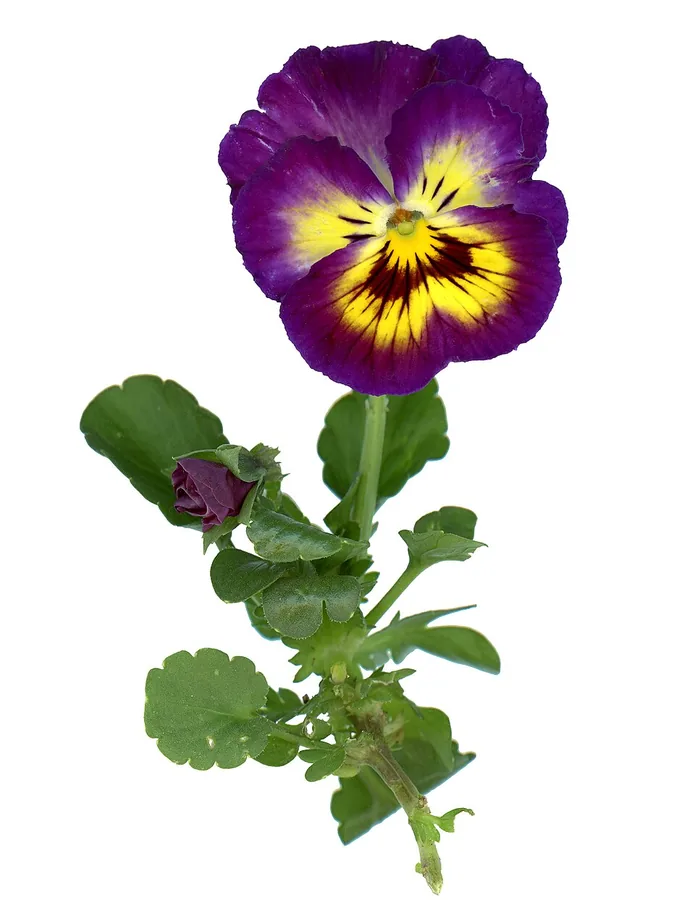
Pansies are the cheerful, welcoming faces of the cool-season garden, and their broad blooms come in nearly every color with dark blotches that read like little expressions. They belong to the violet family and grew up as a garden hybrid raised from wild violas. While most flowers hold out for warmth, pansies come into their own when the air turns cool and crisp, which makes them a kind place to start.
You will find them low and mounding, only 4 to 9 inches (10 to 23 cm) tall, so they settle in beautifully at the front of a bed, in a window box, or in a pot beside the door. The flowers may be solid, blotched, or whiskered, and their colors sweep from gentle pastels all the way to deep, near-black purples, giving you plenty of room to play.
By nature these are short-lived plants, grown as cool-season annuals that shine in fall, winter, and spring. Heat is simply not their friend, so they stretch and fade once summer arrives, and that is nothing you did wrong. Enjoy them fully while it stays cool, then swap them out with an easy conscience when the weather warms.
Care
The short version: plant them in cool weather in rich, well-drained soil, offer full sun to part shade, keep the soil evenly moist, and deadhead often, and the flowers will keep coming.
Light
Pansies are happiest in full sun through the cool months, and they also settle in fine with partial sun or partial shade. Once spring warms up, a spot with a little afternoon shade helps them hold their flowers longer, so don't worry if your only place is a touch shady.
Water
Aim to keep the soil evenly moist but well-drained, letting the top inch dry a little between waterings. Water at the base rather than over the top, since wet leaves invite downy mildew and crown rot, and that small habit spares you a lot of trouble. In cool weather that usually works out to a drink every 2 to 4 days.
Soil
Give them humus-rich, well-drained loam with plenty of organic matter mixed in. A slightly acidic pH of 5.5 to 6.5 suits them nicely, and good drainage is the one thing above all others that keeps the roots healthy and happy.
Temperature
This is a cool-weather flower at heart, thriving from about 19°F to 64°F (-7°C to 18°C). Settled plants take real cold and even a dusting of light snow in stride, though blooming slows and stems stretch once the days climb past the mid-60s.
Humidity
Ordinary outdoor humidity, somewhere around 40% to 70%, is just right for pansies, so this is one less thing to fuss over. What matters more is airflow, because still, damp air around crowded plants is what gives leaf diseases their opening.
Feeding
Offer a balanced water-soluble fertilizer about once a month through the cool-season stretch in fall and spring. Light, steady feeding keeps the flowers coming without forcing the soft new growth that aphids find so tempting.
Pruning
Deadhead spent flowers often to keep fresh buds forming and stop the plant from putting energy into seed. Pinch back any leggy stems as well, which keeps the plant tidy and stretches out the bloom season for you.
Repotting
Move container pansies into a larger pot once they clearly outgrow the old one. Keep an eye out for roots circling the inside or poking through the drainage holes, or soil that dries out almost as soon as you water, and you'll know it's time.
Size & spacing
Pansies stay reassuringly small, just 4 to 9 inches (10 to 23 cm) tall with a spread of 9 to 12 inches (23 to 30 cm). That neat size lets you tuck them along edges, into pots, or among taller plants for a bit of early color wherever you like.
When to plant
Pansies run on cool weather rather than warmth, so timing is on your side. Set plants out in fall to bloom right through the cool months and overwinter in mild zones, or plant in very early spring for a burst of color before summer heat calls it a day.
Northern hemisphere
Southern hemisphere
Typical months for a temperate climate: start earlier in warm zones, later where spring frosts linger.
- Plant: Fall (overwinters in mild zones) or very early spring
- Harvest: Fall, winter, and spring in cool weather; declines and gets leggy in summer heat
Hardiness
USDA hardiness zones: 6–10
Temperature: down to -23°C
Troubleshooting
Nearly all pansy trouble traces back to two simple things: small pests during cool, damp weather, and rot or stretching when it turns wet or warm. Spot them early and a gentle fix usually puts the planting right again, so there is no need to panic. Just match what you see below and step in before it spreads.
Wilting even in damp soil, with soft dark roots below
A pansy that droops while the soil is still wet, then flops over right at the soil line, is dealing with crown and root rot from soggy ground and the fungi that follow. This is the hard one to hear, because an affected plant can't be saved and should be pulled and discarded. The good news is that the rest of the bed can thrive once you fix the drainage, water a bit less, and let the surface dry between drinks so the roots can breathe.
Fix:
- Remove and discard affected plants
- Improve soil drainage before replanting
- Reduce watering and avoid waterlogging
Yellow spots on top with soft gray fuzz beneath the leaf
When yellow blotches show on top and a gray-purple fuzz coats the undersides, you are looking at downy mildew, which thrives in cool, humid, wet stretches. Don't fret, but do act: lift out the affected leaves and plants and bin them, then open up the spacing so air can move freely. Watering at the base early in the day makes a real difference, because it is the wet foliage that lets the spores get going.
Fix:
- Remove and discard infected leaves and plants
- Improve air circulation by spacing and thinning
- Avoid overhead watering and water early in the day
Tender new shoots covered in little green or black specks
Take heart, because those tiny clustered bugs are just aphids, and they turn up most in the cool of spring to sip on the softest new shoots. A firm spray of water knocks most of them loose, and a follow-up of insecticidal soap or horticultural oil handles the stragglers. If a shoot is truly overrun, snip it away, and ease up on nitrogen, since the lush growth it pushes is exactly what draws them in.
Fix:
- Spray plants with a strong jet of water to dislodge aphids
- Apply insecticidal soap or horticultural oil to affected growth
- Remove heavily infested shoots
Chewed holes in the leaves with shiny trails left behind
Ragged bites in the leaves and flowers, trimmed with glossy trails, are the sign of slugs and snails feeding in the cool damp shade after dark. This one is easy to turn around: step out with a flashlight in the evening and pick them off, then lay down a little iron phosphate bait along their paths. Clearing the mulch, boards, and debris where they shelter helps too, and watering in the morning lets the ground dry out before nightfall.
Fix:
- Hand-pick slugs and snails in the evening
- Set out iron phosphate slug bait
- Remove mulch, boards, and debris that shelter them
Stems stretching thin and blooms thinning out come late spring
Pansies love the cool, so as the days warm past 64°F (18°C) they naturally stretch out and slow their flowering. Rest easy, because this is simply summer heat stress and not any disease taking hold. Pinching back the long stems and deadheading can tease out one more flush, and a little afternoon shade with steady moisture carries them through warm spells until it makes sense to swap in fresh plants, just as you would with any cool-season annual.
Fix:
- Pinch back leggy stems and deadhead to encourage rebloom
- Provide afternoon shade and consistent moisture in warm spells
- Replace plants as a cool-season annual when summer heat sets in
Toxicity
Pansies are about as gentle and safe as a flowering plant gets, so you can breathe easy. The ASPCA lists them as non-toxic to cats, dogs, and horses, and the flowers are even edible for people. A curious pet or a grazing animal has nothing to fear from a bed of pansies.
Safe for
People · Cats · Dogs · Horses · Rabbits · Livestock · Birds
Cats None
You can relax around cats, because pansies are safe and a nibbled bloom is nothing to lose sleep over. Like any plant, if a cat really overdoes it on foliage there may be a passing spell of mild tummy upset, and it settles down on its own.
Dogs None
Your dog is welcome to chew pansy leaves and flowers without any harm at all. The only small thing to expect is the soft stool that follows a big mouthful of greens in any dog, and it clears up on its own before long.
Horses Safe
Horses grazing near a bed or border of pansies have nothing to worry about. There is no toxin in the plant, so a curious grazer needs no special watching around it.
Rabbits Safe
Rabbits can happily eat both the leaves and the flowers, and plenty of keepers hand over the blooms as a welcome treat. Just keep the portions modest, as you would with any fresh green, and their digestion stays comfortable.
Livestock Safe
Cattle, goats, and sheep are perfectly fine around pansies in a pasture or planting. The whole plant carries nothing harmful, so there is no cause for concern.
Birds Safe
Birds are safe around pansies, and backyard hens tend to peck the petals with real enthusiasm. Nothing in the plant can do them any harm.
People Safe
You can truly eat pansy flowers, and they show up brightening salads or candied atop cakes. Just give them a good wash first, or grow your own without pesticides, since plants from the garden center may carry a little spray residue.
No special handling needed; flowers are edible, though garden plants may carry pesticide residue and should be washed or grown pesticide-free before eating.
Varieties
Pansies come in dozens of named series, but a handful show up again and again at the garden center. These are the friendly ones worth learning by name.
Majestic Giants
If you want the showiest flowers, this is the series, with blooms around 3 to 4 inches across marked by bold dark blotches, and it holds up beautifully through both cold and heat.
Matrix
Matrix is the reliable one, staying compact and even while facing its flowers upward and blooming early without any awkward stretching.
Delta
Delta rewards you with vigorous, early blooms in clear or blotched faces, and it takes both cold and heat in stride.
Cool Wave
Cool Wave is the trailing kind that spills and cascades, so it is the easy pick when you want to fill a hanging basket or cover ground.
How to propagate
Pansies are nearly always raised from seed, and while the seed does ask for a little patience and steady warmth to get going, it is well within reach.
SeedModerate
Sow indoors in mid to late summer for fall planting, or in late winter for early spring planting
Most folks raise pansies from seed or simply pick up transplants rather than fuss with cuttings, and either path works well. Start the seed indoors in mid to late summer for fall planting, or sow in late winter to set young plants out in early spring. The seed does ask for a patient, steady hand, so there is no shame in letting a grower handle that stage and grabbing ready flats instead.
Myths
Pansies and violas are the same plant.
They are close relatives rather than one and the same. Pansies give you larger flowers in smaller numbers, while violas and Johnny-jump-ups produce many more but tinier blooms. The violas also handle heat a touch better, which is worth remembering.
Pansy flowers are only for show and are not safe to eat.
Good news for the kitchen, the flowers are truly edible. Toss them fresh into a salad or candy them for a cake, with the single caveat that they must be grown without pesticides before they land on your plate.
Pansies are summer annuals that thrive in heat.
It works the other way around. Pansies are cool-season plants that put on their best show in fall, winter, and spring, then stretch and fade once the summer heat rolls in.