Herb · Lamiaceae
Oregano
Origanum vulgare
Give it sun, lean soil, and a dry root run, and forgiving oregano nearly grows itself.
Full sun
Every 7–10 days
80–90 days
USDA 5–10
Overview
Oregano is a hardy perennial herb from the mint family, and it comes from the warm, rocky hillsides of the Mediterranean. That sunny, stony beginning is your friend as a grower, because it tells you exactly what the plant wants: heat, bright light, and soil that drains freely. If anything, treating it a little rough only makes the flavor stronger, so there is real room to relax.
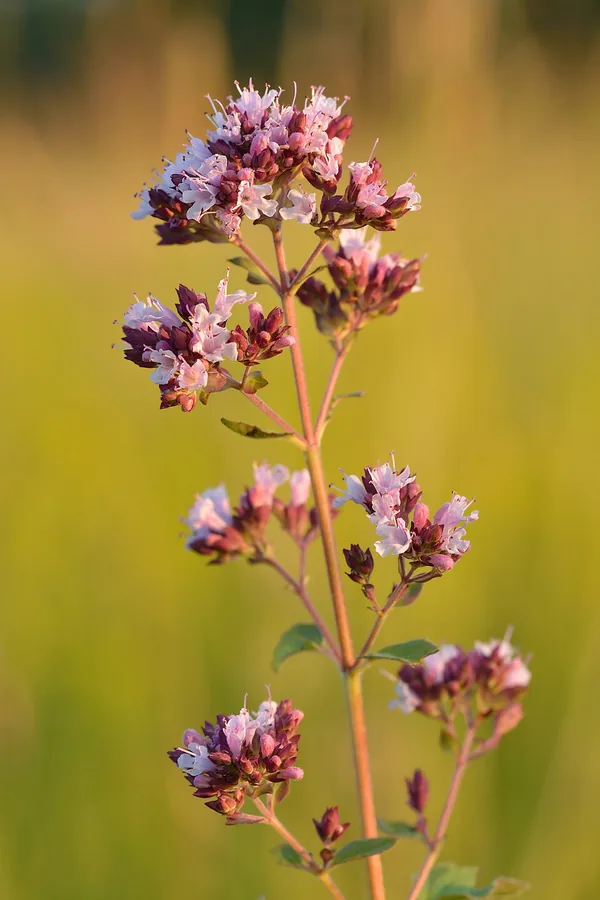
This is a plant that gives back on two fronts. Its leaves hold the warm, peppery note behind so much Italian and Greek cooking, and if you let it bloom, the small white or pink flowers welcome in bees and other pollinators. Leave it be and it fills out into a low, bushy mat that keeps going year after year, which is a lovely thing to watch settle in.
Best of all, oregano asks very little of you, so early mistakes are easy to recover from. It shrugs off dry spells once it has found its feet, needs no rich feeding, and is rarely bothered by pests. The only two things it truly minds are soggy roots and deep shade, so pick a bright spot where water drains away and you are already most of the way there.
Care
The short version: full sun, lean and sharply drained soil, and a deep drink only once the top half has dried out. Feed it lightly if at all, pinch it often to keep it bushy, and this easygoing herb will reward you for years.
Light
Oregano loves full sun, ideally 6 or more hours a day, and that steady light is what draws out the oils that give the leaves their lovely bite. It will put up with a little partial shade if it must, but the plant grows looser and the flavor comes out weaker, so brighter really is better.
Water
Once it has settled in, oregano is happily drought tolerant and far prefers dry feet to wet ones. Water it deeply, then simply wait until the top half of the soil has dried before you water again, which usually works out to every 7 to 10 days. Soggy ground is the quickest way to rot the roots, so when in doubt, hold off.
Soil
Give it well-drained sandy or loamy soil and feel free to skip the rich amendments, since lean ground actually sharpens the flavor for you. A pH anywhere from 6.0 to 7.5 will keep it perfectly content. The one thing that really matters is that water drains away quickly.
Temperature
Oregano copes with a wide range, from about 30°F to 84°F (-1°C to 29°C), and once established the roots come back after winter within its hardiness zones. A hard frost may knock the top growth down, but do not worry, the plant returns in spring.
Humidity
It is happiest in low humidity, around 30% to 50%, which fits its dry Mediterranean beginnings. Damp, stagnant air can invite mildew and pests, so just give it some elbow room and keep a little air moving around it.
Feeding
This is a light feeder that genuinely does better on poor soil, so there is no need to fuss. One gentle dose of balanced fertilizer such as 5-10-5 in spring is plenty, and too much nitrogen only grows soft leaves with less of the flavor you are after.
Pruning
Pinch and harvest often, snipping stems just above a leaf node to keep the plant bushy rather than leggy. Cut back any woody, bare stems whenever you notice them, and trim off flower buds before they open if you want the leaves at their most flavorful.
Repotting
Potted oregano only needs a bigger home every 2 to 3 years, and it will let you know when: roots begin circling or peeking out the drainage holes, the leaves shrink, or the soil dries almost the moment you water it. Just refresh it with a gritty, free-draining mix.
Size & spacing
A grown plant stands about 12 to 24 inches (30 to 60 cm) tall and spreads to roughly the same width, so it stays a comfortable, manageable size. Give each one 12 to 24 inches (30 to 60 cm) of room so air moves freely and the foliage stays dry and healthy.
When to plant
Oregano is a tough little perennial, hardy right down through zones 5 through 10, though the young plants do appreciate some warmth to get started. Sow seeds indoors 6 to 8 weeks before your last frost, move plants out once the cold has truly passed, and pick leaves through the summer, harvesting just before the flowers open when the flavor is at its best.
Northern hemisphere
Southern hemisphere
Typical months for a temperate climate: start earlier in warm zones, later where spring frosts linger.
- Sow: 6-8 weeks before last spring frost
- Plant: spring after danger of frost has passed
- Harvest: Small white to pink flowers in summer; harvest leaves before flowering for best flavor.
Hardiness
USDA hardiness zones: 5–10
Temperature: down to -29°C
Troubleshooting
Oregano stays healthy with very little fuss, and nearly all of its troubles come back to a bit too much water or a bit too little light. Spot the early signs on the leaves, stems, or roots and the fix is usually quick and forgiving. Match what you are seeing below and step in before it spreads, and you will be fine.
A drooping plant with dark, soft roots
If your plant is wilting even though the soil feels damp, the roots are almost certainly suffering from root rot, which comes from too much water or soil that holds it too long. Don't panic, because a plant caught early can often be saved. Gently lift it and look for firm white roots rather than dark, soft ones, trim away anything that has gone bad, settle it into gritty, fast-draining soil, and simply water much less going forward.
Fix:
- Remove affected plant material
- Replant in well-drained soil or amend with grit
- Reduce watering frequency
Long, bare stems that have gone a bit woody
When stems stretch out leggy and woody at the base with only a few leaves up top, the plant has usually gone too long between trims, often in a spot that is a touch too shady, and heavy feeding only adds to it. This is an easy one to turn around. Cut those stems back to just above a leaf node to coax out fresh bushy growth, shift the plant into full sun, and go lighter on the fertilizer.
Fix:
- Cut back stems above a leaf node to encourage bushy regrowth
- Move to a full-sun location
- Reduce fertilizer
Speckled leaves and a hint of fine webbing
Take heart, this is a common one and it responds well to a quick response. A dusty, speckled look with faint webbing usually means spider mites have moved in during warm, dry weather or on an indoor plant, while soft clusters on new shoots point to aphids instead. Rinse the leaves with a firm spray of water, follow up with insecticidal soap, and keep the air gently moving so they have no reason to return.
Fix:
- Rinse foliage with a strong spray of water
- Apply insecticidal soap to affected leaves
- Increase air circulation and reduce dustiness
Milder leaves once the flower buds show up
As oregano moves toward blooming it sends its energy into those little flowers, and the leaves quietly lose their flavor. The good news is the remedy could not be simpler: pinch the buds off before they open. For the boldest seasoning, gather your leaves right as the plant is getting ready to flower, and you will be glad you did.
Fix:
- Pinch off flower buds before they open
- Harvest leaves just before flowering
Toxicity
For you and your family, oregano is a safe kitchen herb you can cook with as freely as you like. For pets the picture changes: the ASPCA lists it as toxic to cats and dogs, because the essential oils irritate the gut and can cause mild vomiting or diarrhea if an animal eats a lot. The concentrated oregano oil is the bigger hazard, so simply keep that out of reach of all your animals and you can enjoy the plant with peace of mind.
Toxic to
Cats · Dogs · Horses · Rabbits · Livestock · Birds
Safe for
People
Cats Mild
A quick nibble of leaf is rarely anything to worry about, though a cat that keeps grazing may drool, be sick, or have loose stools for a while. The one thing to stay ahead of is the concentrated essential oil, so tuck that safely away.
Dogs Mild
A dog that eats a real helping of the plant can end up with an upset tummy, a little vomiting, and diarrhea. A stray pinch from your plate does no harm at all, but the bottled oil is a different matter, so keep it out of reach.
Horses Caution
The same aromatic oils that bother cats and dogs could unsettle a horse's stomach too, so it is kindest to keep it off the menu. A small mouthful grabbed while grazing is very unlikely to cause any trouble.
Rabbits Caution
A rabbit's digestion is delicate, and a strong herb like oregano can throw it off balance. Offer only the tiniest amount, if any, and simply keep an eye out for soft stools or a dip in appetite.
Livestock Caution
Grazing animals usually walk right past the pungent leaves on their own, and a stray mouthful is nothing to fret over. Eating a large amount could bring on some mild stomach upset, so it is worth a glance now and then.
Birds Caution
Pet birds are tiny and feel the effect of concentrated plant oils quickly, so keep any oregano oil well away from them. A little fresh leaf now and then is generally fine in gentle moderation.
People Safe
For your own table, oregano is a friendly kitchen staple you can enjoy fresh or dried in any cooking amount without a second thought. Only the concentrated essential oil asks for care, since it is strong and meant to be diluted first.
Normal culinary amounts of fresh or dried leaf are generally not a concern; concentrated oregano essential oil is the bigger hazard to pets.
Helpline numbers

United States
ASPCA Animal Poison Control: (888) 426-4435 (fee applies)

United Kingdom
Animal PoisonLine: 01202 509000 (fee applies)

Australia
Animal Poisons Helpline: 1300 869 738
Varieties
Most of what you will find labeled oregano falls into one of two groups, and what really sets them apart is the flavor. These are the two worth knowing before you plant.
Greek oregano (Origanum vulgare subsp. hirtum)
If you want that bold, unmistakable oregano flavor most cooks love, this white-flowered, pungent type is the one to reach for.
Common oregano / wild marjoram (Origanum vulgare subsp. vulgare)
Its cheerful pink flowers make it a lovely, bee-friendly plant to have around, even if the milder leaves can taste a little flat when you bring them into the kitchen.
How to propagate
Oregano is a joy to multiply, and the method you choose really does shape the flavor. Splitting or rooting a plant you already like hands you an exact copy, while starting from seed is a little more of a gamble, so pick whichever suits your patience.
DivisionEasy
Early spring or fall · 2 to 4 weeks
Division is the most dependable way to keep a plant you love, because it hands down the parent's flavor just as it is. In early spring or fall, ease an established clump out of the ground, gently pull it into rooted sections, and tuck each piece back in. Give them a little time and the new divisions settle in within 2 to 4 weeks.
Stem cuttingsEasy
Late spring to summer · 2 to 4 weeks
Anytime from late spring through summer, snip a few soft, non-flowering shoots from a plant whose flavor you already trust. Pop them into a moist, well-drained mix and, with a bit of patience, they will root in 2 to 4 weeks. Just like division, this gives you a faithful copy of the parent.
SeedModerate
Start indoors 6-8 weeks before last frost · 2 to 3 weeks to germinate
You are welcome to start oregano from seed indoors 6 to 8 weeks before the last frost, and the little seeds usually sprout in about 2 to 3 weeks. The one thing to know is that seed-grown plants vary and can turn out bland, so when steady flavor matters most, division or cuttings are the gentler bet.
Myths
Oregano is safe for pets because it is a common kitchen herb.
It is easy to assume that what is safe on your plate is safe for your animals, but that is not the case here. The ASPCA lists oregano as toxic to cats and dogs, since its essential oils irritate the gut and can bring on mild vomiting and diarrhea when a pet eats a good amount. The concentrated oil is the part to really watch, so keep that bottle safely out of reach.
Any oregano grown from seed will taste like the strong oregano used in cooking.
It would be nice if every seed gave you that punchy kitchen oregano, but common oregano from seed often comes up mild and uneven. For flavor you can count on, divide a plant you already love or take cuttings from it, and you will get exactly the taste you were hoping for.