Ornamental · Asteraceae
New England Aster
Symphyotrichum novae-angliae
Give it full sun and one summer pinch, and the forgiving New England aster will reward you with fall color long after the rest of the garden has quieted.
Full sun
USDA 4–8
3–7 ft · 0.9–2.1 m
Overview
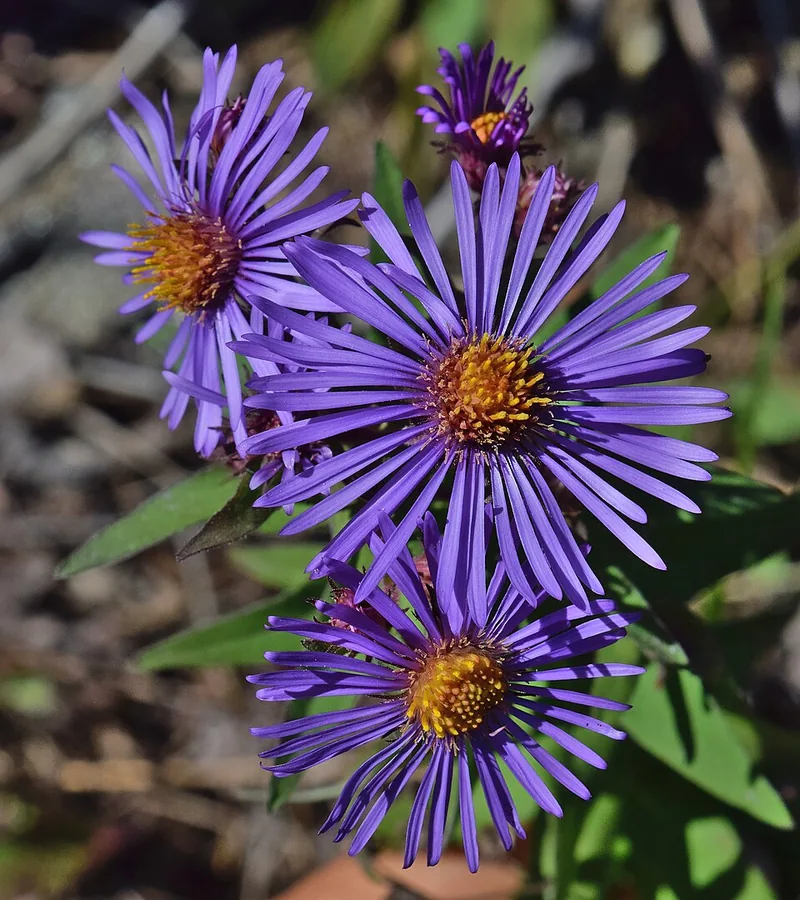
If you are new to growing, the New England aster is a wonderfully gentle place to start, because it saves its finest moment for last and asks very little to get there. As the rest of the garden settles down for the year, it bursts into purple, pink, and ruby daisies from late summer into fall. It shares a family with sunflowers and daisies, and out in the wild it washes roadsides and damp meadows in soft violet come September.
This is a tall, quick grower that simply wants a bit of elbow room, so there is no need to fuss over it. The stems rise from 3 to 7 feet (90 to 210 cm) and the clump widens a little more each year, which makes a roomy back-of-the-border spot in rich, moist ground the kindest choice. It weathers cold all the way down to zone 4 and forgives heavy clay far better than most perennials, so early stumbles rarely set it back.
Its real gift is the timing, and that is where it makes you feel like a hero. The flowers open just as monarchs travel south and bumble bee queens fatten up for winter, so it becomes one of the most treasured late-season nectar sources any garden can hold. Plant it once, give it that summer pinch, and it returns a little stronger every single year.
Care
The short version: full sun, rich soil kept steadily moist but well drained, and a couple of easy pinches before mid-July so the tall stems stay upright. It blooms in fall and feeds the pollinators when almost nothing else will, and it forgives the odd misstep along the way.
Light
Give it full sun and you will get the most flowers and the sturdiest stems, so it is worth the sunniest spot you have. A little afternoon shade is fine and it forgives you for it, but too much shade makes the plant stretch tall, lean over, and bloom far less.
Water
Keep the soil steadily moist, and pay it a little extra attention through dry spells, or the lower leaves may drop and brown. It loves rich, damp ground and even takes to clay, which makes it a lovely fit for a rain garden, though the drainage still needs to be good so aster wilt stays away.
Soil
Plant it in rich, fertile soil full of organic matter, and anything from good loam to heavy clay will suit it kindly. The one thing it truly won't forgive is standing water, so pick a spot that drains even while it holds a bit of moisture.
Temperature
This is a tough, cold-hardy friend that shrugs off -29°F to 95°F (-34°C to 35°C) and settles in happily through zones 4 through 8. It dies back to the ground each winter and comes home to you on its own in spring, so a bare patch in the cold months is nothing to worry about.
Humidity
Ordinary outdoor humidity suits it perfectly, so there is no number for you to chase and nothing to fret over. Air movement matters far more, since still, damp air pooling around crowded stems is what tempts powdery mildew in.
Feeding
It needs very little from you, which is one more reason it is easy to keep. A light feed of balanced or compost-based fertilizer during the growing season is all it asks. Go easy on the nitrogen, since too much only grows floppy stems that lean and flop.
Pruning
Pinch the stems back a few times before mid-July to keep the plant shorter, bushier, and far less likely to need staking, and it is a pleasant, low-stakes job. Once frost has blackened the foliage, simply cut the whole plant down to the ground and let it rest.
Size & spacing
The stems reach 3 to 7 feet (90 to 210 cm) tall, and each clump spreads 24 to 35 inches (60 to 90 cm) wide, so plan for a generous footprint. Give it that full width and air will drift through the clump, keeping mildew at bay with no extra effort from you.
When to plant
This aster keeps a fall calendar, and it is a forgiving one. Set your plants out in spring once the last frost has passed, or in early fall, pinch them through the first half of summer to keep them stocky, and the flowers arrive to greet you from late August into October.
Northern hemisphere
Southern hemisphere
Typical months for a temperate climate: start earlier in warm zones, later where spring frosts linger.
- Sow: Late winter to early spring; seed germinates more reliably after cold stratification
- Plant: Spring after last frost, or fall
- Harvest: August to October
Hardiness
USDA hardiness zones: 4–8
Temperature: down to -34°C
Troubleshooting
Almost every aster hiccup comes down to two easy-to-read causes: damp, crowded conditions or stems that grew too tall for their own good. The good news is that the early clues show plainly on the leaves and stems, so you have plenty of time to step in. Find the picture that matches yours below, and a small action now keeps the whole clump happy.
Stems yellowing, wilting, and sinking from the base upward
This one asks for a firmer response, since aster wilt is a soilborne fungus that hits hardest in soggy, heavy clay that never quite drains. A plant that catches it cannot be saved, so lift it out and destroy it rather than hoping it turns around. Ease the drainage for next time and settle any new asters somewhere fresh, and you can put this behind you.
Fix:
- Remove and destroy severely affected plants
- Improve soil drainage
- Avoid replanting asters in the same spot
A pale, dusty film creeping over the foliage
Take heart, this is only powdery mildew, a fungus that settles in when plants sit too close together and the air stays still, and it tends to appear as summer winds down. Gently strip away the coated leaves and let your watering reach the soil rather than the foliage. A little extra spacing and a summer pinch open the clump up so fresh air can pass through, and the plant recovers just fine.
Fix:
- Improve spacing and air circulation
- Remove and discard affected foliage
- Avoid overhead watering
Tall stems leaning, splaying open, or breaking
Nothing has gone wrong here, the plant is simply happy, and in rich soil or shade it shoots up past 90 cm (35 inches) until the lanky stems lean or split after rain. A few gentle pinches before mid-July keep it shorter and stockier, which is the easiest fix of all. If a plant still reaches for the sky, an early stake holds it steady, and a compact cultivar spares you the worry altogether.
Fix:
- Stake or support taller plants
- Pinch back stems before mid-July to reduce height
Toxicity
Here is a reassuring note for pet owners and parents. The New England aster is not toxic to cats, dogs, horses, or people, and the ASPCA lists asters as safe. If a pet swallows a big mouthful, the most it might feel is a mild, passing stomach upset, so there is nothing poisonous to lose sleep over.
Safe for
People · Cats · Dogs · Horses · Rabbits · Livestock · Birds
Cats None
You can relax with cats around this one. If a curious cat nibbles a leaf, you might see a bit of drool or a short-lived tummy upset of the sort any plant can bring on, but there is nothing poisonous in the aster to hurt them.
Dogs None
Dogs are perfectly safe here too. Should one chew a flower or a mouthful of leaves, the worst you might notice is a brief, mild stomach grumble that passes on its own.
Horses None
Horses can graze right alongside it with nothing to fear. The plant holds no poison for them, so an accidental mouthful is truly no cause for worry.
Rabbits Safe
Rabbits can nibble the foliage without any harm coming to them. Asters show up again and again on the lists of plants that garden and wild rabbits happily eat.
Livestock Safe
Cattle, goats, and sheep are welcome to graze it, and you needn't fret about poisoning. There is nothing in the plant that would do them harm.
Birds Safe
Birds have nothing to fear from this plant, and in fact it treats them kindly. Many come for the seed heads through fall and winter, while the late flowers gather the insects they like to catch.
People Safe
People are safe around it as well. It is grown to be admired in the garden rather than eaten, so there is no reason to taste it, though simply handling it carries no risk at all.
Varieties
Many gardeners choose a named cultivar bred for richer color or a neater shape, and it takes the guesswork out of your first try. These three are the friendly, dependable ones worth knowing.
Purple Dome
If staking makes you nervous, this compact, mounding little plant tops out around 2 feet of deep purple bloom and holds itself upright without a single pinch.
September Ruby (Septemberrubin)
For a taller pick, its stems lift big ruby-red flowers lit by cheerful yellow centers.
Andenken an Alma Potschke
A strong, generous grower that blankets itself in bright rose-pink to salmon blooms, so it rarely disappoints.
How to propagate
Making more New England aster is genuinely easy and hard to get wrong, whether you divide a settled clump or begin with a packet of seed.
DivisionEasy
Spring or early fall, every 2 to 3 years · One growing season
Dividing is the most dependable way to keep your asters thriving, and it is far easier than it sounds. Gently lift and pull the clumps apart every 2 to 3 years in spring or early fall, and each piece settles happily into its new home within one growing season. This kindly chore freshens up tired plants, gently curbs their spread, and clears out the bare, dead middle that older clumps tend to leave behind.
SeedEasy
Sow in late winter to spring; may self-seed in the garden · Blooms typically the second year from seed
Starting from seed is well within your reach when sown in late winter to spring, and a cold spell beforehand truly helps the seeds wake up. Just give them time, since young seedlings usually rest until their second year before they bloom. Plants often self-sow around the garden on their own, though the little ones may look a touch different from the parent, which is part of the fun.
Myths
New England aster is toxic to cats and dogs like many fall flowers.
You can set that worry aside, because the ASPCA lists asters as non-toxic to cats, dogs, and horses. A pet that gulps down a big mouthful might feel a mild, passing stomach upset, yet nothing in the plant is poisonous.
This aster blooms all summer long.
It quietly holds back and saves its display for the tail of the season, opening from roughly August into October. That patient late timing is the very thing that makes it so precious, since it feeds pollinators when almost nothing else is still in flower.