Ornamental · Verbenaceae
Lantana
Lantana camara
Give it full sun and lean soil and lantana will bloom hot all summer for you, though every part of it is poisonous.
Full sun
Every 5–10 days
39–48°F · 4–9°C
USDA 7–11
Overview
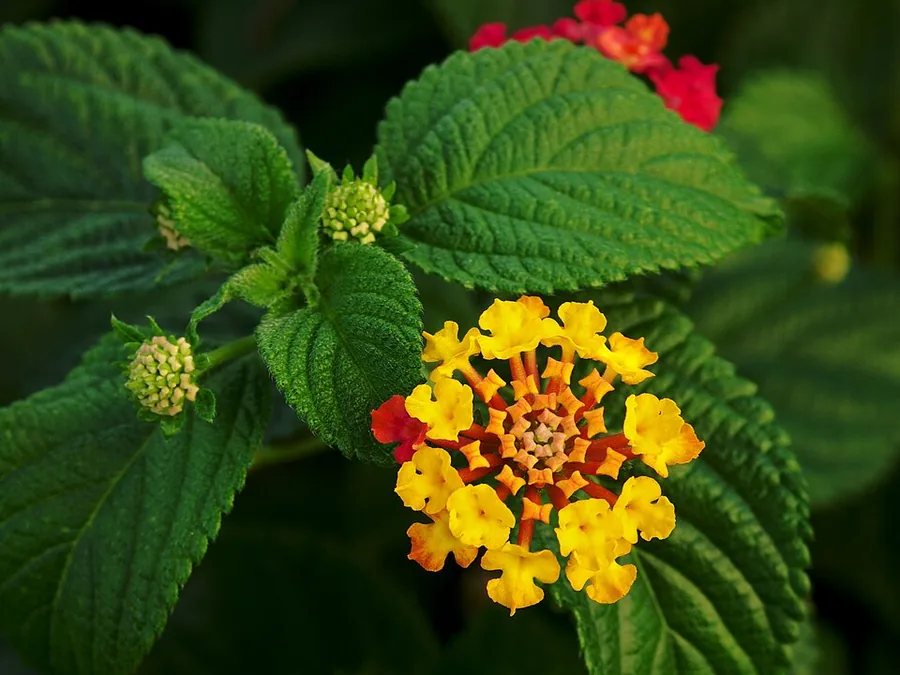
Lantana is a tough, quick-growing shrub in the verbena family, and it is an easy one to love for its dense clusters of small flowers that often change color as they mature. It welcomes butterflies and hummingbirds all season and takes heat, drought, and poor soil in stride once it has settled in. Across zones 7 to 11 it can carry on as a woody perennial, while in colder gardens you can simply enjoy it as a summer annual.
As forgiving as it is pretty, lantana asks little of you, and that ease is part of why it needs respect. Every part of it is toxic, the unripe green berries most of all, and in warm frost-free places it spreads freely enough to be called invasive. Plant it where pets, livestock, and children cannot reach the berries and you can relax and enjoy it.
Flowers arrive from midsummer until the first frost in oranges, yellows, pinks, reds, and bicolors, depending on which one you choose. Plants range from low spreaders to upright shrubs, so there is a shape to suit a border, a container, or a hot, dry slope where little else will grow.
Care
The short version: give lantana full sun and well-drained soil, water it moderately and let it dry between drinks, feed it lightly, and shear it now and then to keep it bushy and blooming.
Light
Lantana wants full sun, 6 or more hours a day, to flower its best. Give it much less and you end up with a leafy plant that holds back on blooms, so pick the brightest, hottest spot you have and it will thank you.
Water
Water in moderation and let the top half of the soil dry out between drinks, roughly every 5 to 10 days. Once it is established, lantana handles drought with ease, and soggy ground troubles it far more than a dry stretch ever will.
Soil
It is not at all picky about soil and settles happily into clay, loam, or sand, even poor ground, as long as it drains well. Any pH between 6.0 to 8.0 keeps it content.
Temperature
Lantana is a warm-weather plant with little tolerance for cold, hardy only in zones 7 to 11. It can weather brief dips to about 39°F to 48°F (4°C to 9°C), but frost cuts down the top growth, which is why gardeners in cold winters grow it as an annual.
Humidity
Ordinary outdoor humidity is all it needs, so there is nothing to fuss over here. Good airflow matters more than any moisture reading, especially where plants sit close together over winter and pests can gather.
Feeding
Feed it monthly through the growing season with a balanced fertilizer. Keep the nitrogen light, since too much coaxes out leaves at the expense of the flowers you are hoping for.
Pruning
Pinch or shear the plant through the season to keep it bushy and full of bloom, and do not be shy about it. On plants you carry over as perennials, cut them back hard in late winter or early spring to bring on fresh growth.
Size & spacing
Lantana runs from 1 to 6 feet (30 to 183 cm) tall depending on the variety, and spreads 3 to 5 feet (91 to 152 cm) wide. Give each plant room to fill out and let the air move through, and it will settle in comfortably.
When to plant
Lantana loves warmth and slips away at the first frost, so timing is on your side once you know the rhythm. Start seed indoors 6 to 8 weeks before the last spring frost, set your plants out once the cold has passed and the soil has warmed, and look forward to flowers from midsummer right up until frost calls a close.
Northern hemisphere
Southern hemisphere
Typical months for a temperate climate: start earlier in warm zones, later where spring frosts linger.
- Sow: 6 to 8 weeks before last spring frost
- Plant: After all danger of frost has passed and soil has warmed in spring
- Harvest: Midsummer until first frost
Hardiness
USDA hardiness zones: 7–11
Temperature: down to -18°C
Troubleshooting
Happily, lantana stays trouble-free outdoors most of the time, and the few problems that crop up tend to appear on plants kept indoors through winter. Find what matches below and step in early, before a small pest or a quiet spell of bloom has a chance to settle in.
Sticky leaves and a puff of tiny white flies
Do not worry, this is almost always a whitefly visit, and it turns up most on plants you have kept indoors through winter. Rinse the leaves with a firm jet of water, then dab the undersides with insecticidal soap or horticultural oil and you will get on top of it. A little more breathing room around your overwintering plants keeps the flies from settling back in.
Fix:
- Rinse foliage with a strong stream of water
- Apply insecticidal soap or horticultural oil to leaf undersides
- Improve air circulation around overwintering plants
Speckled, bronzed leaves with a hint of webbing
Take heart, those tiny specks and faint webs point to spider mites, which love hot, dry air and creep in on plants wintered indoors. To be sure, tap a leaf over a sheet of white paper and look for little moving dots. A spray of water to knock them off, a treatment of insecticidal soap or horticultural oil, and a bit more moisture in the air around the plant will set things right.
Fix:
- Spray foliage with water to dislodge mites
- Apply insecticidal soap or horticultural oil
- Raise humidity around overwintered plants
Lots of green but hardly any flowers
If your lantana looks lush and leafy yet stays shy on blooms, the fix is usually simple: it wants more sun or less nitrogen. Move it where it gets 6 or more hours of direct sun and switch to a balanced feed. Snip off the faded flower heads and it rewards you with a fresh flush of color.
Fix:
- Move or site plant in full sun
- Reduce nitrogen and use a balanced fertilizer
- Deadhead spent blooms to encourage reflowering
Toxicity
This one calls for real care. Lantana carries liver-damaging compounds called lantadenes all through the plant, and the unripe green berries hold the heaviest dose. It can poison cats, dogs, horses, livestock, and people alike, so keep every part well away from animals and children and you can grow it with peace of mind.
Toxic to
Cats · Dogs · Horses · Rabbits · Livestock · Birds · People
Cats Severe
Should a cat nibble any part of this plant, it may begin to vomit, develop diarrhea, grow weak and listless, and have trouble breathing. Because the lantadenes go after the liver, please treat even a small taste as a reason to call your vet.
Dogs Severe
Dogs are drawn to the pretty green berries, which sadly are the most harmful part of all. Keep an eye out for vomiting, diarrhea, weakness, and labored breathing, since these can lead on to liver failure.
Horses Severe
In a horse the toxin can bring on dullness, weakness, and an upset stomach, and then liver damage with jaundice. Skin in the sun may blister as the struggling liver causes photosensitization, and severe cases can sadly turn fatal.
Rabbits Severe
A rabbit is every bit as much at risk here as other mammals. The same liver-harming lantadenes are at work, so a grazing rabbit can end up with gut upset and liver injury. Please keep the plant well out of reach.
Livestock Severe
For grazing animals this ranks among the most serious poisoning risks. Cattle, sheep, and goats first turn constipated, then jaundiced, with liver damage and a swollen, sun-sensitive muzzle and eyelids. It often proves fatal, so fence stock away from it.
Birds Caution
The bright berries catch a bird's eye, and the unripe green ones hold the strongest dose of toxin. A few birds pass ripe seed along unharmed, but it is kindest to treat the plant as unsafe near pet and backyard birds.
People Caution
The unripe green berries are the true hazard here, and children have fallen ill after eating them, with vomiting, diarrhea, and effects on the liver. Handling the leaves can irritate skin too, so wear gloves and keep the berries away from little hands.
All parts are toxic; the immature green berries are the most toxic part. Keep plants away from pets, children, and grazing animals, and wear gloves as foliage can irritate skin.
Helpline numbers

United States
ASPCA Animal Poison Control: (888) 426-4435 (fee applies)
Poison Control: (800) 222-1222



Canada
Poison Centres: 1-844-764-7669
Varieties
Lantana comes in dozens of named selections, chosen mostly for their flower color, cold tolerance, or gentler spread. A few show up more often than the rest.
Miss Huff
If you garden somewhere colder, this orange-and-yellow selection is a friend, holding on down to USDA zone 7b and standing up to phytophthora better than most.
Ham and Eggs
A cheerful pink-and-yellow bloomer that takes Piedmont frost in stride and comes back hardy to about zone 7b.
New Gold
A low, spreading favorite blanketed in golden-yellow flowers that can happily reach around 6 feet wide.
Bloomify Red
A nearly sterile cultivar from UF/IFAS that sets very little seed, so it is a gentler choice if you worry about the plant spreading.
How to propagate
Lantana is a joy to increase, and taking cuttings is the surest way to keep a named variety looking just like its parent.
Stem cuttingsEasy
Take softwood cuttings in late spring or summer during active growth · Roots typically form in about 2 to 4 weeks
Good news for anyone starting out: lantana roots easily from cuttings. Snip softwood cuttings in late spring or summer while it is growing strongly, and they settle in within about 2 to 4 weeks. It will also come from seed or division, but only cuttings keep a named cultivar true to the parent, so reach for those when you want a match.
Myths
Only the flowers are toxic, so every color of lantana is equally safe to grow.
The whole plant is poisonous, and the unripe green berries carry the most toxin of all. The flower color makes no difference at all to how risky it is, so give every plant, whatever its shade, the same careful handling.
Lantana is just a harmless tropical bedding annual.
It is really a tender perennial that has slipped out of gardens the world over. In warm areas it counts as a Category 1 invasive in Florida and a noxious weed elsewhere, building dense thickets that push out native plants.