Ornamental · Asteraceae
Gazania
Gazania rigens
Give it full sun and dry feet and the treasure flower rewards you with bold, daisy-bright blooms all season long.
Full sun
Every 7–14 days
USDA 8–11
6–12 in · 15–30 cm
Overview
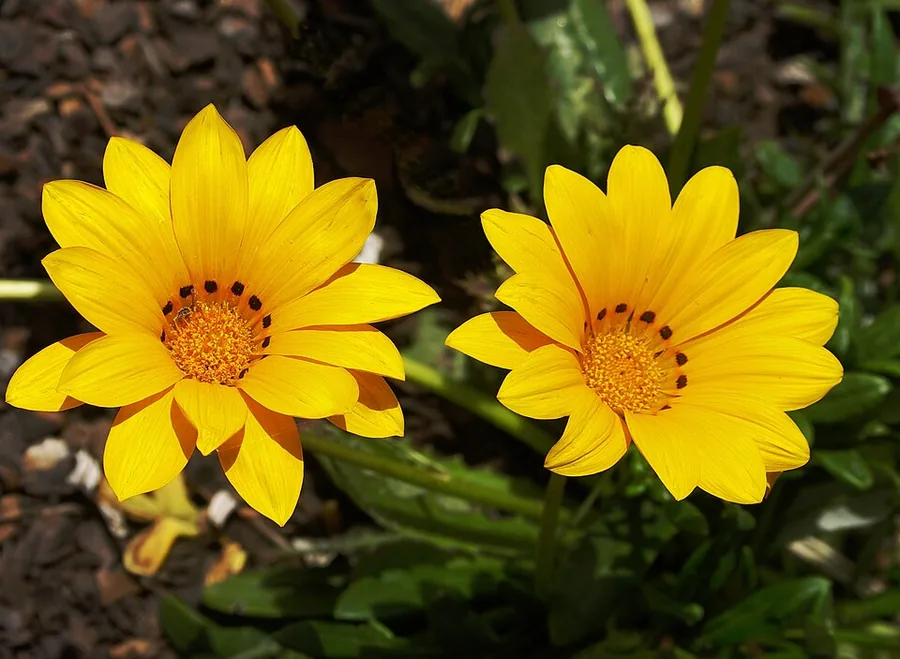
Gazania, the treasure flower, is a low, spreading cousin in the daisy family that comes from southern Africa, and it is a wonderfully forgiving plant to start with. It carries big, cheerful blooms in warm oranges, yellows, reds, and stripes on short stems just above a neat mat of leaves. Where winters stay mild it lives on as a tender perennial, and everywhere colder you simply grow it as an annual in beds, borders, or containers that catch plenty of sun.
The best part is how little it asks of you. Gazania is happy in poor, sandy soil, brushes off dry spells once its roots settle in, and keeps flowering from spring right into fall. The one thing to know is that the flowers follow the sun, opening wide in bright light and closing at night or under a gray sky, so a sunny spot is all it really wants in return.
Offer it heat, light, and soil that drains quickly, and gazania will very nearly take care of itself. The only slip that undoes it is kindness with the watering can, because soggy roots are the single thing it will not forgive, and that is an easy mistake to avoid once you know it.
Care
The short version: full sun, light well-drained soil, and a relaxed hand with the watering can. Let the soil dry between drinks, pinch off the spent flowers, and feed lightly through the growing season, and you will do just fine.
Light
Gazania wants full sun, at least six hours a day, and giving it that is the biggest favor you can do it. In shade the flowers stay shut and only open wide in bright, direct light, so pick the sunniest spot you have and it will thank you.
Water
Go easy here, and you truly cannot go wrong by watering a bit less. Let the top half of the soil dry out between waterings, roughly every 7 to 14 days once the plant is established, and hold back further in cool or wet spells. Drought it shrugs off, but soggy soil rots the roots and crown.
Soil
Plant it in light, well-drained ground, and even poor sandy soil suits it beautifully. Any pH from 5.5 to 7.5 is fine, and sharp drainage matters far more than rich soil ever will.
Temperature
Gazania is comfortable across a wide band, from about 19°F to 90°F (-7°C to 32°C). It takes summer heat in stride and rides out a light chill, though a hard frost will end a plant grown out in the open.
Humidity
Ordinary outdoor air is all it needs, so there is no number to chase. Damp, stagnant air is the one thing to steer clear of, since it invites powdery mildew onto the leaves.
Feeding
Feed lightly with a balanced general fertilizer through the growing season, about once a month, and that is plenty. Gazania does well in lean soil, so a gentle hand beats a heavy one and keeps it blooming instead of running to leaf.
Pruning
There is no hard cutting back to do, which makes this the easy part. Just deadhead the spent flowers as they fade, and that keeps fresh buds coming while stopping the plant from spending its energy on seed.
Size & spacing
Plants stay low and tidy, around 6 to 12 inches (15 to 30 cm) tall and about as wide. Give each one roughly that much elbow room so air moves freely and the mat fills in without crowding.
When to plant
Gazania loves warmth and cannot take a hard frost, but the timing is easy to get right. Start seed indoors 6 to 8 weeks before your last spring frost, move the young plants out once the cold has passed and the soil has warmed, and the blooms will follow from spring through fall until frost closes the season.
Northern hemisphere
Southern hemisphere
Typical months for a temperate climate: start earlier in warm zones, later where spring frosts linger.
- Sow: 6 to 8 weeks before the last spring frost date
- Plant: After the last spring frost date once soil has warmed
- Harvest: Blooms spring through fall, often until first frost; flowering may pause during the hottest part of summer
Hardiness
USDA hardiness zones: 8–11
Temperature: down to -12°C
Troubleshooting
Almost every gazania worry traces back to too much water or too little sun, and both are simple to fix. Watch the roots, leaves, and flowers for the early signs and a small change usually sets things right. Find what matches below, then act while the trouble is still small.
Soft brown stems and crown, and a plant that suddenly flops
If the base has gone brown and mushy, you are looking at root and stem rot, and it usually means the soil held water longer than the plant could take. Once the crown softens the plant cannot be saved, so lift it out gently and let it go. Ease off the watering, mix a little grit into the bed, and give the soil time to dry between drinks, and the next planting will do fine.
Fix:
- Reduce watering
- Improve soil drainage
- Remove and discard affected plants
A soft white dusting creeping across the leaves
That pale film is powdery mildew, a fungus that settles in when the air stays damp and still. Snip away the leaves that look worst and open the planting up so a breeze can pass through. Watering low at the base instead of over the top keeps the leaves dry, and that alone slows the whole thing down.
Fix:
- Improve air circulation
- Avoid overhead watering
- Remove affected foliage
Fluffy white tufts or a sticky coating on plants kept inside
Plants brought indoors for winter often gather mealybugs or aphids, which show up as cottony patches and a sticky honeydew along the stems. Rinse the pests away and follow with insecticidal soap, repeating gently until they are gone. Set the affected plant apart from your others while you work, so it stays a small problem.
Fix:
- Wash off pests
- Apply insecticidal soap
- Isolate infested plants
Blooms that stay closed or only crack part way open
Take a breath, because nothing is wrong here. Gazania flowers close up at night and on gray, overcast days, and they only spread wide in bright, direct sun. Shift the planting to a spot with at least six hours of light and you will watch the blooms open right back up.
Fix:
- Site in full sun (6+ hours direct light)
Toxicity
Gazania is one of the easiest plants to welcome into a home and garden. It is not listed as toxic, so cats, dogs, and grazing animals are all safe around it, and a curious nibble from a child or pet is nothing to worry about. Plant it wherever it makes you happy.
Safe for
People · Cats · Dogs · Horses · Rabbits · Livestock · Birds
Cats None
You can relax with a cat in the house. Should one nibble a leaf or petal, it will come to no harm.
Dogs None
Nothing to fret over with a dog around. Gazania holds no poison for them, so a quick mouthful pinched from the bed is no reason to worry.
Horses Safe
A horse that grazes nearby is perfectly fine, since the plant carries nothing that would upset one.
Rabbits Safe
A rabbit can browse the leaves in complete safety, with no risk at all.
Livestock Safe
Cattle, goats, and sheep can share the space with an easy mind, as nothing in the plant will trouble them.
Birds Safe
Birds pecking at the seeds or petals have nothing to fear from it.
People Safe
It is gentle to have near children. No one grows it for the table, but a stray taste will not cause any harm.
Varieties
Most of the gazanias you will come across trace back to a handful of breeding lines, grouped by how early they flower, how they are colored, and how their leaves look. These are the ones well worth knowing by name.
Daybreak series (e.g. Daybreak Bright Yellow)
This is a compact bedding strain whose flowers wake earlier in the morning and hold open longer than the older kinds do.
New Day Tiger Mix
An early-blooming F1 mix carrying bold striped, two-toned flowers, though it leans a little more toward Phytophthora root and stem rot than most.
Talent series (e.g. Talent Orange)
Prized for its silvery-gray foliage as much as its flowers, which keep opening even when the light turns weaker.
How to propagate
Gazania is a joy to multiply, whether you raise a fresh batch from seed each spring or keep a favorite plant going by division.
SeedEasy
Start indoors 6 to 8 weeks before the last frost; transplant outdoors after frost · Several weeks to form an established plant after transplanting
Raising gazania from seed is the usual path for bedding, and it is a forgiving one. Sow indoors 6 to 8 weeks before your last frost, set the seedlings out once the cold has truly passed, and allow them a few weeks in the ground to settle into sturdy, established plants.
DivisionEasy
Take basal offsets in late summer to early fall and root them · A few weeks to root and establish
Division lets you hold on to a plant you love or a named cultivar through the winter. Lift the basal offsets in late summer or early fall, root them indoors, and within a few weeks they take hold, ready to carry the very same plant into next season.
Myths
Gazania needs frequent watering like most annuals.
Once it has found its feet, gazania needs far less water than the average annual and takes dry weather in stride. The real risk is giving it too much, because soggy soil rots the roots and crown from below.
Gazania flowers stay open around the clock.
The blooms move with the sun, folding shut at night and on dull, cloudy days. They open fully only in bright light, so a spot in shade or a run of gray weather will leave them looking closed for a good while.